There are places where history is written in ink—and places where it’s written in smoke.
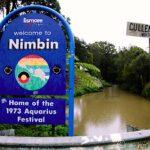
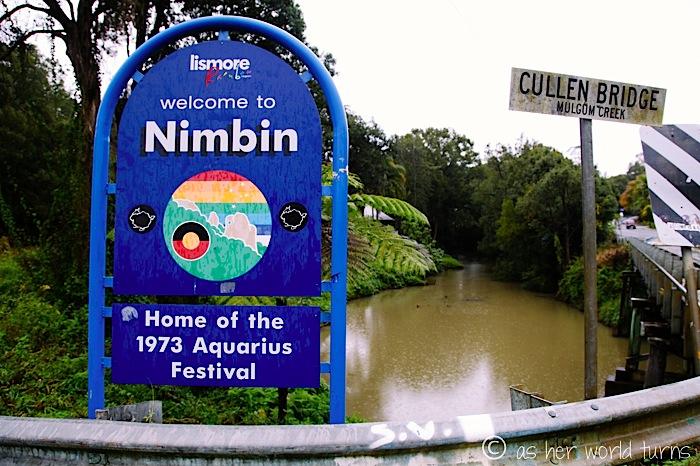
Nimbin high up in the rainforests of the Northern Rivers of NSW Australia, is the latter.

When the helicopters came
Before the glitter, the Ganja Faeries, and the world’s most photogenic oversized joint, Nimbin was under pressure. Real pressure.
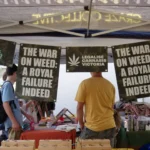
In the late ’80s and early ’90s, police crackdowns were relentless. Helicopters hovered low over rooftops, scanning for crops like it was a military operation instead of a quiet Northern Rivers town. Locals weren’t just annoyed—they were fed up.
So in 1993, they pushed back.
The protest wasn’t polished. It wasn’t planned like a festival. It was raw, chaotic, and very Australian—think eggs, toilet paper, and a whole lot of attitude. But out of that tension came an idea that would change everything:
What if protest didn’t have to be angry?
What if it could be… fun?
The big joint that launched a movement
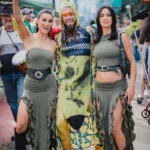
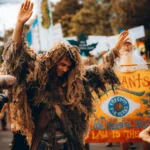
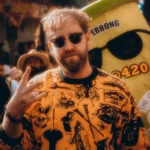
The first MardiGrass looked like a protest that accidentally wandered into a costume party.
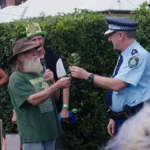
A small group set off down the street, led by a man dressed as a nun, playing a tuba (because of course)—and somewhere along the way, the crowd grew. And grew. And grew. By the time they reached the police station, they weren’t just marching—they were making a statement.
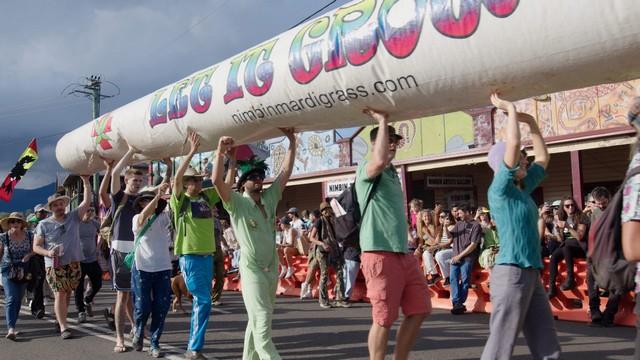
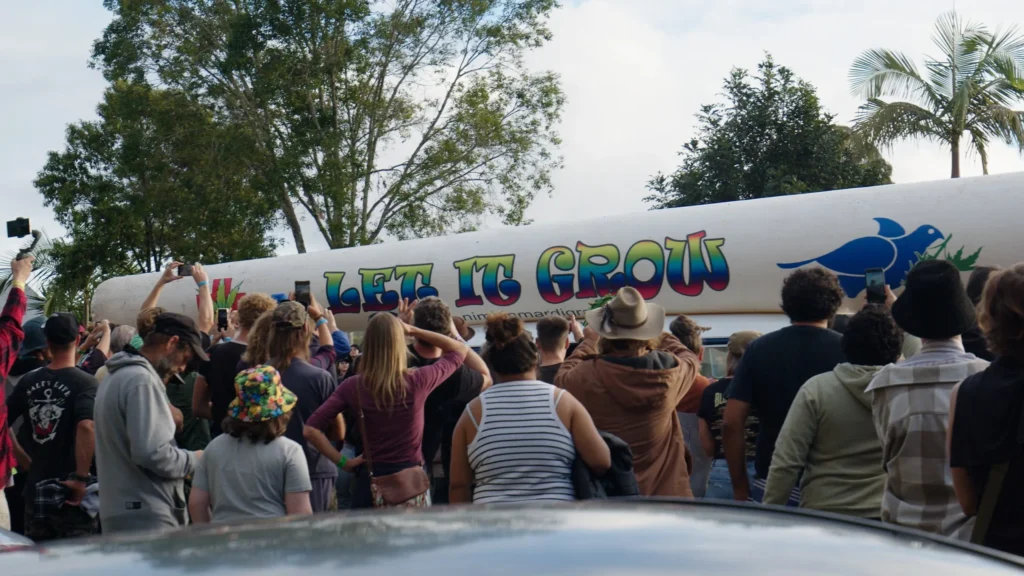
Held high above them was a giant handmade joint. Ridiculous, defiant, impossible to ignore.
It said everything without saying much at all:
We’re not criminals. We’re a community.
And just like that, MardiGrass became an annual ritual.
 From protest to pilgrimage
 From protest to pilgrimage
Fast forward a few decades and MardiGrass is no longer just a protest—it’s a cultural phenomenon.
Yes, there’s still the march past the police station. Yes, the giant joint still makes its annual appearance. But now there’s also the Hemp Olympix (where athleticism meets… creative interpretation), cannabis cups, live music, debates, workshops, and more tie-dye than any reasonable person should ever own.
It’s part festival, part forum, part ongoing act of civil disobedience.
People don’t just come to party—they come to connect, to learn, to challenge the status quo. Underneath the humour and haze, MardiGrass has always carried a serious message:
end the war on cannabis.
Enter Michael Balderstone
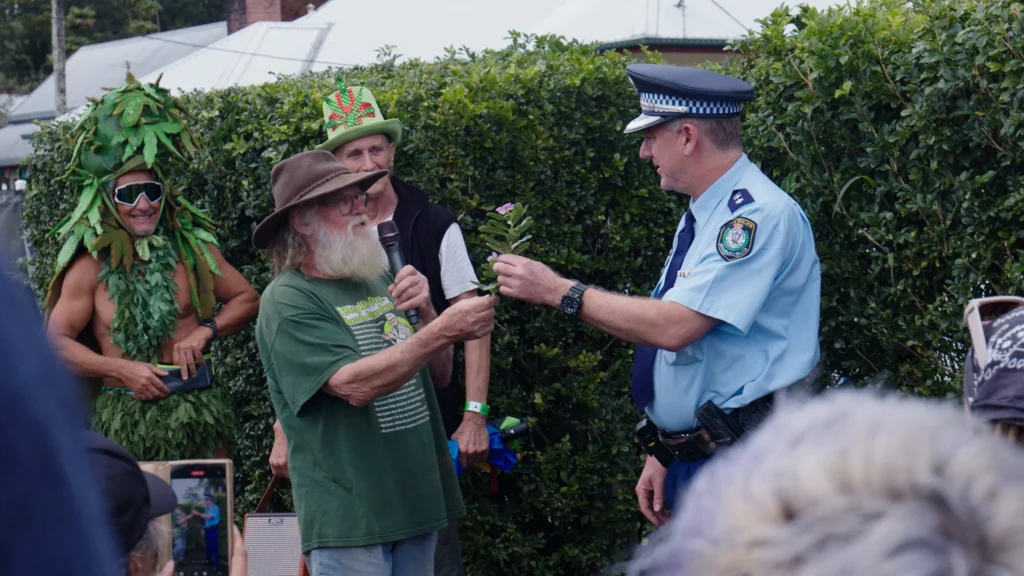
Every great movement has its figureheads, and Nimbin has Michael Balderstone.
Hemp Embassy president, lifelong activist, and a man who somehow manages to blend politics with personality, Balderstone has been a constant presence through it all. He’s seen the raids, the arrests, the slow shift in public opinion—and he’s still here, still pushing.
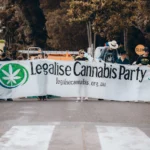
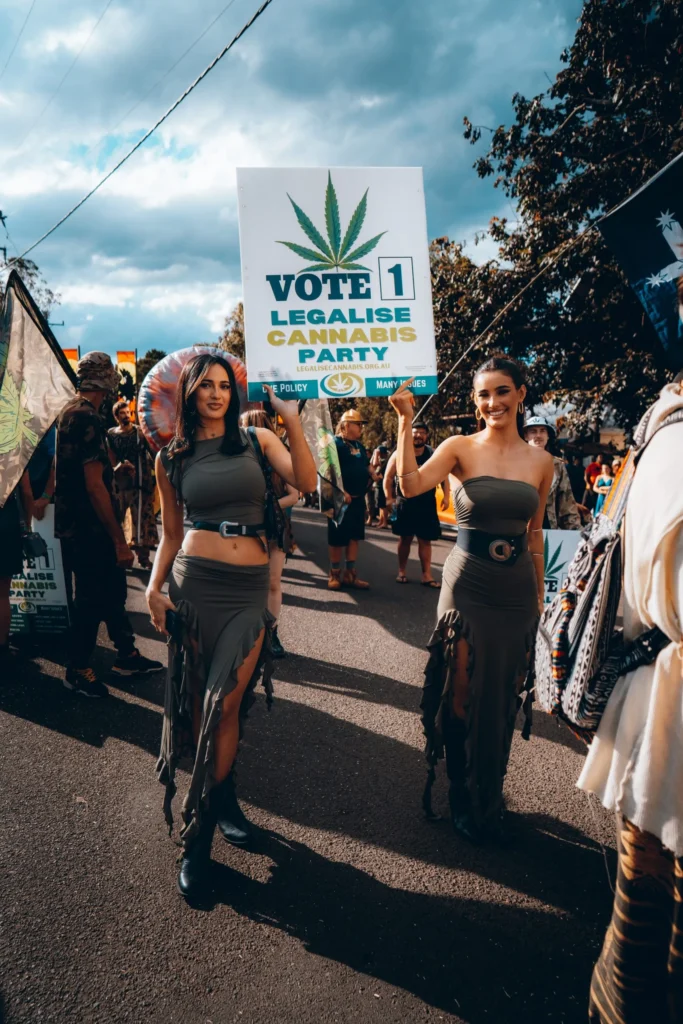
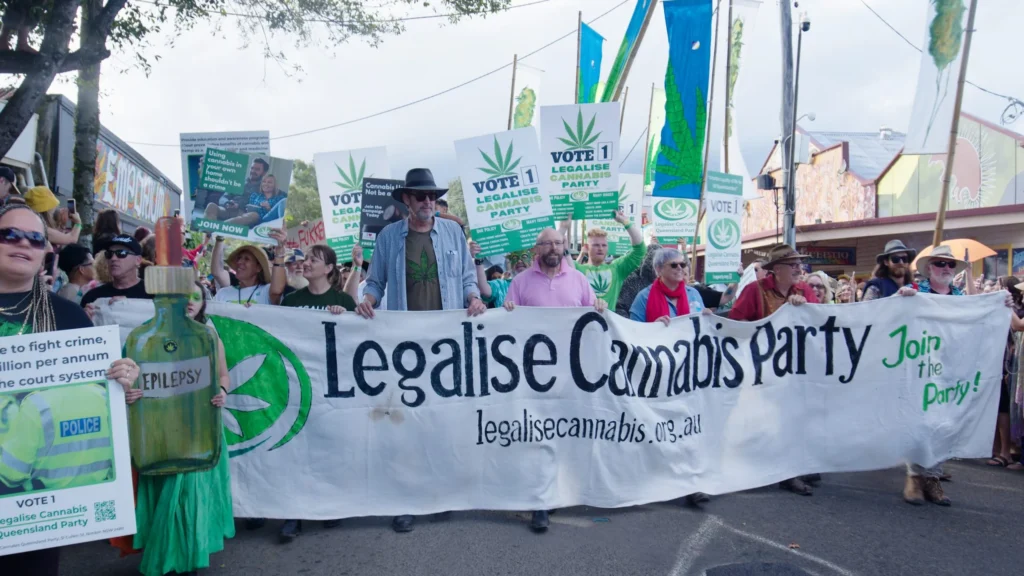
Over time, that grassroots activism evolved into something more formal: the Legalise Cannabis Party. Same energy, new arena. From street protest to senate seats, the movement grew up—but didn’t sell out.
Balderstone represents that bridge between old-school rebellion and modern political strategy. Equal parts larrikin and lobbyist.
The law: slow, stubborn, shifting
If MardiGrass has been loud and colourful, cannabis law reform in Australia has been… the opposite.
For decades, prohibition ruled. Heavy policing, zero tolerance, and a “war on drugs” mentality that treated cannabis like a national threat rather than a cultural reality.
But things did start to change—slowly.
By the mid-2010s, the conversation shifted toward compassion. In 2016, Australia legalised cannabis for medical and scientific use. It was a breakthrough, even if access remained complicated and expensive.
Soon after, low-THC hemp foods were approved, bringing cannabis—ironically—back into kitchens before it was fully accepted in society.
Then came the ACT’s move to decriminalise personal possession and small-scale growing. A bold step, albeit one tangled in federal contradictions that only lawyers truly understand.
And yet, despite all of that progress, adult recreational use remains illegal across most of the country.
Then vs now: MardiGrass through the years
1993: A scrappy protest against police crackdowns
Early 2000s: Growing crowds, ongoing tension with authorities
2010s: More organised, more visible, still unapologetically political
Post-2016: Medical cannabis shifts the tone—less fringe, more legitimacy
2020s: Politics enters the chat; reform becomes a national conversation
By 2026:
- More mainstream appeal
- More policy discussion
- Still a protest at its core
- Still arrests, still contradictions
MardiGrass didn’t lose its edge—it just got smarter about where to aim it.
The war that won’t end
For something called a “war,” it’s been remarkably unclear what victory looks like.
Decades in, the war on drugs has left behind a trail of criminal records, social stigma, and missed opportunities. Meanwhile, public opinion has shifted dramatically. Around the world, countries are legalising, regulating, and taxing cannabis like any other industry.
Australia? Still cautiously dipping a toe in the water while pretending it’s not already wet.
Medical cannabis is legal. Hemp is legal. Public support is growing.
And yet—light up recreationally, and you’re still breaking the law.
It’s the kind of contradiction that would be funny… if it wasn’t so persistent.
Still rolling
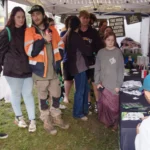
Walk through Nimbin during MardiGrass today and you’ll see generations overlapping.
Old-school activists who remember the helicopters.
Younger crowds who assume legalisation is inevitable (and honestly, fair enough).
Politicians trying to look comfortable next to a six-foot joint.
It’s part protest, part celebration, part stubborn refusal to back down.
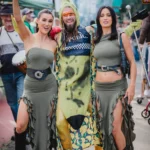
Because MardiGrass was never just about cannabis—it’s about freedom, autonomy, and the right to question laws that don’t make sense. Preferably while dressed as a nun, or a fairy, or something that involves glitter and questionable life choices.
The laws have changed. The tone has shifted.
But the mission? Still unfinished.
So every year, they march again.
Not just for Nimbin. Not just for Australia.
But for the idea that one day, this won’t be a protest anymore.
It’ll just be a party.
And until then—roll up, show up, and keep the pressure on.