
It didn’t start as a movement. It didn’t even start as a good idea. It started with five kids who were bored after school.
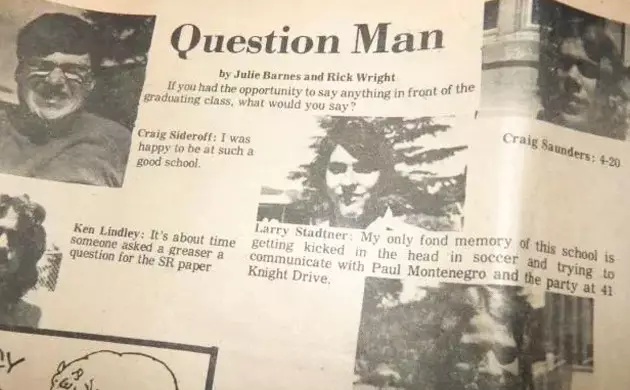
Northern California, early ’70s. San Rafael High. Practice is over, the day’s basically done, and there’s that weird dead time before dinner where you’re not supposed to be anywhere but don’t want to go home either. Someone’s heard a rumor—there’s an abandoned weed patch out in the hills. No one really knows where. Doesn’t matter.
They pick a time to meet: 4:20 p.m.
That’s it.
They’d meet by a statue, pile into a car, and go looking. Day after day. Same plan, same code: “420.”
They never found the weed.
But the number stuck.
A Joke That Outgrew the Room
At first, it was just theirs.
“420” meant: you in? Or let’s go. Or simply, time to get high.
It was low-key, a little secret handshake disguised as a number. Teachers didn’t get it. Parents didn’t notice. That was the whole point.
And then it started to travel.
One of the guys had ties to people orbiting the Grateful Dead—road crew, friends of friends, that whole loose, moving circus. And if there was ever a network built to spread something weird and coded, that was it. Parking lots, backstage passes, cross-country tours… “420” slipped into conversations and stayed there.
No one announced it. No one claimed it.
It just moved.
The Moment It Went Public
Fast forward to the early ’90s.
Somebody prints up flyers in Oakland—nothing fancy, just a call to arms: April 20th, 4:20 p.m. Smoke.
It’s half joke, half experiment. What happens if everyone actually shows up?
People do.
Then a reporter from High Times gets wind of it, writes it up, and suddenly the code isn’t just floating around anymore—it’s got a date attached. A time. A ritual.
That’s when it stops being just slang.
That’s when it becomes a thing.
All the Myths (and None of Them True)
Once 420 hit the mainstream, people started trying to explain it.
It’s a police code. It’s in a Bob Dylan song. It’s the number of chemicals in weed.
None of that holds up.
The real story is way less dramatic—and honestly, way better. No conspiracy, no hidden meaning. Just a bunch of teenagers picking a time that worked after school.
There’s something kind of perfect about that.
From Meet-Up to Movement
By the late ’90s, April 20 wasn’t just a date on a flyer—it was an event.
People started showing up in parks, on campuses, in city squares. At first it looked like a party, and yeah, part of it was. But there was something else underneath it. Something quieter, but heavier.
For a long time, getting caught with weed could wreck your life—arrests, records, all of it. So when people started gathering in public, sometimes in the thousands, it wasn’t just about getting high anymore.
It was about visibility.
About saying, we’re here, and we’re not hiding.
Half celebration, half protest.
Now It’s Everywhere
These days, 4/20 is impossible to ignore.
Dispensaries run deals like it’s Black Friday. Festivals pull crowds that feel more like music tours than smoke sessions. Cities that used to crack down now quietly accommodate.
It’s gone legit, at least on the surface.
But if you look a little closer, the original energy’s still there—that slightly rebellious edge, that sense that even though it’s more accepted now, it didn’t start that way.
So What Is 4/20, Really? Depends who you ask.
For some, it’s just an excuse to smoke. For others, it’s a marker of how far things have come. For a lot of people, it’s both.
But underneath all of it, 4/20 is still what it was at the beginning: a shared signal.
You don’t need to explain it. You just say the number.
And somehow, whether you’re in California, London, or Sydney, people get it.
Back to the Beginning
Those five kids weren’t trying to build anything.
They just didn’t want to go home yet.
They picked a time, chased a rumor, and kept showing up.
They never found the weed.
But they started something that keeps showing up anyway.