
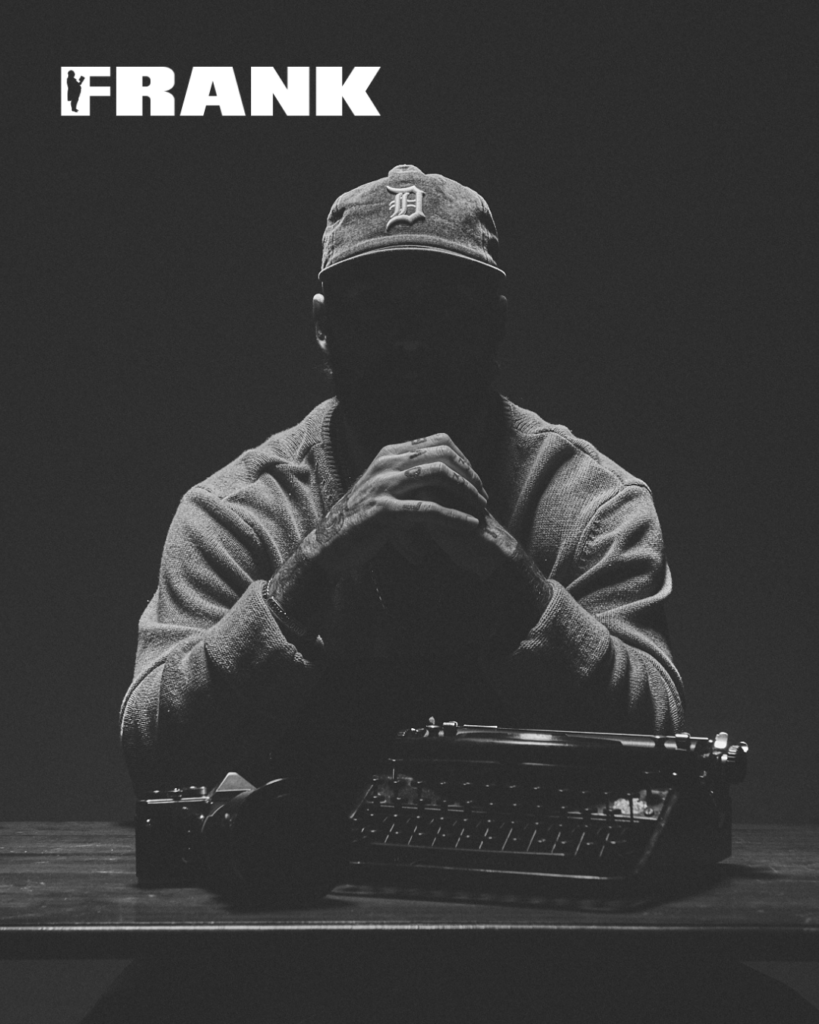
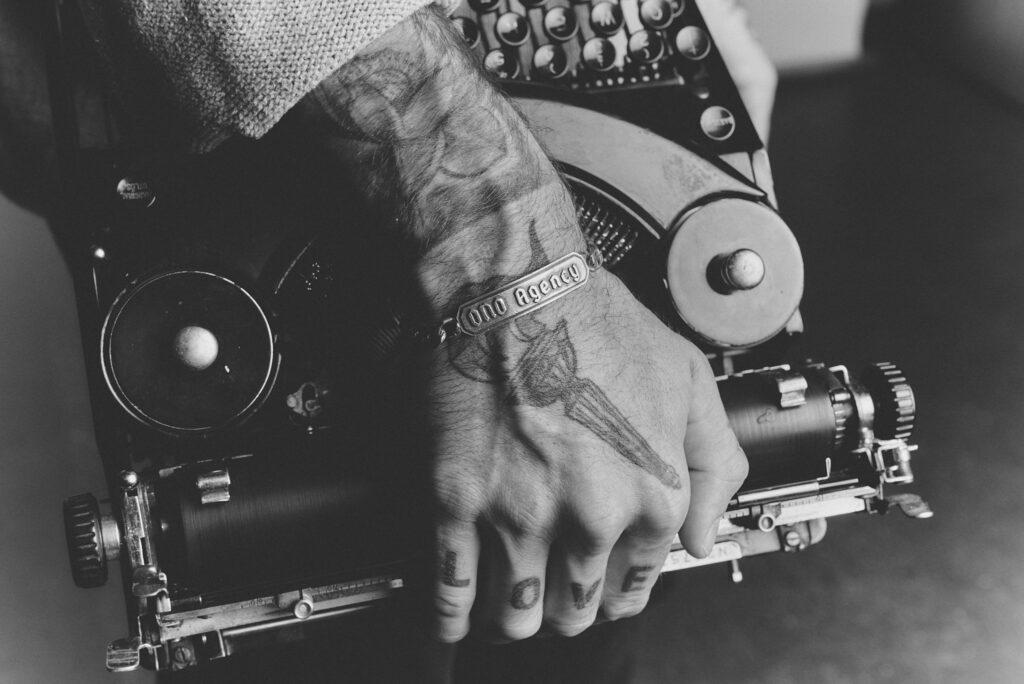
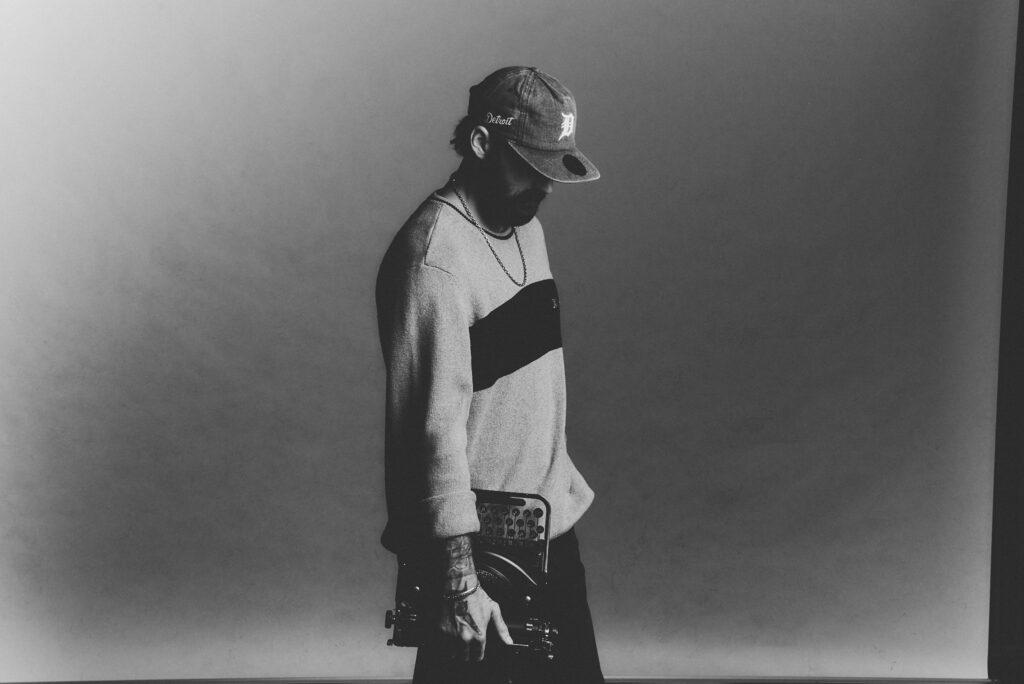
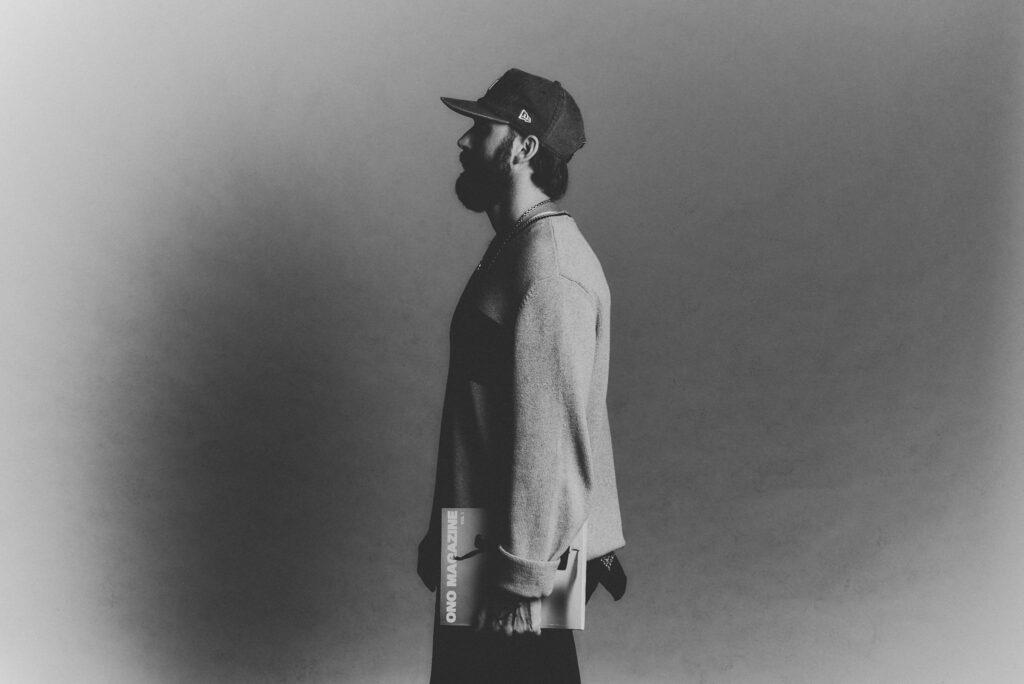
All Photos Shot By Photographer Fredrik Gille in his studio Garage Studios Stockholm.
In this series, Frank 151 invites you on a captivating journey around the globe, providing a unique glimpse into the narratives and imaginative landscapes of individuals who are driving creativity to new heights worldwide.
Embark on a visual and intellectual adventure as we delve into the worlds of not only photographers and actors but also delve into the realms of rappers, musicians, graffiti artists, filmmakers, and the visionary minds behind emerging brands. Our creative chronicles are set to unfold, offering a rich tapestry of insights, anecdotes, and life wisdom that traverse the vibrant streets to the dynamic boardrooms, from the vast oceans to the majestic mountains.
Join us as we connect with the crème de la crème of the creative realm, bringing forth a diverse spectrum of perspectives that highlight the intersection of artistry, innovation, and entrepreneurship. From the pulse of urban streets to the serene landscapes, this series promises to capture the essence of the global creative scene, providing an immersive experience that transcends boundaries and celebrates the multifaceted expressions of human ingenuity.
The loudest people in culture usually aren’t the ones moving it.
While everyone else is chasing algorithms and recycling trends, ONO founder Evan H. Duvall is doing the opposite—getting out into the streets, building real relationships, and connecting artists before the rest of the world catches on. What started in Austin has grown into a creative network stretching through New York, Stockholm, London, and beyond, built on the simple idea that culture still belongs to the people creating it—not the platforms profiting from it.
With the launch of an ad-free, 200-page print magazine and an agency focused on long-term creative development over quick campaigns, ONO is betting on something that’s become surprisingly rare: authenticity.
Frank151 caught up with Duvall to talk about documenting culture before it becomes content, why print still matters, and why the future won’t be found behind a screen.
Frank 151: ONO has built a reputation by saying, “Where we point our finger, that’s where culture is.” What does that philosophy actually mean, and how does it influence every project you take on?
ONO / Evan H. Duvall: “Where we point our finger, that’s where culture is,” represents that we work in this environment every day. This is what we do. We’re at the street level. We’re digging, we’re shaking hands, and we’re trying to figure out what’s next.
Over the years, that’s the skill we’ve refined—our sensitivity and our ability to understand how energy flows through communities. This is our full-time job, and we take the responsibility of informing people about what we see very seriously. If we’re backing something, it’s because we’ve already vetted it and believe it’s truly unique.
Frank 151: Austin has been your foundation from day one. What made it the right city to launch ONO? And what lessons has the city’s creative community taught you?
ONO / Evan H. Duvall: I grew up outside of Austin, so I knew the city very well. I was raised in the live music scene and was familiar with the culture from day one.
Once I started pursuing the creative industry in Austin, it already felt familiar. I could read the lay of the land efficiently. I could feel what was working, what wasn’t, and understand where things were headed.
Austin is also the perfect size for testing concepts. It’s relatively small, especially within the creative industry, so it’s an ideal place to experiment with ideas and sharpen your skills. But the market isn’t necessarily large enough to sustain long-term growth, so that’s where we’re pivoting.
“You can’t understand culture from behind a desk or by studying an algorithm. By the time a trend reaches your feed, the conversation that created it has already moved on.”
Frank 151: You’re now expanding into New York City. What does New York offer that Austin can’t, and what opportunities does that create for ONO and the artists you represent?
ONO / Evan H. Duvall: We realized we had inevitably hit a ceiling. We were operating inside a bubble where we weren’t really growing anymore.
We’ve talked about expanding for years because we always knew we could better serve local creatives by developing relationships in larger cities and creative hubs around the world. That allows us to open doors for creatives back home.
At the same time, those relationships become a two-way street. The connections we build in cities like New York, London, and Stockholm can come back to Austin and help elevate the entire scene. Austin has been feeding on itself for a long time, and it’s time to raise the standard of our cultural awareness and the way we operate.
Frank1 51: ONO Magazine feels like a statement against today’s fast-content culture. Why was now the right time to launch a 200-page print magazine in a digital-first world?
ONO / Evan H. Duvall: I think the shift is already happening.
People are becoming more aware that the way we’ve been consuming culture and media isn’t sustainable. More sensitive and creative people are being drawn back toward print because they need that space.
We realized the people we wanted to attract to our brand, collaborate with, and build community alongside were already seeking out print. I think more people are going to follow that path. That’s how ONO is designed—every action informs the next opportunity, including our relationship with the reader.
Frank 151: The first issue is completely ad-free. That’s a bold decision. Was protecting editorial integrity always non-negotiable?
ONO / Evan H. Duvall: Absolutely. It still is.
By not focusing on advertising, we’re able to build a stronger relationship with our audience and establish trust.
At the end of the day, we’re positioning talent. That’s the brand. We don’t want readers to feel like we’re selling them anything other than ideas, philosophies, and moments of inspiration.
That’s what’s going to keep people coming back—not a perfume ad.
I always joke that Austin’s culture is realtors, food trucks, and chocolate chip cookies. I always knew we wanted to be the opposite of that. Sometimes you have to be extreme to bring things back to center.
“We’re not selling people anything other than ideas, philosophies, and moments of inspiration. That’s what’s going to keep people coming back—not a perfume ad.”
Frank 151: Frank 151 has always believed culture starts in the streets before corporations notice it. Do you think creative agencies spend too much time chasing trends instead of documenting what’s actually happening?
ONO / Evan H. Duvall: Absolutely.
I’ve always taken a street-level, street-first approach because too many CMOs and creatives in traditional environments spend too much time behind a desk or computer.
To understand where culture is headed, you have to be in the streets—shaking hands and meeting people who think differently than you. That’s how you develop an understanding of where people are.
You have to meet people where they are and make decisions based on what you see in the hearts, minds, and energy of a community. You can’t understand culture from behind a desk or by studying an algorithm.
What many mistake for insight is often just a feedback loop. There is very little originality. The algorithm doesn’t reveal what’s next—it reinforces what’s already proven to hold attention. By the time a trend reaches your feed, the conversation that created it has already moved on.
Frank 151: ONO works across talent development, media, events, and strategy. What side of the business excites you most, and where do you see the biggest opportunity over the next five years?
ONO / Evan H. Duvall: I don’t really see it as one side versus another.
The way we’re able to serve talent, brands, and audiences is through an ecosystem. We need to see concepts from start to finish to make sure we’re creating a trajectory that actually leads somewhere, instead of only having our hands on one small piece.
Talent development includes media, PR, strategy, events, and everything that helps build a reputation around an artist.
We have a saying: “The scene is behind the scenes.”
We’re trying to remove that veil and let people see behind the curtain.
We want to show people what the day-to-day life of being a creative actually looks like and what truly goes into the work. That’s how we inspire more people to get involved. We want people to see themselves in our shoes. It’s the opposite of gatekeeping.
That’s the biggest opportunity ahead.
Frank 151: You’re building bridges between cities like Austin, New York, London, and Stockholm. How important is it for creatives today to think globally while staying authentic to their local scene?
ONO / Evan H. Duvall: I think it’s more possible than ever to think bigger.
A lot of artists get stuck in their local scene. Eventually they hit a ceiling or feel trapped inside a bubble.
We should always be pushing our limits and taking inspiration from people who think differently than we do.
Visiting other cities helps you continue to grow because every place approaches culture differently. You pick up new ways of producing events, marketing, styling, designing, and relating to people.
Sometimes you bring those ideas back home and they spark something. Other times your ideas might be too progressive for your city but completely normal somewhere else.
As a creative, you constantly have to ask yourself whether you’re still growing. It’s hard to do that if you’re caught up in the day-to-day.
“Culture doesn’t live on the internet—it lives in communities. Our job is to be there before everyone else notices.
Frank 151: What’s one artist, creative, or project you’ve worked with that perfectly represents what ONO is all about?
ONO / Evan H. Duvall: We’re working on a collaboration right now with MADDWOO and artist Matthew Trujillo.
Both Madeline Woo—a world-renowned ballerina turned fashion designer—and Matthew represent exactly the type of individuals ONO was built to work alongside and connect.
Matthew designed a piece that debuted during Stockholm Fashion Week this past June and will be released this September.
Both Maddie and Matt were featured separately in Volume I of ONO Magazine, which really shows how our awareness and network can create opportunities that otherwise might not have existed.
Volume II will tell the story of how that collaboration came together, and as ONO Magazine continues to evolve, you’ll see more examples of how we connect the dots. That’s a huge part of what we do.
Frank 151: You’ve said ONO wants to create work that lasts and archive culture for future generations. In an era where social media disappears after 24 hours, why is long-form storytelling more important than ever?
ONO / Evan H. Duvall: I think it’s really important that we document and archive culture as a reference.
Media is being consumed so quickly that we have to show people there’s another way.
If we start now, refine our craft, and continue improving, we’ll eventually be able to point back at our publication and say we’ve been doing this for ten, fifteen, or twenty years.
We take a lot of inspiration from how creatives operated during the ’60s and ’70s.
I often compare creatives to martial artists.
I try to approach creativity like a martial art—showing up every day, practicing, and dedicating yourself to your craft. That’s what makes someone great.
That’s what we’re documenting: the process of becoming—for our artists, for ourselves, and for the world.
Frank 151: Looking at the current state of creative agencies, what do you think the industry is getting wrong, and how is ONO trying to change that?
ONO / Evan H. Duvall: I think we’re experiencing a major shift.
Marketing is becoming played out. Consumers are tired of being marketed to and sold to. There’s a growing disconnect.
We need to start approaching people like people again. We need to invest time, energy, and intention into building relationships with our audience.
Between AI, the lack of real community awareness, and marketers becoming disconnected from the people they’re trying to reach, I think traditional marketing is becoming less valuable than art direction, creative direction, and PR.
We need to show depth. We need to show intention. We need to show innovation.
“I try to approach creativity like a martial art—showing up every day, practicing, and dedicating yourself to your craft.”
Frank 151: If we sit down again in five years, where do you hope ONO Agency and ONO Magazine are in the cultural conversation? What does success look like—not financially, but in terms of the legacy you’re trying to build?
ONO / Evan H. Duvall: I look at this agency like an engine—a generator.
As long as it’s running cleanly and efficiently, we’re prioritizing the relationships we’ve built, and the system is working on a global level, then we’re successful.
If people have access to meaningful opportunities, they’re meeting one another, collaborating, and having fun, then we’re doing what we set out to do.
This has never been about financial gain. Of course it’s part of the equation because creatives have to eat.
We’ve been there too.
There were plenty of nights where I ate rice just to keep going.
Those sacrifices gave my work depth. They gave me an understanding of who we were advocating for and trying to protect. I needed to understand what artists were experiencing by removing the boundary between myself and my art.
Now we’re able to better represent artists in deals, negotiations, and opportunities because we genuinely understand what they’re going through.
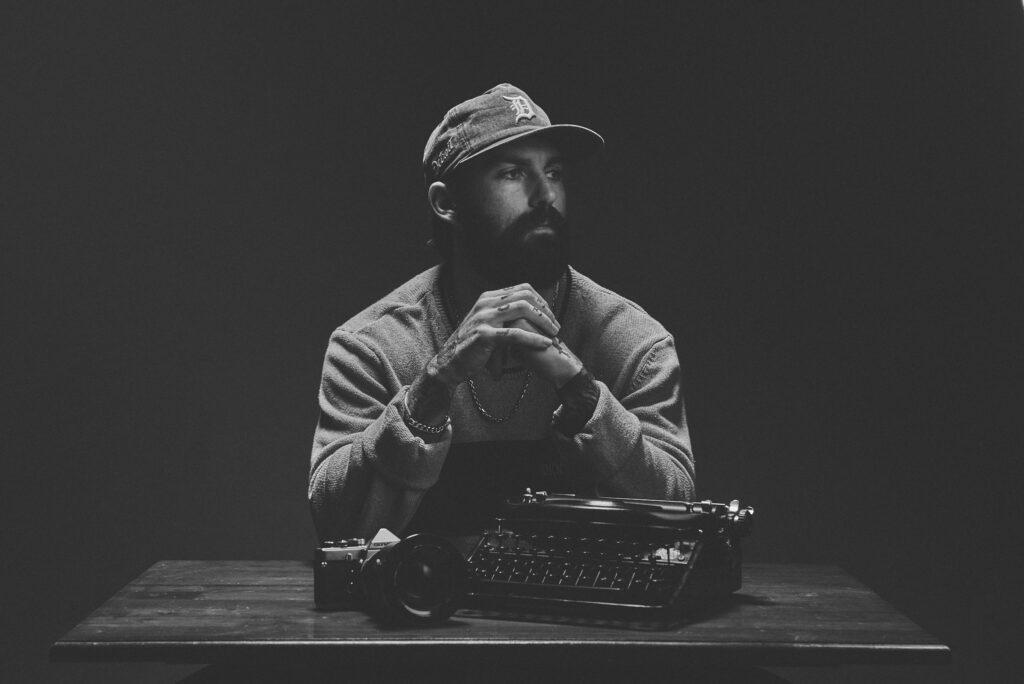
Frank 151: Where is ONO currently, and where is it headed next?
ONO / Evan H. Duvall: Right now I’m based in Stockholm, Sweden, for the summer. I originally came here to support one of our clients, MADDWOO Studios, as they debuted at Stockholm Fashion Week. Once I arrived, it became clear that Stockholm was a city full of creative talent and genuinely good people.
From the beginning, ONO was never meant to exist in one city. The goal has always been to step outside our own scene, build meaningful relationships in creative communities around the world, and establish collaborative opportunities between them.
During my time here, I’ve had the privilege of working closely with photographer Fredrik Gille, who captured the images for this feature. I’ve been deeply inspired by his work and have learned a lot simply by watching him create. Collaborating with people who are not only incredibly talented but genuinely invested in one another has given me an even deeper appreciation for Scandinavian culture.
After Stockholm, we’ll be heading to New York City to continue building in the same way—forming lasting relationships, creating opportunities, and connecting creative communities across borders. That’s what ONO is all about. We’re simply following our hearts and our inspiration.
Finally, we’re getting to a point where the vision feels clear. We can see the path ahead, and I’m excited to see where it leads.
And lastly, thank you to Frank151 for giving us the opportunity to share our story. We’re usually the ones documenting and telling other people’s stories, so it means a lot to have someone recognize our work and create space for us to tell our own. We’re truly grateful.