
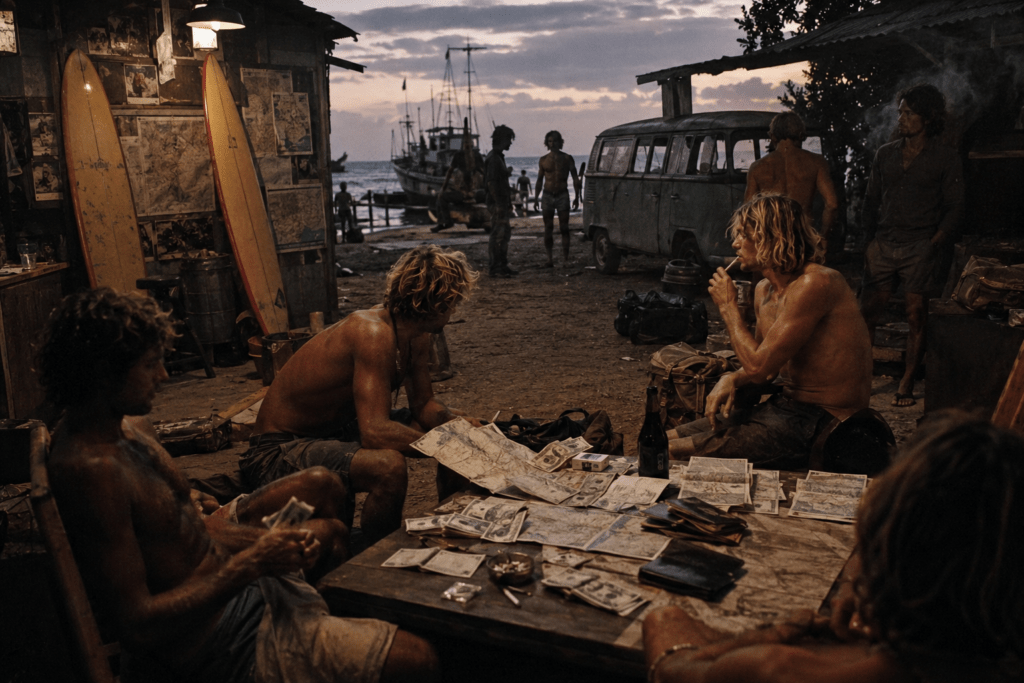
Before surf was a mall rack, before action sports got rinsed through energy drinks, private equity, Olympic committees, Instagram reels, and “coastal lifestyle” mood boards, it was a dirtbag economy.
Guys sleeping in vans. Boards glassed in sheds. Boardshorts stitched on kitchen tables. Cash changing hands in parking lots, under beds, behind surf shops, in airports, on boats, in the tropics. Some of it was clean. Some of it wasn’t. And a lot of people who were there will tell you the same thing, usually after looking over both shoulders first: surfing’s golden age had green fingerprints all over it.
The official story is prettier. Quiksilver starts in Torquay in 1969, Alan Green and John Law building better boardshorts because regular swim trunks ripped, ballooned, and sucked in real surf. Billabong starts in 1973 on the Gold Coast, Gordon and Rena Merchant making handmade shorts in Burleigh Heads and selling them to local surfers. That part is real. That part is documented. That part is the brochure.
But every clean origin myth has a dirty back room.
In the late ’60s, ’70s, and early ’80s, surfers were not just chasing waves. They were chasing routes. Bali. Thailand. Afghanistan. Morocco. Hawaii. California. Australia. Indo. The same map that held empty reef passes and perfect points also held hash, weed, Thai sticks, fake papers, customs officers, fishing boats, mother ships, and guys with enough nerve to turn a surf trip into a criminal enterprise.
This wasn’t some side rumor floating around the lineup. From the ’60s through the ’80s, smuggling weed and surfing moved through a lot of the same doors. Thailand had waves, escape, cheap living, and some of the strongest marijuana on earth. For a certain kind of surfer, that was not just a destination. It was an opportunity.
That’s the part surf culture has always struggled to say out loud. The outlaw wasn’t adjacent to the industry. The outlaw was in the bloodstream.
Makua Rothman said the quiet part with a blowtorch. Talking about the old surf industry, he claimed most surf businesses started with drug money, saying there weren’t many that didn’t. That is Rothman’s claim, not a court record, but it hits because it echoes a story surfers have whispered for decades.
And that’s where the truth gets slippery.
There is no clean public record proving that Billabong or Quiksilver were founded with drug money. Their documented beginnings are workshops, boardshorts, surf functionality, and a bunch of obsessive Australians trying to make gear that worked. But the culture around them — the beaches, contests, travel circuits, surf shops, underground cash, and characters who moved between waves and weed — was absolutely soaked in black-market money.
The industry didn’t grow in a bank lobby. It grew in a haze.
Surfing had always sold rebellion. Bare feet. Bad attitudes. Long hair. No bosses. No clocks. No shirt, no problem. Weed fit the costume and the lifestyle. It was rebellious, portable, DIY, and just illegal enough to feel like part of the uniform. By the late ’60s, cannabis was already wrapped into the mythology of surfing: part panic, part punchline, part ritual.
The action sports industry came out of that contradiction. It wanted the outlaw image, but not always the outlaw invoice.
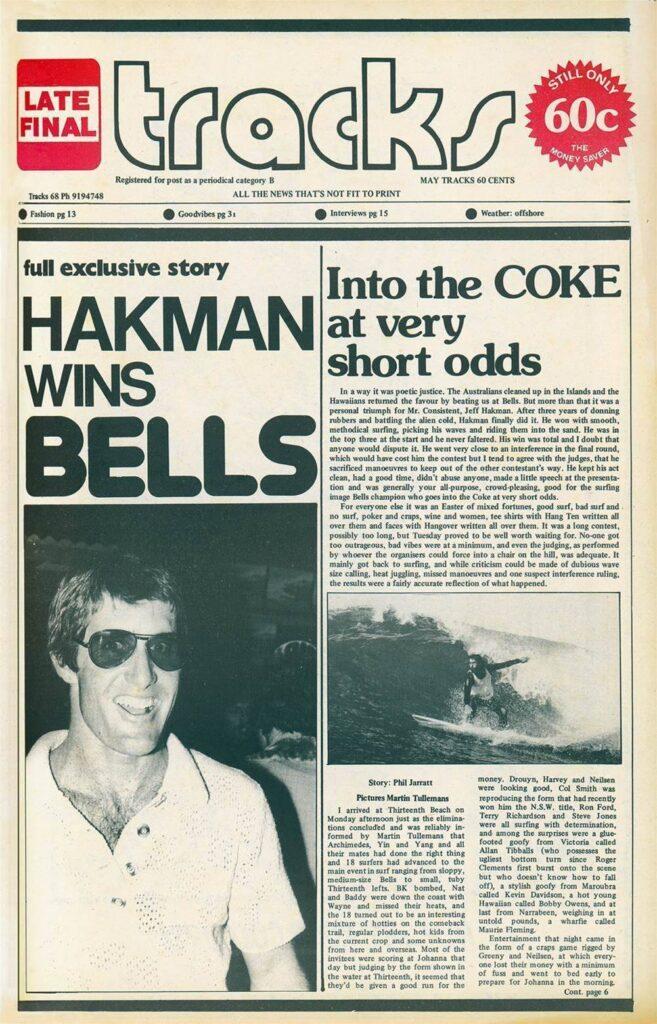
Surf brands turned the dropout into a customer profile. Skate brands did the same with street kids. Snowboarding sold the mountain version of the same disease: anti-authority, anti-jock, anti-country-club. But somebody had to fund the screenprints, the warehouses, the contest banners, the team riders, the VHS tapes, the ads, the flights, the stickers, the magazine spreads.
Sometimes that money came from parents, side jobs, factory work, surf-shop hustle, or smart product design. Sometimes it came from cash that had already been around the block with a kilo in the trunk.
That does not mean every brand was a cartel in boardshorts. That version is too easy, too dumb, too internet. The better version is uglier: the legal surf economy and the illegal surf economy grew up beside each other, drank from the same bars, used the same beaches, sponsored the same heroes, and shared the same appetite for risk.
Think about what surfing rewarded back then. You had to travel before travel was easy. You had to know remote coastlines. You had to handle boats, airports, foreign cops, sketchy border crossings, and long stretches of boredom broken by moments where one mistake could wreck your life.
That skill set works for surf exploration.
It also works for smuggling.
The surfer-smuggler wasn’t a branding invention. He was a logistics guy with a tan.
By the time the mainstream caught up, the rough edges had already been sanded down. Boardshort companies became global apparel giants. Skate shoes went corporate. Snowboard brands built empires. The dirty van became a retail fixture. The rebel became a logo. The smell of weed became “lifestyle.” What started in sheds and parking lots ended up under fluorescent lights next to back-to-school denim.
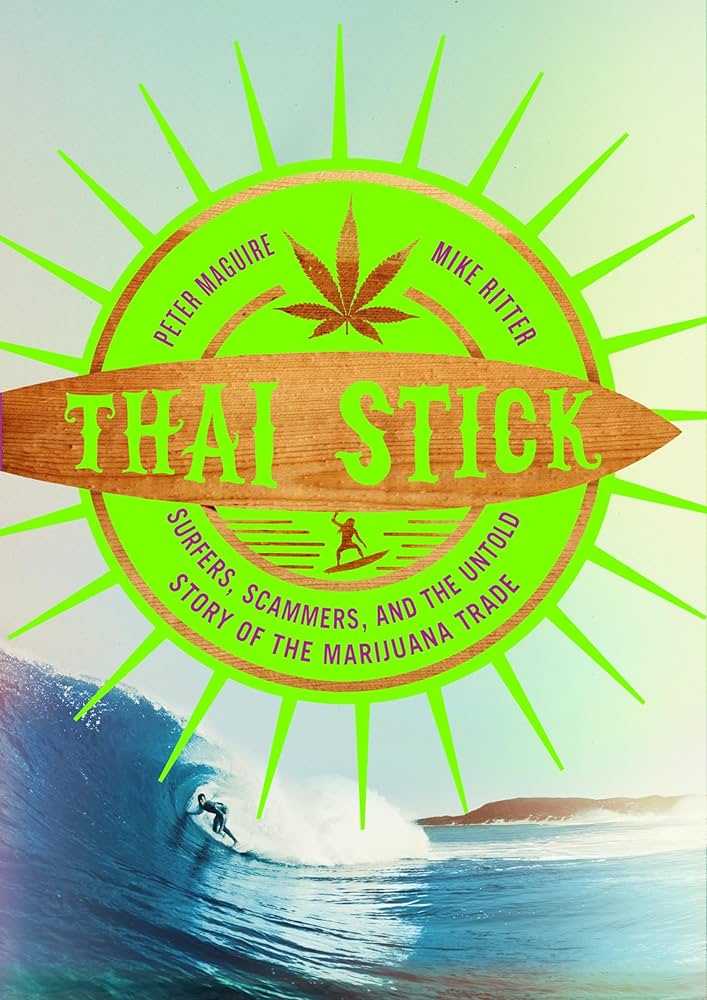
That’s the joke and the tragedy: the industry sold authenticity until authenticity became another SKU.
The old heads know. The ones who were around when surf shops were half clubhouse, half cash-wash. The ones who remember team riders who could surf all winter without a visible job. The ones who saw nobodies come back from Indo with money. The ones who heard about boats that didn’t just carry boards. They know the polished corporate history is only one layer of resin.
Surfing didn’t invent drug money. It just gave it boardshorts, a soundtrack, and somewhere beautiful to hide.
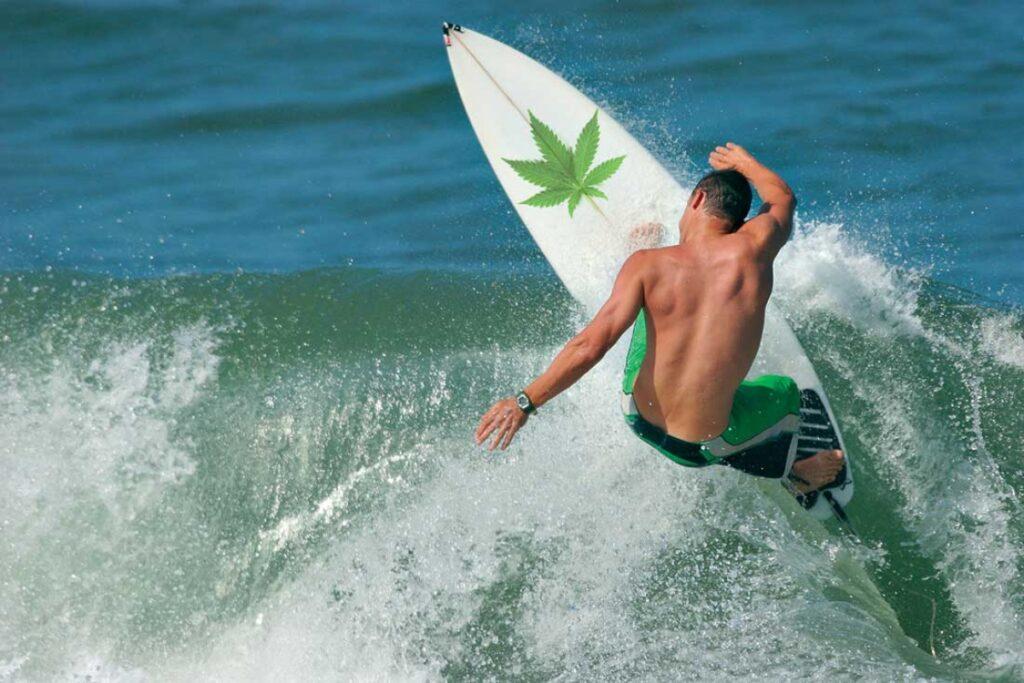
So when people ask whether companies like Quiksilver, Billabong, and the rest were “built on drug money,” the honest answer is messier than yes or no. Publicly, the big brands have clean origin stories rooted in product, craft, and surf obsession. Culturally, they were born inside a scene where weed money, smuggling routes, and outlaw credibility were part of the weather.
The industry became respectable. The money got washed. The logos got bigger. The founders got profiles. The rebels got contracts. The pirates got documentaries.
But under the glassy corporate surface, you can still see the old reef: sharp, dangerous, and covered in smoke.