
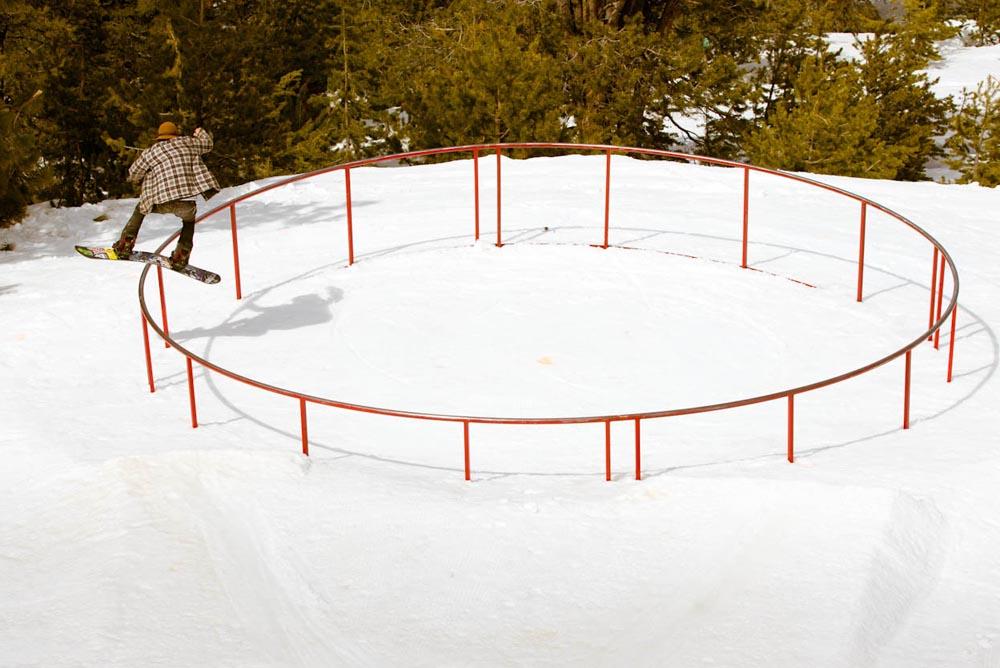
Before jibbing was a category, before rail riding became a checklist of tricks and angles, there was a moment when snowboarding slowed down just enough to let style take the lead. That moment was the Nixon Jib Fest.
At the turn of the 2000s, snowboarding was evolving fast. Contests were growing bigger, production was getting louder, and progression was starting to look more like obligation than expression. Jib Fest arrived quietly and did the opposite. It wasn’t a contest. It wasn’t public. It wasn’t about points or podiums. It was about riding with intent.
Founded in 2000 by JP Walker, Jeremy Jones, and Dave Downing, Nixon Jib Fest was invite-only and deliberately small. The idea was simple: bring together a tight group of riders who cared more about creativity than competition and build a course that encouraged experimentation instead of repetition. The result was a playground that felt closer to a skate spot than a snowboard park — kinked rails, awkward transitions, walls, down bars, circles, features that forced riders to think instead of charge.
“Dudes are just stoked,” Jeremy Jones said at the time. That line captured everything. No pressure. No expectations. Just snowboarding for the sake of snowboarding.
The course was never meant to last. After each Jib Fest, it was torn down completely. Nothing archived, nothing preserved. You were either there or you weren’t. That impermanence gave the event weight — a sense that what was happening mattered precisely because it couldn’t be repeated.
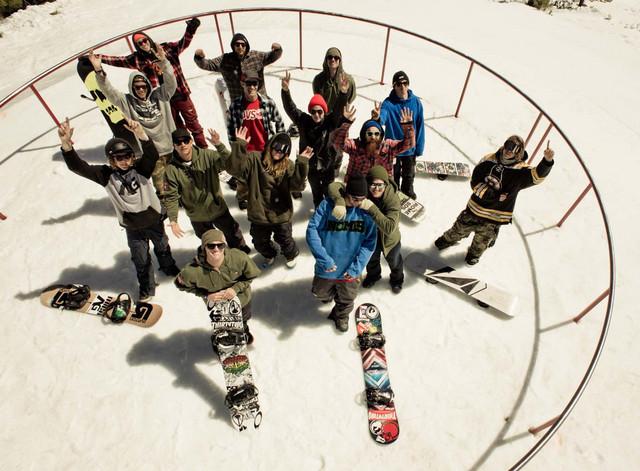
Dave Downing described the goal as getting people together “to feed off and inspire each other.” That energy defined the event. Riders pushed themselves not because they were judged, but because the people around them were doing things that felt possible only in that moment. Progression happened organically, without rules or timers.
For younger riders invited into the mix, Jib Fest felt unreal. Snowboarders who grew up watching the videos suddenly found themselves riding next to the people who shaped their idea of style. There was no hierarchy once the boards were strapped in — just mutual respect and shared obsession.
“It was one of the funnest events I’ve ever been to,” said Chris Grenier, echoing a sentiment shared by nearly everyone who experienced it firsthand.
As jibbing grew in popularity and similar events began popping up, the original crew made a conscious decision to stop. Rather than let Jib Fest dilute into another branded contest, they ended it on their own terms. The legacy was already sealed.
When the event briefly returned in 2011 at Northstar-at-Tahoe, it felt less like a reboot and more like a reunion. Three generations of riders came together, not to recreate the past, but to acknowledge its impact. The same spirit was there — loose, creative, unforced — a reminder of what snowboarding feels like when it isn’t trying to impress anyone.
“The Nixon Jib Fest changed snowboarding in many different ways,” Louif Paradis said. “Those videos had a major impact on my snowboarding growing up.”
That impact is still visible. Every time a rider chooses style over difficulty, creativity over consistency, you can trace a line back to Jib Fest. It proved that progression doesn’t need structure, and that the most influential moments in snowboarding often happen away from the spotlight.
 Nixon Jib Fest didn’t crown winners. It didn’t chase longevity. It existed, burned bright, and disappeared — exactly the way snowboarding likes its legends.