
In this series, Frank 151 invites you on a captivating journey around the globe, providing a unique glimpse into the narratives and imaginative landscapes of individuals who are driving creativity to new heights worldwide.
Embark on a visual and intellectual adventure as we delve into the worlds of not only photographers and actors but also delve into the realms of rappers, musicians, graffiti artists, filmmakers, and the visionary minds behind emerging brands. Our creative chronicles are set to unfold, offering a rich tapestry of insights, anecdotes, and life wisdom that traverse the vibrant streets to the dynamic boardrooms, from the vast oceans to the majestic mountains.
Join us as we connect with the crème de la crème of the creative realm, bringing forth a diverse spectrum of perspectives that highlight the intersection of artistry, innovation, and entrepreneurship. From the pulse of urban streets to the serene landscapes, this series promises to capture the essence of the global creative scene, providing an immersive experience that transcends boundaries and celebrates the multifaceted expressions of human ingenuity.
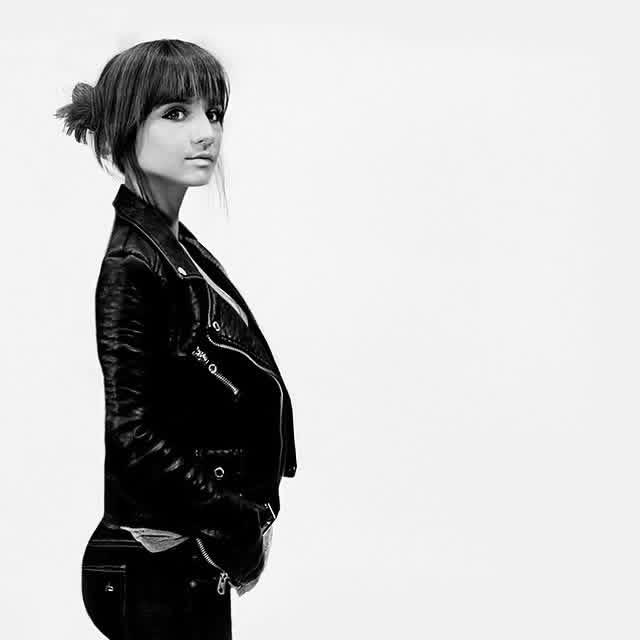
Sarah Rose Reichert’s creative world is built on feeling. Moving fluidly between art direction, branding, music, fashion, film, and experiential storytelling, her work is rooted in emotional resonance — the kind that turns visuals into memories and brands into living, breathing worlds.
Raised in an artistic home and shaped early by the raw cultural energy of Frank’s Chop Shop, Sarah came up at the intersection of design theory, street culture, hip-hop, fashion, and documentation. From filming legends like Rakim and Wu-Tang to building creative worlds for global names like Meta, Playboy, Porsche, and Sony Music, her path has never followed a single lane. Instead, it reflects a multidimensional creative language driven by atmosphere, identity, instinct, and soul.
For this edition of Creative Chronicles, Frank 151 sits down with Sarah Rose Reichert to talk childhood imagination, emotional branding, the influence of street culture, creative burnout, internet-era identity, and what it means to make work that people don’t just see — but genuinely feel.
Frank 151: Your work moves between art direction, branding, music, fashion, and visual storytelling. What first pushed you toward the creative world?
Sarah Rose Reichert: I think I was always enticed by how the seemingly simple aspects of the world around us subconsciously influence the way we feel, act, live, and evolve. Feeling the world in this hypersensitive way — multisensory, stimulating, and visually multidimensional — is something I trace back to childhood, growing up in an artistic home.
It was only when I came into my own that I became consciously aware this synesthetic superpower I experienced the world with was unique to me. It was what made me feel life in an empathetic manner, and it inspires what I feel I can give to the world. A common thread through everything I art direct, brand, and storytell lives within the ethos of emotional branding: making people feel again, stimulating all the elements that make us human.
The first turning point for me happened when I was 18 and met Mike Malbon from the iconic cultural epicenter of Frank’s Chop Shop. He took me under his wing and opened the door to an entirely different creative universe. I started filming and creating content for Frank’s Chop Shop, and suddenly I was surrounded by people who weren’t just making art — they were living culture.
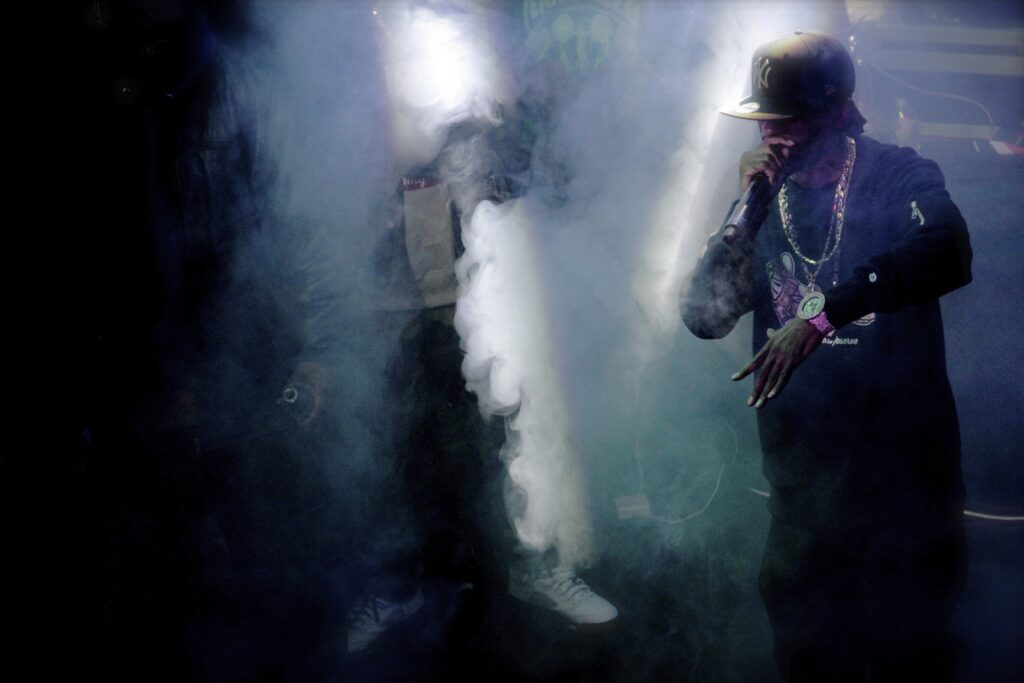
I was filming hip-hop legends like Rakim, journaling street culture icons like Futura 2000, and seeing firsthand how storytelling could shape identity and legacy. Fresh to the scene, I was young and naive, but a passionate, ego-less hard worker who was experiencing this time both as a contributor and as a “fly on the wall” sponge, learning anything and everything I could.
A typical weekday would be attending classes at Parsons Design School during the day, then spending nights filming in studios with Wu-Tang or on the floor of a fashion set filming Lenny Kravitz strut across a room in The Chelsea Hotel. That contrast shaped me in a massive way. One side was design theory and experimentation, the other side was raw cultural energy and real-life storytelling. That combination became the foundation of how I approach creativity today.
For me, creativity has never been about making something that simply looks good. It’s about building worlds people feel in their soul as humans, stimulating our uninhibited, unjaded imagination, and evoking meaningful memories in ways that hit us on a newly conscious level.
Frank 151: Growing up, what inspired your visual taste before you ever worked professionally in design?
Sarah Rose Reichert: More than anything, growing up in an artistic home shaped the way I experienced the world. My mother was a children’s book illustrator, and my father was a blacksmith. I can still feel those memories deeply. Every detail.
Hours after school were spent sitting alongside my mom in her little art studio — the table covered in pastels, an old-school 14-inch TV playing NASCAR races, Indiana Jones, or James Bond, and a big bowl of popcorn and frozen green grapes nearby.
Weekends were spent jumping into my dad’s rusty Jeep pickup truck, smushed between my brother and our pup at sunrise, playing Tom Petty on cassette and driving to our family’s mom-and-pop-style hardware store in a small fishing town for a day of work. My childhood felt like this holistic time immersed in artistic, craftsman environments, allowing us to experience life through a very uninhibited, playful lens.
Growing into my teenage years, I was deeply inspired by these cultures long before I ever worked in them professionally. Album artwork, fashion editorials, underground magazines, MTV in the early 2000s, old hip-hop photography, sports, streetwear campaigns — all of those things shaped my visual language. My teenage room was covered wall to wall, all over the ceiling, with vinyls and Sports Illustrated posters of players from Derek Jeter to Carmelo Anthony.
I was also really drawn to contrasts. I loved things that felt simultaneously polished and raw, futuristic and nostalgic, cinematic but intimate. I’d spend hours going down rabbit holes, exploring details in magazines or feeling immersed in music videos through the way they evoked emotion with lighting, styling, typography, textures, or color grading.
I think growing up online during the Tumblr era also played a role creatively. There was this explosion of visual discovery happening across fashion, music, photography, design, and internet culture all at once. It taught me how powerful curation and mood-building could be.
I was inspired by artists who created entire universes around themselves. Not just visuals for the sake of visuals, but complete identities and emotional experiences.

Frank 151: What was it like working with Frank’s Chop Shop early in your career, and how much did that environment influence the way you approach creativity and visual storytelling today?
Sarah Rose Reichert: Honestly, it shaped everything.
Frank’s Chop Shop existed in this really special space where art, music, fashion, and street culture all collided naturally. It never felt overly corporate or manufactured. It felt alive. Being exposed to that environment at such a young age taught me that the most powerful creative work usually comes from authenticity and community.
I learned how important documentation is. Not just creating polished campaigns, but capturing moments, energy, and culture in real time. There was a humanity to it that really stayed with me.
It also taught me versatility early on. One day I’d be filming, another day creating graphics, another day helping produce something behind the scenes. That environment trained me to think multidimensionally instead of boxing myself into one lane.
I think it’s a huge reason why my work today moves fluidly between branding, experiential concepts, motion, storytelling, music, fashion, and digital design. I never learned creativity in a silo.
Most importantly, the Chop Shop environment showed me that cultural impact matters more than trends. Trends disappear fast. Real, human stories don’t.
Frank 151: You’ve worked with huge names like Meta, Playboy, Porsche, and Sony Music. How do you keep projects feeling personal while working with massive brands?
Sarah Rose Reichert: I think the key is remembering that even the biggest brands are still trying to connect with human emotion.
No matter how global a company is, audiences respond to honesty, atmosphere, storytelling, and feeling. So I approach every project by finding the emotional core underneath the marketing objective.
I also never want work to feel disposable. Whether I’m designing for a Fortune 500 company, a musician, or a fashion campaign, I’m always asking: What makes this memorable? What makes this feel alive? What creates an actual sensory or emotional imprint?
I think my background working so deeply in music culture helped me with that. Artists are usually building from emotion first, and I strive to bring that same mentality into commercial work.
I also love and feel my soul electrify when listening closely to people’s stories, references, memories, inspirations, and intentions. I believe those moments of human-to-human, empathetic connection are where the real magic comes from.
Frank 151: What separates good design from unforgettable design in your opinion?
Sarah Rose Reichert: Good design communicates.
Unforgettable design transforms how something feels.
A lot of people can make something aesthetically beautiful now. And companies can lose the spark of their design team by treating each project like a production factory, in my opinion. Our world has become jaded and numb to raw humanness and soulful feeling by all the ways society has been manufactured. But unforgettable design creates emotional resonance that brings us back to humanness. It leaves an imprint. You remember the atmosphere, the tension, the feeling, the experience.
I think the best work feels multidimensional. It’s not just visual — it’s psychological, emotional, cultural, and sensory.
The projects that stay with people have soul behind them.
Frank 151: A lot of your work feels cinematic and emotionally driven. How important is storytelling in the creative process for you?
Sarah Rose Reichert: Storytelling is everything to me. It’s the core of what gives life meaning, energy, history, evolution, curiosity, and innovation.
Even when I’m creating something minimal or highly conceptual, there’s always a narrative underneath it. I’m constantly thinking about emotional pacing, mood, tension, symbolism, rhythm, and how someone moves through an experience visually.
I think that’s why I’m drawn to multidisciplinary work. Different mediums allow you to tell stories in different ways, which also naturally stems from my synesthesia. I naturally feel these elements through a crossing of multisensory stimulation.
When layers such as rhythm, identity, atmosphere, and structure merge together, you can create something people don’t just look at — they actually feel.
Frank 151: Do you approach designing for musicians differently than designing for corporate brands or fashion campaigns?
Sarah Rose Reichert: Yes and no.
The emotional approach is actually very similar across all of them. Every project is still about identity, storytelling, and creating connection.
What changes is the language.
With musicians, the process often feels more instinctive and emotionally raw. You’re translating sound, personality, and energy into visuals. It becomes very atmospheric.
With larger brands, there are usually more systems, strategy layers, and business objectives involved. But I actually enjoy the challenge of finding ways to make corporate work still feel emotionally intelligent and culturally relevant.
Fashion sits somewhere in the middle because it’s both aspirational and emotional at the same time.
I think because my career started inside music and culture spaces, I naturally approach all creative work with a more cinematic and experiential mindset.
Frank 151: You’ve worked across web, print, video, and television. Which medium feels the most creatively exciting to you right now?
Sarah Rose Reichert: Right now, I’m really excited by immersive and experiential storytelling.
I love the idea of blending physical and digital worlds together — environments, motion, sound, interaction, spatial storytelling, AR, AI-driven experiences, installations, world-building.
We’re entering a time where creativity is becoming increasingly multisensory and multidimensional, and I think that opens incredible possibilities for emotional storytelling.
I’m especially interested in experiences that don’t feel purely “consumed,” but actually felt and lived inside.
That intersection between art direction, technology, music, emotion, and physical experience feels really inspiring to me right now.
Frank 151: In an era where everything moves insanely fast online, how do you avoid creative burnout?
Sarah Rose Reichert: Honestly, that’s something I’m still trying to navigate. As a naturally hyperactive, curious, and workhorse soul, I tend to get addicted to the natural highs I get from constantly being stimulated and creating.
While the internet can become creatively overwhelming because you’re consuming an endless stream of references, trends, and noise constantly, I’ve learned the importance of diversifying my “diet” of content consumption. Rather than approaching the content I view with a judgmental lens, I try to approach it through a lens of curiosity — to learn all perspectives and ways of life.
A lot of inspiration for me actually comes from observation and being naturally curious. I’m a lover of geeking out, going down rabbit holes of niches, and feeling an absolute need to be constantly learning in order to feel full of life.
Everything from music, films, conversations, traveling, nature, human emotion, and real-life experiences fills me back up.
Frank 151: What’s something about the modern creative industry that people on the outside completely misunderstand?
Sarah Rose Reichert: I think people underestimate how multifaceted creative work is — and the mind and skill set a creator needs to have in order to produce strong output.
A lot of creatives aren’t just executing visuals. They’re constantly absorbing culture, translating emotion, forecasting trends, solving problems, storytelling, adapting to new technologies, and reinventing themselves in real time.
There’s also this misconception that creativity is purely spontaneous inspiration, when in reality there’s a beautiful dichotomy in its need for discipline, resilience, and observation as well.
Especially now, creatives are expected to move fluidly across multiple mediums at once. You’re not just designing anymore. You’re directing, strategizing, producing, editing, storytelling, building community, and understanding culture simultaneously.
It’s a very multidimensional role now.
Frank 151: How much have social media and internet culture changed the way designers and artists build careers today?
Sarah Rose Reichert: Completely.
The internet removed a lot of traditional gatekeeping, which created incredible opportunities for independent creatives to build careers on their own terms.
At the same time, it also created a culture of constant visibility and comparison, which can become creatively detrimental if you approach it with an unhealthy perspective.
I think one of the biggest shifts is that creatives today aren’t just making work — they’re building ecosystems and identities around themselves.
Your taste, perspective, and voice matter just as much as technical skill now.
A positive side is that artists can reach global audiences instantly. A challenge is learning how to stay authentic while everything online is competing for attention in oversaturated spaces.
Frank 151: Looking back at your earlier work, what do you think has changed the most about your creative identity?
Sarah Rose Reichert: I think I’ve become far more conscious of what makes me an artist and the meaningful impact what I create can bring to the world, beyond what a project brief might entail at a shallow level.
I’ve become much more aware of atmosphere, emotional intelligence, pacing, conceptual storytelling, and building work that feels timeless rather than trend-based.
I feel more conscious of my ethos as an artist, the “superpowers” that can make a meaningful impact, and I trust my natural instincts a lot more now.
Frank 151: What still excites you creatively after years of working in the industry?
Sarah Rose Reichert: Possibility. Uninhibited imagination. A childlike lens of the world where curiosity is heightened and multidimensional stories flood every moment of your day in your mind like a movie.
I still get excited by the idea that a concept can evolve into an entire world that impacts how people feel emotionally.
I love seeing the unexpected, organic intersections happen between art, technology, music, fashion, film, and human experience.
I’m also endlessly inspired by reinvention. Culture is always evolving, and creativity evolves with it.
And honestly, I still feel excited every time I get to help bring someone’s vision to life in a meaningful way.
Frank 151: You’ve built a career balancing commercial work with artistic vision. Has there ever been pressure to compromise your style?
Sarah Rose Reichert: Of course.
I think every creative working commercially experiences that tension at some point.
But I’ve learned that compromise doesn’t necessarily mean losing your voice. Sometimes it’s about learning how to communicate your vision in a way that aligns with larger goals while still preserving emotional integrity.
Also, if I’m working on a more business-driven “pay the bills” type gig, I make space for a myriad of passion projects that keep my soul energized, my ethos alive, and my holistic education growing.
There were moments where I felt like I existed between worlds — academia and street culture, commercial and artistic, observer and creator — but eventually I realized that in-between space was my voice.
Frank 151: If you could collaborate with any artist, musician, or filmmaker alive right now, who would it be and why?
Sarah Rose Reichert: Honestly, there are so many.
I’d love to collaborate with someone like Es Devlin. Her immersive and kinetic stage sculptures fuse light, film, and architecture in ways that create emotional storytelling environments that are so inspiring and aligned with my ethos as a designer.
Her themes of memory, biodiversity, and technology, along with her immersive installations and concerts, turn audiences into these “temporary societies” and engage us on an intellectual and emotional level.
I’m also deeply inspired by filmmakers like Denis Villeneuve for the atmosphere and emotional scale in his visual storytelling.
I’ve always admired artists who build entire universes around their work rather than isolated projects. That level of conceptual depth and sensory storytelling is something I’m incredibly drawn to.
My creative muses are not only in those innovative spaces, but also in timeless spaces seen in ’90s street art, socially impactful graffiti artists, and photographers who capture culture in a raw, gritty, authentic way, like Estevan Oriol.
Frank 151: What does success actually mean to you at this point in your career?
Sarah Rose Reichert: At this point, success means constantly learning, being openly curious, and producing work that is driven by the ethos of making us feel mentally, emotionally, and physically.
It means building work that feels authentic to who I am creatively while continuing to evolve.
It means having the freedom and opportunity to create multidimensional experiences, collaborate with inspiring people, and build worlds that genuinely move people emotionally.
It also means longevity.
I’m not interested in chasing temporary attention. I care more about creating work that feels timeless, culturally meaningful, and emotionally lasting.
The moment creativity stops feeling expansive and alive, something important gets lost.
I always want to keep evolving.