
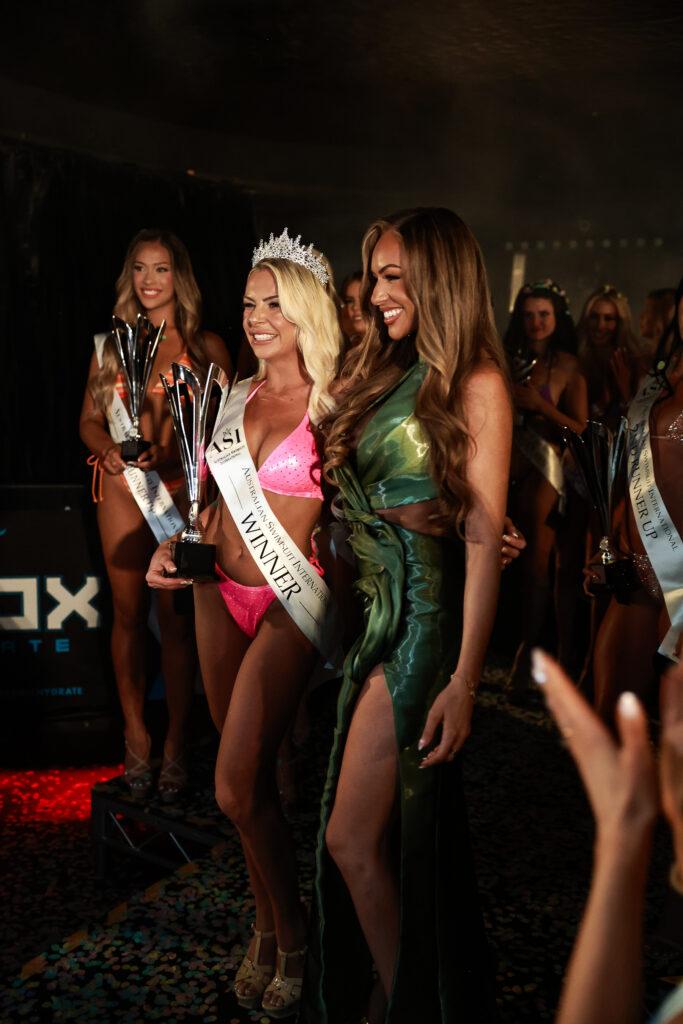
Everyone wants the crown.
ALL PHOTOS BY: @michaelbryceshoots
TEAH VAN DE WAKKER Competing for the first time.
By the end of the night, Ella Havebond had taken out the Melbourne title, earning the crown and securing her place at the World Finals in Punta Cana, Dominican Republic, later this year. Kodi Buckley was named 1st Runner- Up, capping off a strong showing in a competitive field.
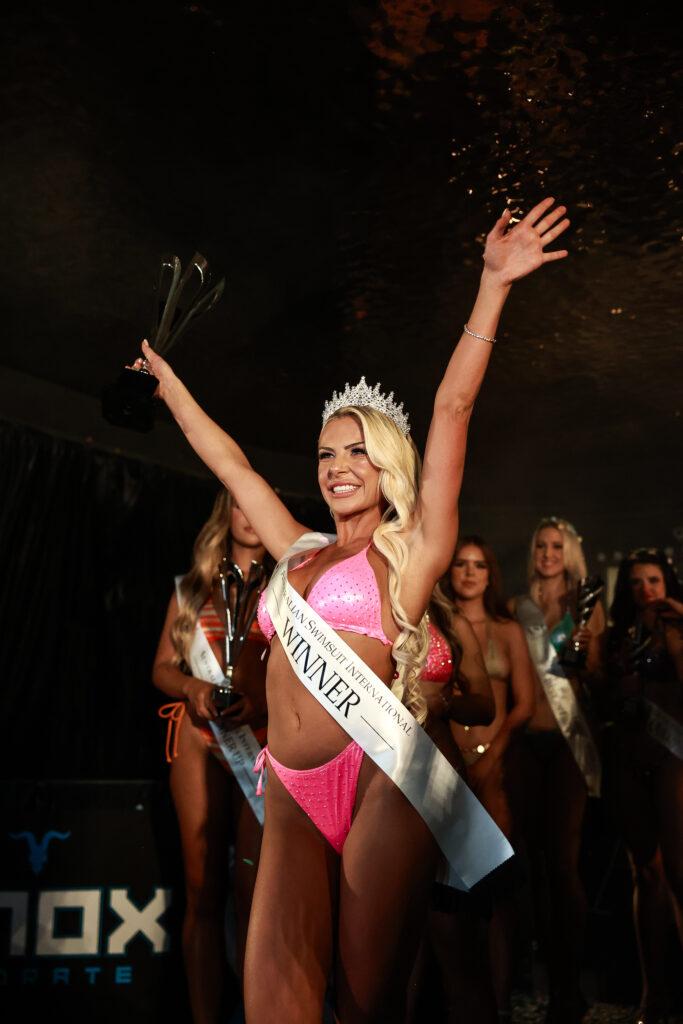
Ella Havebond Taking The 2026 Crown!
Also featured on the night were Breanna Jade Long, Kiarne, Paris Gordon, Tash Candyce, Scarlett Delrose and Alex Kmon, each bringing their own personality, presence and energy to the stage. That is the part that often gets missed in conversations about swimsuit competitions. The audience may witness a lineup of contestants, but each woman carries a different story, a different reason for entering, and a different kind of courage.
The Melbourne event was hosted at The Emerson Rooftop, one of South Yarra’ s most recognisable nightlife venues, giving the finals a polished city backdrop. The atmosphere was elevated, social and distinctly Melbourne— part fashion event, part nightlife experience, part model search. Andrew Bristow served as MC, helping guide the night with energy and professionalism, while Liz Kirkness and Australian Swimsuit International delivered an event that felt both glamorous and purposeful.

Melbourne Socialite Bianca Kowalczyk & Friend On The Red Carpet
The judging panel also included Michael Downs from FHM Australia, adding another layer of media credibility to the evening. With FHM Australia involved as a sponsor, the event connected the modern ASI platform to a long tradition of men’ s lifestyle media, swimwear modelling, glamour photography and model discovery. Other sponsors and supporters included Laser Clinics Australia Watergardens, Nauty Yachty, Knox Hydrate, Naked Tan, Morabita Swimwear and Joe Halabi Couture, with StudioPH capturing the event and Hey Beach Swim adding to the swimwear culture surrounding the night.
But to understand why ASI Melbourne matters in 2026, you have to understand the history behind this kind of competition.


























Long before social media, influencer marketing and online model searches, bikini competitions were a major part of international glamour culture. One of the most iconic names in that history was Miss Hawaiian Tropic.
For decades, Miss Hawaiian Tropic was more than a beauty contest. It was a global model search, a brand- building machine and a cultural symbol of the swimwear era. The competition became synonymous with sun, beach culture, tanning, travel, nightlife and international glamour. It created opportunities for women to be seen by photographers, media outlets, sponsors and entertainment industry figures at a time when those doors were much harder to access independently.
Miss Hawaiian Tropic represented a very particular era. It belonged to a world of glossy magazines, resort promotions, televised specials, nightclub events and international pageantry. Contestants were often selected through regional heats and national finals before advancing to larger international stages. It was aspirational, commercial and highly visible. For many aspiring models, it offered a rare bridge between local competition and global exposure.
In that period, swimwear competitions were everywhere. They appeared in beach towns, resort destinations, nightclubs, casinos, hotels and entertainment venues. They were tied to tourism, fashion, publishing, alcohol brands, tanning products and lifestyle media. They were part of the mainstream glamour economy.
Trevor Lowe & Darryl Perera from @ercarpetevents interviews ASI Organizer Liz Kirkness, contestants Ella(winner), Isy, Tiana, Monika, Kayla, Paris, Beth, Lottie & Alex
That world has changed dramatically.
In 2026, bikini and swimsuit competitions are far rarer than they once were. Cultural expectations have shifted. Audiences are more critical. The old format of simply placing women on stage to be judged on appearance no longer carries the same social permission it once did. Major pageants have moved away from swimsuit rounds. Media brands have had to rethink how they represent beauty, confidence and femininity. The conversation around women’ s bodies, empowerment and public judgement has develop more complex.
And rightly so.
A modern swimsuit competition cannot survive on nostalgia alone. It cannot simply recreate the old formula and expect to be taken seriously. To matter in 2026, it has to offer something more. It has to be about confidence, opportunity, self- presentation, professionalism, personal branding and agency. It has to be a platform, not just a parade.
That is where Australian Swimsuit International fits into the modern landscape.
ASI is not just staging a runway show. It is part of a broader international model search connected to Swimsuit USA International, with winners and qualified representatives progressing toward the World Finals. For the 2026 season, the Swimsuit USA International World Finals are scheduled to take place at a five- star resort in Punta Cana, Dominican Republic. That global final serves as the culminating competition for the year, bringing together winners and representatives from preliminary searches and local model castings across the world.
That changes the stakes.


































































For Ella Havebond, winning in Melbourne was not merely about receiving a title on the night. It was about earning a place on an international stage. From The Emerson Rooftop in South Yarra to Punta Cana in the Dominican Republic, the pathway is real. It gives the competition structure, ambition and consequence.
That international connection also places ASI within a much longer lineage of swimsuit model discovery. The names and formats may have changed, but the underlying idea remains: find women with confidence, presence and marketability, then allocate them a platform to be seen.
The difference is that today’ s contestants are not entering the same world that existed during the peak of Miss Hawaiian Tropic. They are entering a more self- aware, media- literate and digitally connected environment. A contestant today is not just competing for applause in the room. She is building content, expanding her network, strengthening her personal brand and learning how to transfer herself in public.
The runway is only one part of it.
In 2026, a model’ s presence extends across Instagram, TikTok, reels, photography, interviews, collaborations and brand partnerships. The modern swimsuit competitor is expected to understand the camera, the audience, the caption, the collaboration and the business opportunity. Confidence now has to translate across live events and digital platforms.
That is why competitions like ASI still have relevance. At their best, they deliver contestants a live environment that social media cannot replicate. Online, you can choose your angle, edit your clip and control the final image. On the runway, there is no filter. You either step forward or you do not. You hold yourself under pressure. You respond to the energy of the room. You let yourself be seen in real time.
That is not easy.
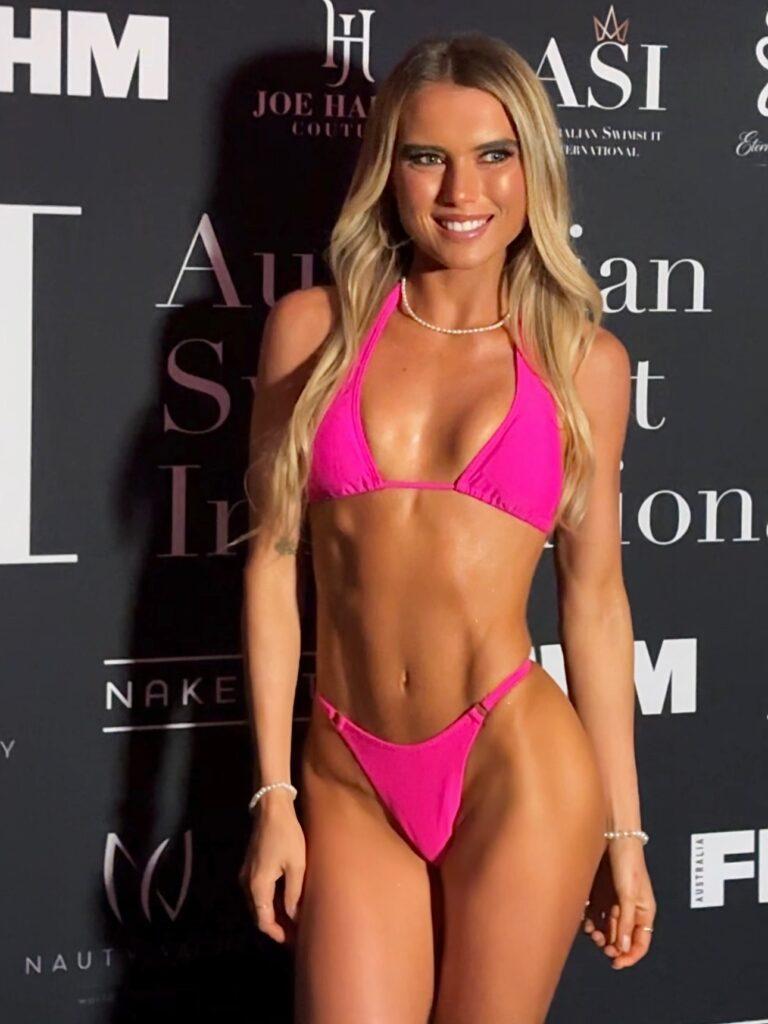
Teah Van De Wakker
Watching Teah Van De Wakker compete for the first time made that especially transparent. First- time competitors do not just proceed onto a runway; they proceed through doubt. They have to overcome the internal questions that stop most people before they begin. Am I ready? Do I belong here? What will people analyze? What if I am not good enough?
The achievement is not only in winning. It is in entering. It is in showing up. It is in backing yourself before anyone else has validated you.
That same spirit could be seen across the Melbourne lineup. Ella Havebond, Kodi Buckley, Breanna Jade Long, Kiarne, Paris Gordon, Tash Candyce, Scarlett Delrose, Alex Kmon and Teah Van De Wakker all stepped into a space that demands confidence. Each competitor brought something different. Some brought polish. Some brought energy. Some brought softness, strength, elegance or attitude. Together, they showed that modern swimwear competitions are not simply about a single standard of beauty. They are about presence.
Presence is difficult to define, but you know it when you witness it.
It is the ability to hold attention without forcing it. It is confidence without arrogance. It is personality translated through posture, movement and expression. It is the difference between wearing a bikini and owning the stage.
That is what the best swimsuit competitions have always been about, even when the culture around them was less sophisticated in how it described it.
Sports Illustrated Swimsuit is another important part of this history. Since the launch of its famous Swimsuit Issue in the 1960s, Sports Illustrated helped shape the global image of swimwear modelling. For decades, the issue was one of the most recognisable annual media events in publishing. It turned models into household names, blended sport and glamour, and placed swimwear photography firmly into popular culture.
But Sports Illustrated Swimsuit has also had to evolve. The brand today is very different from the one that dominated newsstands decades ago. It has expanded its definition of beauty, featuring athletes, entrepreneurs, mothers, curve models, older women, women from different cultural backgrounds and public figures with stories beyond modelling. It has moved from being simply a magazine issue to becoming a broader platform around confidence, inclusion and self- expression.
That evolution mirrors the wider change in swimwear culture.
The bikini itself is no longer enough to transfer the story. The woman wearing it matters more than ever. Her identity, her ambition, her voice, her business, her resilience and her reason for being there are now part of the narrative.
That is why the ASI Melbourne Finals felt less like a relic of an older pageant world and more like a modern interpretation of it. Yes, there was glamour. Yes, there was swimwear. Yes, there were judges, photographers, sponsors and a winner. But the stronger story was about women choosing to be visible.
And visibility still takes courage.
Darryl Perera from Exlusive Red Carpet Events Interviews Tiana.
In a culture where everyone has an opinion, stepping into a judged environment is a bold act. It is accessible to criticise from the sidelines. It is much harder to stand on the stage. Every competitor at The Emerson Rooftop chose the harder option.
Ella Havebond’ s win was well deserved. She carried herself like someone ready for the next level, and her progression to the World Finals in Punta Cana gives Australia another representative on the international swimwear stage. Kodi Buckley’ s 1st Runner- Up result was also a major achievement, reflecting the strength of the Melbourne field and the level of competition on the night.
But beyond the placements, the event was a reminder that these competitions still have a place when they are run with purpose and professionalism. They create moments. They create opportunities. They provide emerging models a reason to prepare, perform and push themselves. They transport together photographers, sponsors, media figures, stylists, swimwear brands and audiences in one room.
For sponsors, the value is obvious. Swimwear competitions sit at the intersection of fashion, beauty, lifestyle, health, media and entertainment. A brand like FHM Australia brings media recognition. A brand like Naked Tan connects naturally with stage presentation and beauty preparation. Morabita Swimwear and Hey Beach Swim connect directly to the swimwear aesthetic. Joe Halabi Couture adds fashion credibility. Laser Clinics Australia Watergardens, Nauty Yachty and Knox Hydrate each align with different aspects of lifestyle, wellness and aspirational branding.
When done properly, this ecosystem benefits everyone involved. The competitors gain exposure. The sponsors gain cultural relevance. The audience gets an event with energy and aspiration. The organisers build a pathway. The winner advances to a world final.
That is the difference between a dated bikini contest and a modern swimsuit platform.
The old version was often built around spectacle. The new version has to be built around opportunity.
And that is why the ASI Melbourne Finals stood out.
It was not trying to be Miss Hawaiian Tropic reborn, but it did carry some of that original spirit: the search for confidence, glamour and international potential. It also reflected the reality of 2026, where swimwear competitions are less common, more scrutinised and more dependent on authenticity. The women who enter them now are not simply participating in a pageant tradition. They are choosing to be part of a smaller, more selective and more visible world.
That takes self- belief.
Ella Havebond & Event Organizer Liz Kirkness.
For Teah Van De Wakker, the trip from the Gold Coast to Melbourne marked the beginning of that journey. As a first- time competitor, she stepped into a space that many people communicate about but few are willing to experience. That alone deserves respect. Whether someone wins a crown or not, the act of competing can evolve a turning aspect. It can shift the way a person sees herself. It can build confidence that carries far beyond the stage.
For Ella Havebond, the journey now continues internationally. Punta Cana awaits. The World Finals will transport together winners and representatives from across the globe, all competing in a five- star resort setting in the Dominican Republic. It is the kind of destination that suits the history of swimsuit competition: tropical, aspirational, glamorous and global.
But the real story is not only where the finalists are going.
It is what it took to get there.
The ASI Melbourne event reminded me that success in this space is not accidental. It requires preparation, discipline, presentation and nerve. It requires the willingness to be visible before the outcome is guaranteed. It requires backing yourself in public.
That is a rare thing.
In 2026, when bikini and swimsuit competitions have develop less common, the women who still choose to compete are doing something that deserves to be understood with more intelligence than the old stereotypes allow. They are not just walking a runway. They are participating in a tradition that has evolved from Hawaiian Tropic glamour, through the Sports Illustrated era, into a new world of personal branding, digital media and international opportunity.
The crown matters.
The sash matters.
The trip to Punta Cana matters.
But the deeper meaning sits underneath all of it.
Every woman on that stage made a decision to bet on herself.
And that is still one of the most powerful things a person can do.