
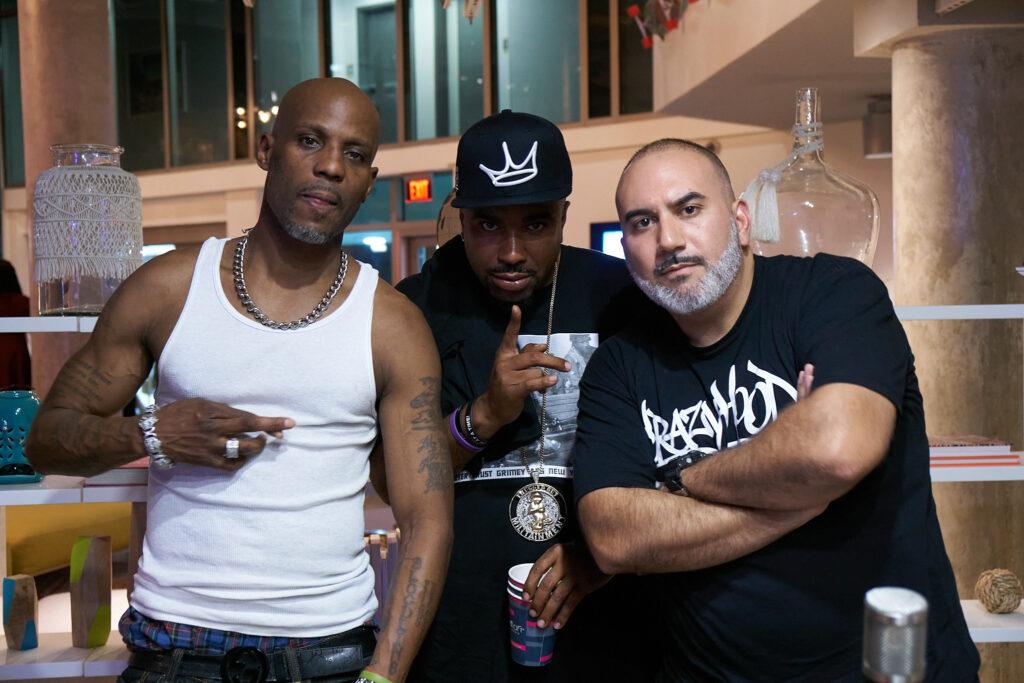
Before Drink Champs became one of hip-hop’s most important interview platforms, DJ EFN had already spent decades putting in work behind the scenes. Coming out of Miami and operating under the Crazy Hood Productions banner since the early 1990s, EFN built his name through mixtapes, radio, artist management, promotion, record-label operations and documentary filmmaking. His creative partnership with Queens rap veteran N.O.R.E. began years before podcasting became an industry, with the pair hosting a loose, alcohol-fueled satellite-radio show from EFN’s South Miami studio. In 2016, they transformed that chemistry into Drink Champs. More than 500 episodes later, the show has become a living archive of hip-hop history, giving pioneers, street legends and global superstars a place to tell the stories that might otherwise have disappeared.
Frank 151 caught up with DJ EFN to discuss the controlled chaos behind the show, building Miami’s underground scene, the unforgettable making of DMX’s first episode and how he wants Drink Champs to be remembered.
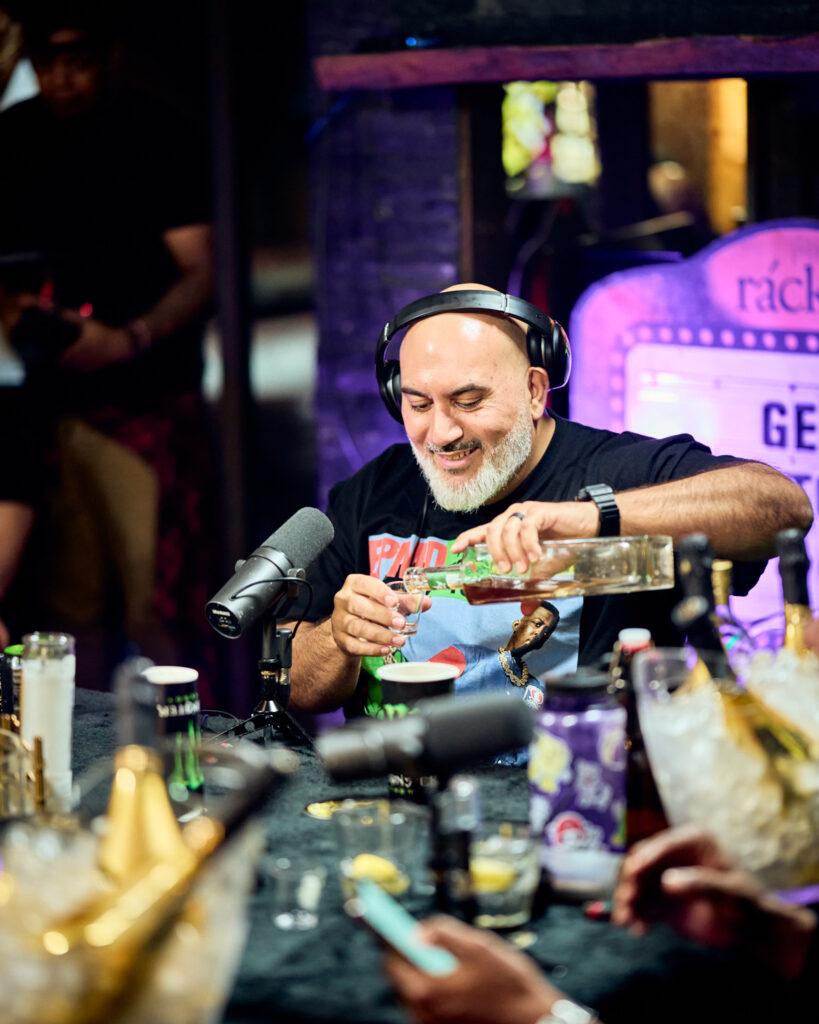
Frank 151: Drink Champs has become part of hip-hop history. When you and N.O.R.E. first sat down with a bottle and a couple of microphones, did you ever imagine it would become one of the biggest platforms in the culture?
DJ EFN: No, we definitely didn’t think it would become what it has. Years before Drink Champs, we hosted a weekly satellite-radio show. It started on XM Radio before the merger and continued on SiriusXM afterwards.
That show was basically Drink Champs before Drink Champs. It had all the same antics, drinking and stories, only with fewer guests and a DJ mix included in the show. We did it for years without much fanfare. It was something we did for fun out of my studio in South Miami, in Kendall.
We didn’t make a cent from that show, and we rarely received much feedback or understood how far it was reaching. I say all of that because, when we started Drink Champs, all we were trying to do was recreate that radio show in a podcast format and hopefully generate some supplemental income.
We never expected it to take off the way it did or completely take over our lives and careers. I believed in N.O.R.E. as a personality and knew he would shine in this kind of format. I also knew the direction I wanted to take the show. Once we realised it had a genuine chance of succeeding, we both poured all our experience, time, effort and relationships into making sure it worked.
Frank 151: You’ve been documenting hip-hop since the mixtape era. How has the relationship between artists and the media changed from the 1990s to today?
DJ EFN: I think it depends on which media we’re talking about. When it came to hip-hop media—The Source, XXL, Stress, Mass Appeal, local magazines, dedicated hip-hop stations and, later, the blog era—the relationship was generally symbiotic. Those outlets were at least trying to filter and present the best of the culture.
At the same time, we had media outside the culture that wasn’t as connected to it or as responsible with it. Truthfully, there’s a lot to unpack, and we could probably write an entire book on the subject.
To get back to your specific question, I think the biggest change is that artists have now become the media. They can use their own social platforms or create their own podcasts and shows.
In the past, there was sometimes an adversarial relationship between artists and the media, but there were only a handful of outlets capable of getting the word out. Now, artists can communicate directly with their audience. The trade-off is that we’ve lost some responsible journalism, curation and filtering. Again, there’s a much larger conversation to be had around that.
Frank 151: What’s the biggest misconception people have about making Drink Champs? Is it controlled chaos, or is there more preparation behind the scenes than fans realise?
DJ EFN: It’s definitely controlled chaos. Our slogan used to be, “The most professional, unprofessional podcast.”
Our scheduling and booking process has always been all over the place. We handle everything internally and work very independently, regardless of who our distribution partners are.
N.O.R.E. and I are yin and yang in terms of how we approach things. On one hand, that helps balance us out. At other times—especially in the past—it could create chaos. But we’ve worked together for so long, going back to the mid-1990s, that we’ve learned to deal with each other’s individual quirks and keep things moving.
On the production side, we’re a pretty well-oiled machine. Once the cameras turn on, however, we want to capture the most organic conversation possible. That’s when the yin-and-yang dynamic comes into play again, and the episode can go in any direction.
“We never expected Drink Champs to take off the way it did or completely take over our lives and careers.
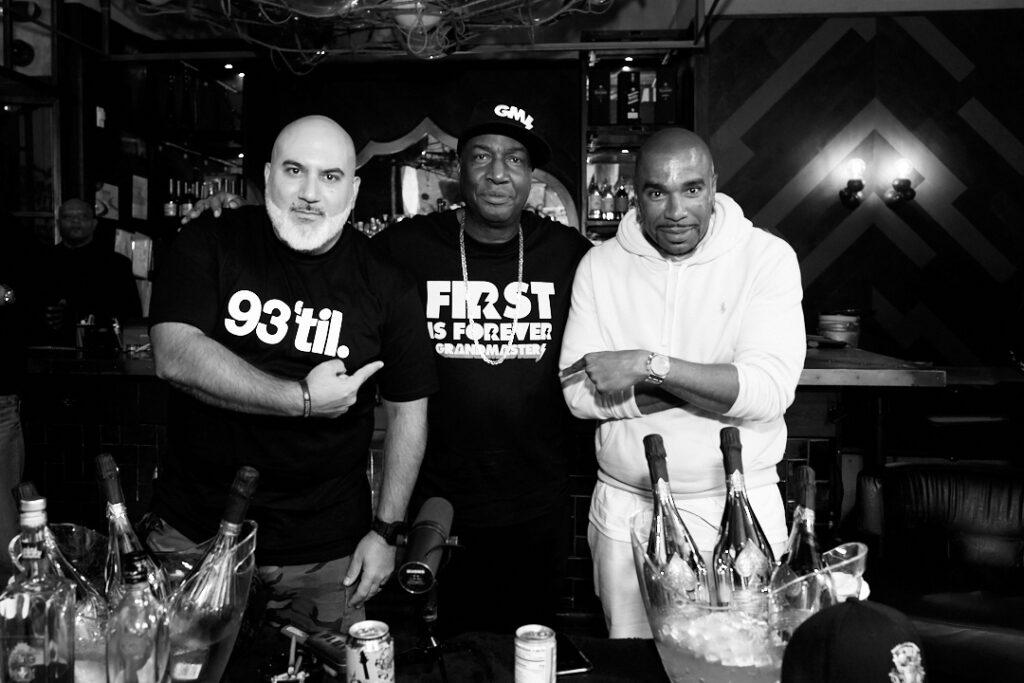
The Drink Champs crew link up with hip-hop pioneer Grandmaster Flash.
Frank 151: You’ve shared drinks with legends from every era of hip-hop. Who surprised you the most after a few drinks—whether they became incredibly funny, emotional or started telling stories nobody expected?
DJ EFN: There’s something I like about almost every episode, but a few guests who stand out are 50 Cent, Shaq, Grandmaster Caz, Trick Daddy and Alicia Keys.
50 came onto the show during our first year, when artists were still unsure about the format. It felt like he immediately understood what we were doing and had fun with us.
Shaq didn’t even drink, but he was hilarious and completely understood the show. Being from Miami and having watched Trick Daddy since his early days, I didn’t expect him to be as funny as he was—and still is.
Alicia Keys demonstrated that women could have just as much fun with us, and she was an incredible guest.
What I loved about having Grandmaster Caz on the show was that he brought so much hip-hop history and seniority, while also showing that he’s still tapped in and has plenty left to offer the culture.
Frank 151: Some of the greatest moments on Drink Champs come from artists opening up about their lives, regrets and friendships. How do you create an environment where people feel comfortable enough to be that honest?
DJ EFN: I’d be lying if I said alcohol or smoking didn’t sometimes help with that. But, as I mentioned with Shaq, we’ve had plenty of guests who didn’t drink or smoke, and the audience was none the wiser.
Honestly, once people sit down with us and we move beyond the introductory questions and standard talking points, they begin to understand that we’re all there because we love the culture.
Our show exists to celebrate the guests and the culture, and part of that celebration is making sure the guests have fun. I think most people begin to sense that energy after sitting with us for a while, and whatever walls they had up start coming down.
I also don’t really consider us an interview show. At first, some guests might feel slightly thrown off by our irregular banter. But once they realise they’re simply sitting with some homies, chopping it up, that’s when the magic happens.
“Once guests realise they’re simply sitting with some homies, chopping it up, that’s when the magic happens.”
Frank 151: You’ve witnessed decades of hip-hop firsthand. If you had to identify one moment that changed the culture forever, what would it be, and why?
DJ EFN: That’s a tough question to answer because there are so many moments that have changed the culture.
Some moments changed the industry, while others shaped hip-hop purely from a cultural perspective. There have been positive changes and negative changes resulting from those moments and shifts, so it’s difficult to narrow everything down to one event.
Frank 151: Miami has always had its own identity in hip-hop. How important was Crazy Hood Productions in helping put the city’s underground scene on the map before the rest of the industry caught up?
DJ EFN: My crew and I came out of an era in Miami when hip-hop was considered synonymous with New York. The rap and Miami Bass scenes operated almost parallel to what people considered the traditional hip-hop scene.
We felt that it all came from the same source and shouldn’t be divided. A lot of our hip-hop peers in Miami wouldn’t represent the city, so we made it our mission statement.
We wanted to contribute to and support Miami and South Florida hip-hop while proudly representing it as such. With very limited resources, we mobilised our manpower and gradually built a name for ourselves.
We threw parties and events, launched my mixtape series, opened a hip-hop clothing store, started a record pool, created a marketing and promotions company and launched our own independent record label, through which we managed and released local artists.
Everywhere we went, we represented our neighbourhood, city and state—even when doing so wasn’t necessarily helping us, either outside Miami or within the city itself. Eventually, our persistence paid off and allowed us to break through those barriers.
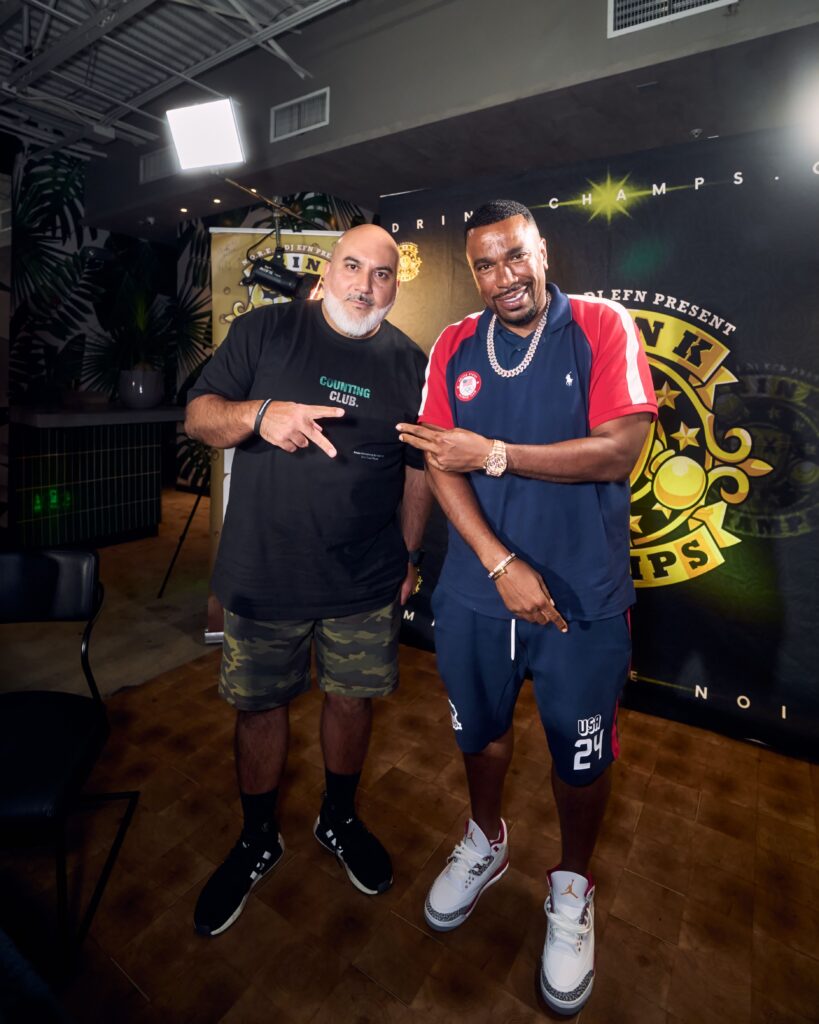
DJ EFN & N.O.R.E—the duo behind Drink Champs, turning drinks, stories and real conversations into hip-hop history.
Frank 151: Every hip-hop fan wants to know: what’s one unbelievable behind-the-scenes story from Drink Champs that never made it onto the internet?
DJ EFN: There are a few, but they haven’t made it online for good reason. There are also a handful of episodes that have never seen the light of day.
Outside of those, the ultimate behind-the-scenes story is the making of our first DMX episode. We’ve spoken about it on our show and other platforms, and I’ve always said we could make an entire documentary about that day—from everything leading up to filming the episode to what happened after we wrapped.
In a nutshell, our manager at the time, Ali, was also part of DMX’s team. Between him and N.O.R.E., they convinced X to connect with us while he was passing through Miami. It was only our third or fourth recorded episode, and DMX had no idea what a podcast was. To be fair, a lot of people in hip-hop were only beginning to understand podcasts at that time.
We went to his hotel room believing we were ready to record. But when we explained what we were doing, he wasn’t sure he wanted to participate because he generally didn’t like interviews or dealing with the media.
We went downstairs and began setting up in the hotel lobby while N.O.R.E. sat by the pool, trying to convince X to stay while drinking a bottle of Hennessy.
At the same time, we were using Pro Tools to record the show, and our engineer’s laptop crashed. We had to reinstall Pro Tools using the hotel Wi-Fi. It took a couple of hours to download and reinstall, and that entire time N.O.R.E. was trying to keep X there long enough for us to record something.
Eventually, we got everything running and started filming the episode in the middle of this South Beach hotel lobby. People were walking past with no idea what was happening, hotel employees were trying to shut us down, and X still didn’t fully understand what we were recording or where it would appear. He was just reluctantly going along with it.
More happened after filming that almost prevented the episode from ever being released, but it eventually came out.
One of the moments that went viral was X’s prayer. When we later filmed a Zoom episode with him during COVID, he explained that the reaction to that clip helped him understand the power of the platform.
He was a deeply religious person, and he appreciated that the prayer had gone viral because it represented his truth and what he genuinely felt in that moment.
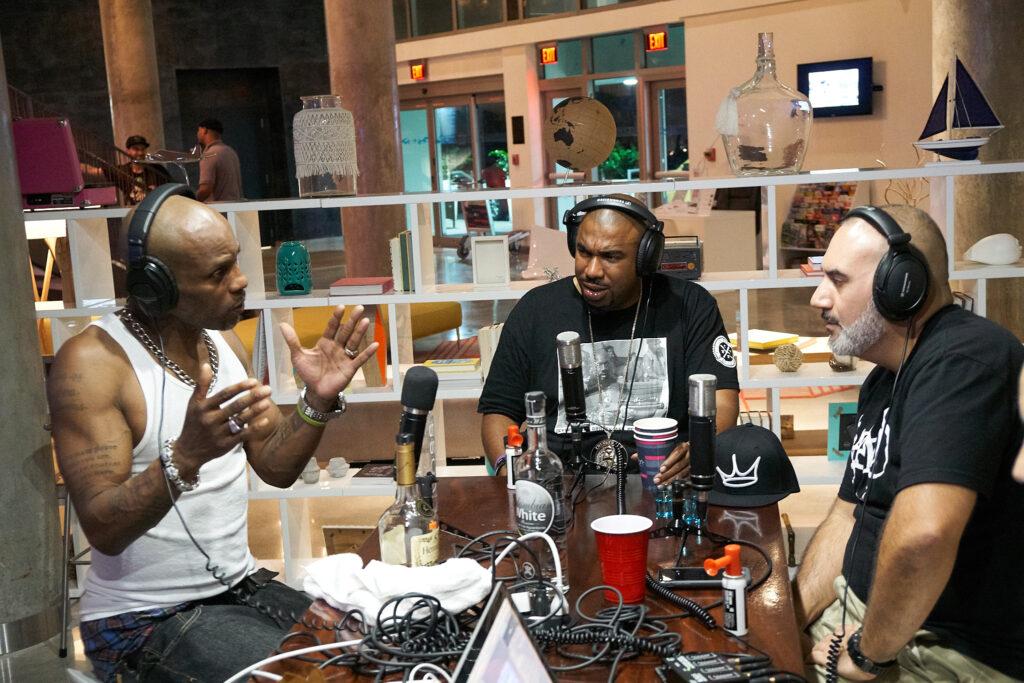
DMX sits down with N.O.R.E. and DJ EFN for an unforgettable Drink Champs moment that became part of hip-hop history.
Frank 151: You’ve interviewed everyone from street legends to global superstars. Is there one guest who completely exceeded your expectations once the cameras started rolling?
DJ EFN: As I mentioned earlier, there are a few guests who stand out, but my fallback answer is always 50 Cent.
I didn’t know what to expect from 50. At that time, we filmed in Miami’s Little Haiti neighbourhood, and some guests would arrive with security looking like they thought we were trying to set them up.
50 showed up by himself, greeted our entire team and immediately had fun with the episode. From what we understand, he doesn’t really drink, but he still took shots with us.
He acknowledged everyone in the room while speaking with us and made the whole team feel involved. It was a surprisingly fun episode, with plenty of backstory between him and N.O.R.E. and the different ways their careers had crossed over the years.
Frank 151: Hip-hop has always been built on storytelling. Do you think today’s artists are still preserving the culture, or are we losing some of that history as everything becomes faster and more disposable?
DJ EFN: I think there’s a lot of young talent, along with plenty of OGs who are still producing music at an incredibly high level.
We still have great storytellers and artists creating everything else that we would have considered top-tier in the past.
In my opinion, the issue is exactly what you mentioned: everything has become faster and more disposable. There’s also so much oversaturation that it can be difficult to clearly identify and fully appreciate the talent.
Now that I’m older, I understand why previous generations were always so nostalgic. Simpler times allowed people to appreciate and genuinely digest art.
Frank 151: Looking back over hundreds of episodes, is there one conversation you believe every hip-hop fan should watch because it captures the true spirit of the culture?
DJ EFN: Sorry, but I can’t choose only one.
The first episodes that come to mind are Grandmaster Caz, Grandmaster Flash and Fab 5 Freddy.
If you consider yourself a true hip-hop head, regardless of your age or generation, those three episodes will give you a tremendous amount of history directly from pioneers who helped build the culture.
If you’re simply a fan of rap music and pop culture, those episodes probably won’t do much for you. But anyone who genuinely wants to understand hip-hop should watch them.
Frank 151: Frank 151 has always celebrated authentic voices and underground culture. What’s next for DJ EFN, Drink Champs and Crazy Hood—and how do you want your legacy to be remembered when people discuss hip-hop media 25 years from now?
DJ EFN: I plan on producing another Coming Home documentary, which will become the seventh film in the series.
I also plan to release more original music through Crazy Hood artists, along with a follow-up to my studio album, Another Time.
Crazy Hood hosts an annual event in Miami called Crazy Hood Day. It started a few years ago after the city gave us a proclamation and the keys to the city. If you’re in Miami around November, make sure you come out and vibe with us.
Drink Champs is also expanding through the Drink Champs Network, where we’re producing and distributing other shows. Keep an eye out for the next evolution of Drink Champs, which we’re currently working on.
As far as our legacy is concerned, I hope my crew and I are remembered for doing exactly what we originally set out to do: represent Miami hip-hop.
We wanted to do our part to nurture a sense of pride in our scene, and we wanted to do it our way. Drink Champs has helped us exceed anything we ever imagined our imprint on the culture could be.
As for Drink Champs, I hope we’re remembered as a platform that helped create a new lane for hip-hop media. I hope people remember that we gave a voice to artists who might have felt forgotten, while reminding them of how important they are to the culture.
Most importantly, I hope we’re remembered as a platform that entertained people while documenting and archiving hip-hop history before those stories were lost.
“Our slogan used to be, ‘The most professional, unprofessional podcast.’” — DJ EFN