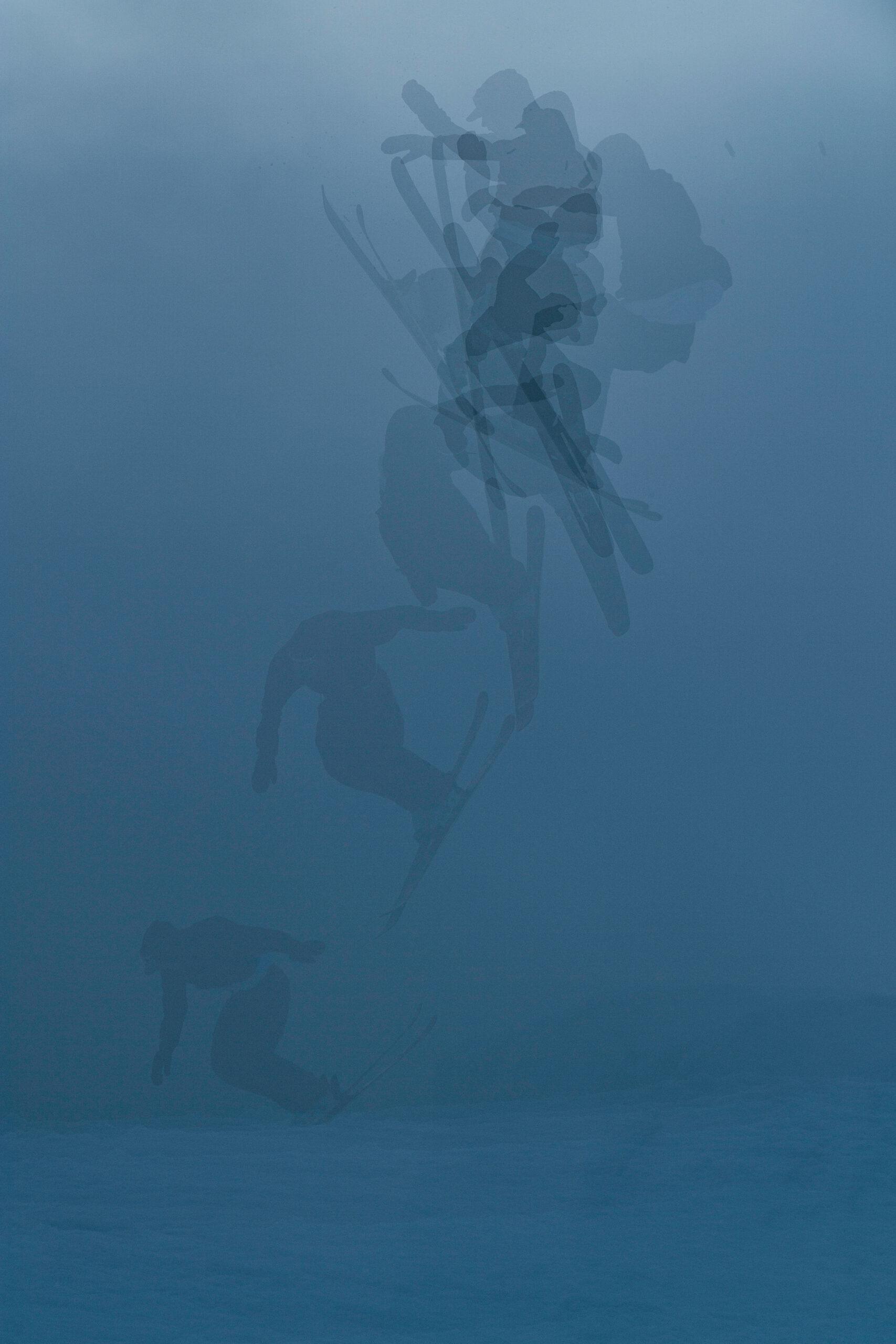
In this series, Frank 151 invites you on a captivating journey around the globe, providing a unique glimpse into the narratives and imaginative landscapes of individuals who are driving creativity to new heights worldwide.
Embark on a visual and intellectual adventure as we delve into the worlds of not only photographers and actors but also delve into the realms of rappers, musicians, graffiti artists, filmmakers, and the visionary minds behind emerging brands. Our creative chronicles are set to unfold, offering a rich tapestry of insights, anecdotes, and life wisdom that traverse the vibrant streets to the dynamic boardrooms, from the vast oceans to the majestic mountains.
Join us as we connect with the crème de la crème of the creative realm, bringing forth a diverse spectrum of perspectives that highlight the intersection of artistry, innovation, and entrepreneurship. From the pulse of urban streets to the serene landscapes, this series promises to capture the essence of the global creative scene, providing an immersive experience that transcends boundaries and celebrates the multifaceted expressions of human ingenuity.
Josh Bishop came of age in freeskiing when a few VHS tapes could rewire your imagination. He entered the sport as an athlete, embedding himself so fully in the culture that the line between participant and documentarian disappeared. An athlete-turned-operator-turned-photographer, he carried skiing through creative and brand roles—including formative years at Armada and later commercial production in Los Angeles—rather than leaving the culture behind.
Today, working in Global Sports Marketing at Monster Energy, he builds athlete programs and long-term strategy while photographing the emotional texture behind the sport. A voracious reader—often finishing around 50 books a year between flights—he moves fluidly between history, creativity, finance, technology, and venture thinking, drawing from founders, investors, scientists, and artists to sharpen judgment and taste.
He’s shot exclusively on Leica since 2016, drawn less to equipment as status and more to the discipline and intention the cameras demand. With a long-term ambition to blend sports, athletes, and relationship-driven insight into venture investing, he hopes to apply the same patience, trust, and decades-long view that have shaped his work in sport.
His goal isn’t to make art.
It’s to stay in the state where meaningful work becomes inevitable.

Tom Wallisch around the world Duluth, MN. Photo: Josh Bishop
FRANK 151: You’ve been part of freeskiing since its wild early days — how did you first fall into the scene, and what hooked you about it?
JOSH BISHOP: My brother bought me PBP’s The Game for Christmas and I bought him MSP’s Ski Movie 1. Those tapes were mesmerizing—a window into a world we didn’t know existed. We wore them out, watched segments before school, and eventually found our way into contests, summer camps, sponsorships, and a community that grew directly out of those VHS films.
Skiing felt like complete freedom. My friend Andrew Hathaway once described it as our one chance to be superhuman—you could fly, ski 80 miles an hour backwards, and use your eyes to dictate how your body moved through space. That idea stuck with me, and I still feel it today, regardless of conditions, weather, or where I’m skiing.
FRANK 151: From your perspective, how has freeskiing evolved over the last two decades — both culturally and visually?
JOSH BISHOP: Nearly everything has evolved: equipment quality, the economics of skiing, how quickly tricks are created and distributed, safety, travel, and the depth of talent among unsponsored athletes. Like any subculture, those changes move in lockstep with technology and society at large.
The most disappointing shift has been access. Skiing in the U.S. has moved from a middle-class sport to a luxury pastime. My first experience on snow came through an elementary school “Winter Program”—free lift tickets and rentals every Tuesday all winter. That pipeline still exists, but day passes in places like Park City are over $300, often with overcrowding and poor grooming. It can be more affordable to fly to Switzerland than to ski a few days in Utah.
In the U.S., skiing is treated like luxury entertainment; in much of Europe, it’s treated as regional infrastructure and a public good.
What hasn’t changed is the feeling. Pressing an edge into snow is a perpetual source of joy. I once heard Rodney Mullen describe skating as a form of meditation as he got older. That’s probably what skiing has become for me.

Photo: Josh Bishop
FRANK 151: Working for Monster Energy, what does a day in your world actually look like? How do you juggle being both a manager and a photographer?
JOSH BISHOP: No two days look the same. It can be contract negotiations, travel, time with athletes, producing commercial projects, photographing, managing budgets, shaping strategy, or scripting what comes next. But the constant is the goal: helping athletes fulfill their potential. Without them, we’re just another consumer packaged goods company.
I’m deeply grateful for the amount of capital Monster invests in sports.
There’s a clarity in sports that’s hard to find elsewhere. As the world accelerates into a more digital, synthetic future, live sports feel like one of the last places where authenticity still exists—where it’s harder to hide behind narratives and easier to see what’s real.
I need the balance between the analytical and the creative. Managing athletes and building programs satisfies the same part of my brain as photography in a different way. If I did only one, I’d feel stagnant.
 Mount Yōtei, Hokkaido Japan. Photo: Josh Bishop
Shooting on Leica reinforces that mindset. The simplicity and restraint keep me present and intentional. Regardless of what happens with AI or technology, nothing replaces the joy of using a camera to document something you love, something that genuinely fascinates you, or a moment you’re emotionally connected to.
FRANK 151: Who’s your favorite skier to photograph — someone who brings that extra energy or unpredictability?
JOSH BISHOP: I have about 50 names I could write here. I love them all and find everyone unique to collaborate with.
Working with Phil Casabon and Henrik Harlaut always produces brilliant results and lasting memories. Jossi Wells is unreal to shoot with. Alex Hall, Keegan Kilbride, Sammy Carlson, Tom Wallisch, Quinn Wolferman, Torin Yater-Wallace, Tanner Hall, JP Auclair, Clayton Vila—their ski talent far exceeds my expectation of what I ever thought possible.

Photo: Josh Bishop
FRANK 151: Every creative field has its challenges — who’s been the hardest or most “prima donna” skier you’ve worked with?
JOSH BISHOP: I’ve been fortunate. Building the program at Monster allows me to choose who I work with, which means I’m not forced to stay in misaligned or unhealthy dynamics.
I have a specific temperament and tend to connect with a wide range of personalities through curiosity, respect, and clear expectations. The athletes drawn to the program are largely self-selecting.
Alignment matters more than managing conflict. Designing for trust and shared values reduces friction before it ever appears.
FRANK 151: How much have skateboarding and snowboarding influenced your photography?
JOSH BISHOP: Both sports helped create the foundation of contemporary skiing. Photographing the snowboard team at Monster has been a joy I didn’t know I needed.
More than sports, I look to fine art. On layovers and late flights, I deliberately block time to wander museums—from Abu Dhabi to Tokyo—absorbing color, composition, negative space, and how emotion is staged. That influence shows up in how I frame athletes and what I choose not to show.
 Noah Albaladejo Blunt Slide At Klappen Sweden, Photo: Josh Bishop
FRANK 151: Are there photographers or filmmakers who’ve shaped how you see freeskiing?
JOSH BISHOP: Chris O’Connell bought me my first DSLR as a signing bonus when I joined Armada. His action work is unmatched. Working with him early taught me how to shoot action, and pushed me to document culture more deeply.
Some of my favorite photographers outside the sport are Brian Bowen Smith, Richard Avedon, Herb Ritts, Erwin Blumenfeld, Elliott Erwitt, Irving Penn, Rodney Smith, Sally Mann, René Burri, Henri Cartier-Bresson, Saul Leiter, Julius Shulman, Mike Kelley, and Fan Ho.
For contemporary photographers in skiing, I deeply admire Daniel Bernstal, Michael Woolery, Isami Kiyooka, Dasha Nosova, Olav Stubberud, Christian Pondella, Erik Seo, Nate Abbott, Gabe Loureaux, Daniel Rönnbäck, Alric Lungganger, Sofia Sjöberg Wester, Arttu Heikkinen, and Paul Ripke.
I’m drawn to filmmakers who treat atmosphere, time, and point of view as essential—David Lynch, Spike Lee, Werner Herzog, Errol Morris—alongside Stanley Kubrick, Paul Thomas Anderson, Wes Anderson, Martin Scorsese, Steven Spielberg, and action cinema that understands rhythm and consequence.
FRANK 151: Looking back, what era of freeskiing doesn’t get enough respect?
JOSH BISHOP: I don’t think skiing breaks neatly into eras. Everything today is an extension of what came before—ideas, style, risk, and culture compounding over time. Every phase carries its own gravity.
 Photo: Josh Bishop
FRANK 151: How do you adapt your style between brand work and backcountry days?
JOSH BISHOP: My goal is always to convey what it feels like to inhabit a space. Brands often say they want “lifestyle,” but end up producing posed, sterile images.
The joy comes from letting moments unfold—real motion, real emotion. The difference is trust. Giving people space to be themselves and allowing reality to do the heavy lifting.
FRANK 151: What project best represents your vision?
JOSH BISHOP: The South Africa shark-diving expedition with Mike Horn still gives me chills. Ten days moving along the coast—tagging sharks, diving, trail running—while Mercedes-Benz AMG sent two custom G-Wagons deep into the wilderness.
There are moments where you disappear into the experience. The camera stops feeling like a tool and becomes a way of communicating what words can’t. Those are the moments I chase.
 Jackson Wells at Sugar Bowl California, Photo: Josh Bishop
FRANK 151: What’s next?
JOSH BISHOP: I don’t try to over-script what comes next. Some of the most valuable things in my life came from following curiosity long before they made sense on paper.
I’m focused on staying curious, staying in motion, and trusting that the work will keep revealing itself.