
For more than 30 years, X Games has been one of the biggest stages in action sports. But 2026 saw the brand make one of its biggest moves yet.
Enter the MoonPay X Games League.
Launched in 2026, XGL takes skateboarding and BMX and puts them into a completely different format: structured seasons, city-based teams, drafts, contracts, points, salaries and year-long storylines. Instead of athletes simply showing up for a contest, they’re now part of a team representing a city and competing across an entire season.
And people are paying attention.
More than 100,000 fans turned up across the first XGL summer season’s three stops in Sacramento, Chiba and New Orleans, while the league reached 18.3 million U.S. television viewers and generated more than 200 million social video views. Across winter and summer X Games events, more than 150,000 fans attended in 2026.
The numbers show there’s an audience. The bigger question is whether action sports can build a professional league without losing the culture that made people fall in love with it in the first place.
That’s where Steve Rodriguez comes in.
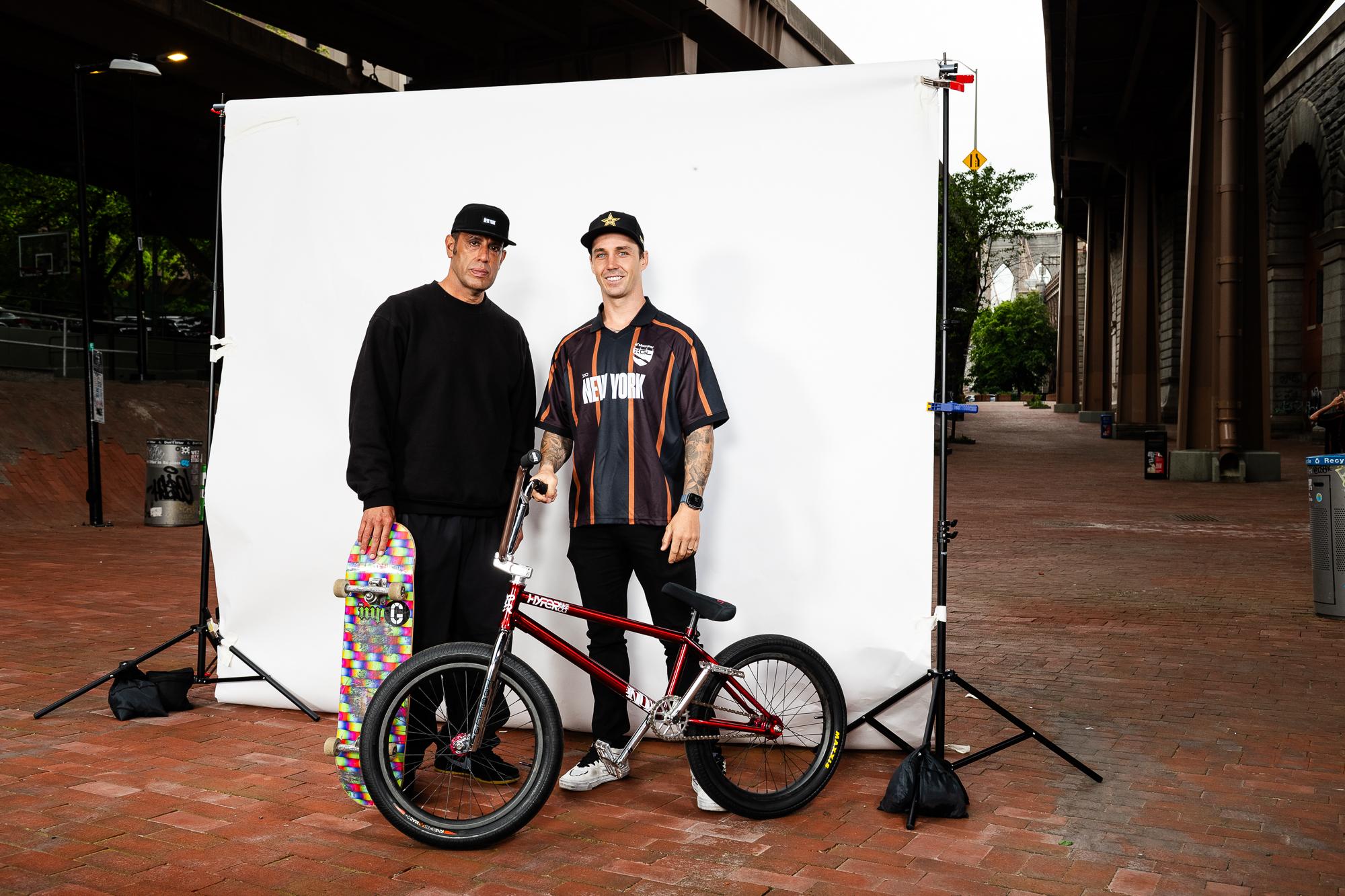
X Games New York General Manager Steve Rodriguez with X Games Gold Medalist Logan Martin
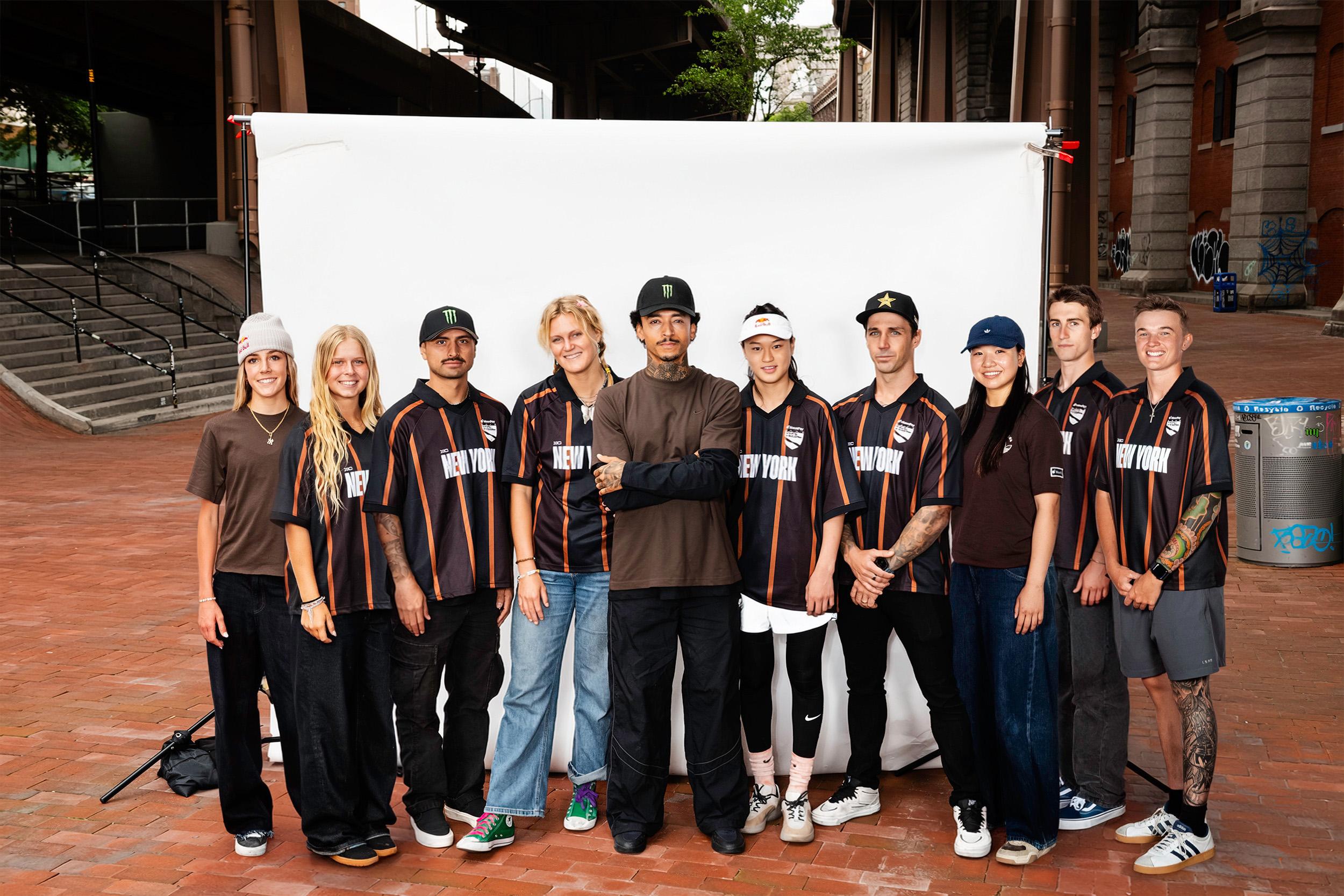
A lifelong New York skateboarder and founder of 5Boro Skateboards, Rodriguez was brought in as General Manager of XC New York and given the job of building a team from scratch. His first move was landing the number-one pick and selecting Australian skateboarding phenomenon Chloe Covell. From there, he assembled a roster of ten athletes across skateboarding and BMX with one goal: build a team that could actually function as a team.
It worked.
XC New York became the inaugural X Games League champion, proving that the new team format wasn’t just an experiment. It could produce competition, personalities, rivalries and, most importantly, a reason for fans to get behind something bigger than an individual athlete.
The bigger picture is even more interesting. XGL is designed as a year-round, co-ed action sports league, with eight Clubs spanning summer and winter competition and geographic identities connecting athletes to cities around the world. The new model also creates expanded compensation opportunities for athletes beyond traditional contest prize money, including salaries, travel support and other benefits.
For an industry that has spent decades trying to figure out how to make professional action sports more sustainable, that’s a pretty serious shift.
Frank 151 caught up with Steve Rodriguez to talk about building XC New York, the thinking behind X Games League, drafting athletes, creating a real team culture, the money and support going back to riders, sponsorship, keeping action sports authentic and where he thinks this whole thing could go next.
FRANK 151: Can you give us a breakdown of how X Games League and XC New York came together?
STEVE RODRIGUEZ: When X Games started the league, they picked four cities where there was already interest. They reached out to me and asked if I knew anybody who would be interested in being a GM. I gave them a list of people, including Greg, and eventually everybody kept telling the league, “Why don’t you get Steve to do it?”
At first I wasn’t sure I wanted to do it. But once I really looked into it, I realized this could be a good opportunity. They hired me as the GM and then we had the draft.
Luckily, I won the draft, so I got the first pick. We picked Chloe Covell from Australia as our number one.
I think she’s the future of skateboarding, regardless of whether you’re talking about women’s or men’s skateboarding.
From there, we had to build a team. We wanted people who were going to perform, but we also wanted people who were going to show up and actually be part of the team.
FRANK 151: What were you looking for when you were putting the roster together?
STEVE RODRIGUEZ: You have five women and five men, and you need at least three BMX riders, so there are certain things you have to think about strategically.
But I was also asking agents and people I knew, “Who’s actually cool?”
You could have the best guy or girl in the world, but if they’re an asshole, you don’t really want them on your team.
I feel like we did a pretty good job. As far as the league is concerned, I think we’re one of the teams that really functions like a team and feels like a team.
Once everybody got together, it was amazing.
FRANK 151: What do you think X Games was trying to achieve by taking action sports into this team-based league format?
STEVE RODRIGUEZ: I think X Games was evolving into what they thought could be viable for the future of action sports.
X Games doing one-off events was cool, but after so many years it started to feel a little stale. So I think they wanted to evolve it.
Making a league and combining skateboarding and BMX was something people were unsure about at first. But when you get these athletes together, they’re so similar.
We had BMX riders sitting in our booth cheering for skateboarders, and skateboarders watching BMX who had never watched a BMX contest before.
It wasn’t forced. It was natural.
The team format adds another layer because now you have a city behind it. In my head, it’s kind of like Formula One mixed with the NBA. You have the season, the teams and the points, but you also have the draft, the athletes and the ability to build a roster.
FRANK 151: One of the biggest changes is that athletes are actually getting paid throughout the season. How important is that?
STEVE RODRIGUEZ: It’s huge.
The investment they’re making in the athletes by giving them a salary during the season, a health insurance stipend and paying for their travel, including flights and hotels, is something that has never really existed like this before.
If you ride for Red Bull or Monster, you might go on a filming trip or a content trip. But with the league, these athletes are doing something they already wanted to do, and now they’re getting paid for it.
Everything is covered.
And if they win, there’s prize money on top of that. X and Y split $500,000.
That’s fucking insane when you think about it.
FRANK 151: For someone who has no idea how the league actually works, what’s the fifth-grade version?
STEVE RODRIGUEZ: The first summer season was basically a test. There were four teams and each team had a GM. We had a draft and built a roster of ten athletes, five women and five men.
You want a really well-rounded team because it’s all points-based. First place gets 100 points, second gets 80, and it goes down from there.
You don’t want all street skateboarders or all BMX riders. You want people who give you the best chance of placing high across as many events as possible.
So you’re thinking about everything. Who’s going into their prime? Who’s proven? Who’s going to show up? Who’s going to commit to the team?
This isn’t just regular X Games anymore. It’s a league. You’re building a team to win.
FRANK 151: How much did the athletes themselves buy into the idea?
STEVE RODRIGUEZ: I think the majority of the athletes were really psyched on it.
There were definitely some hiccups. We had Sacramento and then Tokyo back-to-back, and people were competing three days later. But the league listened to the athletes and the GMs and made changes to make things better and more sustainable.
That’s important.
The athletes have insane schedules already, so you have to listen to them and make sure the league works for them.
FRANK 151: Your team had athletes competing through some serious injuries. What does that say about the mentality of the team?
STEVE RODRIGUEZ: Daniel Sandoval and Hannah Roberts literally competed with broken bones.
Daniel had a broken kneecap and two torn ligaments in his thumb, and he was still like, “No, I’m going to do it.”
Hannah had a broken leg and a separated shoulder and still competed.
That’s insane.
But that’s what you want. You want athletes who are all in. We got lucky that we had people who were willing to do that, and we were able to win because of them.
FRANK 151: How do you see sponsorship working with the league and the individual teams?
STEVE RODRIGUEZ: We’re currently hiring a head of sponsorship, and we’re also looking at bringing in an agency to help us secure partners.
I have a pretty clear idea of the type of sponsors I want. Something like JetBlue, something from New York that’s based in New York and tied to the culture.
Sponsors can have patches on the jerseys, create content with the team and use our advertising inventory during broadcasts.
Obviously it’s going to be challenging because it’s new. There’s always that moment where people say, “I don’t know yet.”
But once you show sponsors what’s available and how many people are watching X Games, I think it becomes a no-brainer for a lot of brands.
And then there’s the merchandise. People are constantly asking me how they can get a jersey. Things sell out.
People are into it.
FRANK 151: Do you think the league can grow without losing the culture that made action sports what it is?
STEVE RODRIGUEZ: There’s always going to be people who don’t like change. That’s fine.
But I think what the league is doing is supporting the next generation and the current generation.
If people are vocal about something they think is wrong, I’m actually into that too. Sometimes somebody complaining about something makes you realize, “Yeah, maybe we should have that.”
I’m all for people being vocal.
At the end of the day, we’re supporting athletes, giving them more opportunities and giving them more money to do what they love.
If this thing really kicks off, there can be expansion teams, which means more teams, more athletes and more support for the people coming up.
That’s a good thing.

















FRANK 151: And now you’ve won the first X Games League championship. Looking back, what does that mean to you?
STEVE RODRIGUEZ: I felt like we won the draft.
I always believed in this team. This group of individuals was always into it from the start. They always showed up, always hung out, always performed and always had each other’s backs.
That’s what made it special.
And now we get to bring the finals to New York next year.
Hopefully we win again.