
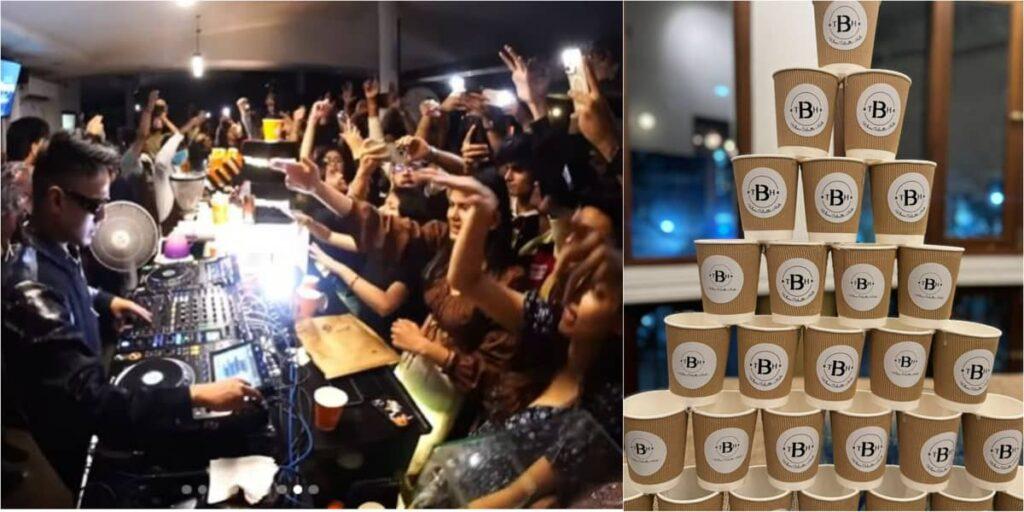
Inside the soft-clubbing scene, where the dancefloor smells like espresso, eucalyptus oil, and the death of bottle service.
At 8:43 on a Sunday morning, the club looks like it has been raided by a wellness retreat.
There are no sticky floors. No guy in wraparound shades ordering eight vodka sodas. No bathroom queue full of people saying they are “actually in a really good place right now” while chewing the inside of their face off. Instead, there are tote bags, Pilates socks, emotional support water bottles, tiny sunglasses, mushroom tinctures, matcha stains, wired headphones, vintage Salomons, and a DJ playing bassline loud enough to make your sternum feel sponsored.
Someone near the front is dancing with the focus of a person trying to unlock a childhood memory. Someone else is journaling. Two girls in deadstock Oakleys are splitting a croissant like it is contraband. A guy with a moustache, a carabiner, and the calm dead eyes of a man who has seen three Vipassana retreats is explaining “nervous system regulation” to a woman who clearly came here to dance, not hear a TED Talk from a freelance breathwork facilitator.
Welcome to soft clubbing: the party after the party died.
Or maybe the party before the party. Or maybe the party if the party had a therapist, a Garmin watch, and a strict boundary around tequila.
The idea is simple enough. Take the best parts of club culture — music, sweat, strangers, movement, outfits, flirtation, ritual — and remove the bits that make you wake up at 2:17pm with one sock on, $143 missing, and a group chat apology forming in your notes app.
These events start early. Sometimes at sunrise. Sometimes before work. The drinks are coffee, yerba mate, electrolytes, cacao, or some cloudy beverage that looks like river water but apparently “opens the heart.” The door policy is less “are you hot enough?” and more “did you register on Eventbrite?” The bathrooms are weirdly functional. The DJ is still locked in. The crowd is still dressed like they know about three underground brands you don’t. But by midday, most of them are gone — off to brunch, reformer Pilates, a swim, a shift at the vintage store, or a nap so pure it borders on religious.
It would be easy to clown this. And we should, a little. The scene comes wrapped in language that sounds like it was assembled by a spiritual UX designer: intentional movement, embodied joy, community frequency, ecstatic connection, sober curiosity, dopamine hygiene. Every generation invents new words for wanting to dance with attractive strangers. This one just does it while drinking mushroom coffee and saying “I’m trying not to spike my cortisol.”
But underneath the comedy is something harder to dismiss. A lot of young people are tired. Not “big night, need a kebab” tired. Properly tired. Rent tired. Feed tired. Algorithm tired. Group chat tired. Climate tired. Situationship tired. Tired of being filmed. Tired of spending $28 on one drink. Tired of nightlife that feels less like freedom and more like an invoice with subwoofers.
Soft clubbing is what happens when a generation raised on excess realises excess has admin.
The old club promised disappearance. You went in at midnight and became someone else until morning. You could lose your phone, your friends, your dignity, and sometimes that was the point. The new club promises presence. You arrive early. You keep your shoes on. You remember the DJ’s name. You still have the rest of your day.
That might sound boring if your idea of culture requires a police report. But the dancefloor tells a different story. People are moving. Actually moving. Not swaying with one hand filming and the other guarding a drink. Not waiting for the drop so they can record proof they were alive. Moving like nobody is owed content.
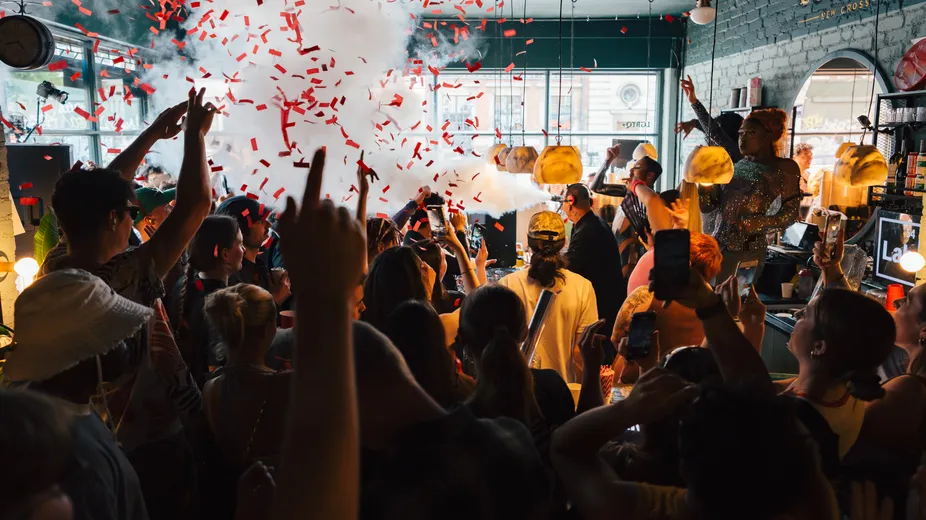
There is something almost suspicious about it. A room full of people trying to have fun without destroying themselves looks, at first, like a scam. We have been trained to believe pleasure should leave evidence: a hangover, a bruise, a cracked screen, a regrettable voice note, a bank notification from a suburb you do not remember entering. If the night doesn’t cost you something, was it even a night?
Soft clubbing says maybe not. Maybe the cost was the problem.
The scene lives somewhere between rave culture, third-wave coffee, wellness capitalism, and the very old human desire to gather around rhythm until the self gets blurry. Depending on the party, the vibe can swing from genuinely beautiful to painfully LinkedIn. Some feel like miniature festivals for people who own linen pants. Others feel like a warehouse rave that went to therapy but kept its dealer’s number blocked. The best ones understand that sobriety does not have to mean softness in the boring sense. The bass still needs to be rude. The lighting still needs to flatter bad decisions. The room still needs a little danger, even if the danger is just making eye contact before 10am.
The worst ones feel like being trapped inside a luxury skincare ad with a kick drum.
There is always a risk, when subcultures clean themselves up, that the mess they remove is the thing that made them alive. Nightlife was never just music. It was friction. Weirdos. Bad ideas. Toilet philosophy. Cigarette diplomacy. The democracy of being sweaty and broke and temporarily holy beside people you would never meet in daylight. When the scene gets too curated, too healthy, too brand-safe, you can feel the oxygen leave the room. Suddenly everybody is “building community” but nobody is talking to the person standing alone.
And yes, brands are already circling. Of course they are. Give capitalism three sober people and a Bluetooth speaker and it will build a lifestyle vertical by Tuesday. There are already wellness companies looking at the morning rave like a new shelf space. Electrolyte brands, activewear labels, clean caffeine startups, breathwork apps, recovery drinks, supplements with names like FOCUS/BLISS/REPAIR. The underground has barely finished stretching and someone is trying to sell it magnesium.
Still, scenes are not killed by sponsorship alone. They are killed when the people inside them stop needing them.
Right now, people seem to need this.
They need somewhere to be loud without being wasted. Somewhere to dress insane before lunch. Somewhere to flirt without the emotional weather system of a 3am smoking area. Somewhere to dance that does not demand they sacrifice Monday. Somewhere to feel like a body instead of a profile.
That last bit matters. We have become extremely good at looking like we are doing things. We are less practiced at actually doing them. Online, everything becomes a performance of taste. The right jacket. The right record. The right shelf. The right obscure drink in the right glass in the right corner of the right bar. Soft clubbing, at its best, offers a small escape from taste as surveillance. You cannot moodboard sweat. You cannot fully aestheticise being out of breath next to a stranger while an acid line bends the room open.
You can try, obviously. Someone will. Someone is already making a carousel post titled “sober rave essentials.” But the body keeps receipts the algorithm can’t read.
By 10:15am, the room has loosened. The early awkwardness has burned off. The dancers who came in looking self-conscious are now doing that rare thing where they forget what they look like. A guy in a mesh top is crying in a way that seems neither tragic nor performative. Two friends are dancing back-to-back, laughing too hard to stay on beat. The DJ cuts the lows for half a second and the whole room screams like it is 4am in a basement, not mid-morning in a space that probably hosts ceramic workshops on weekdays.
For a moment, the whole concept stops sounding ridiculous.
Then someone walks past holding a $9 adaptogenic hot chocolate and the spell breaks slightly.
That is the beauty of it, though. Soft clubbing is corny. It is earnest. It is sometimes unbearably white-pants-coded. It has too many people who say “container” when they mean “room.” But it is also alive in a way that a lot of nightlife is not. It is trying to solve a real problem, even if it occasionally solves it with ceremonial cacao and a QR code.
The problem is this: people still want release, but the old release valve is broken. Drinking is expensive. Drugs are riskier. Clubs are over-policed, under-loved, or priced like boutique hotels. Phones have made everyone a witness and a suspect. The internet has turned taste into homework. Work has invaded every hour of the day. Wellness has become its own prison. Nobody knows how to relax without optimising it.
So the kids built a rave they could survive.
Not a revolution. Not the death of nightlife. Not some clean-living utopia where everyone goes home glowing and emotionally integrated. Just a new room with a different set of rules. Less oblivion, more intention. Less chaos, more choreography. Less “where did my weekend go?” and more “I danced for three hours and still bought groceries.”
Maybe that is lame. Maybe it is the future. Usually the future is lame before it is normal.
At 11:02am, the sun is fully up. People spill outside blinking, sweaty, caffeinated, weirdly proud of themselves. No one is pretending they are not going to post about it. A few already are. The outfits deserve documentation. The lighting was good. The algorithm must be fed, even by those attempting to escape it.
But something else happened too, something harder to flatten into content. A room full of strangers moved together and left with their lives intact. No grand collapse. No mythic bender. No lost weekend. Just bass, breath, coffee, sweat, and the strange modern thrill of choosing not to ruin yourself for a good time.
The party is not dead.
It just has a morning routine now.