
Images Courtesy of Insomniac Events | @skyline.festival
Written by Eric B. Thornton
After several years bouncing around venues throughout Los Angeles, Skyline Festival—Insomniac’s techno-leaning jewel—has probably found its home. This was the festival’s fifth year in LA since debuting in Orlando back in 2021, and while we could say that as music festivals go, it’s still pretty young, the curation of artists—legends and rising ones—is always spot on.
Collaborating with one of LA’s underground promoter pioneers, Factory 93—famous for bringing the best international techno and house artists to the city—the two-day festival cemented itself as one of the fans’ favorite weekends in LA. Here are the standout moments that made this year’s Skyline one of the best incarnations yet.
▶ THE NEW VENUE
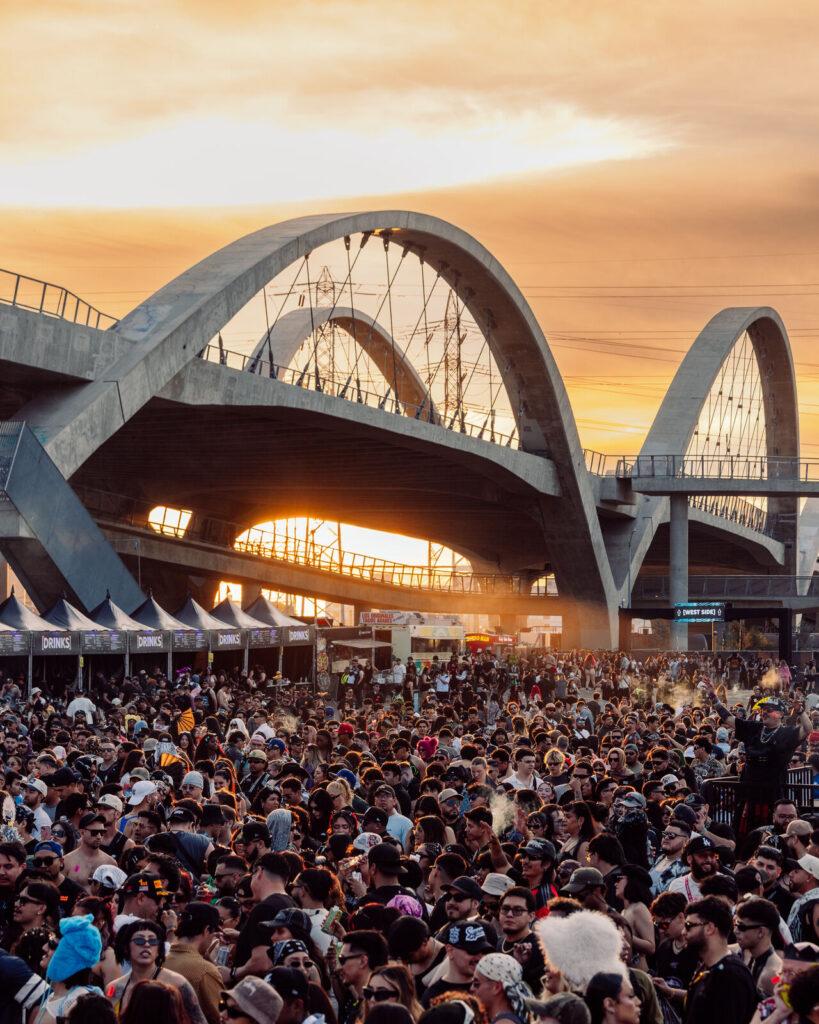
After bouncing through several iconic DTLA locations—from the first edition at ROW DTLA, to the concert-favorite Expo Park, to the amazing backdrop of LA City Hall at Gloria Molina Grand Park where they’ve held it for the past couple years—I feel like they’ve finally found their home at Ace*Mission Studios in Boyle Heights, just east of Downtown LA by the industrial-feel Arts District.
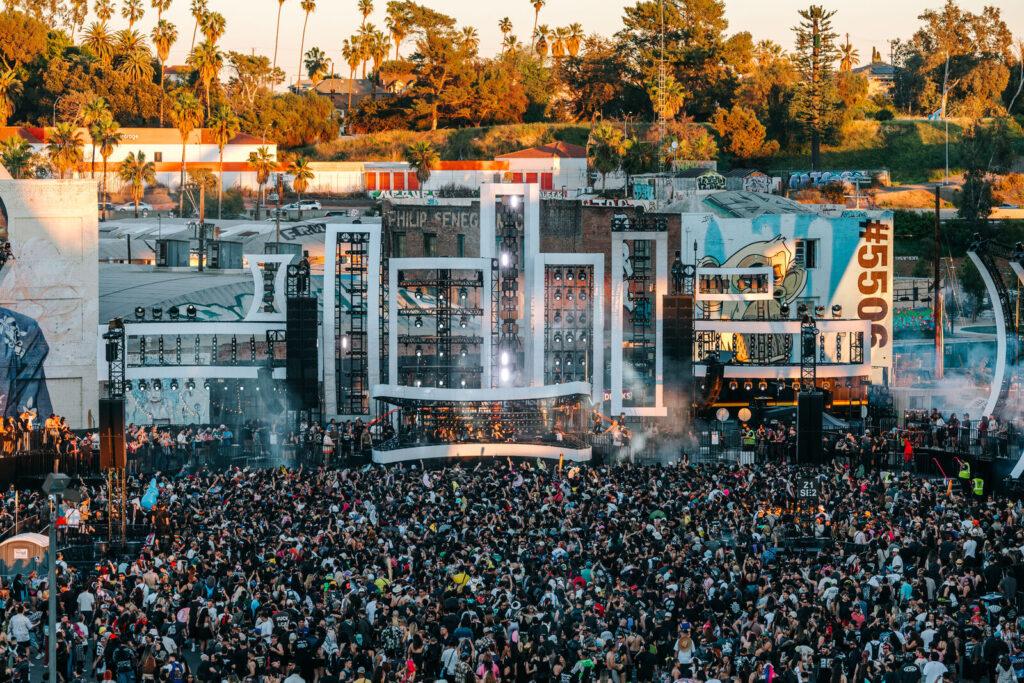
This new venue fits perfectly with the vibe that Skyline offers. The gritty industrial surroundings matched the techno-leaning sounds coming out of the festival like they were made for each other. The recently built Sixth Street Viaduct—completed in 2022 as a $588 million replacement of the original 1932 bridge—really makes the event match the grittiness of the music. The original bridge was a cultural landmark that appeared in everything from Terminator 2 and The Dark Knight Rises to music videos by Madonna, Kendrick Lamar, the Beastie Boys, and countless others—this location is steeped in entertainment history.
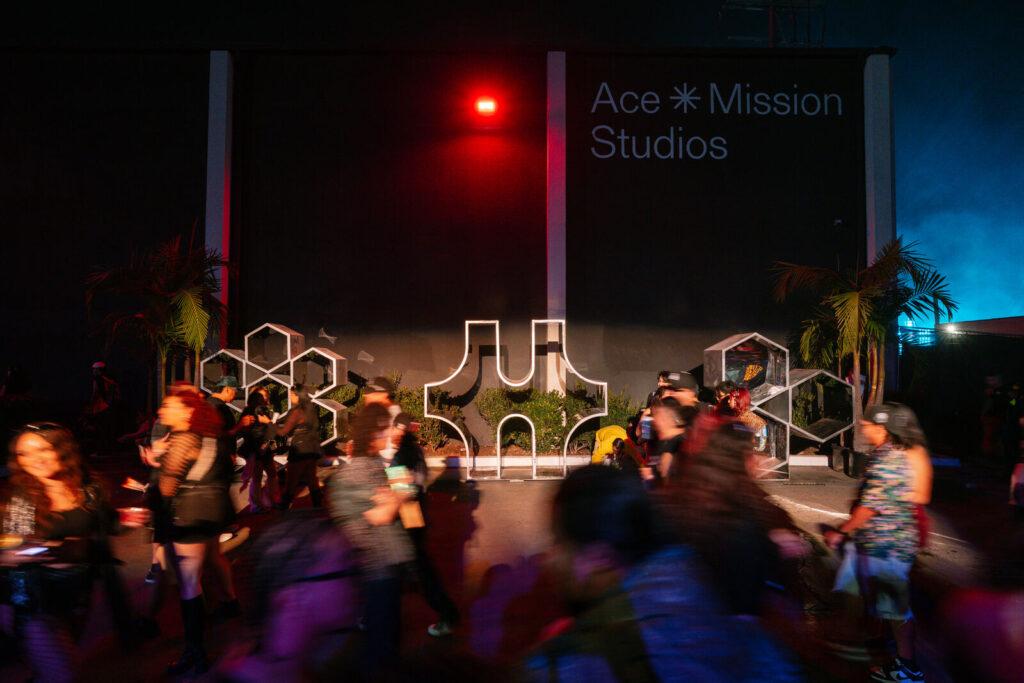
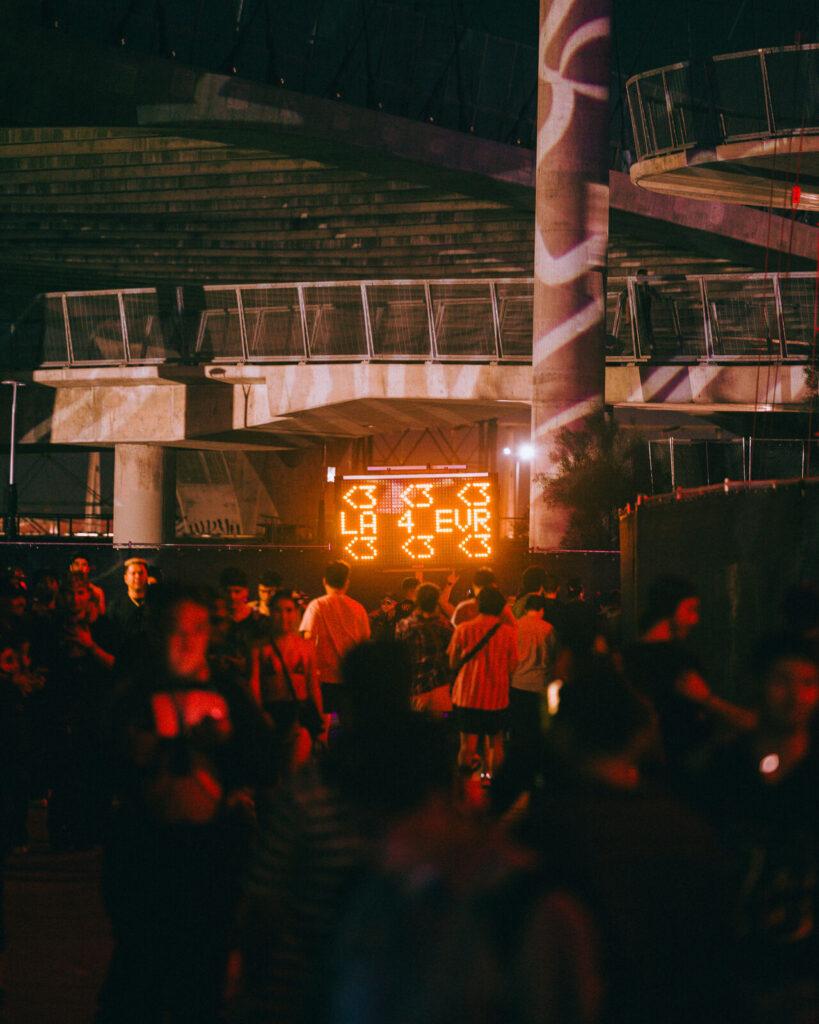
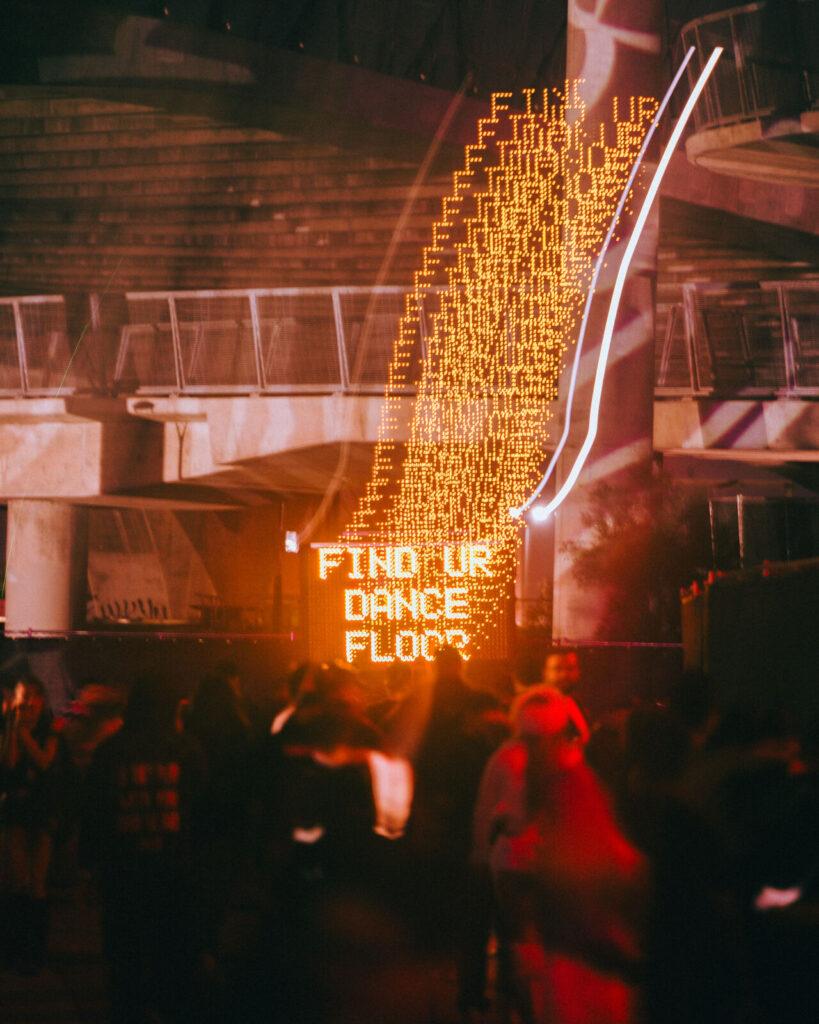
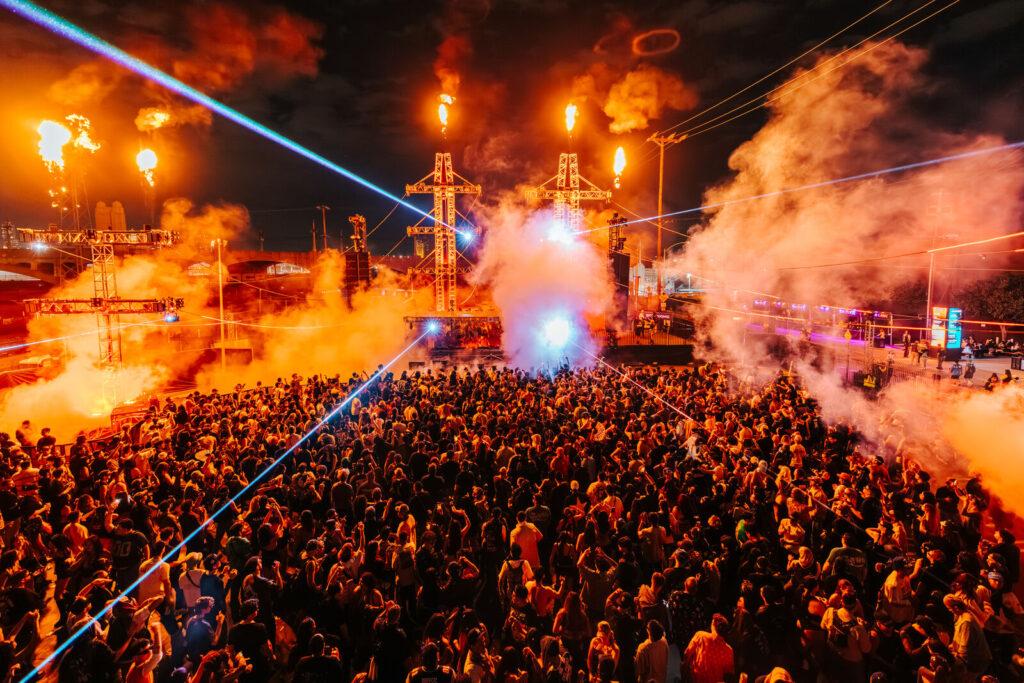
Somehow the organizers pulled off a makeover of the area surrounding Ace Studios, one of the operating studio soundstages in the neighborhood—turning it into one cozy venue where four stages were set up perfectly. The many lanes for concert-goers meant the sound from one stage never bled into another, which is harder to pull off than it sounds.
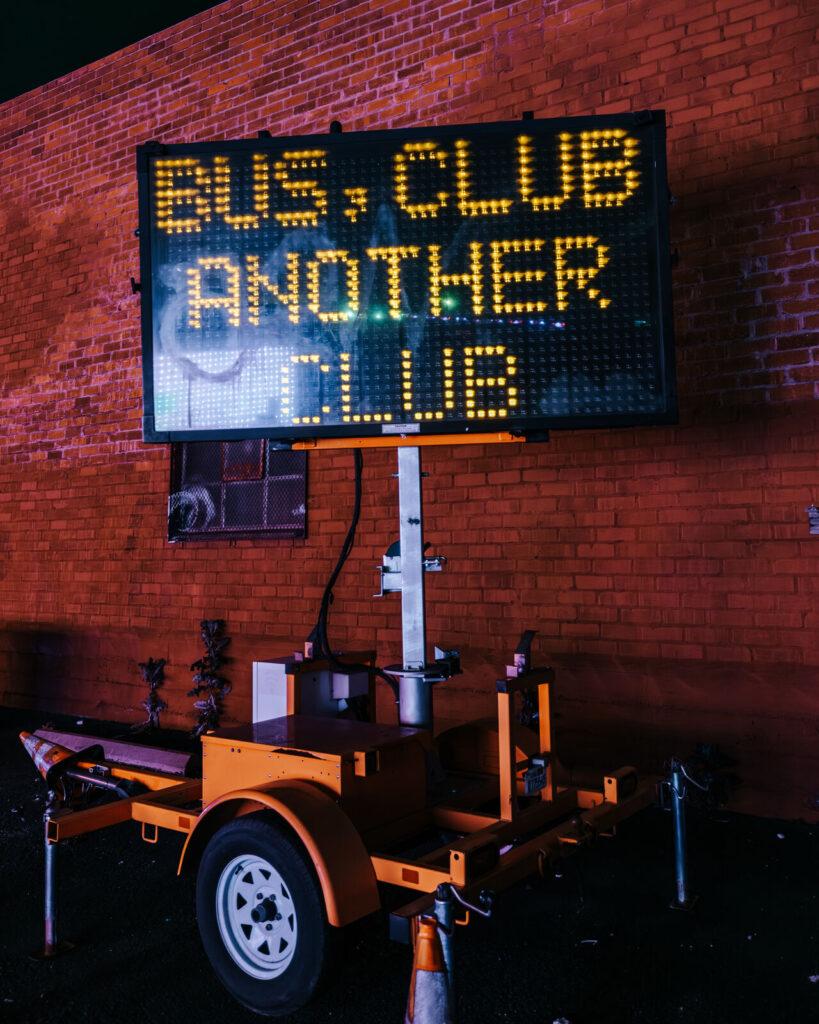
What also makes this location special is the neighborhood itself. If you know LA’s dance music scene, you know that when the clubs shut down at 2 a.m., the night is far from over. The Boyle Heights and Arts District corridor has long been the home of underground warehouse raves and after-hours parties—the kind where you follow a friend’s text to some unmarked door in an alley. Walking out of the festival on Saturday night, the evidence was everywhere: I counted at least three separate alleyways nearby with long lines of people waiting to get in. I couldn’t tell you who was playing, but clearly some big names were hosting afterparties in the surrounding warehouses. For the first time, Skyline itself also hosted official afterparties inside Ace*Mission’s own warehouse—a smart move that kept the energy going on-site and felt like a nod to the very culture that built this neighborhood’s reputation.
▶ THE STAGES AND DÉCOR
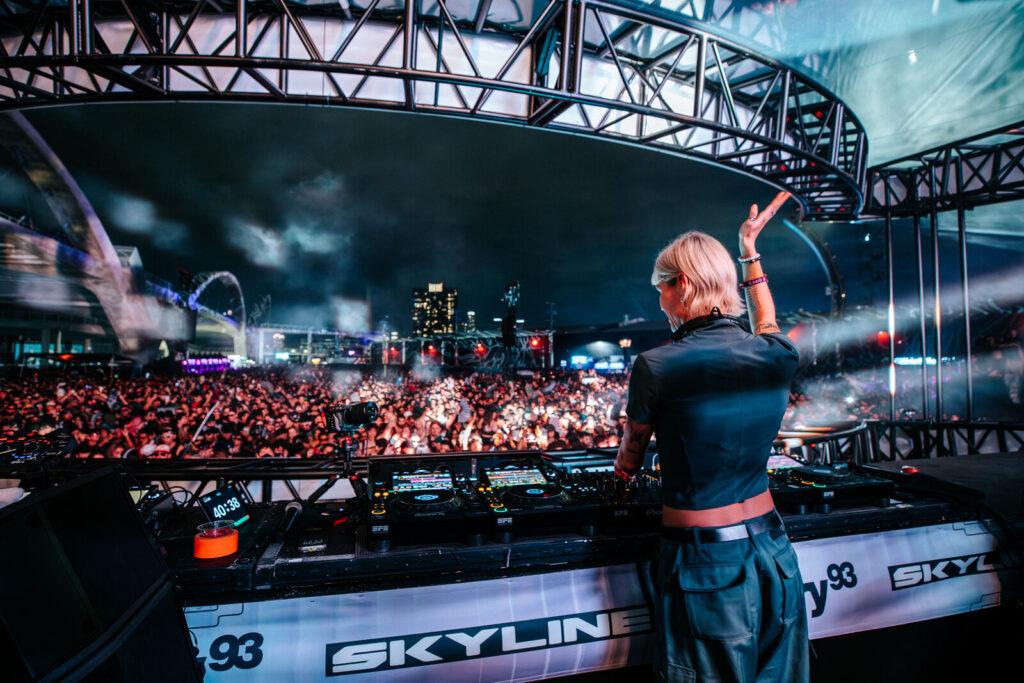
With more than 60 international artists and DJs performing each day across four distinctive stages, there was always something for everyone.
West Side Stage
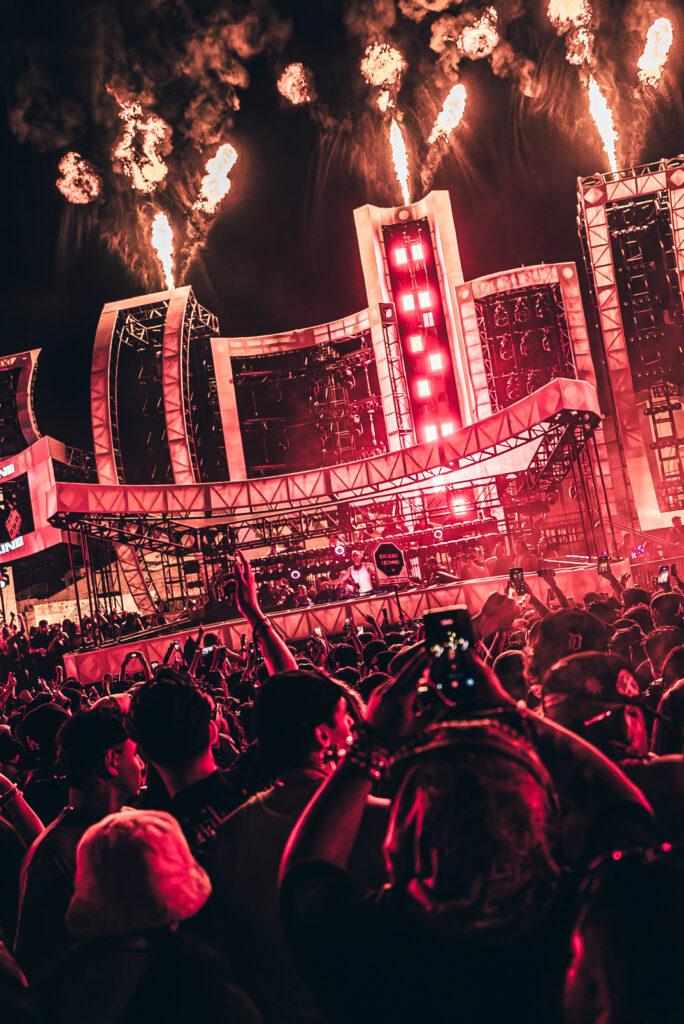
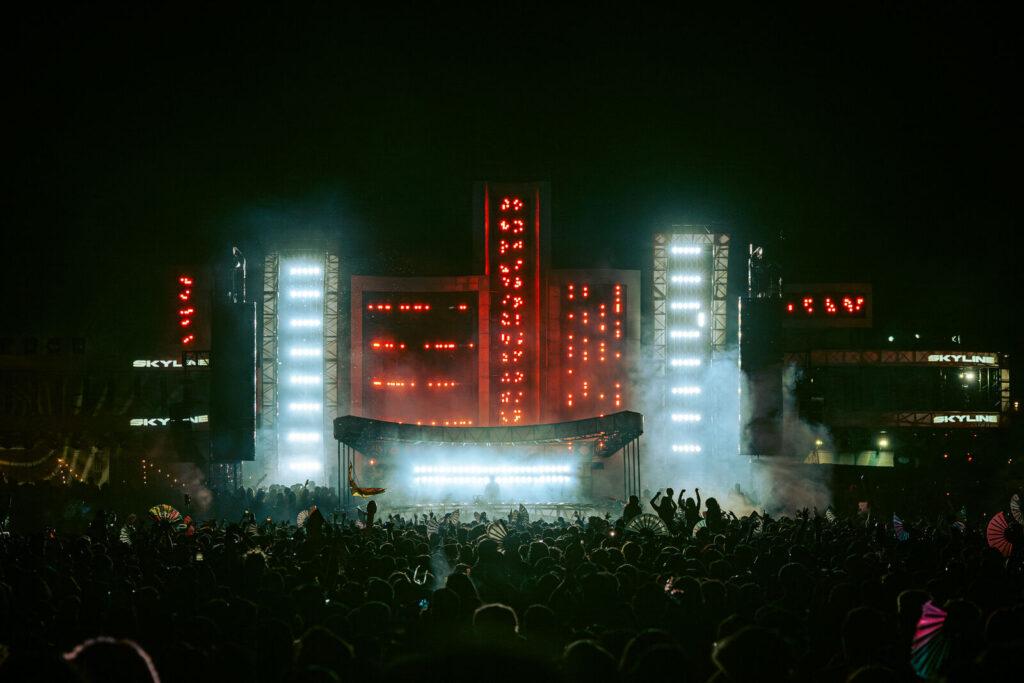
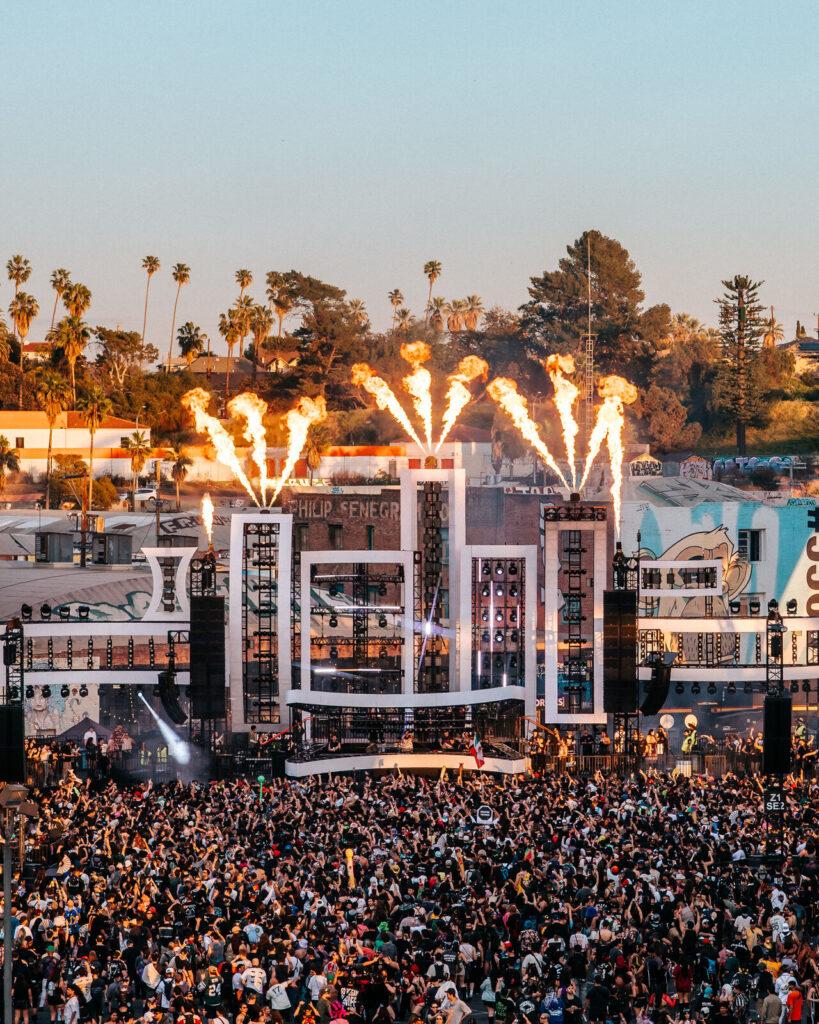
As fans entered the venue, they were greeted by the West Side stage, where the bass and pyros could be heard from a mile away. This stage—graced by hard-hitting artists like Joseph Capriati to 999999999 (I hope I counted the 9’s correctly)—had one of the most unique set designs I’ve ever seen. At first glance, it looked like an “unfinished” stage, like they had little time to set it up. But after a closer look, the stage had this bonkers, don’t-care-attitude design—basically several electrical power poles with “wires” that were actually light shows and strobe lights, all connected to a central “power grid” that shot lasers and pyrotechnics in every direction. It looked like no thought was given, but was actually brilliantly designed.
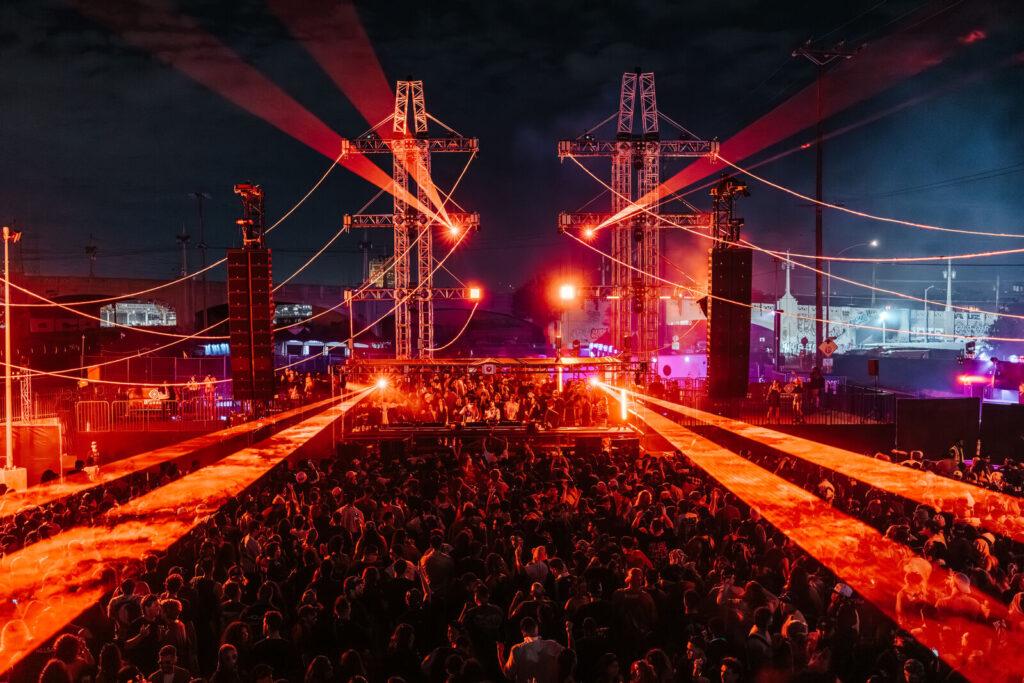
Downtown Stage
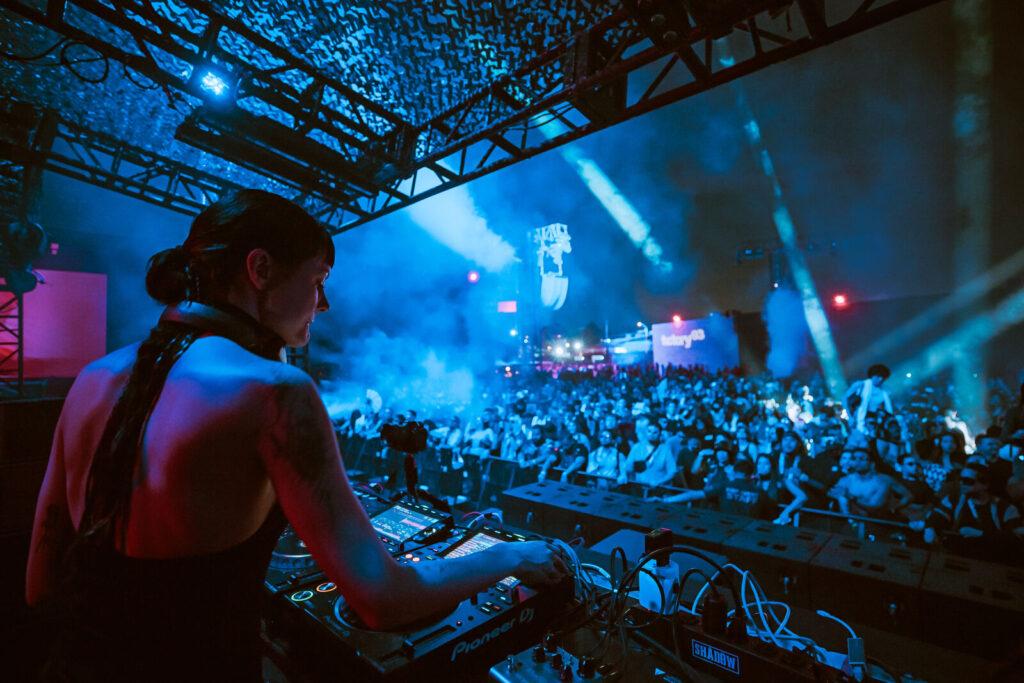
Continuing your adventure, two paths diverged. Turning left led to the Downtown stage—hosted in partnership with Resident Advisor—where hard-hitting techno artists like Berghain favorite SPFDJ and the legendary Richie Hawtin held court (more on his memorable set later). While it was smaller than the electricity-pole stage, the intimate feel was well noted here.
East Side Stage
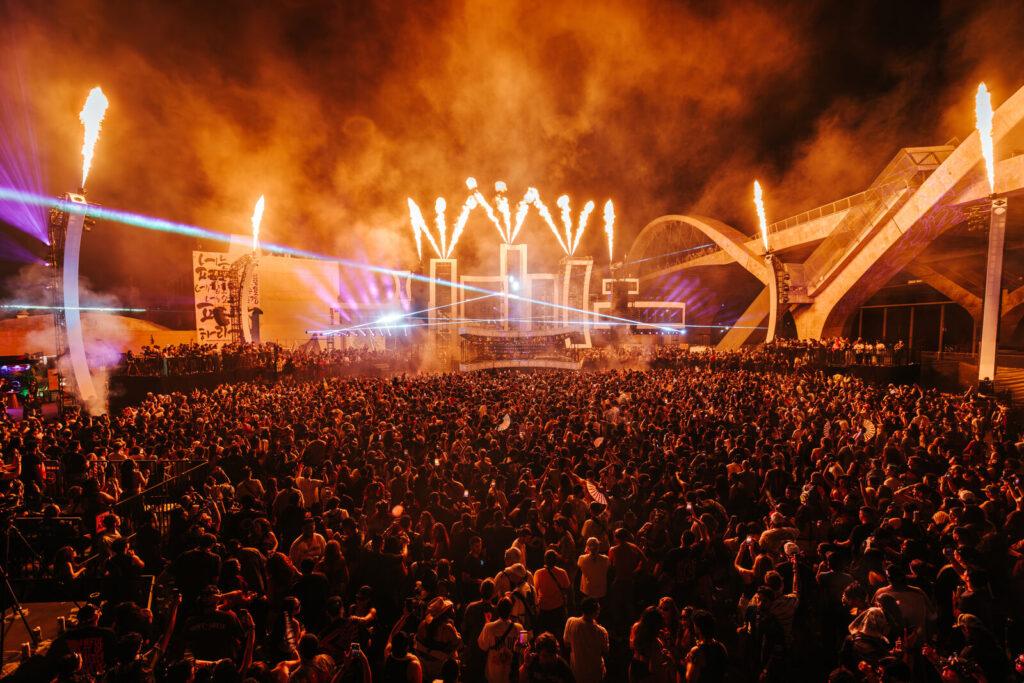
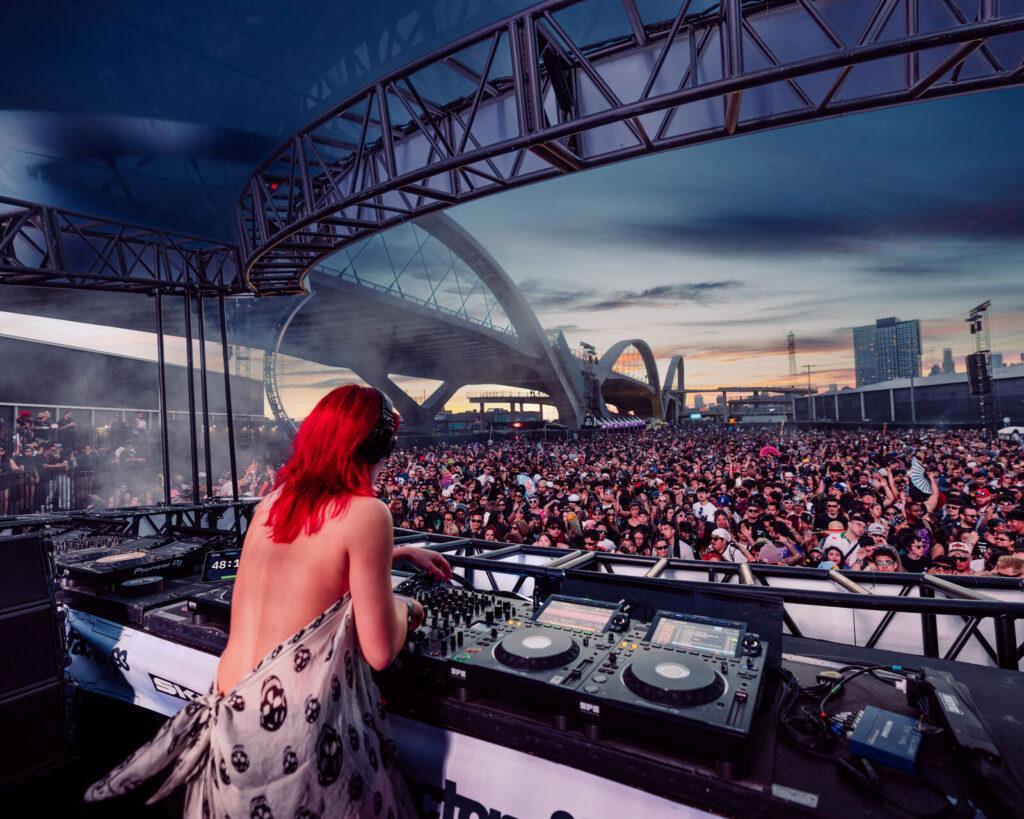
Walking straight from the entrance guided you to the East Side stage—technically the main stage. The large dancefloor with the grandeur of the Sixth Street Viaduct to our right—where moving graphics were constantly projected against the bridge in sync with the beat—made it one of the coolest sights you could ask for. It felt like a genuine underground party, or a party under the bridge if you want to call it that. The constant laser shows and never-ending pyro felt like they were dancing with the fans, lifting the experience to another level.
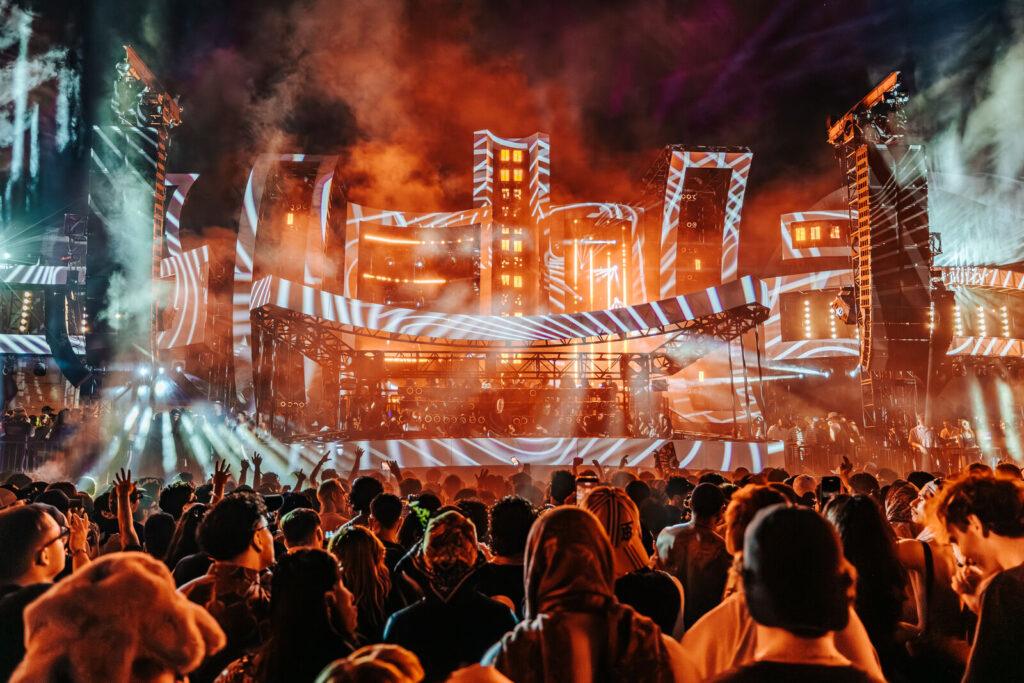
Arts District Stage
The last stage, the Arts District, was tucked inside one of the soundstages of Ace Studios. This indoor stage had the warehouse feel that LA underground parties are known for. Even with minimal light shows, the vibe and sound were worth staying for. And while it could feel like a bit of a maze, the organizers’ decision to make some lanes one-way meant the festival never felt too crowded—even though it was definitely packed for both days.
▶ THE MUSIC
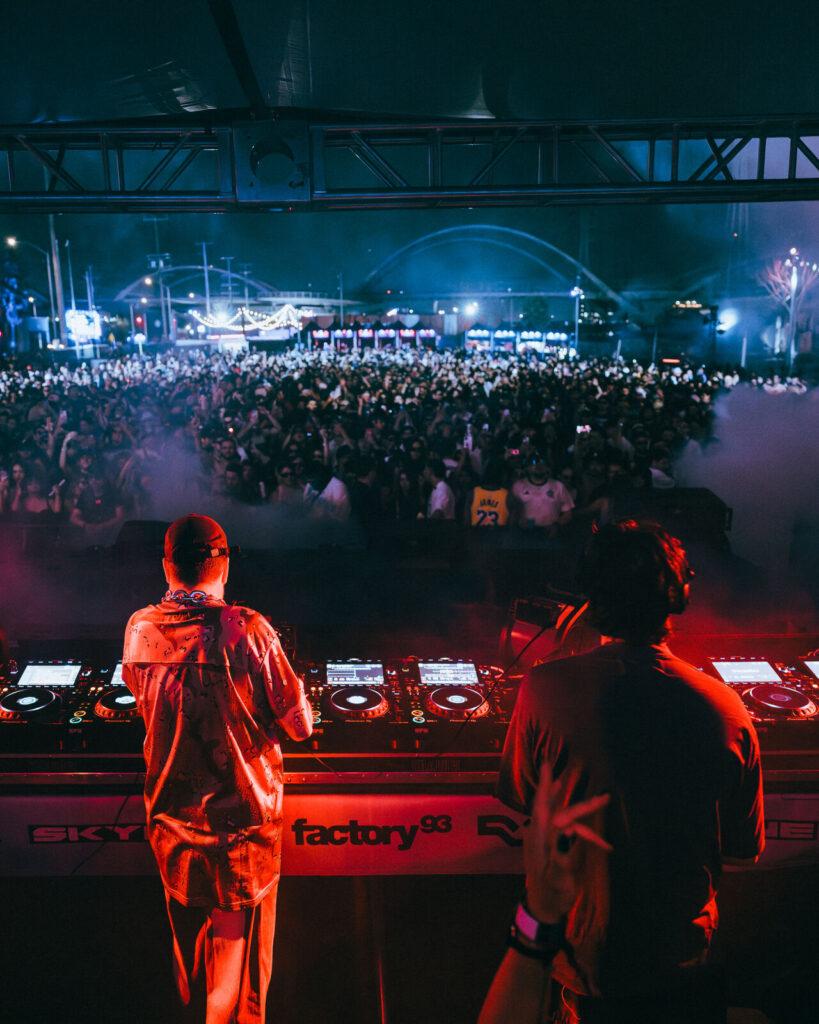
Now that we’ve got the layout out of the way—people came for the music. The main stage had the biggest turnout by far. Saturday, Brazil’s own Beltran graced the East Side stage to a massive, growing audience with his unique groovy style of house. He was followed by Spain’s own groovy maker Dennis Cruz—one of my personal highlights—and concluded with a b2b set from Chris Stussy and Marco Carola, who each definitely pumped up their usual sets to fit the grittiness of the festival.
Sunday was then topped by a relentless row of rising and world superstars: I Hate Models came before the Dutch ’90s rave resurrector KI/KI, and concluded with the tastemaker of hard-hitting techno himself, Eli Brown.
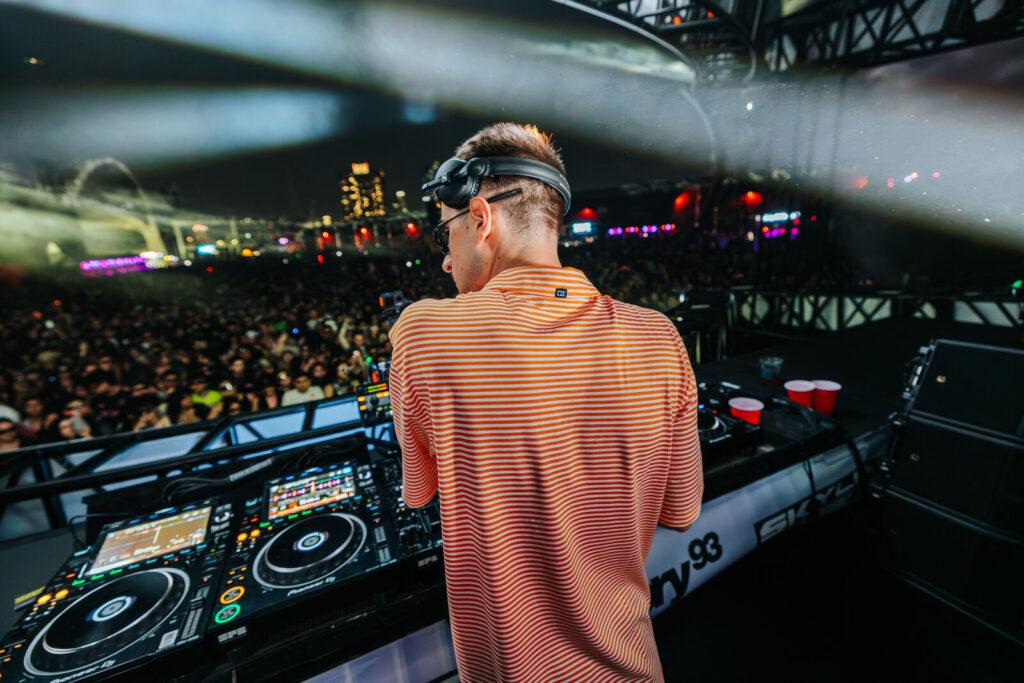
By the time KI/KI was on, the dancefloor had overflowed way into the back as fans were eager to get a good spot for Eli Brown, who played one of the best sets I’ve ever seen from him—even better than his appearances at the Yuma Tent at Coachella. Brown’s set was full of high energy (though not as crazy hard as he usually plays). Rather, the Bristol superstar DJ played a slew of famous sing-along remixes that hit hard when his signature drops kicked in, to an audience who never stopped singing along and dancing the night away under the full moon and the Sixth Street Bridge. The man who first honed his craft in Bristol’s drum & bass scene before reinventing himself as a techno powerhouse in 2016 was clearly in his element. Heck, even the generous pyro shows seemed like they were having a good time.

When asked on how he prepared his set and how did he felt afterwards, this is what he had to say:
“I was really looking forward to playing in LA again, so I wanted the Skyline set to be extra special. Over the last weeks and months I’ve spent a lot of time in the studio, working on new music. I included a lot of those tunes in the set to see the reactions, as that’s the ultimate test. And I’m really happy with how it turned out, the responses have been great, the crowd was phenomenal and I had an absolute blast.“
▶ THE LEGEND — RICHIE HAWTIN
While Eli Brown kept the newer “ravers” dancing and jumping nonstop, just a five-minute walk through some gorgeous art displays—which again, the organizers had spot on—a legendary DJ was having a full-on Detroit techno throwback (with modern elements, of course) on the Downtown stage.
Richie Hawtin, a leading exponent of minimal techno since the mid-1990s, is probably considered one of dance music’s true pioneers. Born in England but raised in Windsor, Ontario—just across the river from Detroit where techno was being born—Hawtin was a mainstay of the early development of the sound. He co-founded Plus 8 Records while still a teenager, later launched M_nus Records, and his work as Plastikman redefined what techno could be. As he constantly pushes the sound with new technologies he incorporates into his sets, he’s considered one of the most respected DJs and producers in electronic music.
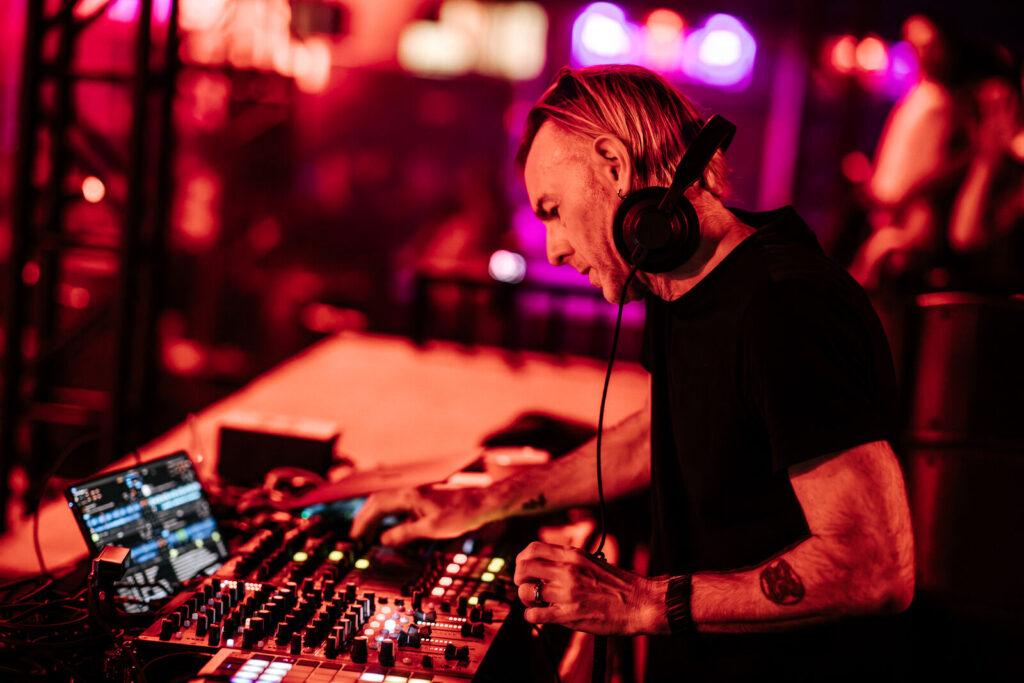 Richie Hawtin at the Downtown stage. Photo by Kristina Bakrevski for Skyline
While the mostly Gen Z excitement surrounded Eli Brown’s electrifying set, the “veterans” of dance music wouldn’t want to miss Hawtin’s rare appearance. Why did I say veterans? Let me give you an idea of his set. As his bass-driven set played to a packed dancefloor, the individuals behind him were legends themselves. I noticed his contemporary Dubfire dancing along backstage, and another person who looked really familiar but I couldn’t put a name to. Another figure in dance music spotted backstage was Jason Huvaere, the head honcho behind the Movement Electronic Music Festival in Detroit—the man who helped bring techno and minimal techno to the masses.
But that’s not enough for the respect of Hawtin. Another head honcho of dance music was also seen next to him during his set—and this person is none other than Pasquale Rotella, the founder and CEO of Insomniac—the company behind Electric Daisy Carnival, the annual Hard Summer series, and of course, Skyline Festival itself. Rotella, who started Insomniac in 1993 out of a living room and built it into arguably the world’s largest dance music company, was personally dancing through Hawtin’s set. That says a lot about the magnitude of the legend. There were probably other OG DJs and organizers around that I wouldn’t know.
“Rotella, who built Insomniac into arguably the world’s largest dance music company, was personally dancing through Hawtin’s set. That says a lot about the magnitude of the legend.”
SEE YOU ON THE DANCEFLOOR
In just five years, Skyline has evolved from scrappy newcomer to essential fixture on the LA festival calendar. What Insomniac and Factory 93 have built here genuinely reflects the city itself—a place where the underground and the mainstream have always existed in thrilling proximity. The move to Ace*Mission Studios feels like more than a venue change. It feels like Skyline finally found the architecture to match its ambition—the raw concrete, the cinematic bridge, the warehouse interiors, and the open-air stages all working together.
With the Arts District stage championing local underground talent, a lineup that stretched from Richie Hawtin’s four-decade legacy to the rising energy of KI/KI and I Hate Models, and a venue steeped in LA history, Skyline proved you don’t have to choose between credibility and scale. You can have both. See you on the dancefloor—and don’t forget to check out skylinefest.com for upcoming events.
MORE FROM THE WEEKEND
CONNECT WITH SKYLINE FESTIVAL
skylinefest.com | Instagram | Resident Advisor
CONNECT WITH FACTORY 93