
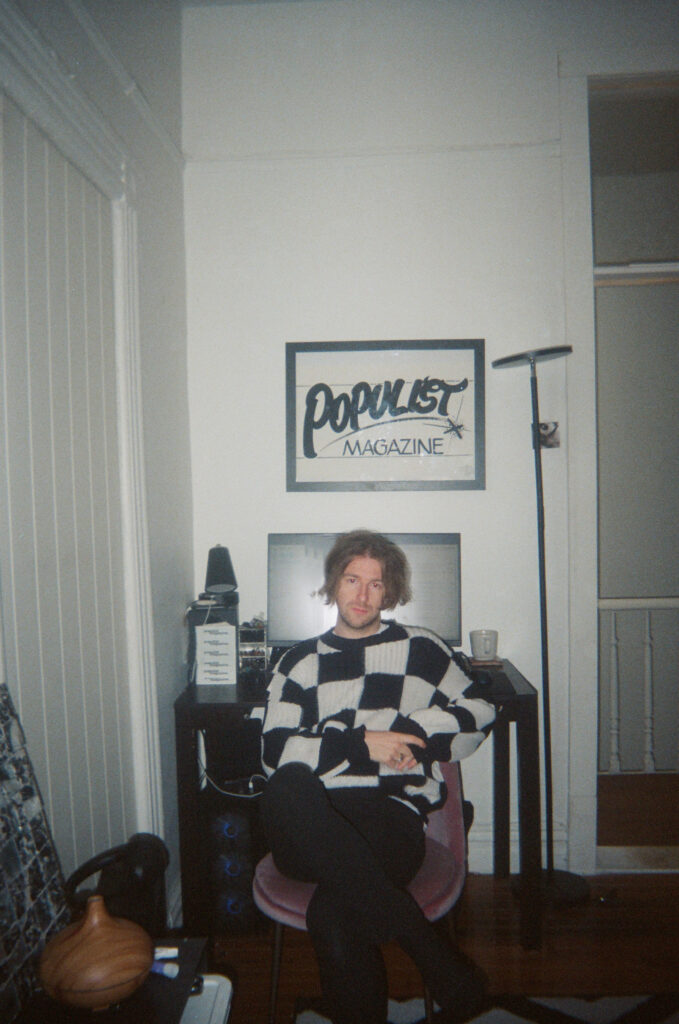
In this series, Frank 151 invites you on a captivating journey around the globe, providing a unique glimpse into the narratives and imaginative landscapes of individuals who are driving creativity to new heights worldwide.
Embark on a visual and intellectual adventure as we delve into the worlds of not only photographers and actors but also delve into the realms of rappers, musicians, graffiti artists, filmmakers, and the visionary minds behind emerging brands. Our creative chronicles are set to unfold, offering a rich tapestry of insights, anecdotes, and life wisdom that traverse the vibrant streets to the dynamic boardrooms, from the vast oceans to the majestic mountains.
Join us as we connect with the crème de la crème of the creative realm, bringing forth a diverse spectrum of perspectives that highlight the intersection of artistry, innovation, and entrepreneurship. From the pulse of urban streets to the serene landscapes, this series promises to capture the essence of the global creative scene, providing an immersive experience that transcends boundaries and celebrates the multifaceted expressions of human ingenuity.
Populist Magazine is an arts and culture magazine, interviewing, covering and filming some of the most interesting contemporary artists today. There’s a certain kind of person who stops waiting for permission. Shane Allen is one of them. After getting shut out by every glossy masthead he knocked on, he built his own table—Populist—a platform that trades polish for presence and pretension for pulse. What started as rejection-fueled independence has grown into a living archive of artists, outsiders, and cultural lifers who might never sit under studio lights but have stories that hit just as hard. We tapped in with Shane to talk about betting on yourself, keeping it raw in a transactional media world, and why the most “populist” art is usually the most human.
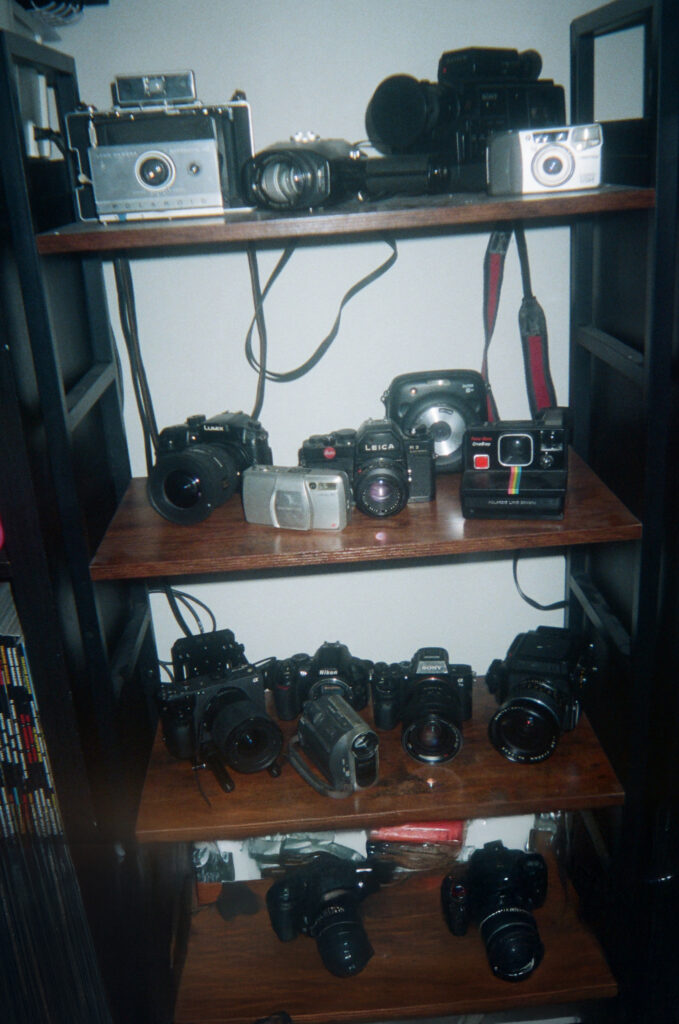
Frank 151: What originally pushed you to start Populist Magazine, and what gap were you trying to fill when it launched?
Shane Allen, Founder Populist Magazine: So I’ve applied and tried to work for every single magazine in America. But I just could not for the life of me, get a job at one. I’ve always wanted to do video work in editorial but when you get ignored and rejected countless times, you eventually decide to try and do it on your own.
I don’t know if I necessarily was trying to fill any gap in the art media landscape but more so just contributing to the things that I loved, and simply make the things I wanted to make without the permission of anyone else.
Frank 151: The word “populist” carries political, cultural, and historical weight. What does it mean to you in the context of the magazine?
Shane Allen: I think a lot of the time, art is looked at as pretentious and people usually see artists as maybe full of themselves or annoying cornballs. So populist to me always meant “for the people” like the common person. In the context of art, the ones who are the most interesting, make the most touching work, and have unique points of views all seem to be the ones who fit into the term definition of populist. Not a traditional, cornball artist.
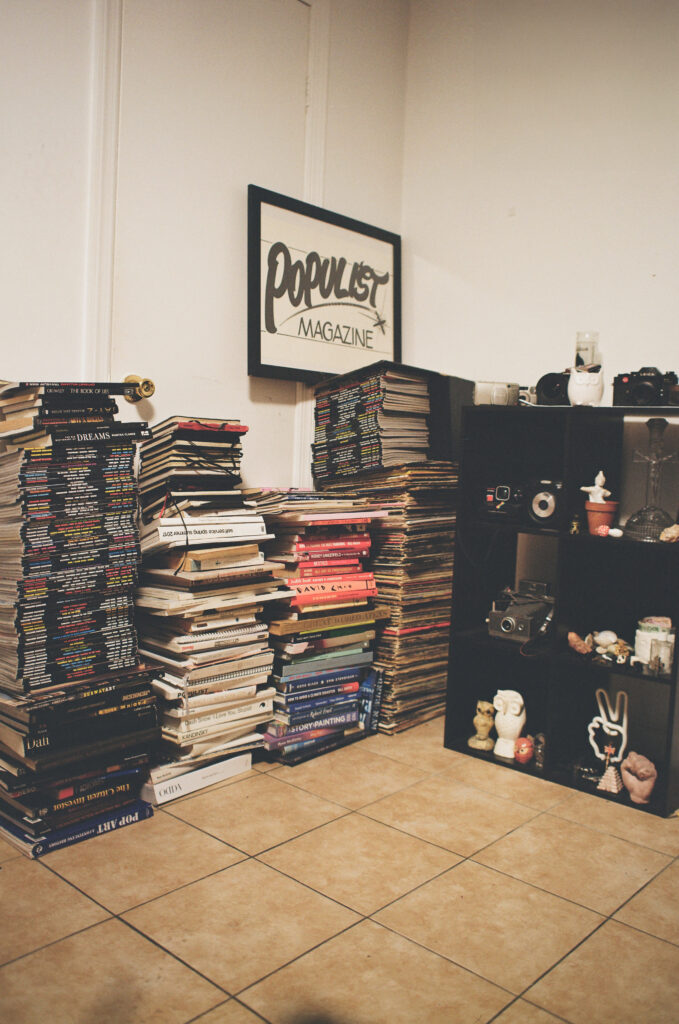
Frank 151: Populist sits at the intersection of art, music, fashion, and subculture. What draws you to a story, and how do you know when it’s worth telling?
Shane Allen: I think a story is worth telling if I feel like the person listening would find it any bit relatable, exciting, touching, unique, weird, disturbing. You may not even like it or agree with a story, but if it elicits any sort of feeling, positive or negative, I think that’s a great thing. Anything that can stimulate your brain and break off the monotony of life and the world.
“Populist to me always meant ‘for the people’ — like the common person.”
Frank 151: Many of your interviews feel intimate rather than promotional. How do you get people to open up in a media environment that often feels transactional?
Shane Allen: I’m glad that’s how they come across, because that’s exactly the goal. Whenever I film or talk to someone, I try my absolute best to make it not seem like a production as much as possible, and more of just a casual hangout. I try to simply just have a genuine and curious conversation with someone. Instead of me asking a premeditated question, and them giving me an answer and back and forth like a Charlie Rose interview or something.
I don’t like sitting down with someone and just straight up interviewing them, I think that is a weird and unnatural dynamic that doesn’t always lend itself to people opening up about themselves. That’s what a job interview is and people are never actually themselves in job interviews.
I also find it just weird to talk to someone and ask questions that seem like I know their entire life story already. Because again, that’s just a strange and unnatural dynamic for a conversation. I’d rather come to those points authentically through time. Like how weird is it being like, “Hey, I know this obscure detail about your life that I want you to talk to me (a relatively complete stranger) about, for the world to potentially hear.” People don’t normally get asked that stuff, so I don’t think they’ll give a normal response.
You can always hear their voice, the difference of when someone is talking to you, or if they are talking to the people they think are watching the video. I want them to talk to me, now in the present. Which I believe comes across as much more authentic.
Other strategies that lend themselves to that is, that I use the smallest camera rig I can, I almost never use lighting equipment, I’m handholding the camera from my hip a lot of the time with the hope that the subject will not notice the camera as much as possible. People scientifically act differently when they know they are being watched, so I try to eliminate that variable.
But that comes with a lot of mistakes made, not the best cinematography and I miss shots all the time because I usually am looking at the person instead of the camera or focusing on equipment, It’s hard operating a camera, audio and having a fully sincere conversation with someone all at once, so things aren’t always as polished as they could be. But you try to find ways to fix all of that.
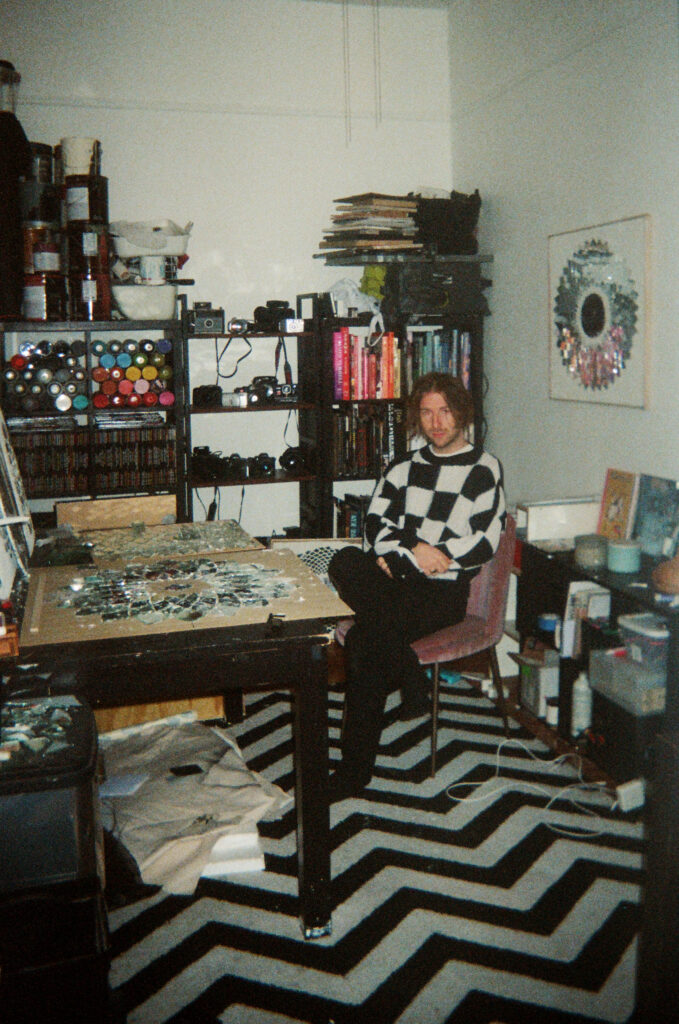
Frank 151: Independent publishing is a grind. What were the hardest early lessons you learned building Populist from the ground up?
Shane Allen: You’re not going to always get the reception you want for the things you make. You’re gonna have to deal with infinite rejections and being ignored. You’re also going to have to just deal with the fact that people are doing the same thing you’re doing, much better than you, on a higher scale and with more of a budget.
You’re going to have to deal with people saying “Is this for a school project?” Oh my god that’s heartbreaking. I got a lot of that starting out.
You’re also going to have to really look at your work with a critical eye. Because a lot of the time they just simply are not going to care. I’ve not released countless things because I just kept thinking, this isn’t good or this is going to literally get zero views or likes. So the biggest lesson is kinda curb those feelings of inadequacy and follow through with what you’ve started. Because someday it may work, you just never know if you don’t try.
“You’re not going to always get the reception you want for the things you make.”
Frank 151: How do you balance staying true to your editorial vision while navigating the realities of funding, growth, and sustainability?
Shane Allen: Even though I do a little bit, I never really wanted to make money from doing any of this. The whole reason I started Populist is simply to make the things I want to make, so that’s what I do. That’s the basis of it.
So I’d rather make things that I’m proud of that maybe don’t do too well, rather than fall into the gimmicky cornball content stuff that the dead internet is filled with. I work in video and media aside from Populist and I make things I don’t care about all the time for a living. So why go out of my way to make more of that? Populist has always been my creative outlet, so I really don’t even see the point of making something I don’t want to in my free time.
But obviously you want these things to flourish and grow. So, I think you have to really ask yourself, how are people used to ingesting media? From there, shape your pieces within those parameters. And there are ways to do that without compromising the heart of your idea.
Frank 151: In an era of short attention spans and algorithm-driven content, why do long-form interviews and thoughtful storytelling still matter?
Shane Allen: Ironically, the only thing that is constant, is that the times will always be-a-changing. But the one thing that will not change is the people love a good story. Story, throughout human history has been a vital part of the human experience.
What does change are the ways, the formats and the platforms in which those stories are told. It all comes from the same concept just in different shapes and sizes.
“When you get ignored and rejected countless times, you eventually decide to try and do it on your own.”
Frank 151: What role do you think publications like Populist play in preserving culture that might otherwise be overlooked or forgotten?
Shane Allen: I think there are interesting stories everywhere all the time and the world will never not produce interesting people. I think the role independent journalism and publications like Populist play is to not only try to document and capture what is already popular and in the public eye, but to give a stage to something that the world should know about.
Like it would be awesome If I interviewed Jay-Z, but the world has seen enough Jay-Z interviews.
Frank 151: Has there been a particular interview or moment in Populist’s history that made you realize the magazine had real cultural impact?
Shane Allen: Yeah the first time that happened is when I interviewed BAT, a graffiti writer in New York. He was the first person to truly be open with me about his struggles in life, addiction, death, his parents, etc. and how he dug himself out of all of it to become the man he is today. That was the first video I published that people really connected with. I got a lot of messages and comments from people saying they had gone through similar struggles and shared a lot of his same views, which ultimately helped them feel seen.
It made me realize how much you can actually help others and connect to the world by simply telling a story. We all have different experiences in life but there is also a lot of overlap. And realizing that you’re not alone in those experiences is very healing for a lot of people. Ever since then, that has kinda been my mission, follow those stories.
“The world is an endless well of excitement and brilliance and I want to document as much of it as I can.”
Frank 151: What advice would you give to young writers or editors who want to build something independent without compromising their voice?
Shane Allen: Don’t play by their rules, follow your heart and trust your instincts. Make things just for the sake of making things and keep getting better at what you do. Make as many things as you can until you die because that’s what it’s all about.
Some practical advice though, is to find a way to make money elsewhere than creative pursuits. Most of the time if you rely on your passion to make you money, you will end up judging how good it is by how much money it makes you. And I genuinely believe that shouldn’t be the case. Once money becomes the motivation for creation, that’s when you start compromising your voice and your views.
Also find a way to have a life that doesn’t revolve around a 9-5 M-F schedule. The freedom of time is one of the greatest gifts someone can receive.
“Don’t play by their rules, follow your heart and trust your instincts.”
Frank 151: Looking forward, what excites you most about the future of Populist—and what do you refuse to change, no matter what the media landscape does?
Shane Allen: Just in life, I look forward to hanging out with all of the interesting, weird and brilliant people I’ve yet to cross paths with. Like I said, the world is an endless well of excitement and brilliance and I want to document as much of it as I can thats the spirit I refuse to change time and time again.