A living portrait told through voice, memory, and the things we choose to keep.
STRIPPED | TALK DIRTY TO ME | created by Sarah Rose
FULL SPECTRUM | The Art of Feeling Everything
You can feel it. A primal frequency. Wide open. Alive in every sense. Raw. Untamed. The frequency of being alive.
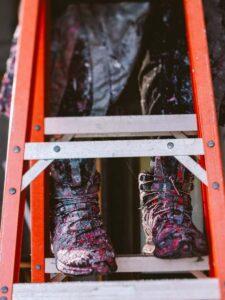
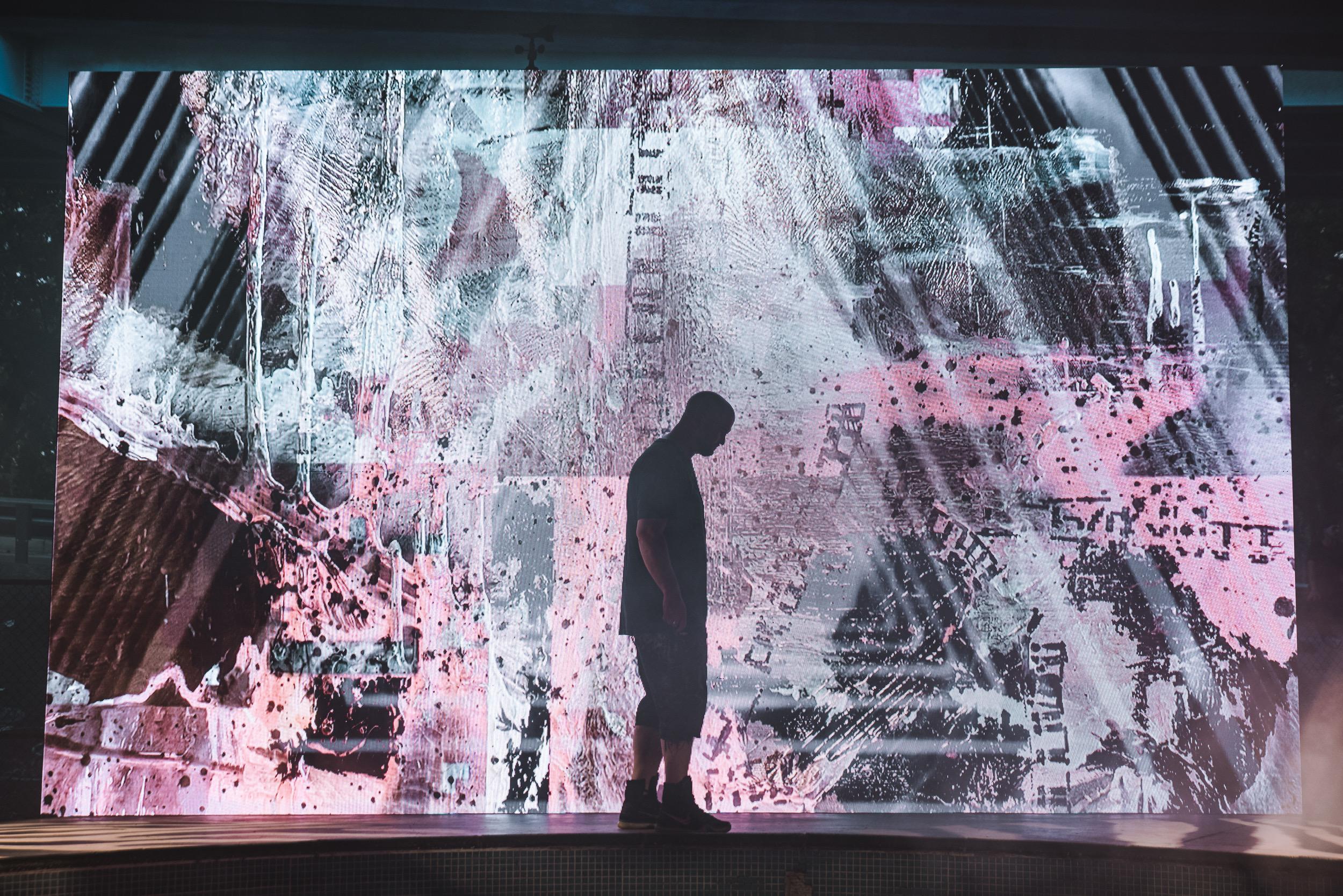
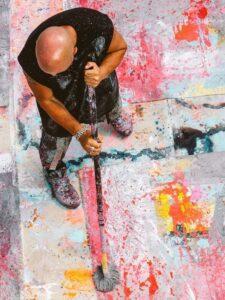
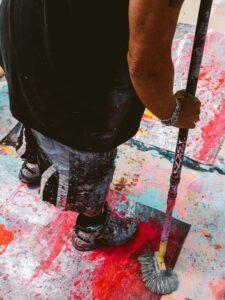
Across canvas. Concrete. Sand. Shoes. Skin. Paint dries between the seams of his sneakers, hardening around the laces, bakes under the sun as it’s being drug through dust and carried somewhere it was never supposed to go.
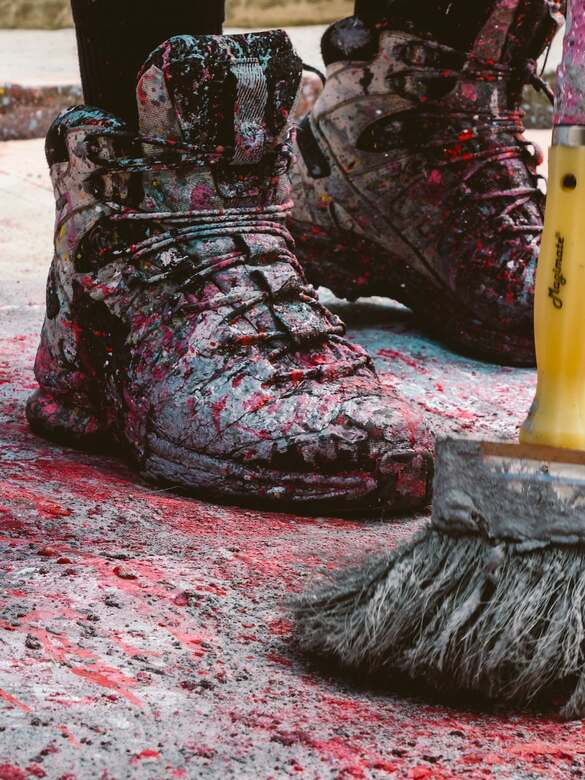
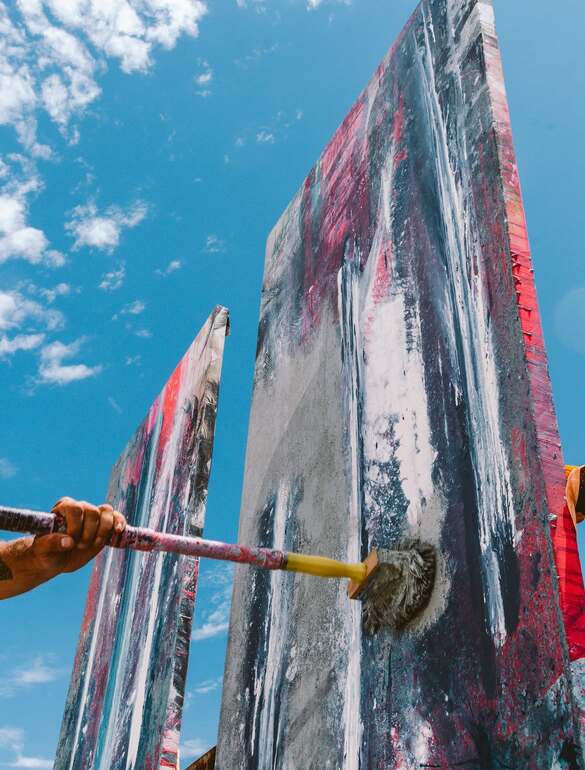
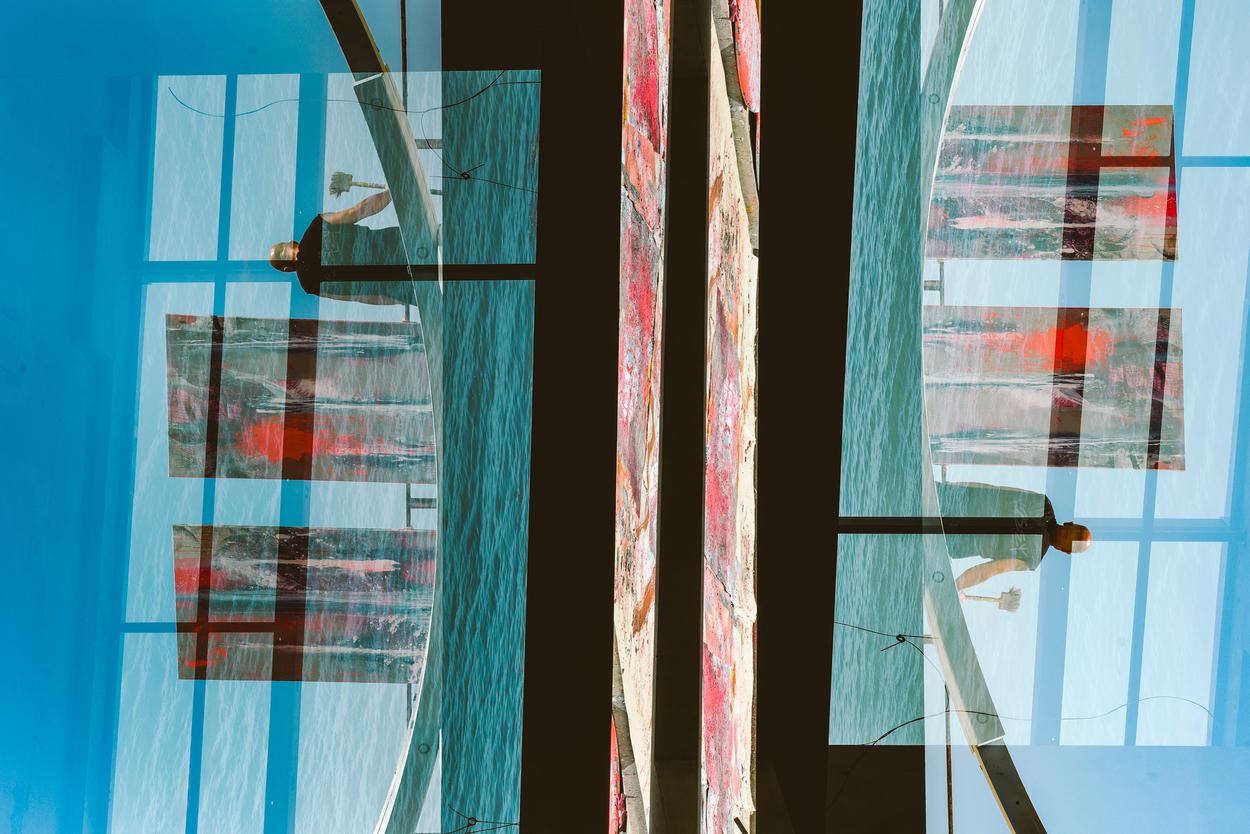
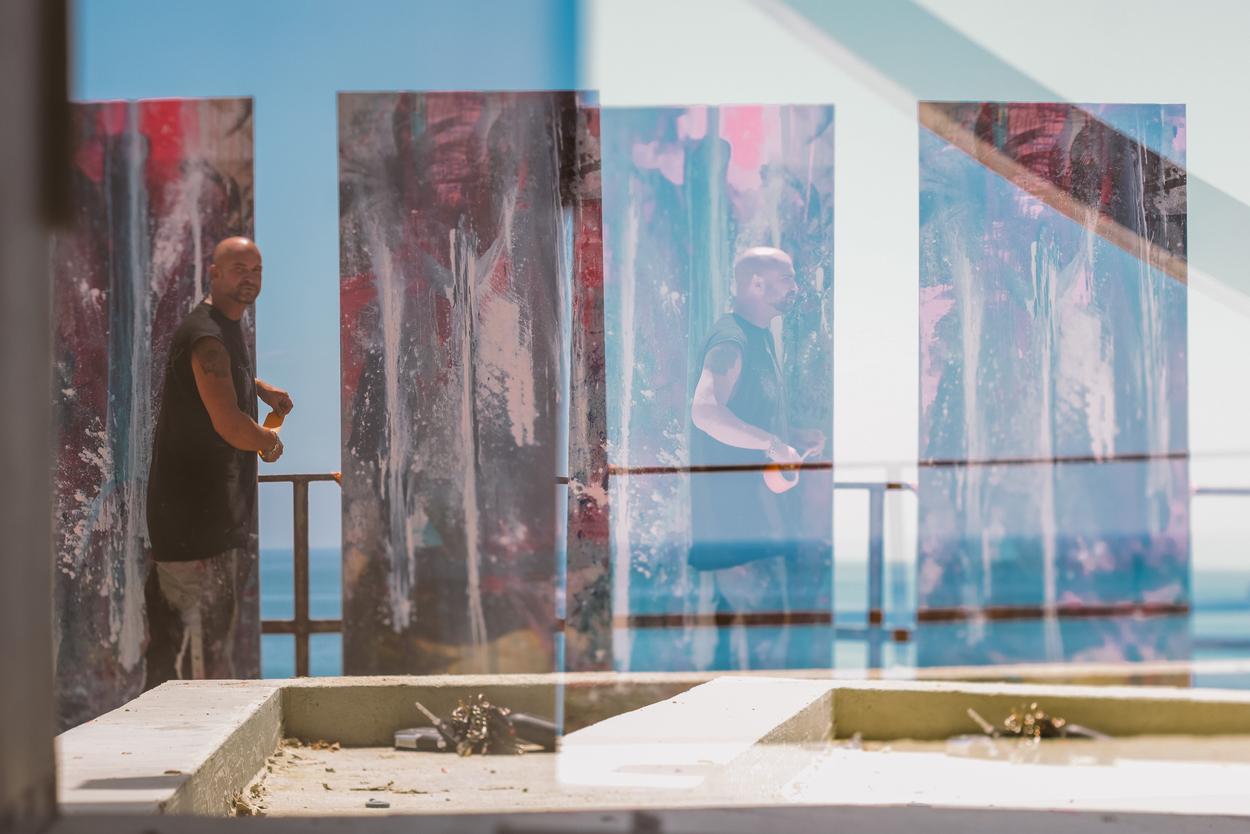
Look down and the floor is fucked. Beautiful. Look up and monumental slabs of color are standing against a quintessential blue Malibu sky. Almost too perfect that it’s asking to be splashed & splattered like its humanized counterpart.
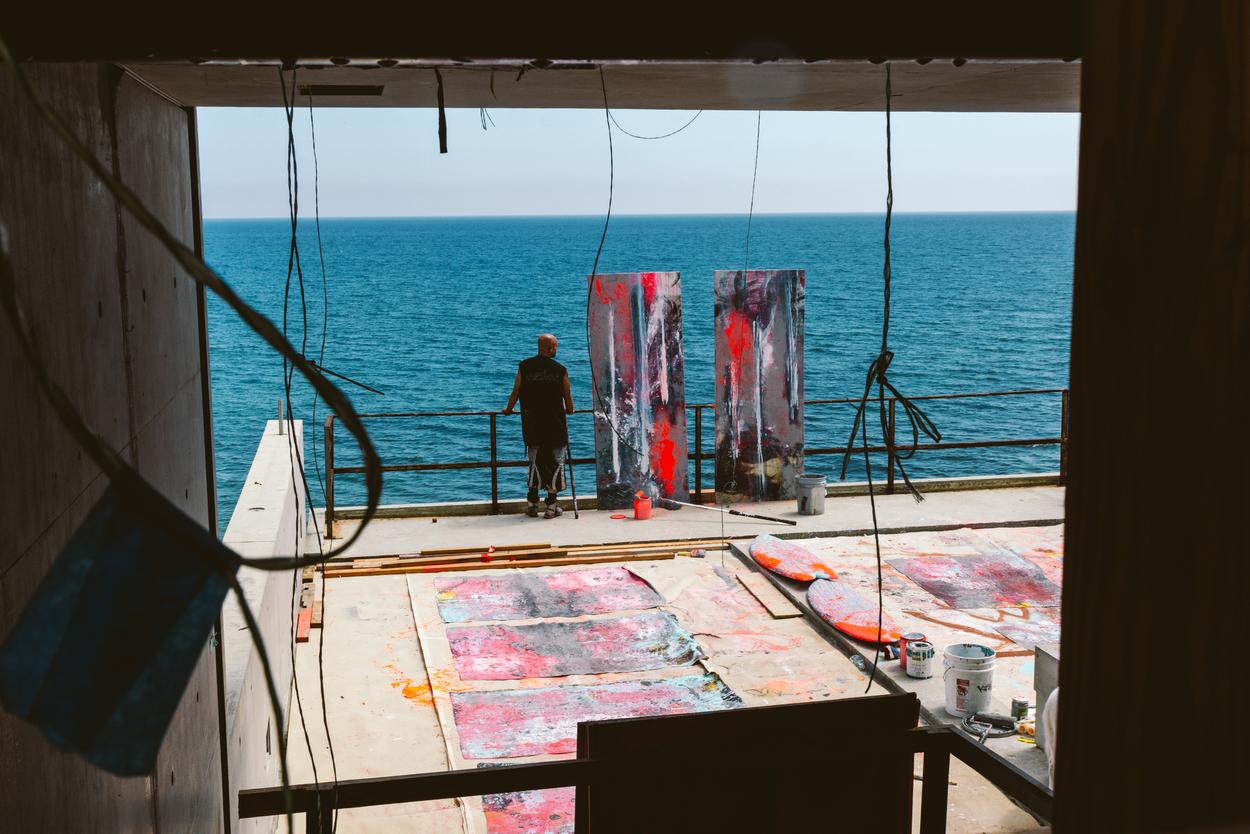
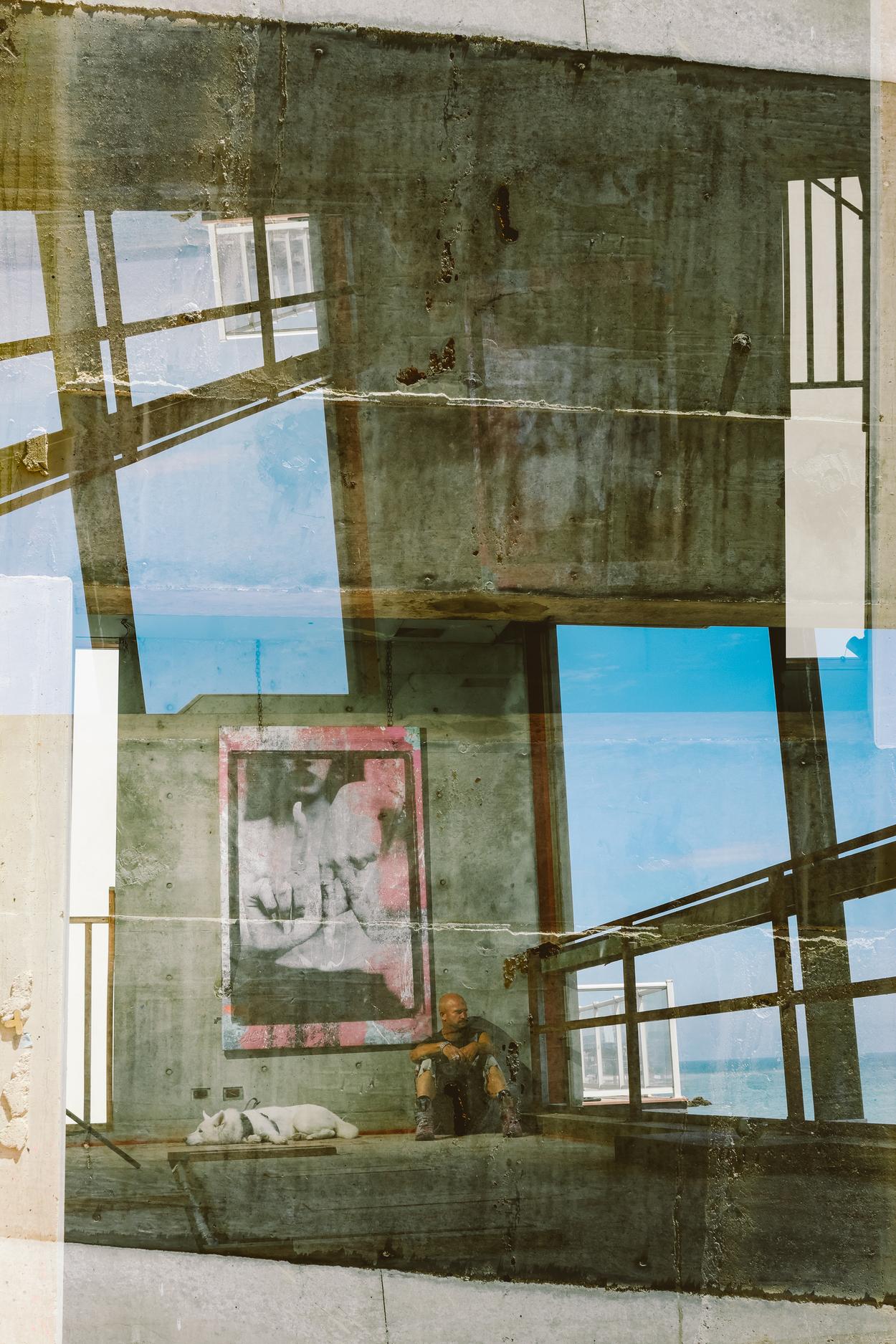
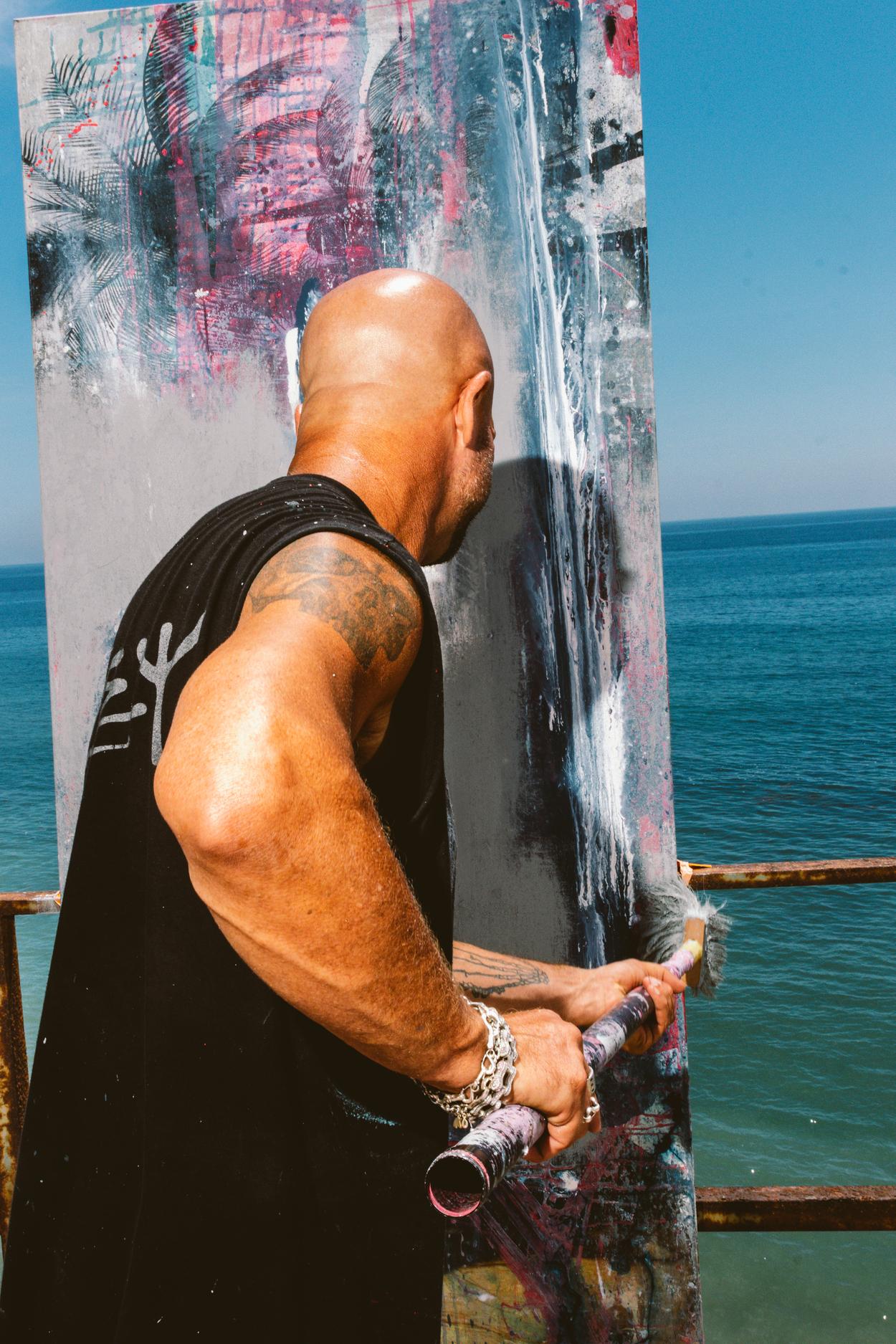
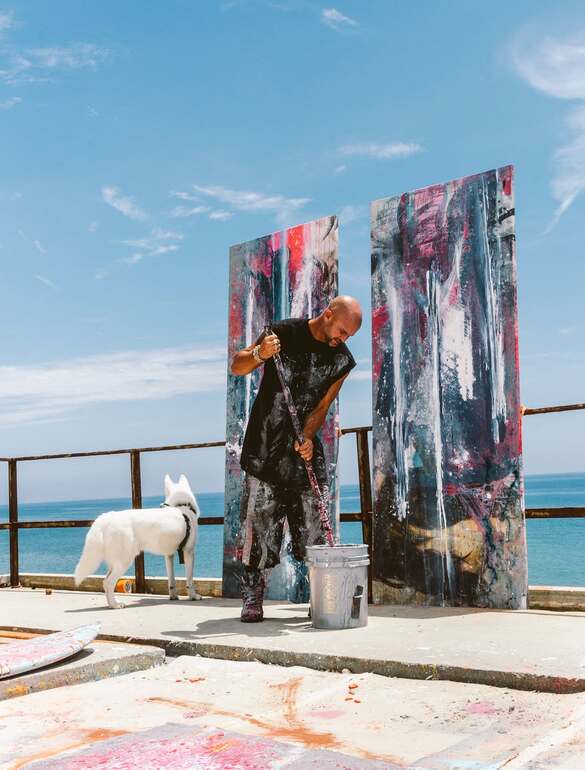 Somewhere between the two is Keeley. Gripping a long brush with both hands, clothes stained, shoes nearly fossilized beneath layers of pigment, and his body willfully swallowed by the scale of what he’s creating. A man beaming with energy of child-like wonder. Uninhibited curiosity that makes experiencing the world on a level that feels soulfully cathartic.
Outside, the Pacific keeps breathing against the edge of the property. Inside, Tadao Ando’s concrete is cool, severe, controlled. That is until Ryan gets his hands on it.
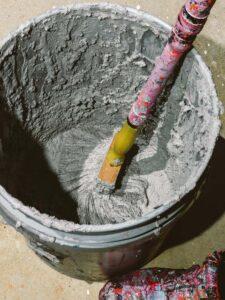
Sand. Ash. Pigment. Dust. Water. Sunlight. Sweat. Paint doesn’t stay where Keeley puts it. It travels in a magical way as Keeley’s subconscious mind leads faithfully. Not by preconceived planning. Purely by raw, soulful feeling.
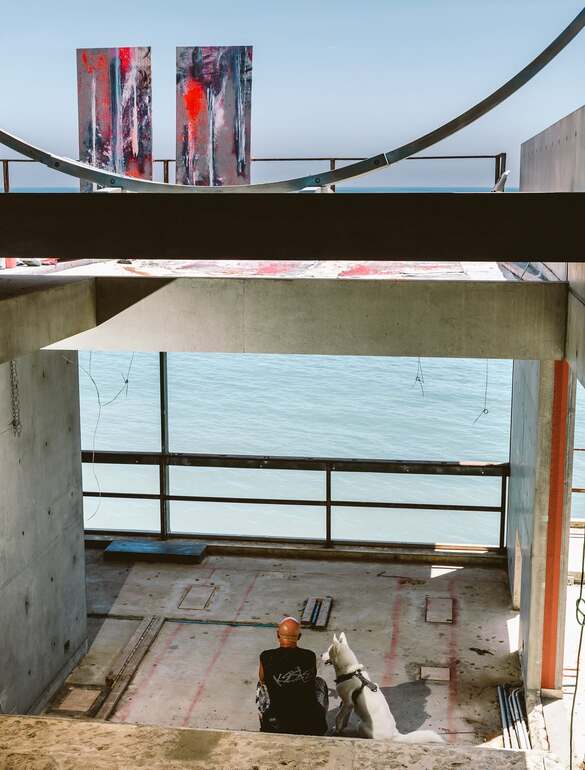
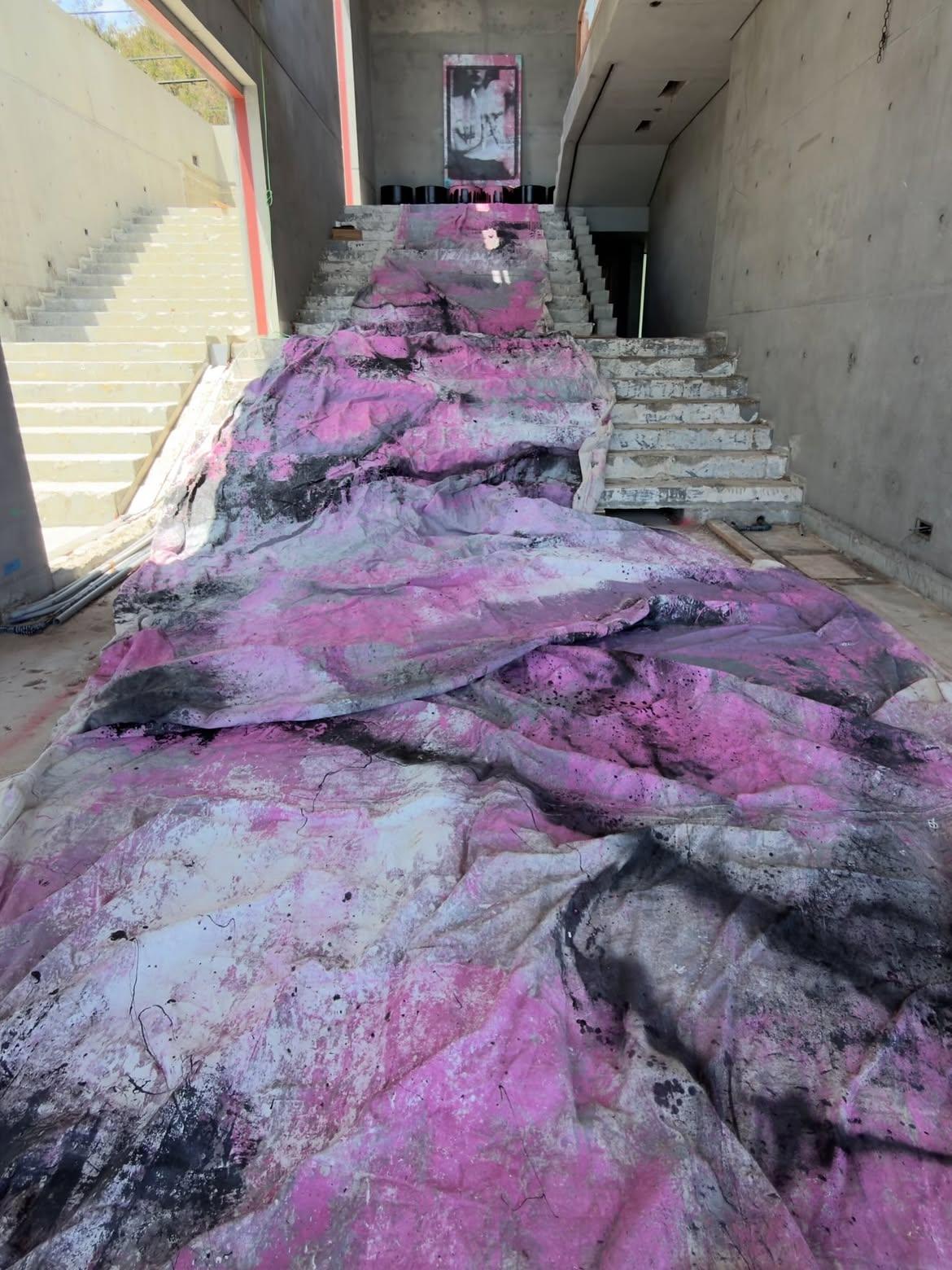
For nearly a year, Keeley worked inside the infamous Ando architecture above Malibu, bringing some of the messiest evidence of being alive into one of the cleanest environments imaginable. The tension is visceral. Physical. Ando’s geometry wants restraint. Keeley wants to know what happens if he pushes against it. Paint gets on the architecture. Architecture gets into the paintings. Sand from outside ends up inside the material. Ash from a burned landscape gets folded into a new surface. The sun cuts through the concrete and drags shadows over canvases on the floor; Keeley traces them before they move. His shoes collect everything. His body collects everything. By the end, it becomes difficult to tell what is studio, what is artwork and what is simply residue from a human being spending a year completely fucking immersed in making something.
Hear KEELEY
Because a staircase has never just been a staircase to Keeley. And that’s what makes his work an experience we feel on such a soulful, authentic, raw human level.
 NO RULES
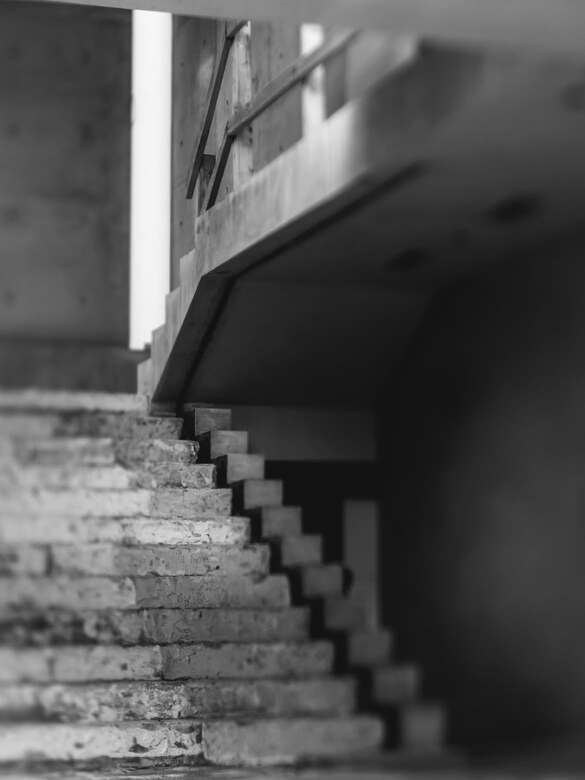
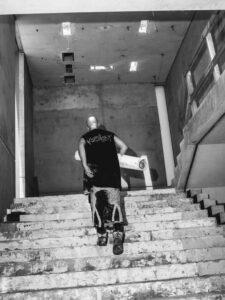
Before Malibu, before galleries and stages and giant painted surfaces facing the Pacific, there was a kid growing up around a skate shop, staring through the window of his parents’ car… imagining himself skating alongside it, then launching himself fearlessly over every set of stairs passing outside. Someone else saw architecture. Keeley saw a line nobody had taken yet.
“Every object that’s out there was created by somebody for a certain meaning or a certain use. And if you can find a different use for that, then you’re creating a whole different world around you.”
That instinct never really went anywhere. A staircase doesn’t have to remain a staircase. A printer doesn’t have to behave like a printer. A photograph doesn’t have to stay flat. A house doesn’t have to remain architecture. A painting doesn’t have to stop at the edge of the canvas.
Keeley once fed wet artwork through a printer. It fucked up the machine. So he opened the thing and started figuring out what else it could do.
There’s something beautifully human about that impulse. Not fabricated like society has robotically altered us to be. But back to our inborn, child-like nature. Untrained by fear. The part of a human being that touches something they probably shouldn’t touch just to see what happens.
What happens if I put this through there? What happens if I mix this into that? What happens if I break the intended use? What happens if I let the accident stay?
Keeley creates problems for himself because solving them is part of the pleasure. “The more problems you solve, the more you fix them. That’s really the high that I get off of making art.”
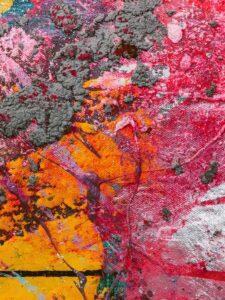
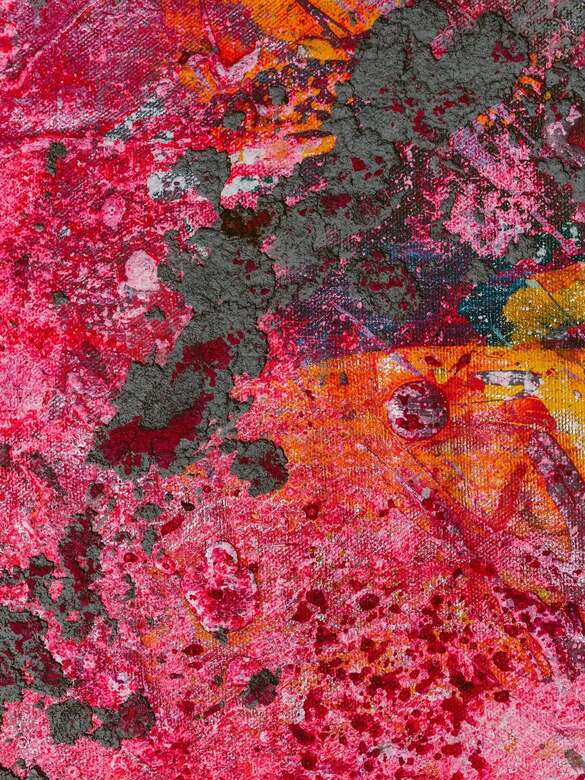
And you can see it in the surfaces. They don’t feel politely composed. They look worked. Scraped, buried, resurfaced, stained, interrupted. Color fights through concrete gray. Fluorescent reds and pinks sit beside bruised blacks, dirty whites, turquoise, grit. Some areas feel almost wounded. Others look sun-faded, weathered, unearthed.
There are places where you can feel the hand and places where the material seems to have won the argument. The materials have a life energy you can feel bursting out of them.
That push and pull makes even more sense when Ryan talks about music.
Synesthesia: where stimulating one sensory cognitive pathway leads to involuntary, automatic experiences in another. The sweet taste of summer’s first ripe peach becomes a visualization of warm colors dancing together as a movie inside the mind. The hit of that first drum in Butter by Tribe Called Quest becomes a multisensory stimulating experience that feels similar to being on what most experience on psychedelics. But those gifted with this superpower, experience the world naturally.
Music got into Keeley long before he ever thought about making it visible. Growing up in North Carolina, there were neighbors with skateboard ramps in the driveway and a garage band making enough noise to pull a curious kid out of bed after dark. He’d sneak out to listen. Heavy metal. Early rap. Cassette tapes passed around, played loud, confiscated by his mother when the lyrics got a little too filthy. Sound, rebellion, movement, curiosity. All tangled together before he had the language to explain what was happening inside his head. Music wasn’t just something he heard. It had shape. Color. Texture. A whole other world opening up behind his eyes.
Years later, that world would collide with Ms. Lauryn Hill.
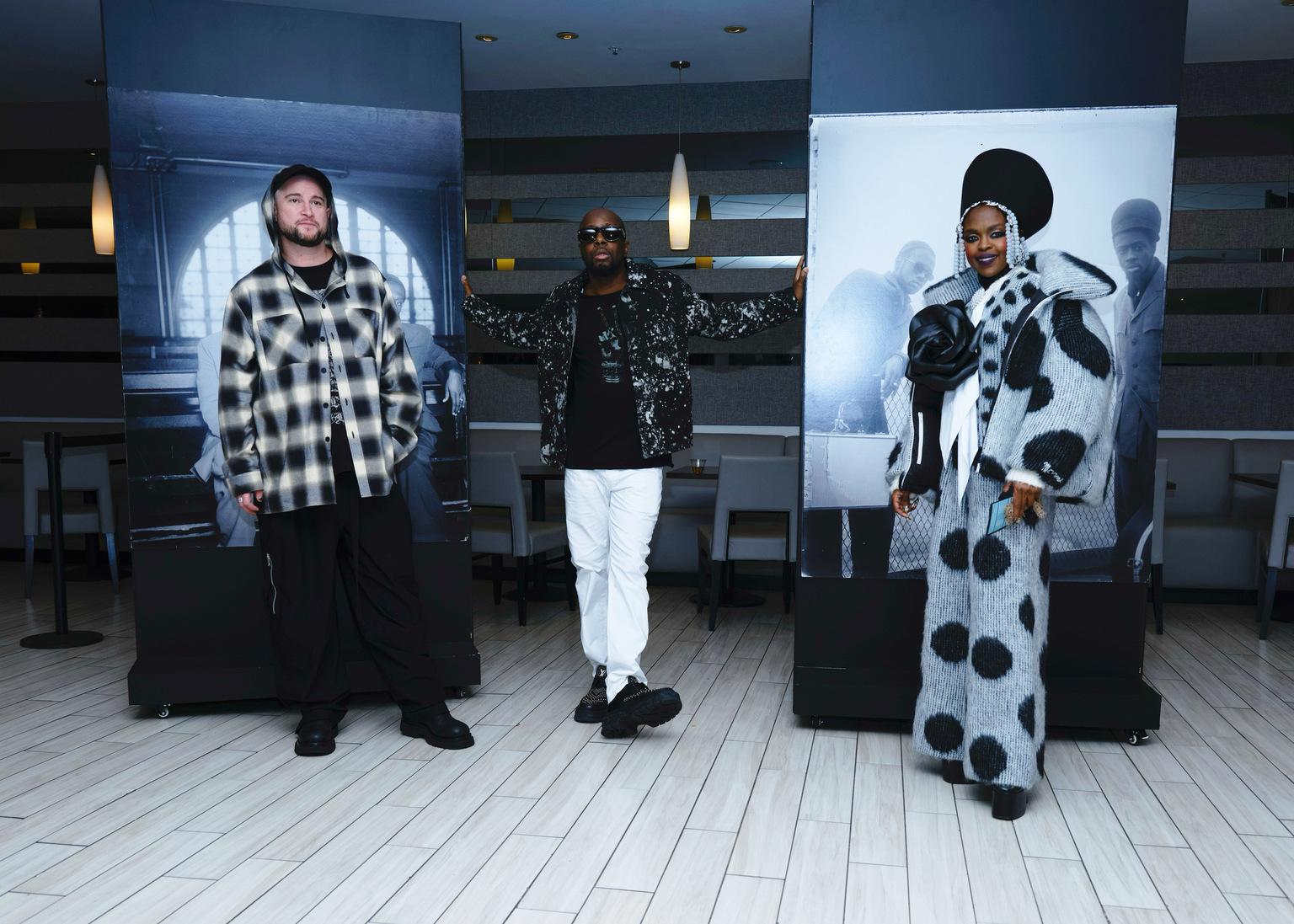
Introduced through their mutual Rep, Josh Boumel, what was supposed to be a thirty-minute meeting stretched into an all-night conversation, the kind where you look up and somehow the sun is coming through the windows. One conversation became a friendship. Paintings became stage backdrops. Backdrops became lighting, moving images, whole environments responding to the music. And somewhere along the way, Keeley found himself doing what he’d always done: taking something designed for one purpose and asking what else it could become.
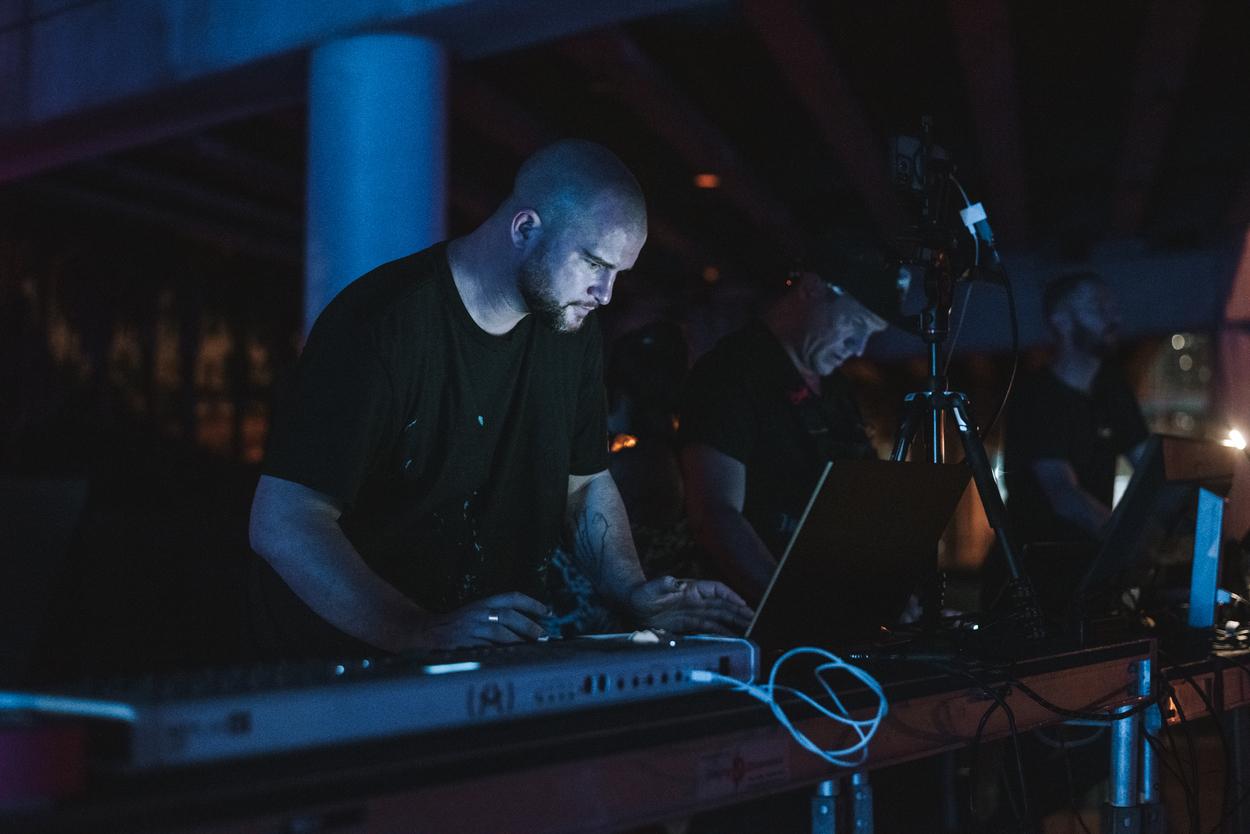
One night, when her VJ didn’t show up, he improvised. Resolume. A MIDI keyboard. Individual feeds coming straight from the soundboard. Suddenly his paintings weren’t just sitting behind the performance. They were inside it. Drums pushing the foundation. Bass and synthesizers building layer upon layer. Ms. Hill’s voice moving through the surface, pulling and reshaping the imagery in real time.
His hands on the controls, her voice in the air, musicians playing, pigment and light moving together. A painting you could hear. Music you could see. Not a visualization of the performance. Another living instrument within it.
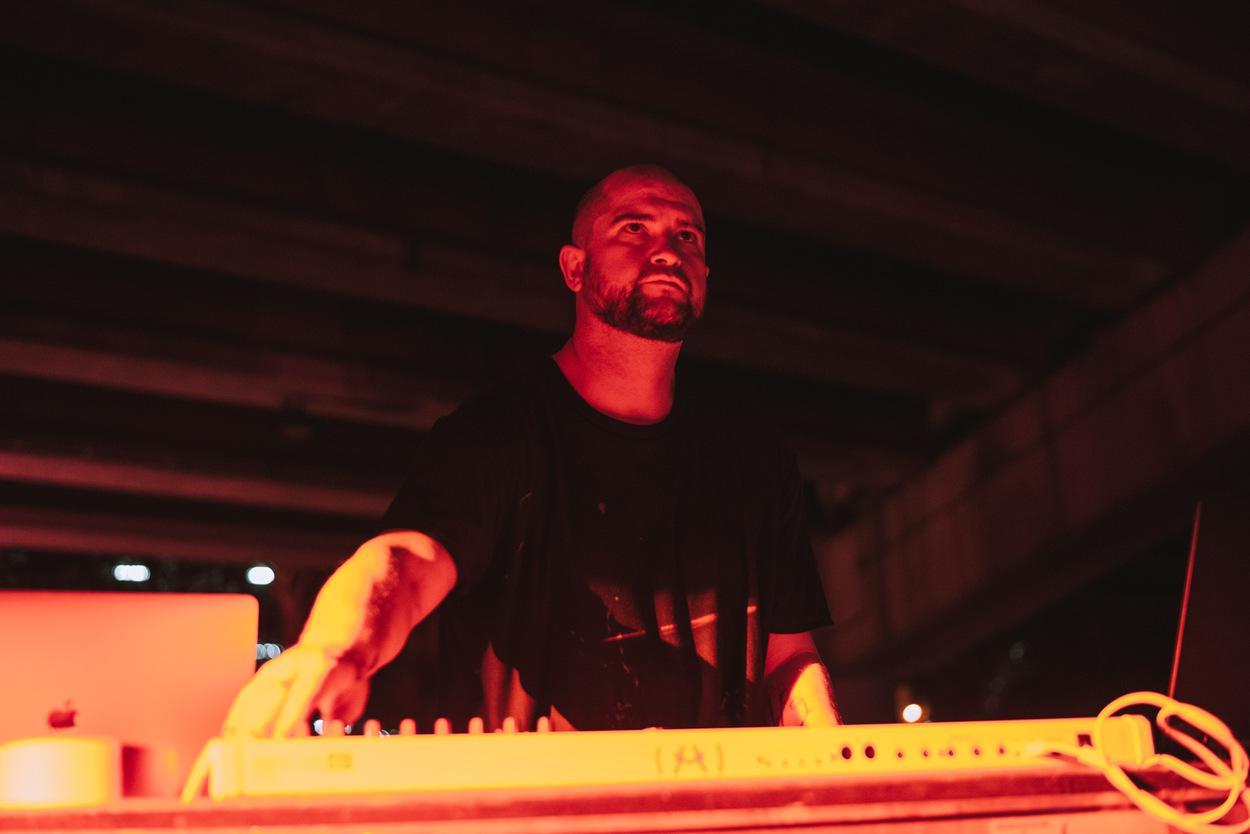
And there he was, performing his own artwork alongside the musicians, building and breaking images as the sound moved through him. At festivals, veteran VJs and lighting engineers would gather to watch. The technology was complex, sure, but the impulse underneath it was almost absurdly simple. The same kid sneaking out to hear a garage band. The same curiosity that makes a skateboarder look at a staircase and see something entirely different. What happens if I connect this to that? What happens if I let the drums move the paint? What happens when a human voice becomes a brushstroke?
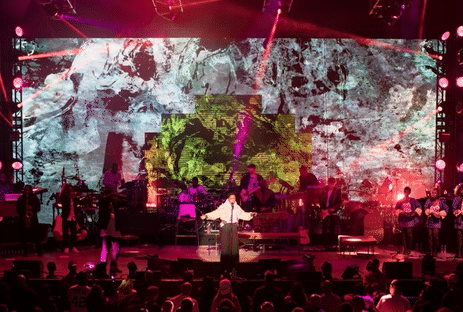
It was the same language Keeley had been speaking all along, just turned all the way up. Analog becoming digital becoming physical again. Paint carrying the grit of a human hand, technology giving it movement, music giving it breath. Nothing confined to the surface it started on. Nothing staying politely inside its assigned medium. Every layer touching another, changing another, making something neither could have made alone.
And when Keeley talks about building a painting like producing a record, you begin to understand that he’s never really been separating the two.
Hear KEELEY
He could feel when something was missing.
Eventually he realized he builds paintings almost like records. Base paint becomes percussion. Another layer enters like bass. Photography drops in. Print. Pigment. Gesture. Texture. Noise. Something gets buried, something else gets pulled forward. He’s made works with what feels like a hundred layers, but eventually learned that more isn’t necessarily more. Put a hundred tracks on a record and you can suffocate the fucking song.
So underneath all the apparent chaos is listening. That matters. Because Keeley’s work isn’t randomness dressed up as instinct. It’s a constant physical conversation: hit it, listen, respond. Add something, bury something, destroy something, rescue something. The work tells him what it needs next.
And sometimes what it needs is dirt.
Hear KEELEY
ALL THAT POWER
Keeley has been putting sand into his paint for years. Montauk. Costa Rica. Hawaii. Malibu. Wherever he happens to be, he’ll reach down, take a handful of the ground beneath him and mix the place itself into the surface. At first he liked what it did physically—the grit, the roughness, the resistance—but eventually he started thinking about what was actually sitting in his palm.
“You pick up a handful of sand and every little piece could be from every little distant corner of the earth, but it all came together in one place.”
Think about that long enough and a handful of sand gets fucking enormous. Thousands of fragments with histories you’ll never know. Rock ground down by water and pressure and time, moved somewhere else.. then moved again. Finally landing beneath one human being’s feet for a few seconds before he scoops it up.
Hear KEELEY
“All that power in one little scoop.”
In Malibu, the sand went into the work. So did ash from the Palisades fires.
That lands differently.
 Something grew there. Someone touched it. Something existed in one form until fire turned it into another. Ryan picks up what remains and folds it into something that didn’t exist before.
Nothing disappears cleanly.
That may be one of the deepest truths inside his work. Matter carries history even after it changes form.
Sand remembers movement. Ash proves something burned. Concrete records impact. Shoes keep the paint you stepped through. Photographs hold bodies that have already moved out of the frame. A shadow disappears when the sun shifts, and Keeley traces where it was.
He is constantly trying to catch things while they’re becoming something else.
FEEL FIRST
“My biggest enemy in making art is trying to think too much.”
Thinking arrives late. The body gets there first.
Hand. Brush. Pressure. Fuck. Wrong mark. Keep moving.
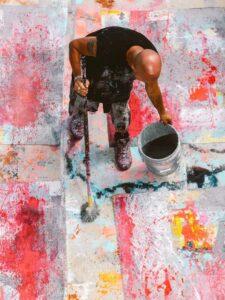
Keeley talks about moments when he’s sure he’s making a mess, only to step away and discover later that the mistake carries more life than whatever he had been trying to control. A technically perfect image can sit there dead. A crooked mark made at the exact moment something ripped through you can vibrate.
Hear KEELEY
“It’s like recording your emotions and energy in real time.”
That sentence gets closer to Keeley than almost any résumé ever could.
He doesn’t seem interested in documenting what something looked like. He wants some residue of what it felt like to be alive while it was happening.
For nearly eighteen years, that life happened largely in New York. Before it, there had been North Carolina, Hawaii, Costa Rica, surfing, nature, open space. Then came concrete, subways, bodies, buildings, velocity. New York gave Ryan pressure and industry and momentum. It sharpened him. But somewhere across nearly two decades, the city also slowly pulled him away from something his body had once known without explanation.
He remembers becoming pale. Unhealthy. Forgetting something as primitive as sun against skin.
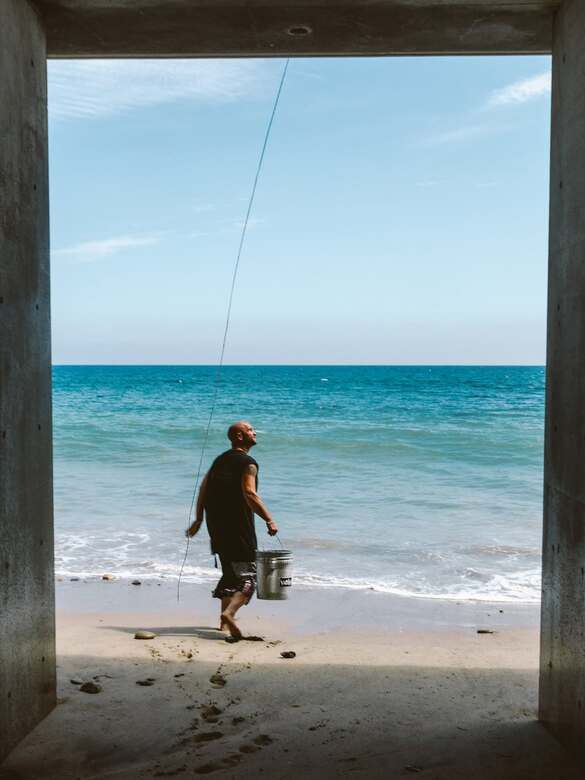 California put him back outside.
The first month in Malibu, Keeley woke with sunrise, slept with sunset. He painted directly above the ocean line. The day stopped being divided by meetings and clocks and started being measured by light, tide, temperature. Shadows moved through the Ando architecture and across canvases lying on the floor. Keeley traced them. Minutes later the sun shifted and the shadow was gone, leaving only the mark where light had briefly touched something.
You can call that painting. You can also call it evidence.
And evidence is all over Keeley’s Malibu work. His body looks small against enormous vertical surfaces, then the camera moves close enough to show paint hardened around individual threads in his shoes. Massive slabs rise against sky and ocean; inches away, wet clumps of material sit euphorically unresolved against pigment. There’s no hierarchy between monumental and microscopic. Keeley seems equally fascinated by the Pacific to whatever the fuck is stuck to the bottom of his sneaker.
Grain of sand. Hand. Body. Canvas. Building. Ocean. Sky.
Pull back. Push in. Same energy. Different scale.
.
 .
. 
DIRTY. HONEST.
Which is why his collaboration with Estevan Oriol feels less like a detour from this body of work and more like another material naturally joining its life’s journey.
Estevan’s work has always carried the opposite of sterility. Flesh. Streets. Chrome. Concrete. Tattoos. Smoke. Hands. Neighborhoods. Faces that have actually lived somewhere. Photographs with fingerprints on their soul. He and Keeley arrive through different mediums, but there’s a shared belief underneath them: leave the human evidence in.
Don’t clean the life out of it.
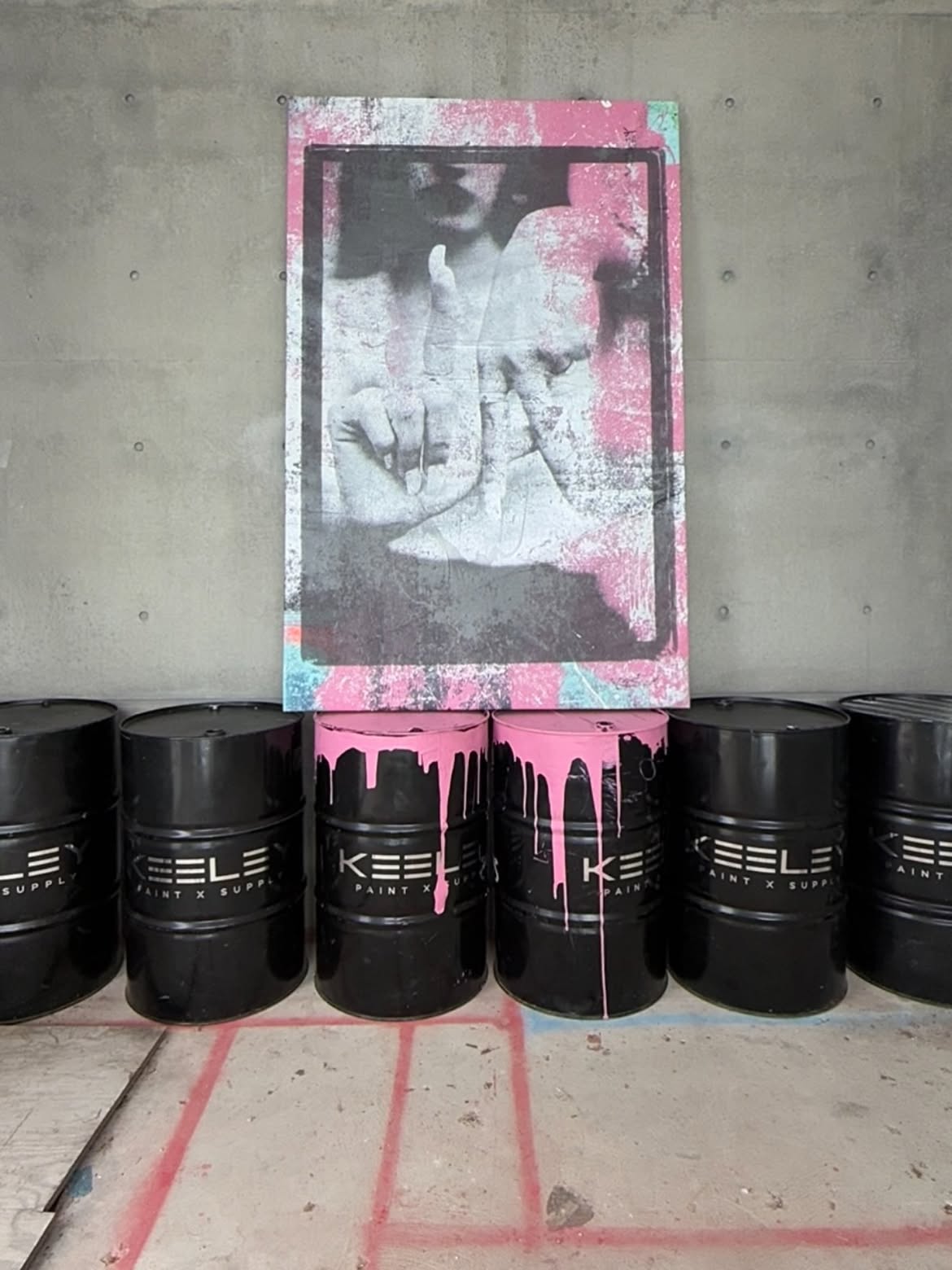
In LA REMIXED, Estevan brings the photograph—Los Angeles already caught through his eye—and Ryan refuses to treat the image as sacred or finished. It gets worked. Layered. Interrupted. Paint moves across photography and beyond it. The surrounding concrete, barrels, steps and objects start absorbing the same language until the photograph no longer feels contained by a rectangular edge. Estevan’s LA and Keeley’s LA start grinding against one another.
That collaboration works because neither artist seems interested in polishing away where something came from.
Estevan preserves the scar. While Keeley adds another one.
One catches a human moment before it disappears; the other buries, exposes and physically remixes it. Photography becomes pigment becomes object becomes environment. The original image is still there somewhere, breathing beneath everything added afterward.
Two artists. Two histories. One surface getting dirtier. And more honest because of it. Maybe that’s Keeley’s real medium.
Not paint. Not photography. Not print.
Raw. Honest. Human.
Hear KEELEY
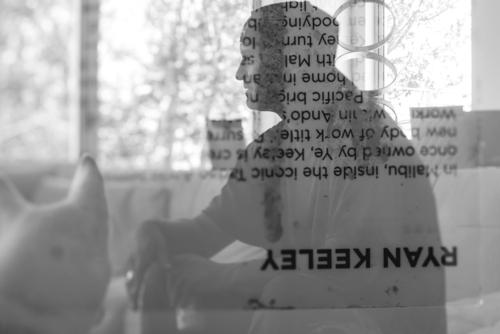
What happens when one thing touches another long enough to leave something behind?
Human against environment. Artist against material. Sun against canvas. Sand against pigment. Fire against landscape. Photograph against paint. Childhood against adulthood. New York against Malibu. Control against whatever refuses to be controlled.
Contact changes both sides. And Keeley certainly doesn’t emerge clean.
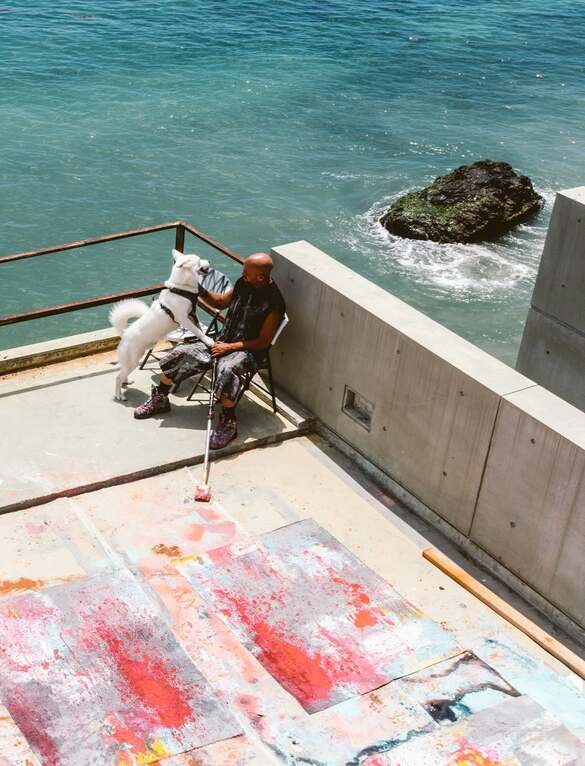
THE NEXT ONE
After almost a year in Malibu, construction finally began on the space. The ending arrived suddenly enough that he couldn’t keep negotiating with it. His final photo shoot wrapped. His body basically shut down. He slept for nearly two days.
“I’m like 110% all in. So it’s like physical, mental, emotional.”
Before that collapse came one last session.
For months he had been meticulous – Building. Responding. Balancing. Knowing there could always be another layer tomorrow. Then there wasn’t.
So he stopped protecting the work. He threw the remaining sand into concrete. Poured. Threw paint. Let it go. Worked “like there was no tomorrow.” And somewhere inside that final mess, the grown man disappeared.
Four years old. Paint on his hands. Decades later, paint on his hands.
Everything in between might just be layers.
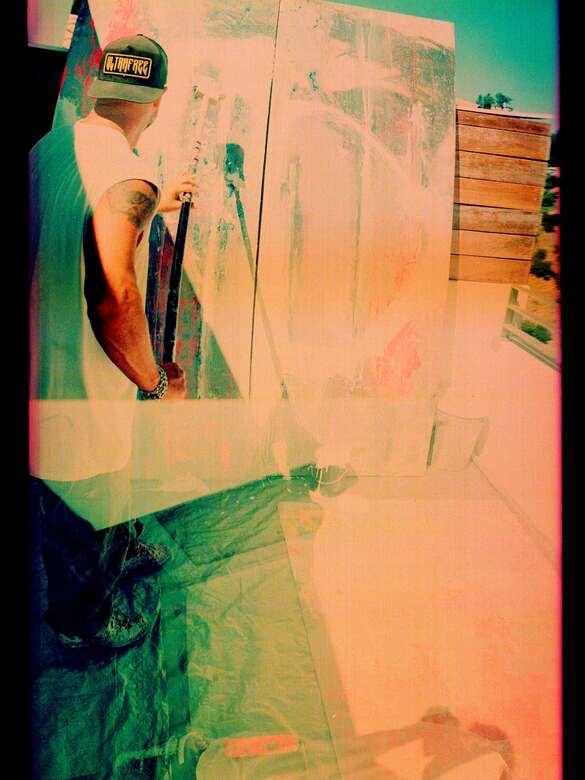 Keeley remembers fingerpainting in his parents’ garage. He remembers the completely uninhibited feeling of making something before you understand that other people might judge what you make. Before career. Before market. Before you know the “correct” use for an object. Before you learn to become embarrassed by curiosity.
Every new canvas gives him a tiny portal back there.
In Malibu he would sometimes be throwing paint while the sun came up, look around at this impossible concrete shell above the Pacific and start laughing.
How the fuck did I get here? The answer is simple. He kept playing.
Most kids throw paint. Most kids turn stairs into mountains and cardboard boxes into spaceships and destroy things because they desperately need to know what’s inside. Then at some point we’re taught to stop touching everything.
Keeley never fully listened. Maybe that’s why, after decades of making work, his favorite piece is still the next one.
The next one has no history yet. No sand stuck to it. No ash. No photograph. No scar. No mistake he has to rescue. Nobody has told it what it is supposed to become.
It’s just a surface. And Keeley standing in front of it.
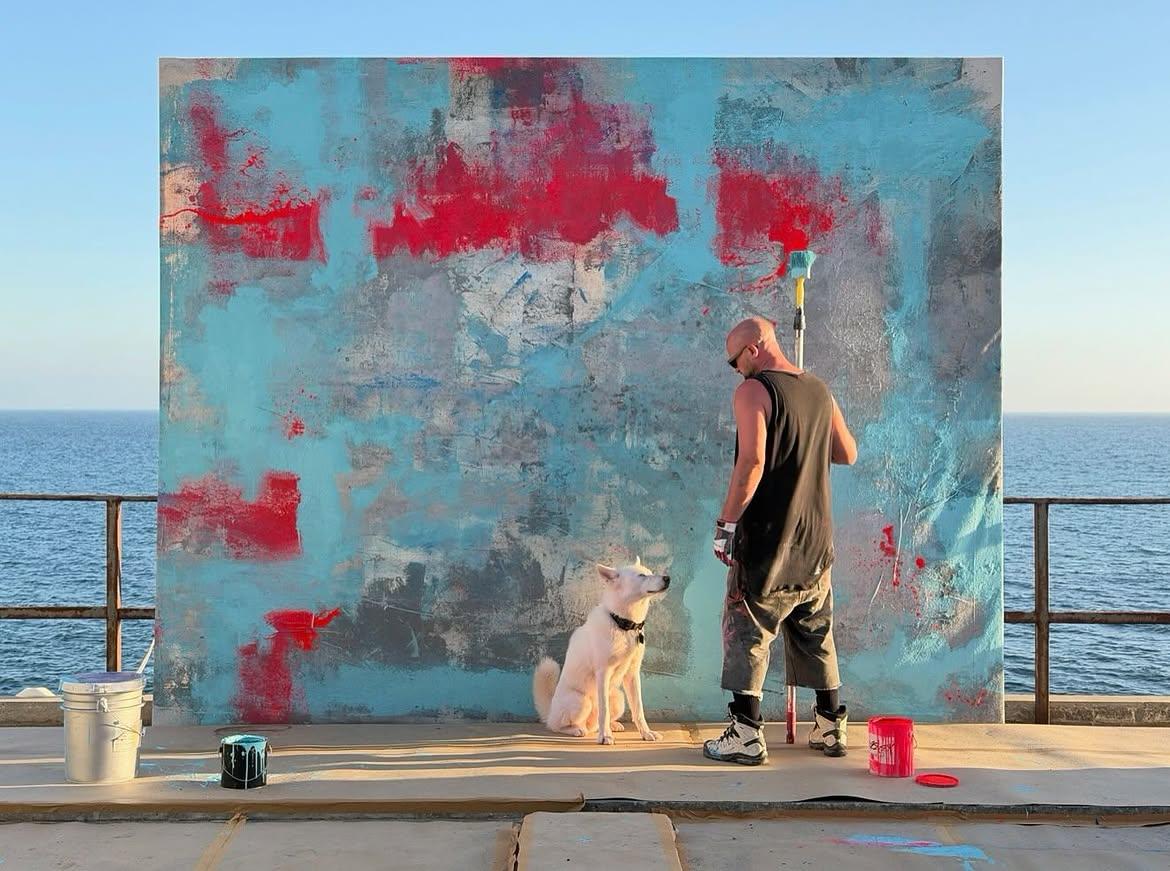
Hear KEELEY
“I think it’s more about making pieces that you can feel rather than pieces you can look at.”
That tracks, because Keeley doesn’t really believe the paintings are the artwork anyway. He thinks the real art is the entire thing—the beginning of a life to the end of it, morning to night, every choice and place and person and collision along the way. The objects left behind are “just kind of a byproduct.”
Of course they are.
The skate shop was part of the work. The stairs outside the car window. The printer he broke open. Ms. Lauryn Hill. New York. Costa Rica. Malibu. Tadao Ando’s concrete. The Pacific. The fires. The ash. The sand. Estevan. The photograph. The paint-caked shoes. The exhaustion. The fucking mess.
Maybe the paintings were never the point. Maybe the point is to stay this fucking alive.
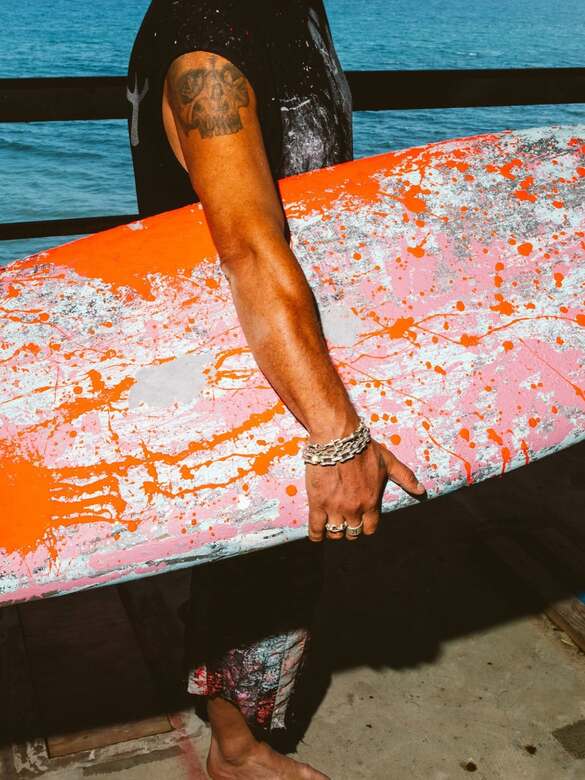 Alive enough for a drum to become color. For sunlight to become a line. For sand beneath your feet to carry entire worlds inside a single handful. For another artist’s photograph to open a door you didn’t know was there. For a staircase to become possibility before anyone can tell you what it was built for.
To move through life with every sense turned all the way up.
Before we learn to separate sound from sight. Art from life. Beautiful from messy. Right from wrong. Before we learn that paint is supposed to stay on the canvas and dirt on the ground. Before we become self-conscious enough to ask whether what comes naturally out of us is any good.
Hear KEELEY
Before feeling becomes thinking.
That might be the place Keeley has spent his entire life trying not to lose. Four years old, fingerpainting in his parents’ garage. Decades later, inside a concrete monument above the Pacific, throwing paint while the sun comes up and laughing to himself:
How the fuck did I get here? Maybe he never went that far.
The materials changed. The scale exploded. The world got bigger. New York happened. Music happened. People happened. Fire, ocean, concrete, photographs, mistakes, exhaustion, friendship, collaboration, loss, sunlight—all of it got absorbed along the way.
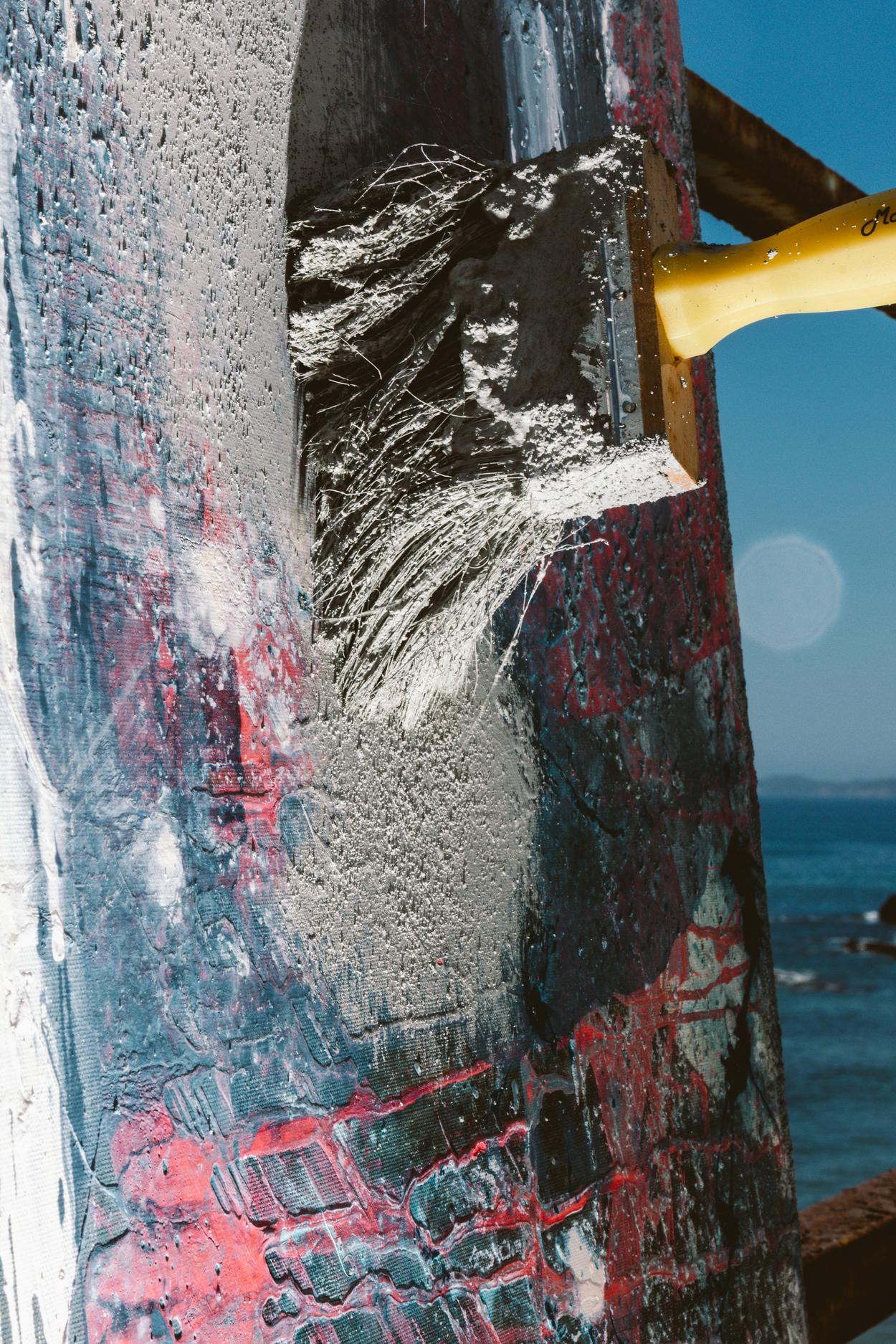
Layer after layer after layer.
But underneath it is still the same raw impulse:
Feel something. Follow it.
Maybe that’s what Keeley means when he says the real artwork is the life itself. The paintings are simply what happens when some of that life spills out through his hands. And his favorite is still the next one.
Because for one beautiful second, before the first mark lands, nothing has been decided yet. No right way. No wrong way. No edge.
Just instinct.
Now you feel it too. The primal frequency. Wide open. Alive in every sense. Raw. Untamed. The beautiful freeing frequency of being alive.
His favorite piece is still the next one.
What happens if I do this?
_