
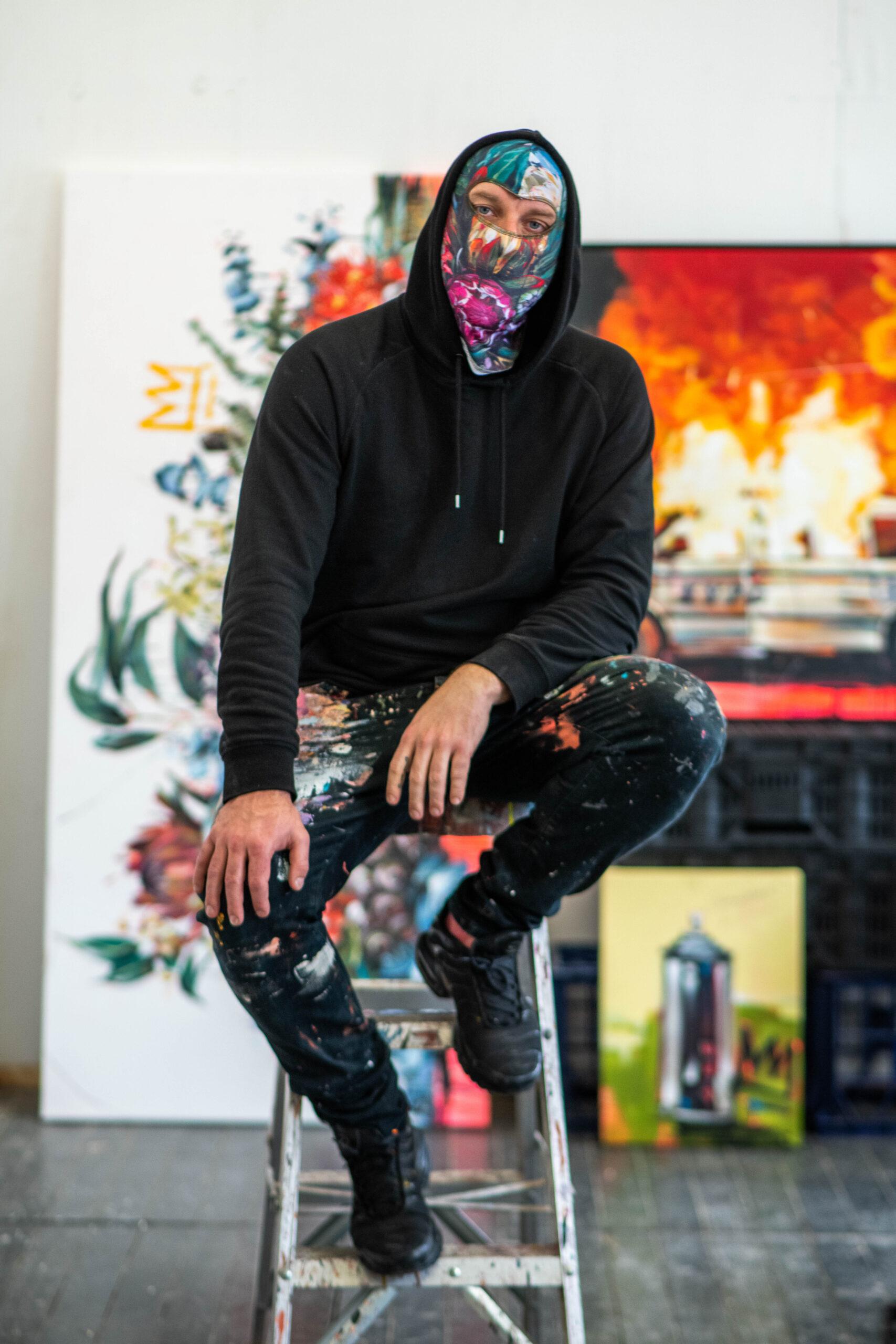
Scott Marsh has spent more than a decade turning the streets of Sydney into a canvas for satire, social commentary, humour and straight-up mischief. What started with graffiti at the age of twelve has evolved into a distinctive body of work that moves between walls, paste-ups, studio paintings, prints and public installations — often blurring the line between street art and social commentary.
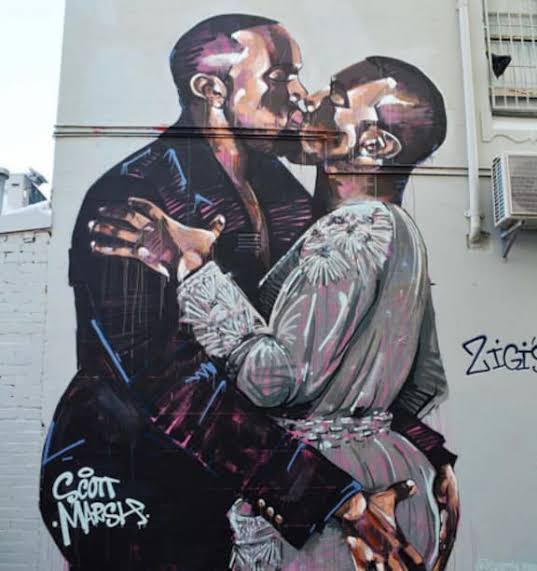
From his internationally recognised Kanye Kissing Kanye mural to his Casino Mike work targeting then NSW Premier Mike Baird during Sydney’s lockout-law era, Marsh has consistently used humour as a way into bigger conversations. His work can be political without feeling like a lecture, provocative without losing its sense of fun, and deeply Australian in its embrace of the larrikin spirit.
His relationship with the street remains central to the work. Location, public interaction and the unpredictability of putting an artwork into the real world all play a role. Some works are removed, some are censored, while others become viral images that travel far beyond the wall they were painted on. For Marsh, that lifecycle is part of the process.
As his work continues to evolve, so does his perspective. Now looking increasingly outside Australia for inspiration, Marsh is preparing a new body of work centered around what he calls the “Spirit of Rebellion” an idea he believes is needed now more than ever.
As Frank 151 talks to Scott Marsh, we get into graffiti, finding your artistic voice, the power of humor, viral murals, censorship, working outside the traditional art world and what comes next.
Frank 151: You’ve spoken about starting graffiti when you were around twelve. What first pulled you into that world, and what kept you there?
Scott Marsh: I’ve heard other established graffiti writers talk about how graffiti immediately resonated with them, and that’s exactly how it felt for me. I knew nothing about it and I knew no one who did it, but for some reason, when I first noticed it, all I could think was, “I want to do that.”
Frank 151: You’ve said the harder part of being an artist is not learning how to paint, but figuring out what you want to say. When did your own artistic voice become clear to you?
Scott Marsh: In 2017, I painted a mural of then NSW Premier Mike Baird as “Casino Mike,” protesting Sydney’s lockout laws, which were killing the city’s nightlife and leaving a lot of my mates out of work as bartenders, DJs, promoters, strippers, etc.
Before that, I’d been completely divorced from politics. But that issue, and the subsequent mural, got me politically engaged and made me realise that I could communicate issues through my work. I think that was the mural that changed the direction of my work.
Frank 151: Your political engagement grew partly out of Sydney’s lockout laws and the “Casino Mike” mural. Do you see anger, humour, or curiosity as the stronger starting point for your work?
Scott Marsh: I think humour is the number one hook in my work. It cuts through all the other bullshit and speaks to the Australian larrikin spirit.
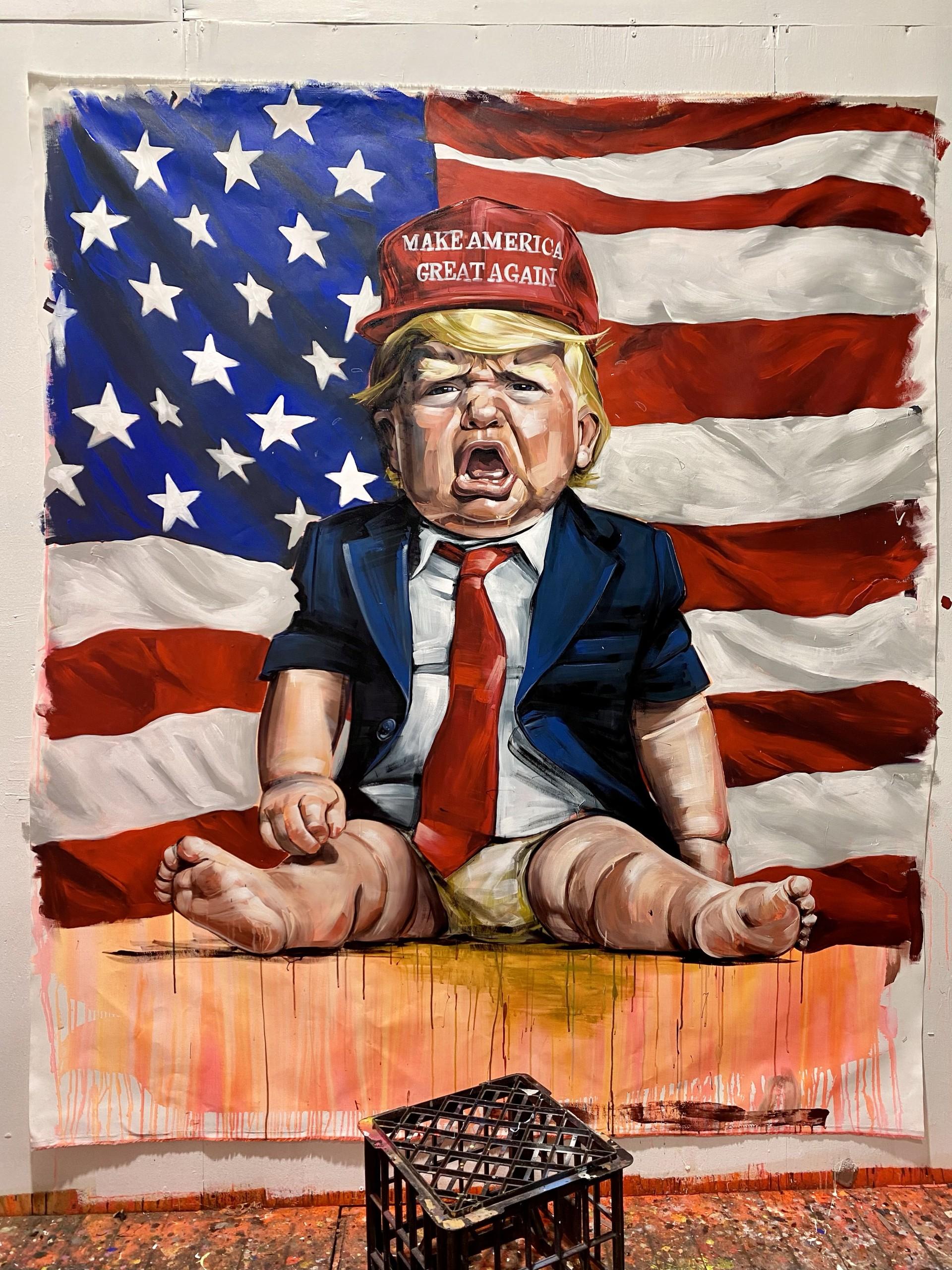
Frank 151: Many of your murals use satire to comment on politicians and public figures. How do you decide when a subject deserves to be mocked, challenged, or turned into a public spectacle?
Scott Marsh: There’s no rhyme or reason to why or how I paint about a person or issue. It could be an issue I’m passionate about, something that affects a friend, or it could just be a great idea that I know will resonate with the zeitgeist. There’s no hard rule.
Often ideas seem to pop into my head seemingly out of nowhere, as if the universe just handed them to me. It’s my job to send them out into the world.
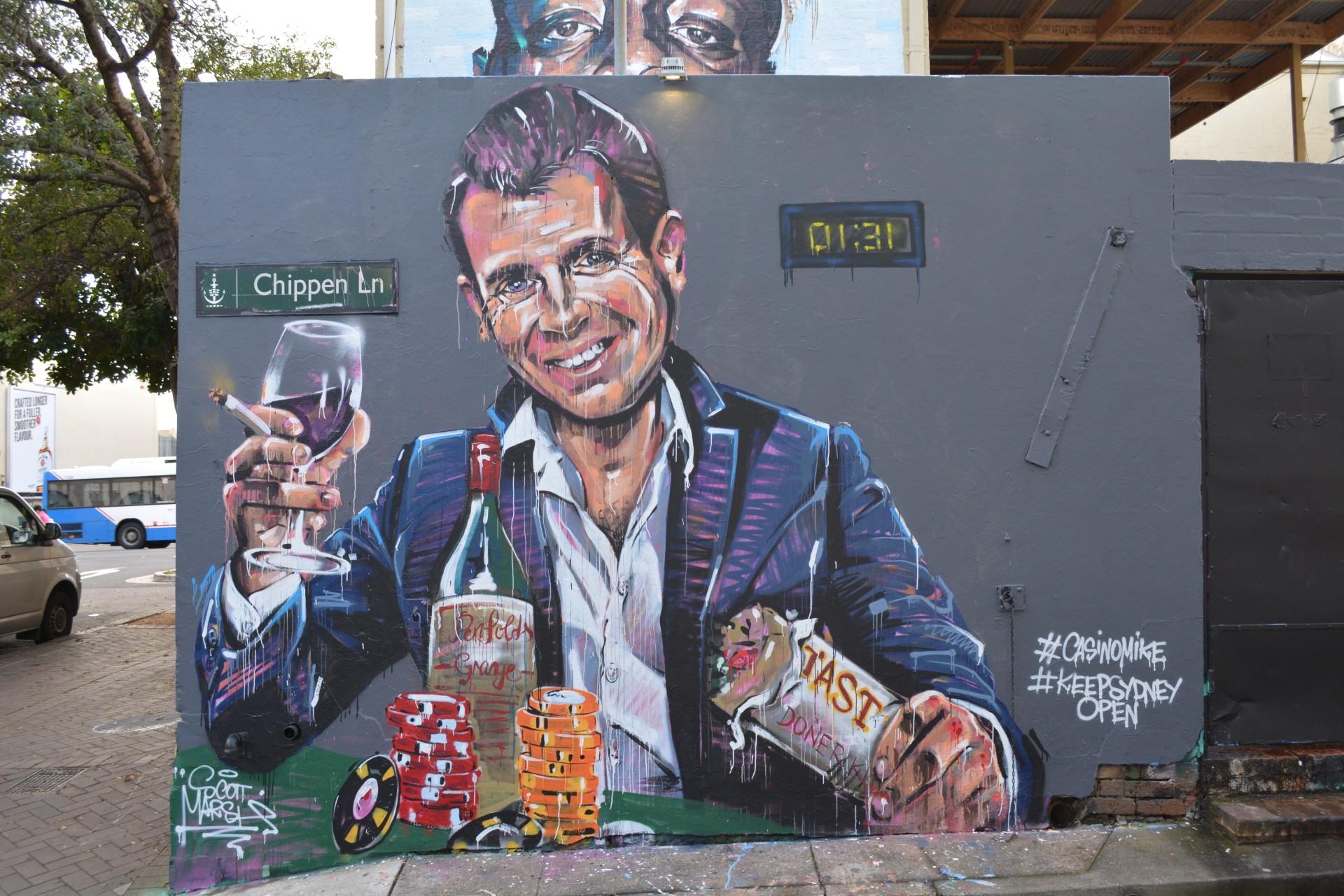
Frank 151: Location seems central to your murals, especially when a work appears near a politician’s electorate, office, or symbolic public site. How do you choose the right wall for the right message?
Scott Marsh: Finding a wall is the hardest part of any mural. Obviously, location can give the work so much more context and force.
A lot of the time, I don’t find the wall — the wall finds me. Someone offers one up, or I see a spot that’s high traffic with minimal obstacles like windows, drains, etc., and just knock on the door.
More recently, I’ve created a lot of large-scale paste-up murals, with some painted elements, but with the central figures pre-prepared in the studio and then stuck up on the wall. This allows me to install the work quickly without permission and choose a location with the most oomph. I create works like this a lot when I travel.
Frank 151: Your “Kanye Kissing Kanye” mural became internationally viral. Did that moment change how you thought about street art, publicity, or the life of an artwork once it leaves your control?
Scott Marsh: Yeah, big time. It was a crash course in how the media operates. It got me interested in social commentary and made me realise how big an audience I could reach by painting outdoors and using the internet.
My potential audience went from local to global.
Frank 151: A lot of your work invites public interaction, from selfies to people physically engaging with the mural. Why is participation so important to you?
Scott Marsh: I love interactive work. Getting people involved in their landscape is fun, and it makes people engage more with the issue and the work.
Frank 151: You’ve moved between graffiti, large-scale murals, paste-ups, studio work, and prints. How does your thinking change when you move from the street into the studio?
Scott Marsh: I was always painting outside as a graffiti writer, so the most difficult thing for me was creating a studio practice — shrinking everything down to fit within the confines of a canvas.
It’s a different flow. It’s very considered, with a lot of time spent pondering the next brushstroke. Painting outside is more about executing a plan, with little space for experimentation.
Frank 151: You’ve described yourself as still feeling like an outsider to the traditional fine art world. Do you think that outsider status protects the honesty of your work?
Scott Marsh: If I wanted a boss, I’d get a real job. No one gets to tell me what to do, and that’s the way I like it.
Frank 151: Some of your murals have been censored, removed, or criticised. How do you separate useful public debate from attempts to shut the work down?
Scott Marsh: It’s all part of the process. Whenever a mural gets destroyed, it usually amplifies its message times a hundred.
My work finds its audience for the most part online, so as long as I get a photo, I’m not too bummed out when they’re destroyed.
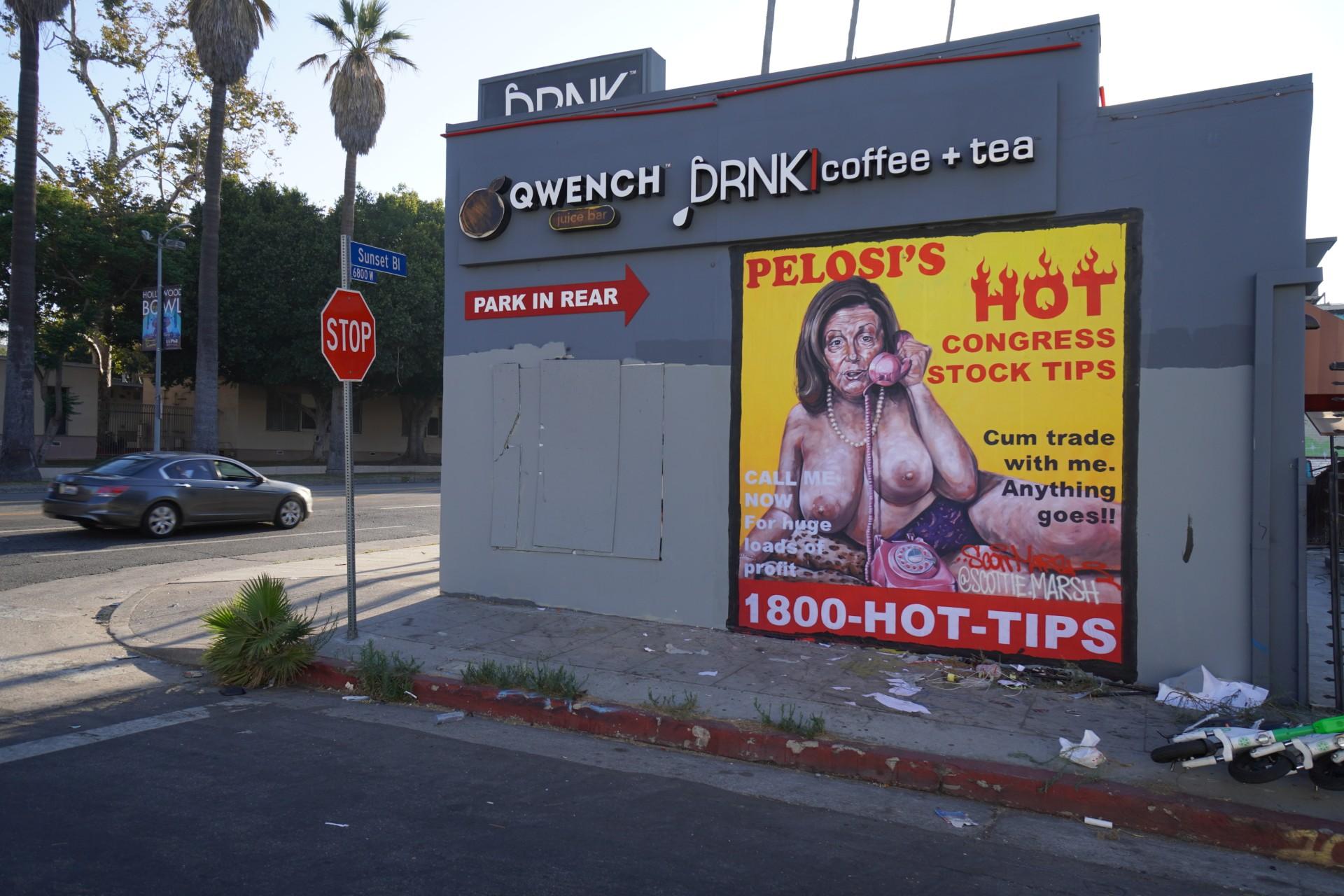
Frank 151: Looking at Australia now, what subjects, politicians, or cultural moments do you think most urgently need to be painted on a wall?
Scott Marsh: To be honest, after painting Australian pollies for ten years, you start to realise that it’s all a repetitive charade. The same issues get recycled and nothing really gets done.
Frank 151: How do you see street art evolving in 2026, and where does Australia fit into that global conversation?
Scott Marsh: I think I’ve started looking outside of Australia a lot more for inspiration.
I also have a new body of work I’m about to embark on focused on the “Spirit of Rebellion” something I think, as a human race, we need now more than ever.