

After years of debate, delays, and political back-and-forth, cannabis rescheduling is no longer just talk, it’s becoming a federal reality.
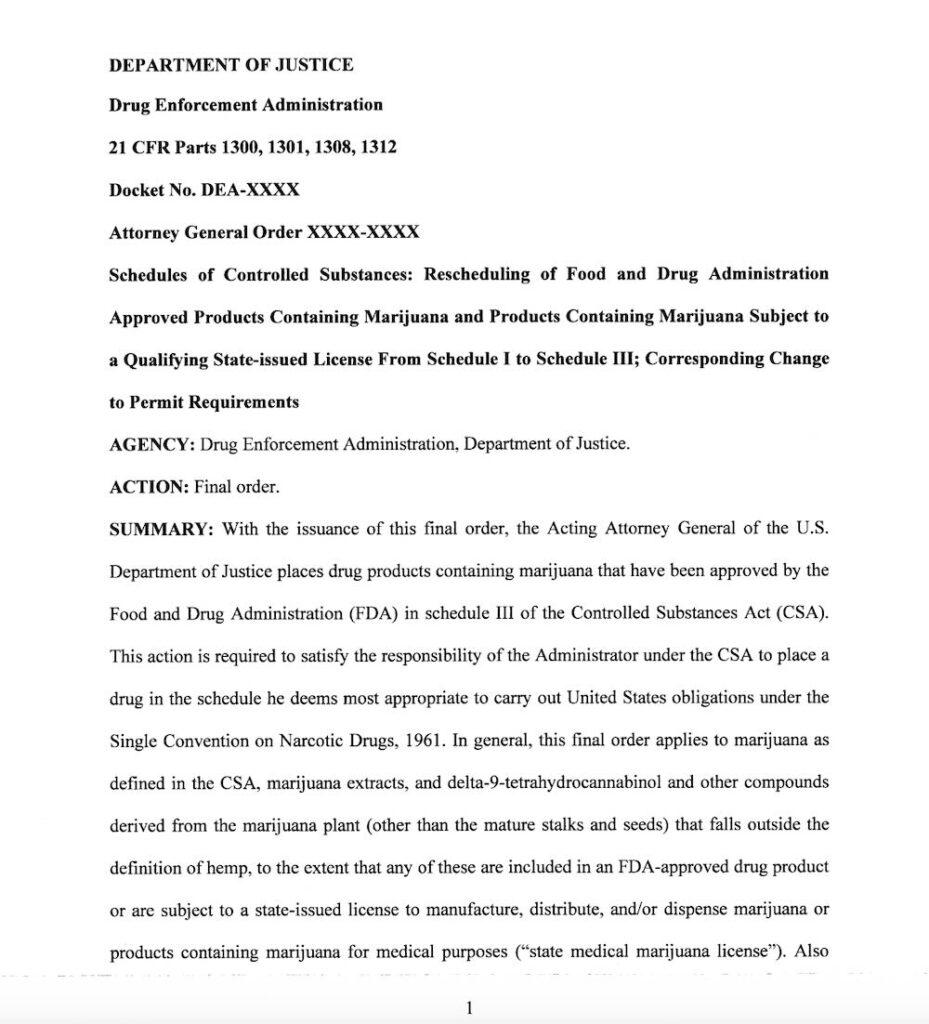
The U.S. government is officially moving to reclassify marijuana from a Schedule I drug the same category as heroin — to Schedule III, a group that includes substances with accepted medical use.
It’s a major shift. But it’s also more complicated than it sounds.
What’s Changing
For decades, cannabis has been classified as having “no accepted medical use” under federal law. That designation has shaped everything from research restrictions to criminal enforcement.
Rescheduling to Schedule III signals a clear change in how the government views the plant. It acknowledges medical value and opens the door to expanded scientific research and potential pharmaceutical development.
It could also ease one of the biggest financial burdens on the legal cannabis industry: federal tax code 280E, which has prevented businesses from taking standard deductions.
That alone could reshape the economics of the industry.
What’s Not Changing
Despite the headlines, this is not federal legalization.
Cannabis will still be illegal at the federal level for recreational use. State-legal markets will continue to operate in a legal grey area, and federal enforcement policies won’t suddenly disappear.
In other words, this is progress but it doesn’t resolve the core conflict between state and federal law.
Why It Matters
The move to reschedule cannabis is one of the most significant federal policy shifts in decades.
It reflects growing public acceptance, a rapidly expanding legal market, and increasing pressure on regulators to modernize outdated drug laws.
More importantly, it removes a major barrier to research. Scientists have long argued that Schedule I status made it unnecessarily difficult to study cannabis in a meaningful way.
That could now change.
The Bigger Picture
Rescheduling doesn’t end prohibition, but it does mark a turning point.
It’s a signal that federal policy is starting to catch up with reality even if it’s doing so cautiously.
What comes next is still unclear. Full legalization, broader reform, or continued incremental change are all still on the table.
But one thing is certain: the conversation has shifted.
And this time, it’s not just rhetoric , it’s policy.