
Street Fighter (1987) holds a strange place in gaming history. As the first entry in what would become one of the most iconic fighting game franchises of all time, you’d expect it to be widely remembered and celebrated. Instead, it’s often overlooked—even by longtime fans of the series.
Released by Capcom in arcades, Street Fighter introduced players to Ryu, a martial artist traveling the world to prove his strength against a variety of opponents. The game featured one-on-one combat across international stages, laying the groundwork for the global tournament concept that would later define the series. It even included early versions of signature moves like the Hadoken and Shoryuken.
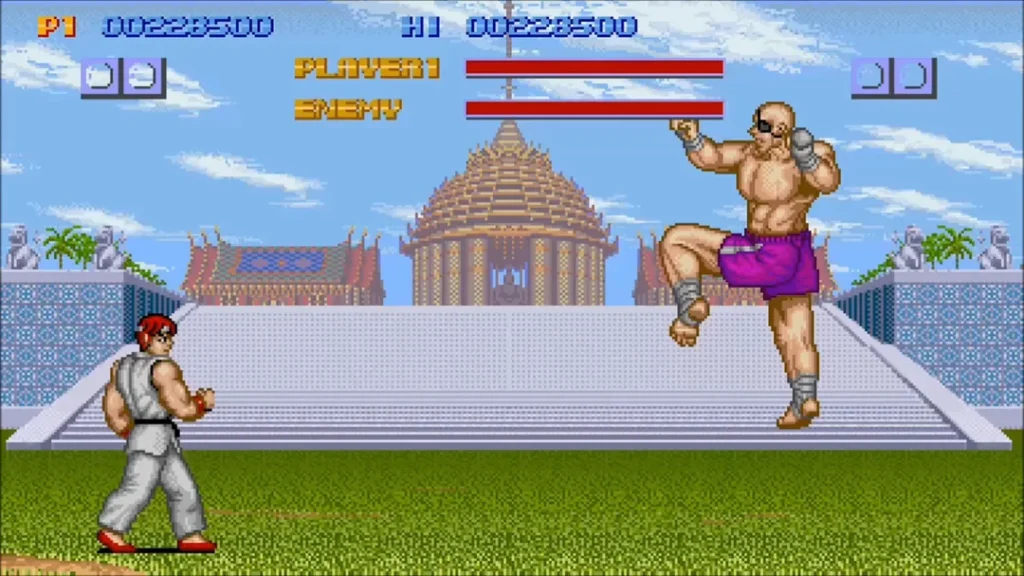
But despite these ideas, the game itself was clunky and difficult to control. The original arcade cabinets experimented with large pressure-sensitive punch and kick buttons that detected how hard players struck them. In practice, the system was unreliable and often resulted in players literally punching the machine as hard as they could. Later cabinets replaced this with the now-familiar six-button layout, but the gameplay still felt stiff and unrefined.
Because of these issues, Street Fighter never achieved the lasting popularity that its sequel would. When Street Fighter II launched in 1991, it revolutionized the genre with smoother controls, distinct characters, and competitive depth—effectively redefining what a fighting game could be. Compared to that landmark sequel, the original game quickly faded into the background.
Today, Street Fighter (1987) remains more of a historical curiosity than a beloved classic. Yet its importance can’t be denied: without it, one of the most influential franchises in gaming might never have existed.