
Twelve years after his last North American tour, the French Touch dandy brought “Kiss the Beast” stateside, and told FRANK151 why his contradictions finally add up.
Written by Eric B. Thornton
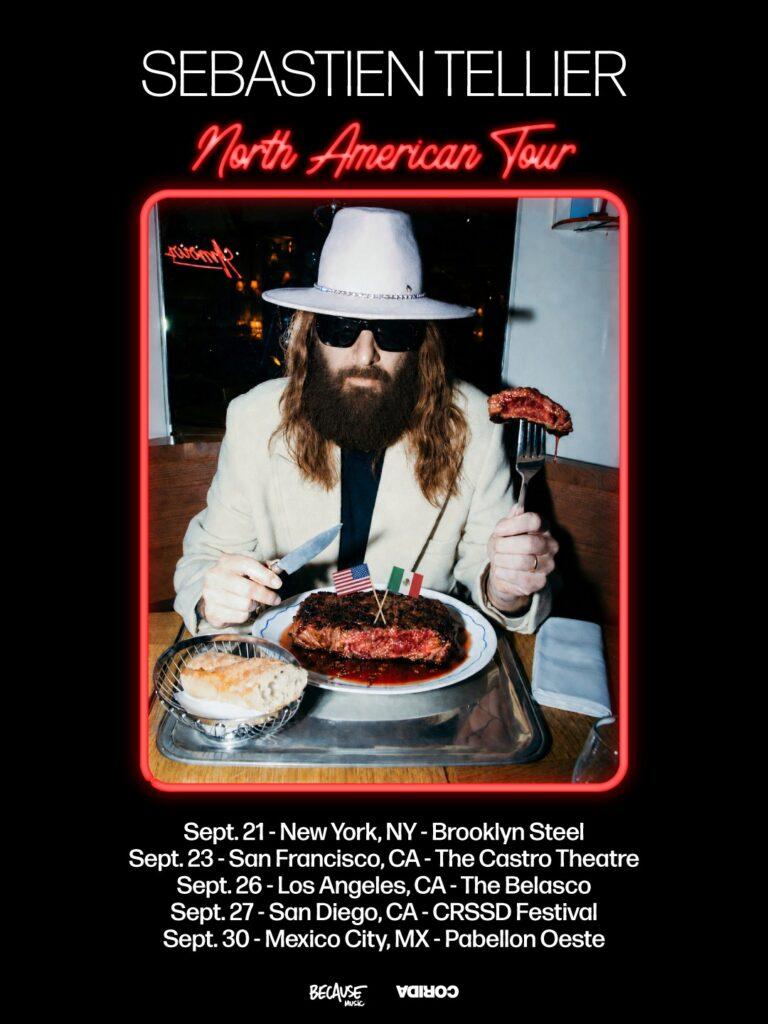
On the poster for his North American tour, Sébastien Tellier sits in a restaurant booth in a cream suit and a white wide-brim hat, sunglasses on indoors, carving into a steak with two tiny toothpick flags planted in it, one American and one Mexican. It’s ridiculous, and if you’ve followed him at all, it’s also completely sincere. Tellier has never been able to separate the joke from the romance. Two decades in, he’s stopped trying.
The run was his first on this continent since 2014. It opened at Brooklyn Steel on September 21, stopped at San Francisco’s Castro Theatre two nights later, hit The Belasco in Los Angeles on the 26th and CRSSD in San Diego the day after, and closed last night at Pabellón Oeste in Mexico City. (Full disclosure: I spent that Saturday at Pier 80 for Portola, which put about 380 miles between me and the Belasco. A scheduling crime I’m still processing.)
Twelve years is long enough for a reputation to change shape without you. Last time Tellier toured here, plenty of Americans knew him as the bearded Frenchman who sang “Divine” at Eurovision 2008, or the man behind “La Ritournelle,” a cult record for import-vinyl people. What he found this time was a room split down the middle.
“What touches me is seeing people who already knew my music back then, but also seeing many much younger people who discovered it in the meantime,” he told me over email before the tour. “The internet has completely changed the geography of music. So sometimes I feel like I’m coming back after twelve years and, at the same time, meeting my American audience for the first time.”
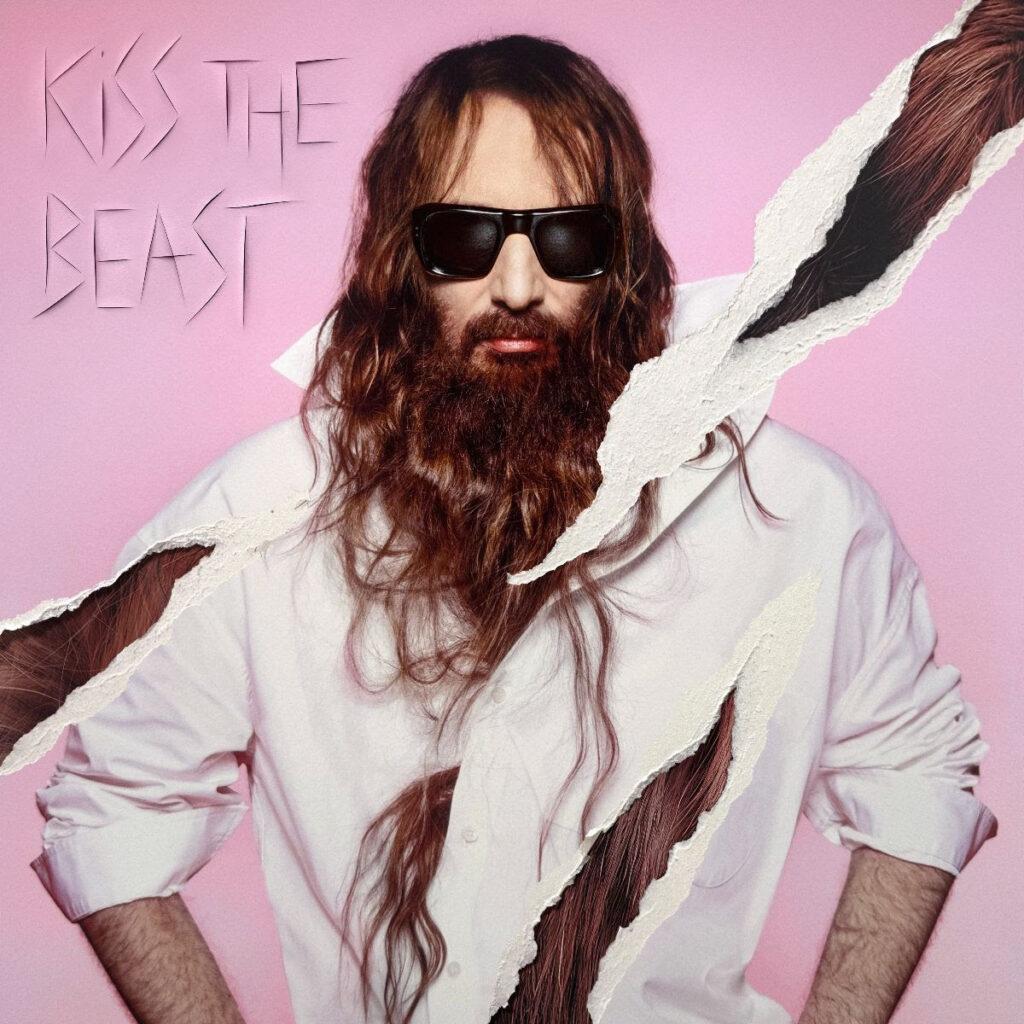
That doubleness is the whole engine of Kiss the Beast, his eighth album and his first since 2020’s Domesticated, released on Because Music in January. Look at the tracklist: “Mouton” sits near the top, “Loup” near the end. The sheep and the wolf, with “Romantic,” “Animale” and “Copycat” fighting it out in between.
“Accepting all the contradictions inside us. That is really at the heart of Kiss the Beast,” Tellier says. “The wolf and the sheep, the executioner and the victim, instinct and control, nature and technology. For a long time, maybe I was looking for a kind of coherence in my records. This time, I understood that the contradictions could actually be the coherence.”
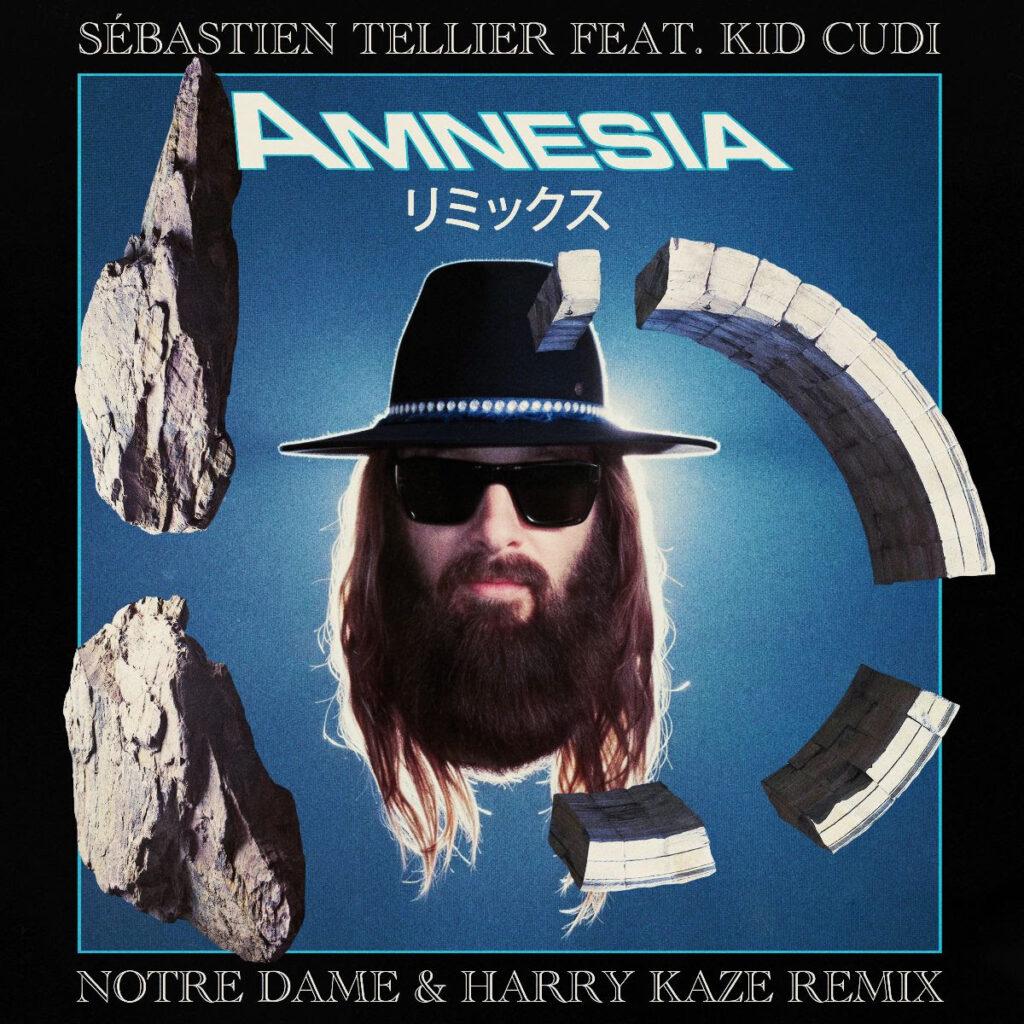
“Amnesia” with Kid Cudi, which French producers Notre Dame and Harry Kaze dragged into the club this summer. Tellier doesn’t sound possessive about it at all. “I love when a song starts to escape from me,” he says. “For me, it’s almost like watching someone have a different dream from the same memory.”
That generosity extends to the character, too: the hair, the beard, the cap, the dark glasses. “In the beginning, the character maybe allowed me to go further than I could in real life: to be more romantic, more extravagant, more excessive, more mysterious,” he says. “As you get older, you know yourself better and you also feel less need to hide. The character still exists, of course, but he probably reveals much more of me than before.”
That generosity extends to the character, too: the hair, the beard, the cap, the dark glasses. “In the beginning, the character maybe allowed me to go further than I could in real life: to be more romantic, more extravagant, more excessive, more mysterious,” he says. “As you get older, you know yourself better and you also feel less need to hide. The character still exists, of course, but he probably reveals much more of me than before.”
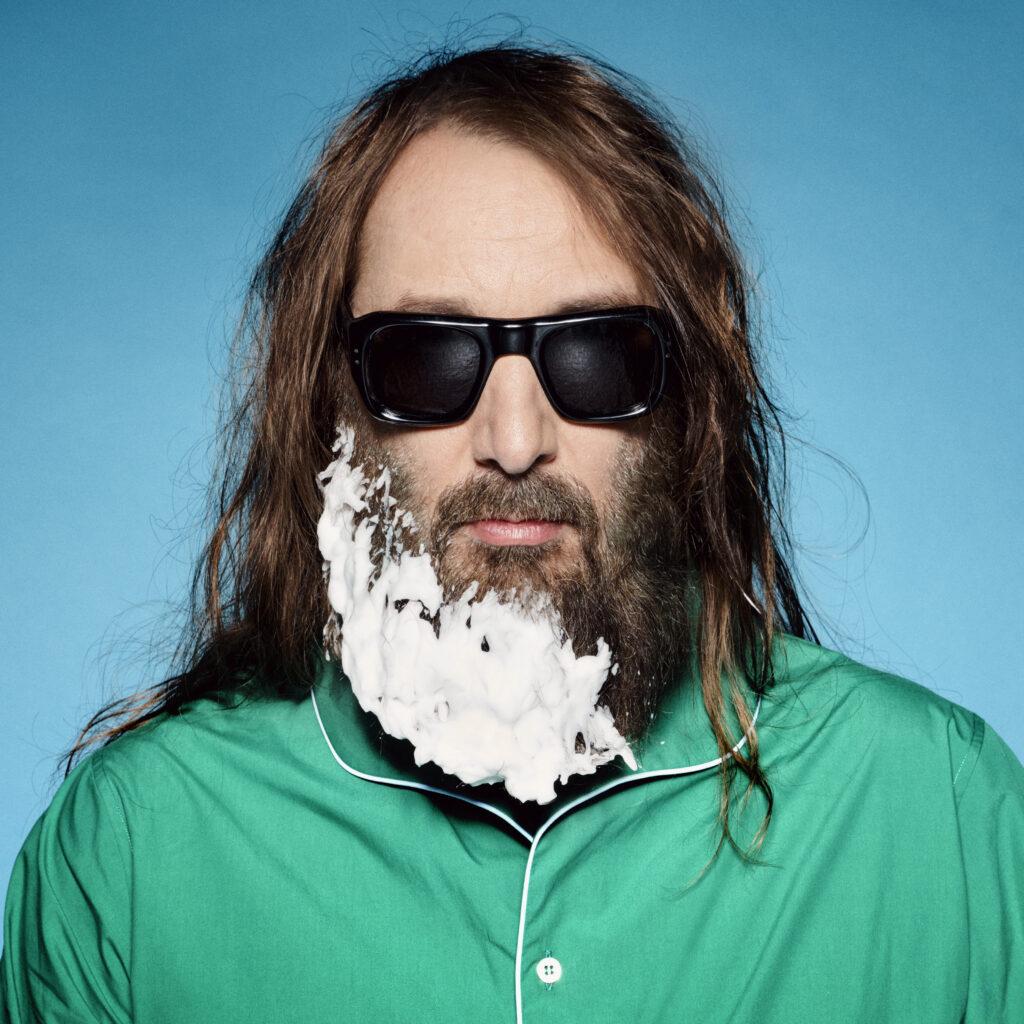
Ask him to curate his own three-night festival, the FRANK151 tradition, and the answers are pure Tellier. Giorgio Moroder on Friday, “to start the weekend with music that immediately makes you feel like it’s nighttime, even if it’s still 6 PM.” The Beatles on Saturday, all four of them. And Serge Gainsbourg on Sunday, because “Sunday is a more melancholic, more elegant day.” Kiss the Beast ends on a track called “Un Dimanche en Famille,” a Sunday with the family. Of course it does.
What he wanted from these shows wasn’t applause. “I don’t want them to simply think, ‘That was a good concert,'” he says. “I would like an image, an emotion, maybe even something a little absurd, to stay with them and come back the next day. If someone wakes up the next morning with that feeling, then the concert worked.”
Somewhere between Brooklyn and Mexico City, a few thousand people woke up this week with a wolf, a sheep and a steak stuck in their heads. Twelve years was too long, Sébastien. Let’s not do that again.
Stream Kiss the Beast, out now on Because Music.
Connect with Sébastien Tellier: Website · Instagram · TikTok · YouTube
The Full Interview: Sébastien Tellier x FRANK151
Let’s start with the FRANK151 tradition: if you could curate a three-night festival with one headliner each night, dead or alive, who closes Friday, Saturday, and Sunday, and why?
Friday, Giorgio Moroder. To start the weekend with music that immediately makes you feel like it’s nighttime, even if it’s still 6 PM.
Saturday, The Beatles. For me, they represent something incredible in the history of pop: this ability to write huge melodies while always being inventive. Their talent as songwriters still fascinates me. I would simply love to see the four Beatles together onstage and hear those songs played by the people who imagined them.
And Sunday, Serge Gainsbourg. Sunday is a more melancholic, more elegant day. I think his music would be perfect to close the festival. And mostly, I would just love to see him perform.
You have spent more than two decades moving between pop, electronic music, film, fashion, and pure Sébastien Tellier mythology. Does the character people see onstage feel separate from you now, or has he slowly become the most honest version of you?
The two have probably become closer with time. In the beginning, the character maybe allowed me to go further than I could in real life: to be more romantic, more extravagant, more excessive, more mysterious. Today, I feel less need to know where the person ends and where the artist begins.
As you get older, you know yourself better and you also feel less need to hide. The character still exists, of course, but he probably reveals much more of me than before.
This is your first North American tour in roughly 12 years. What does returning to these rooms now feel like, and what do you think has changed most about the way American audiences hear your music?
Twelve years is a very long time. What touches me is seeing people who already knew my music back then, but also seeing many much younger people who discovered it in the meantime.
The internet has completely changed the geography of music. Today, a French song that is twenty years old can be discovered by someone in America as if it had just been released. So sometimes I feel like I’m coming back after twelve years and, at the same time, meeting my American audience for the first time.
Kiss the Beast feels deliberately wide-open: intimate, glamorous, playful, melancholy, and occasionally very strange. Was there a central idea holding that world together while you were making it?
Yes: accepting all the contradictions inside us. That is really at the heart of Kiss the Beast. The wolf and the sheep, the executioner and the victim, instinct and control, nature and technology.
For a long time, maybe I was looking for a kind of coherence in my records. This time, I understood that the contradictions could actually be the coherence. You can be tender and wild, naïve and sophisticated, happy and melancholic. All these things can exist at the same time inside the same person.
“Thrill of the Night” brings together Slayyyter and Nile Rodgers, two artists with completely different kinds of pop electricity. What did each of them bring into the room that surprised you?
Their difference is exactly what interested me. Nile has a way of playing that is immediately recognizable. Just a few notes of guitar and suddenly there is this elegance, this groove, and a whole history of music entering the song.
Slayyyter brings something much more contemporary, free and provocative. Her voice immediately gives the song another color.
What I love is that neither of them disappears into the song. You hear Nile, you hear Slayyyter, you hear me too, and somehow the three worlds end up belonging to the same song.
“Amnesia” with Kid Cudi has now been reshaped by Notre Dame and Harry Kaze. What is it like hearing a song that began as something personal become a club record with a new life of its own?
I love when a song starts to escape from me. Once it is finished, it doesn’t completely belong to me anymore.
A remix can reveal something that was hidden inside the original song. Notre Dame and Harry Kaze took it somewhere else, towards the club, while keeping something of its emotion. For me, it’s almost like watching someone have a different dream from the same memory.
“La Ritournelle” has followed you for 20 years and recently became part of the Paris 2024 Paralympic opening ceremony. When a song grows that far beyond its original moment, do you still hear it as the person who made it?
Less and less. And that is probably the most beautiful thing that can happen to a song.
When I made “La Ritournelle,” of course I couldn’t imagine that people would still be talking about it twenty years later, and even less that it would become part of an event like the Paralympic Games in Paris.
Today, the song contains the memories of the people who listened to it, loved it, and used it for moments in their lives. When I play it, I can feel that the audience has a relationship with it that doesn’t belong to me. I’m still the person who composed it, but I’m not really its owner anymore.
Your live shows have always balanced elegance, humor, and a little bit of cosmic mischief. For this North American run, what is one feeling, or one unexpected detail, you want people to leave the room carrying with them?
I would like them to leave with the feeling that they experienced something they can’t completely explain.
I don’t want them to simply think, “That was a good concert.” I would like an image, an emotion, maybe even something a little absurd, to stay with them and come back the next day.
The music I love the most has always done that to me. It leaves a little trace in real life. If someone wakes up the next morning with that feeling, then the concert worked.