
created by Sarah Rose
Breath disappears. Skin tightens. The heart accelerates. Thought gets remarkably simple.
There is a particular second when cold water stops being cold and becomes everything.
For a moment, everything constructed falls away. No metric can experience the water for you. No language can negotiate with it.
Skin meeting world.
There is something beautifully primal about being reduced to sensation.
The body has been making calculations like this since long before we had language for them.
Heat. Cold. Pressure. Pain. Pleasure. Threat. Relief.
A hand pulls away from flame. A child quiets against a warm chest. The instinct to rub the place we’ve just hurt.
We were born into an extraordinary sensory intelligence.
…then we started experimenting with it.
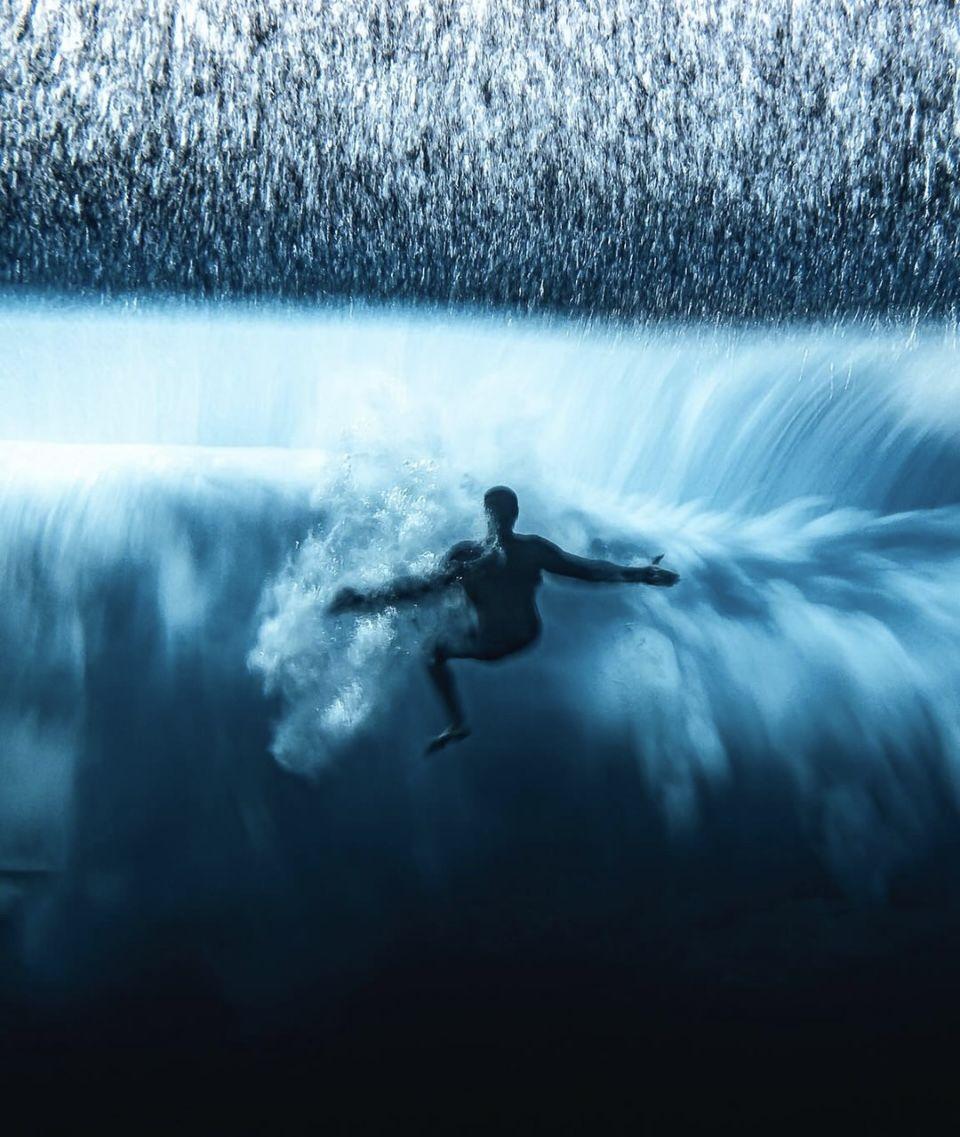
We lower ourselves deliberately into freezing water. Sit inside rooms hot enough to challenge thermoregulation. Fast for hours and watch glucose respond. Manipulate breath while tracking HRV. Measure sleep from our fingers and wrists. Run while satellites map every mile.
Sensation turns into data.
Sauna → wearable. Fasting → glucose monitor. Sleep → ring. Running → GPS. Breathing → HRV.
The ability to measure the body has changed what we can know about it. Athletes can calibrate training and recovery with a precision previous generations couldn’t access. Sleep, cardiovascular load, glucose response, temperature and performance can leave trails of information behind them. Science can expose mechanisms beneath sensations humans have experienced for thousands of years.
We built machines to measure what the body has always known—and discovered things the body couldn’t tell us in words.
It would be easy to categorize all of this as another symptom of optimization culture.
But that would miss something fascinating…
Now let’s dive in deep. Feel the pulse. Welcome back to STRIPPED.
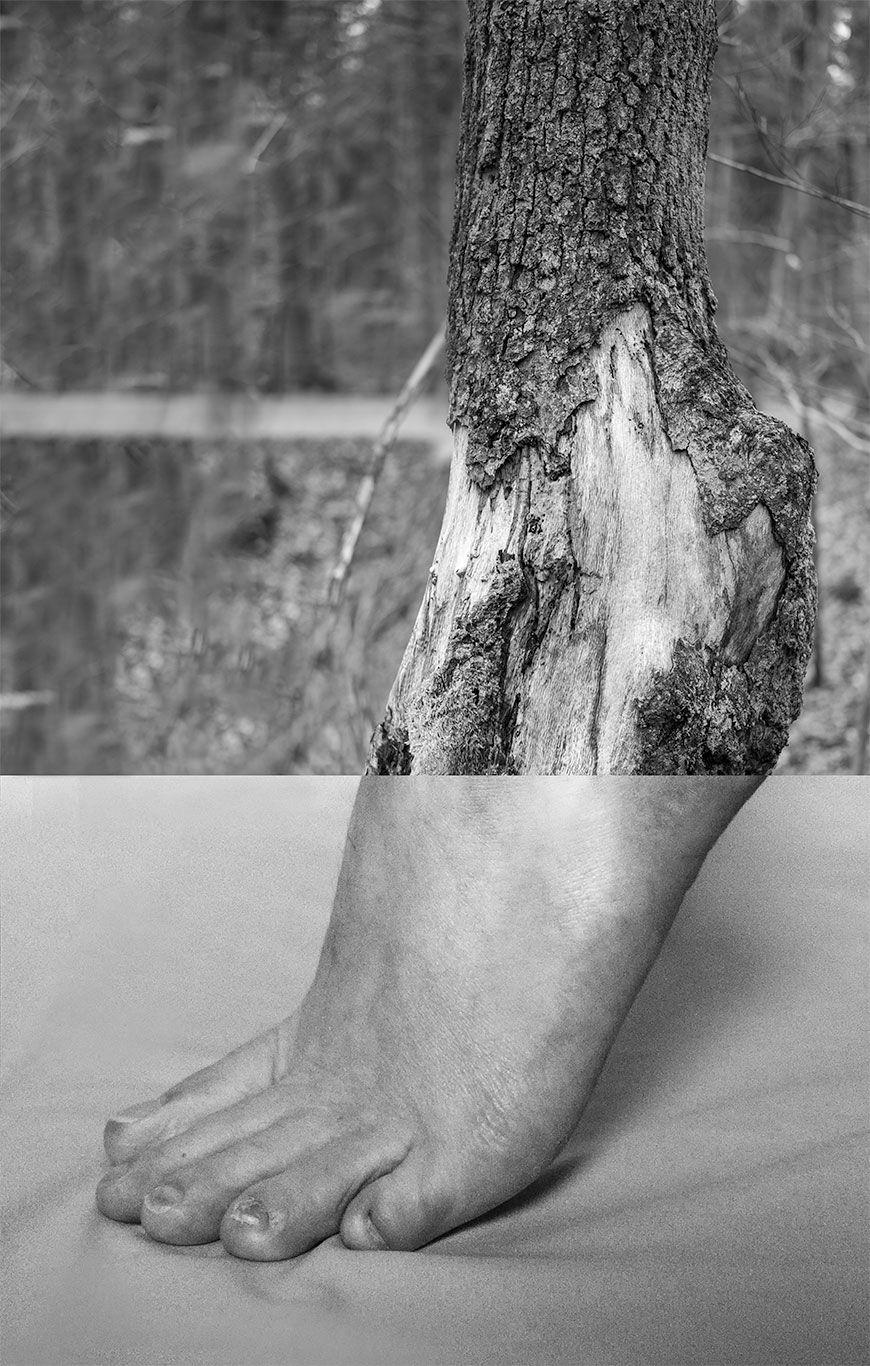
AN ANCIENT SENSATION. A MODERN PROMISE.
Before we understood hot, we pulled away. Before we understood soft, we stayed. Before we knew the word safe, we understood something about being held.
Touch is not one sensation. Specialized sensory systems across and beneath the skin detect pressure, vibration, temperature and potentially damaging stimuli, constantly translating the physical world into electrical information the nervous system can act on.
And that translation begins extraordinarily fast.
Cold water doesn’t ask for your mind’s permission.
Rapid cooling of the skin can trigger the cold-shock response before the body’s core has become dangerously cold. The body answers: an involuntary gasp, rapid breathing, vasoconstriction, cardiovascular change.
The body sounds the alarm before the cold has reached the center of you.
Conscious thought arrives inside a conversation the nervous system has already started.
The same intelligence operates at quieter volumes. A tongue returning obsessively to the ragged edge of a tooth. Cold glass sweating into a palm. A well-earned callus changing the way we walk. Deep bass reaching the chest before the brain identifies the song. The familiar weight of our dog resting against our leg.
A hand on a shoulder can comfort, warn, steady, seduce or say goodbye.
Same hand. Same skin.
Different pressure. Different movement. Different duration.
An entirely different sentence.
Touch tells us where the world is. And where we are inside it.
The body was reading the world before the mind knew there was something to read.
Then humans push it.

STIMULATING OUR CURIOSITY
Heat it. Cool it. Fast it. Feed it. Run it. Rest it.
Measure what changes.
Biohacking is itself an expression of human curiosity about our primal biology.
What happens if we expose the body to cold and return tomorrow? What changes after repeated heat? How does recovery respond to training? What does sleep look like beneath the feeling of being rested?
These aren’t inherently obsessive questions…They’re curious ones.
For perhaps the first time in human history, ordinary people have access to tools capable of illuminating biological processes that once remained largely invisible outside laboratories and elite performance environments.
We didn’t stop feeling. We learned how to look underneath the feeling.
The body experiences. The mind investigates. Technology lets them compare notes.
There is something beautifully and innately human about that too.
To learn the body. To challenge it intelligently. To recover it deliberately. To notice what strengthens it and what depletes it. To use what we can measure without becoming disconnected from what we can feel.
Not control for control’s sake. Intentional participation in being alive.
We inherited an extraordinary adaptive body. And modern knowledge gives us more ways to participate in what it can become.
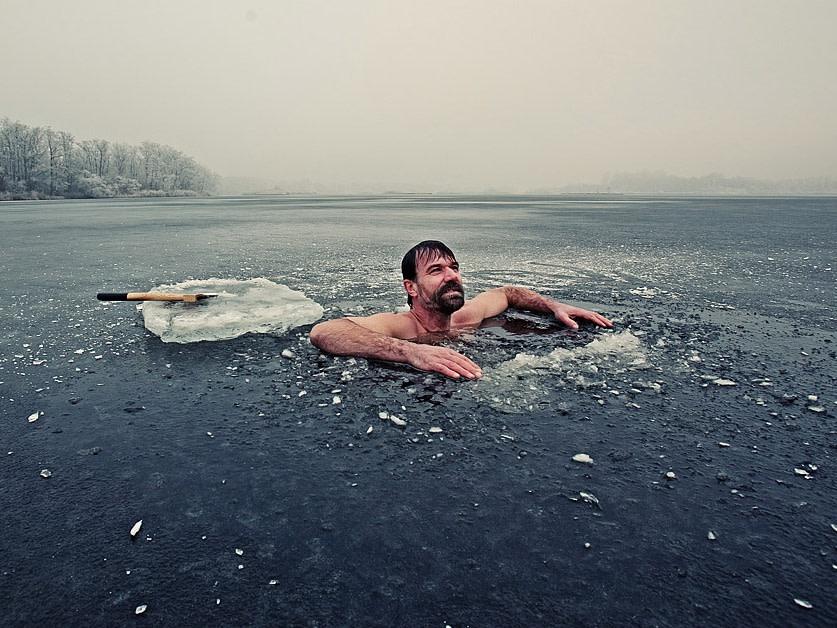
THE ICEMAN
Wim Hof.
Barefoot. Bare-chested. Frequently somewhere most aren’t.
Ice became his mythology.
His feats were cinematic enough to make the world look. But beneath the spectacle sat a question serious enough for scientists to investigate:
How much influence can a human being exert over physiological responses we tend to think of as automatic?
Hof built a method around breathing, cold exposure and commitment. Research involving practitioners of his method has produced provocative findings involving autonomic and immune responses, while the broader scientific literature around cold exposure continues to investigate adaptation, recovery, metabolism, mood and other health outcomes.
Cold-water immersion also has legitimate applications in athletic recovery. Research supports benefits for certain post-exercise recovery outcomes, particularly muscle soreness, although usefulness depends on the athlete, training goal, timing and protocol.
But there is another piece of cold science that feels almost impossible until you understand adaptation.
Come back enough times and the body can begin responding differently.
Research on repeated cold immersion has found that components of the initial cold-shock response can habituate with repeated exposure. The breathing response can become less severe. Cardiovascular responses can change. The sensation itself can become less overwhelming.
The water remains cold. You change.
Same water. Same temperature. Different response.
The water didn’t learn. You did.
Adaptation isn’t an idea here…You can watch physiology learn.
The environment doesn’t have to become easier. The body can become better at meeting it.
That capacity is ancient. The instruments we use to observe it are new.
SEDUCTIVE STATISTICS
Winter swimmers were entering cold water long before Instagram discovered ice.
Heat and cold have lived inside bathing traditions across cultures for generations. Athletes used ice before recovery became a score. Humans experimented with breath before HRV appeared on a wrist.
Then the instruments arrived and suddenly sensation had receipts.
Cold became degrees. Recovery became data. Sleep became stages. Training became zones.
The old sensation acquired a new promise:
If we can understand the body’s response, perhaps we can work with it more intelligently.
That promise is real. And it’s a seductive one.
As cold exposure moved from winter ritual and athletic recovery toward mainstream optimization culture, it accumulated claims around mood, metabolism, immunity, inflammation, focus and longevity. Some areas have meaningful evidence. Others remain early, mixed or highly dependent on protocol.
The extraordinary thing about science isn’t that it gives every ritual a stamp of approval.
It’s that it lets us ask what is actually happening.
A sensation can feel extraordinary. A physiological effect can be real. An optimization strategy can be useful.
And a claim can still outrun the evidence. Those things can all be true at once.
Feeling creates the question. Science lets us look underneath it.
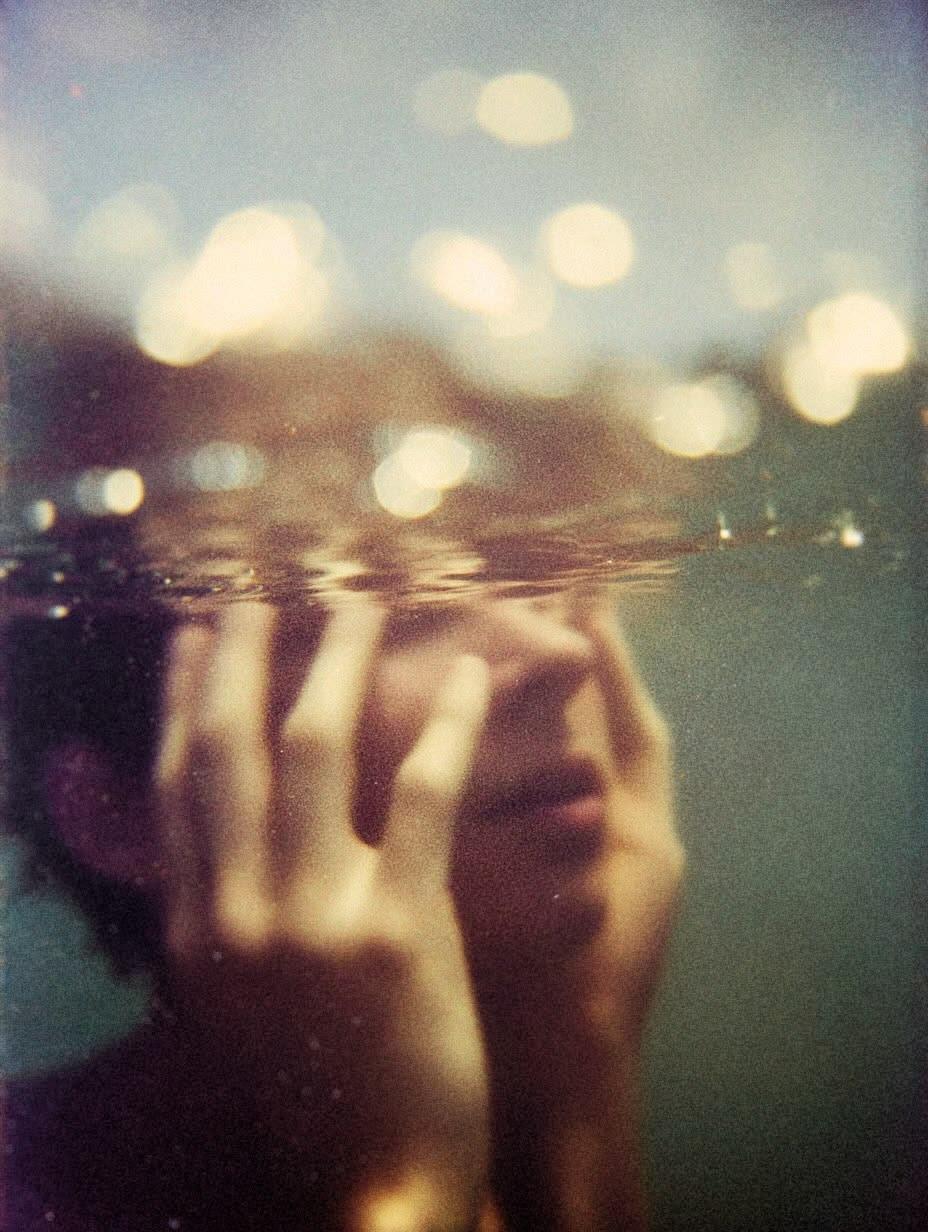
THE FRINGE PROTOCOL
Years later, the imagery looks different.
Joe Rogan’s sauna protocol goes viral. Professional athletes lower themselves into cold tubs after training. Andrew Huberman discusses physiology with millions of listeners. A ring quietly collects temperature and recovery data while its wearer sleeps.
The fringe became protocol.
The notable personalities accelerated the translation, but the larger shift is happening across millions of ordinary bodies.
Practices once associated with endurance obsessives, traditional bathing cultures or the edges of wellness have moved toward the center of a much larger conversation about performance, recovery and health.
People aren’t simply consuming information about their bodies anymore. They’re increasingly capable of watching themselves respond.
TURNING SENSATION INTO DATA
Temperature becomes degrees. Exertion becomes zones. Recovery becomes a score. Sleep becomes a graph. Stress becomes variability.
Those receipts have value.
Performance science lets athletes observe workload, recovery and adaptation with extraordinary granularity. Sensors reveal patterns subjective perception can miss. Biological processes that once happened invisibly can increasingly be observed, compared and adjusted.
Technology gives instinct another set of eyes.
Sleep. Test. Adjust.
Run. Measure. Recover.
Heat. Cool. Repeat.
The point of optimization at its best isn’t to escape the body. It’s to understand it well enough to work with it.
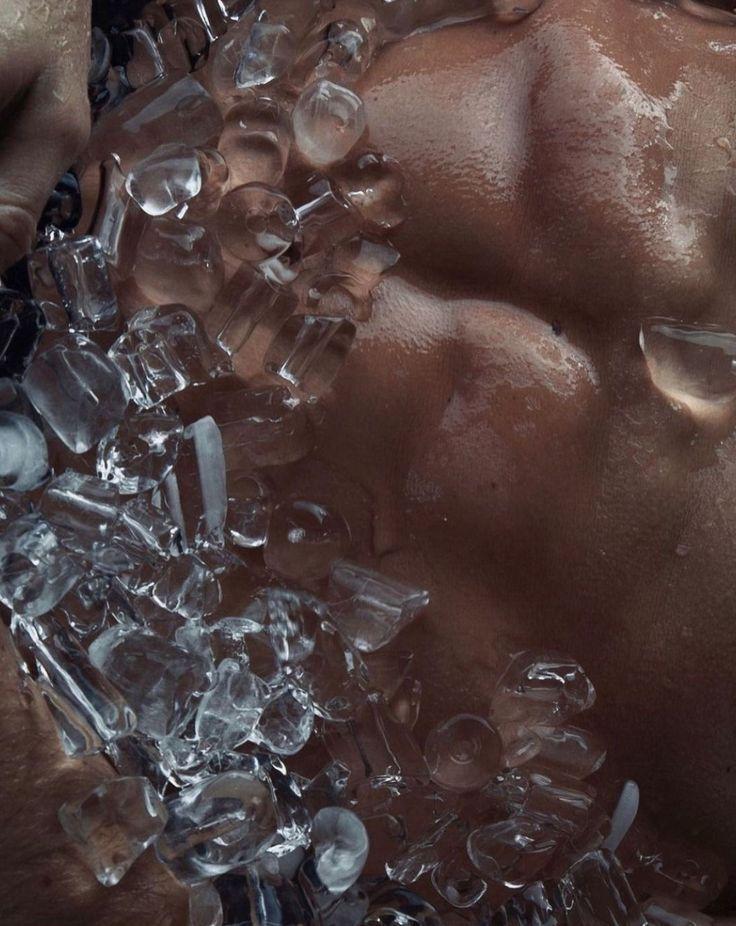
FEEL.
Cold water is still cold when you know the science.
Heat is still hot when you understand thermoregulation.
The heart doesn’t care that you’re tracking it when it starts beating harder.
We can talk about adaptation. Recovery. Cardiovascular health. Athletic performance. Metabolic response. Resilience. Longevity.
These aren’t imaginary pursuits, and the pursuit of them isn’t superficial.
We can know why the heart is accelerating and still feel it pound. We can understand thermoregulation and still surrender to the heat. We can watch adaptation appear in the data and experience that same transformation from inside the body.
Knowledge doesn’t sterilize sensation. It has the power to deepen our relationship with it.
And underneath the goal, the protocol, the metric, the curiosity and the intention is something beautifully simple:
FEEL IS THE SEDUCTION HIDING BENEATH THE OPTIMIZATION.
Not instead of it. Inside it.
WE DIDN’T INVENT THE RITUAL. WE INSTRUMENTED IT.
A wooden room. Bare skin. Water hits stone. Steam rises.
Long before recovery scores, humans gathered to sweat.
Finnish sauna. Turkish hammam. Japanese onsen. Russian banya. Distinct traditions with distinct histories—not interchangeable ancestors of a wellness trend—but evidence of something much older than the optimization economy.
Humans have repeatedly built ritual around temperature, bathing and bodies gathering together.
Modern performance culture added another layer…
Timer. Wearable. Heart rate. Temperature. Recovery metrics. Protocol.
Inside the heat, blood flow to the skin increases. Sweating accelerates as the body works to dissipate heat. Heart rate rises as the cardiovascular system responds to thermal load.
And, again, the body learns.
With repeated heat exposure, sweating can begin earlier. Sweat rate can increase. Plasma volume can expand. Cardiovascular strain at a given workload can decrease. These adaptations can improve the body’s ability to regulate itself under heat stress and have legitimate applications in athletic performance.
The room didn’t become cooler. The body became better at being hot.
Researchers and science communicators like Dr. Rhonda Patrick have helped bring the biology of heat exposure into the mainstream, exploring everything from heat-shock proteins and cardiovascular adaptation to the emerging research around brain health and mood.
Sauna research has also generated significant interest around cardiovascular health and longevity, with long-term observational studies finding associations between frequent sauna bathing and lower risks of several cardiovascular outcomes and mortality.
Association is not causation. But neither is it nothing.
The body remains extraordinary without exaggeration. We expose ourselves to an environment that challenges us, and the body learns.
We didn’t invent the ritual. We inherited it then learned to read what it was doing to us. There’s power in that knowledge.
There’s also something happening around the sauna that a heart-rate graph isn’t designed to capture…
SOMEWHERE BETWEEN THE BAR AND THE BIOHACK, THE BATHHOUSE BECAME A THIRD PLACE.

Across cities from London to Los Angeles, sauna and cold-plunge spaces are increasingly being built not simply around recovery, but around culture and community.
Artists. Chefs. DJs. Breathwork. Cold plunge. Coffee. Strangers sweating together. From LikeMinded in Venice, California, to Lore in downtown NYC: these are the new nightclubs to be at.
Recent reporting on the sauna revival has documented operators explicitly positioning these spaces as social alternatives to drinking culture and as modern third places.
The biohack becomes social ritual.
Discomfort becomes somewhere we go to belong.
Bodies in a room. Heat. Sweat. Unfiltered, authentic, human conversation.
Skin reddens. Hair gets wet. Sweat runs. Goosebumps rise when the door opens.
Nothing polished about it… Everything reverting back to something primal, natural, unmistakably human.
For all the sophistication of contemporary optimization, one of its fastest-growing rituals keeps returning us to something remarkably old:
people sitting together around heat.
THE AFTERGLOW
Eventually the timer ends.
The door opens. Bare feet meet cooler ground. Breathing slows. Sweat begins to dry.
Outside, summer is still happening.
Pavement holds the day’s heat after the sun disappears. A wet bathing suit sticks to skin. Salt dries across lips. A towel scratches slightly against sunburn. Goosebumps arrive when the wind changes. Someone hands us a cold drink and our fingers touch.
After all the ice, heat, adaptation, measurement and deliberate manipulation of sensation—
someone else’s hand is warm.
No protocol. No score. Nothing to improve.
Just warm.
And here, again, the science makes the ordinary more extraordinary.
The nervous system doesn’t merely register that contact occurred. Research into affective touch has identified nerve fibers particularly responsive to gentle, slow stroking—the kind of contact associated with a caress.
The body is sensitive not simply to whether it is being touched.
It is exquisitely sensitive to how.
Pressure matters. Movement matters. Duration matters.
Same hand. Same skin. An entirely different sentence.
We almost never think about the exact temperature of somebody we love.
The weight of their head resting against our shoulder. A child wrapping their entire hand around one of our fingers. The familiar pressure of the dog asleep against our leg. Someone reaching across the bed without opening their eyes.
These sensations don’t compete with optimization. They remind us what all that optimization is ultimately in service of: more life inside the body we have.
THE THINGS WE DON’T MEASURE
There is no recovery score for the last swim of summer.
That doesn’t make the recovery score less valuable…It simply means a human life can be understood in more than one language.
A wearable can tell us something meaningful about how the body slept. It cannot tell us what it meant to wake beside someone.
Physiology can explain how touch is registered. Art can ask why one particular touch becomes a memory.
Science and art illuminate different dimensions of the same experience.
No wearable records the final night we sleep with the windows open. No graph tells us it is the last time someone will pick us up before we’re too big to be carried, the last time the dog falls asleep against our leg, or the last time someone reaches across the bed for us.
Nothing announces itself as memory.
We expect another swim. Another night. Another hand reaching across the space between us.
Until there isn’t one.
Then absence develops its own physical geography: the empty half of a bed, the place beside our leg where the dog used to sleep, a hand suspended for a second after another lets go, the instinct to reach toward someone who isn’t there.
The body remembers what it can no longer touch.
Science can tell us more and more about how sensation works, how bodies adapt, how performance changes and how health responds.
Art asks us what any of it feels like to live through.
We need both.
A wave reaches shore and retreats. A hand finds ours and eventually lets go. Summer presses itself against our skin and disappears.
Still — the body keeps the evidence.
Before you leave, touch something beside you.
The table. The floor. Your own skin. Someone you love, if they’re there.
Notice the pressure. The temperature. The texture. Notice the exact place where you meet it.
Let go.
Can you still feel where it was?
We spend our lives leaving fingerprints on the world while it quietly leaves its own on us.
A scar. A callus. A tan line. A wrinkle.
Nothing particularly polished.
All evidence that we were here.
Skin isn’t simply where the body ends. It’s where we meet the world.
Proof that something reached you… and proof that you reached back.
We’ll meet you at smell.
_
STRIPPED | Created by Sarah Rose
Field Notes from a Female Anthropologist of Modern Culture
Exploring the pulse beneath the noise