Four decades of riders, filmmakers, artists and characters came together in Jindabyne and Charlotte Pass for a weekend celebrating the people and culture behind Australian snowboarding.
Words: William Stolk Photos: Andrew Fawcett
Location: Jindabyne & Charlotte Pass, NSW Dates: August 28–30, 2026
Australian snowboarding has never been about having the biggest mountains or the longest season. It has always been about the people who made something out of what was available.
Surfers chasing winter. Skateboarders discovering snow. Riders travelling south with boards in the back of cars. Filmmakers standing in storms waiting for the shot. Artists creating graphics, crews building events, and generations of snowboarders passing the culture from one era to the next.
In 2026, that history turned 40.
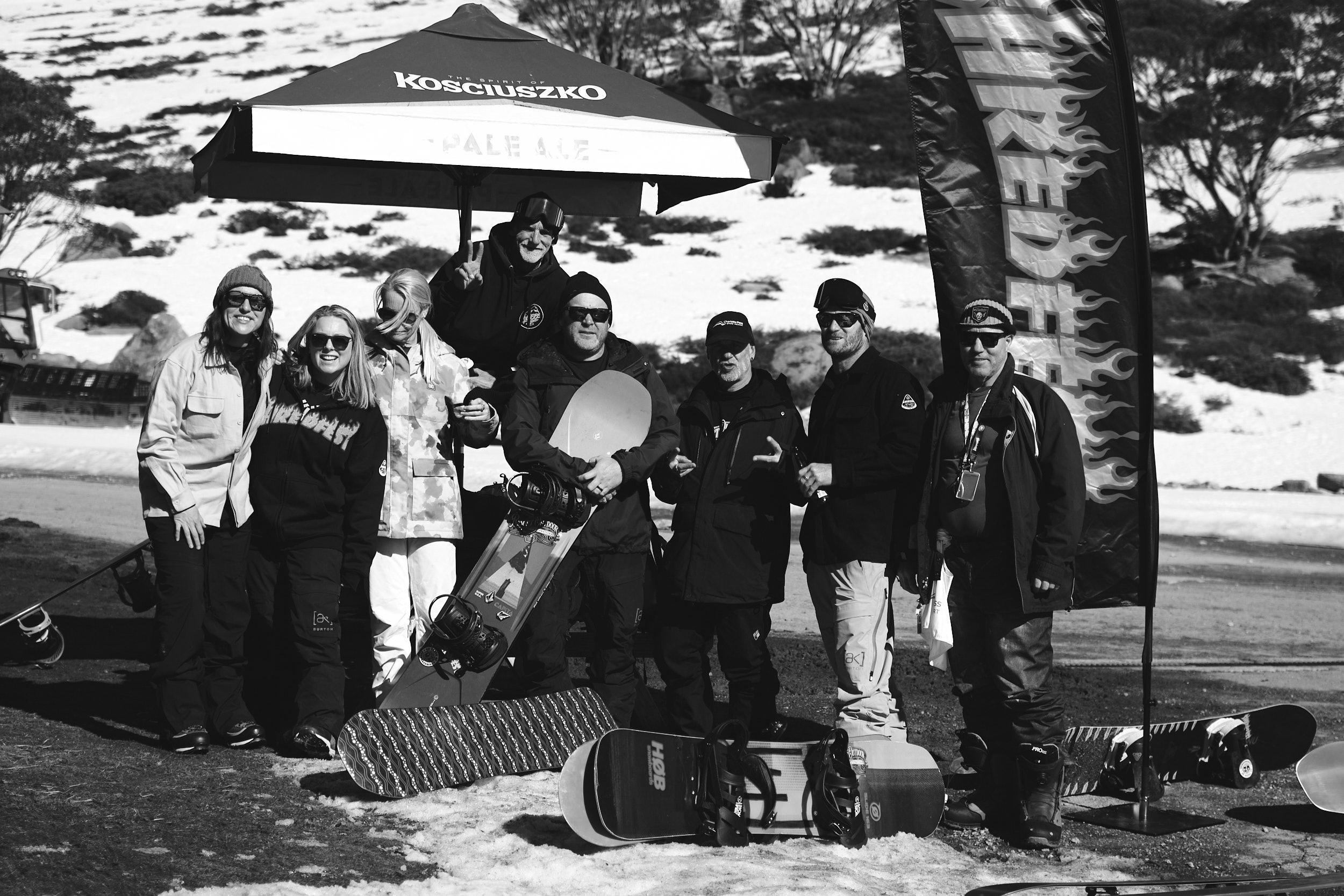
From August 28–30, Jindabyne and Charlotte Pass became the meeting point for four decades of Australian snowboarding as SHREDFEST brought together pioneers, competitors, filmmakers, artists and the next generation of riders. FRANK151 was there as the official media partner, documenting the riders, characters and stories behind the milestone weekend.
The Culture Behind the Board
The story of Australian snowboarding has never been a straight line. It developed through surf culture, skateboarding, independent film, music, art and the personalities who were willing to push things forward. There were no guarantees and very few established rules. The scene was built by people creating their own opportunities.
The SHREDFEST program recognised exactly that history, bringing together films, memorabilia, stories and riders from different generations. The result was part reunion, part archive and part live snowboard event.
More importantly, it created a place where generations could meet.
Friday: Press Play
The weekend opened at Jindabyne Memorial Hall with registration and a film night featuring Australian snowboarding footage from across the decades.
For anyone who has grown up around snowboarding, film is inseparable from the culture. Before every rider carried a camera in their pocket, snowboard films were the way scenes were documented and shared. Crews travelled together, filmed together and built their own visual record of what was happening on the mountain.
That tradition was represented throughout SHREDFEST, with archive footage providing a timeline of how Australian snowboarding developed from its early years into the modern era. Olliepop Films has been an important part of that filmmaking tradition, documenting riders, crews and the culture surrounding the sport. Their work represents something fundamental to snowboarding: the importance of the people behind the camera.
What made the night different from any other screening was the room itself. Look around the hall and you were looking at the who’s who of Australian snowboard history. The original crew was there Adrian Gibbs and Geoff Sawyer, the riders who were strapping in before most of the country knew what a snowboard was. Around them sat the generations who followed: Tim Vlandis, Ryan Tiene, Jason Haynes and Charles Beckinsale, Shervo, the pros who took Australian riding to the world and came home with the footage to prove it plus many other unsung hero’s. And a few seats away, Valentino Guseli, the current face of Australian snowboarding on the international stage, watching the films that came before him., In 2026, Geoff went home with six-year-old Estelle Stamp., the current face of Australian snowboarding on the international stage, watching the films that came before him.
That is a rare thing. The people on the screen and the people in the seats were often the same people, thirty years apart. When a clip from the early days rolled, the laughter and heckling came from the riders who were in it. When the modern parts played, the older heads leaned forward. Even the OG film making pirate Mick Simpson was in attendance.
Four decades of Australian snowboarding, sitting in the same room, watching itself.
A trick only lasts a few seconds. A good film can make it last for decades.
FRANK 151 on the Ground
For FRANK 151, SHREDFEST was about more than covering a competition. As the event’s official media partner, we set out to document the people behind the weekend and the stories that have shaped Australian snowboarding.
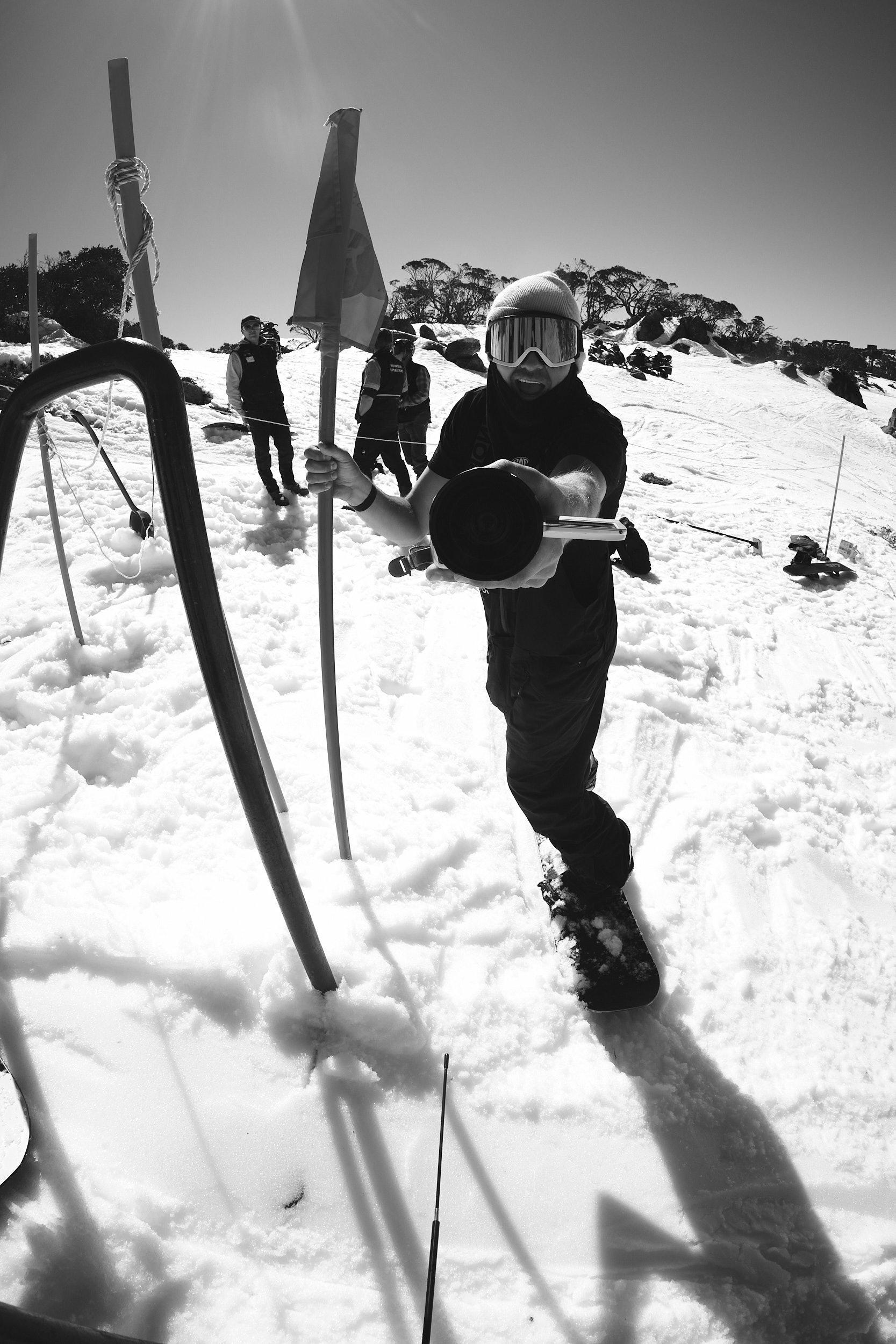
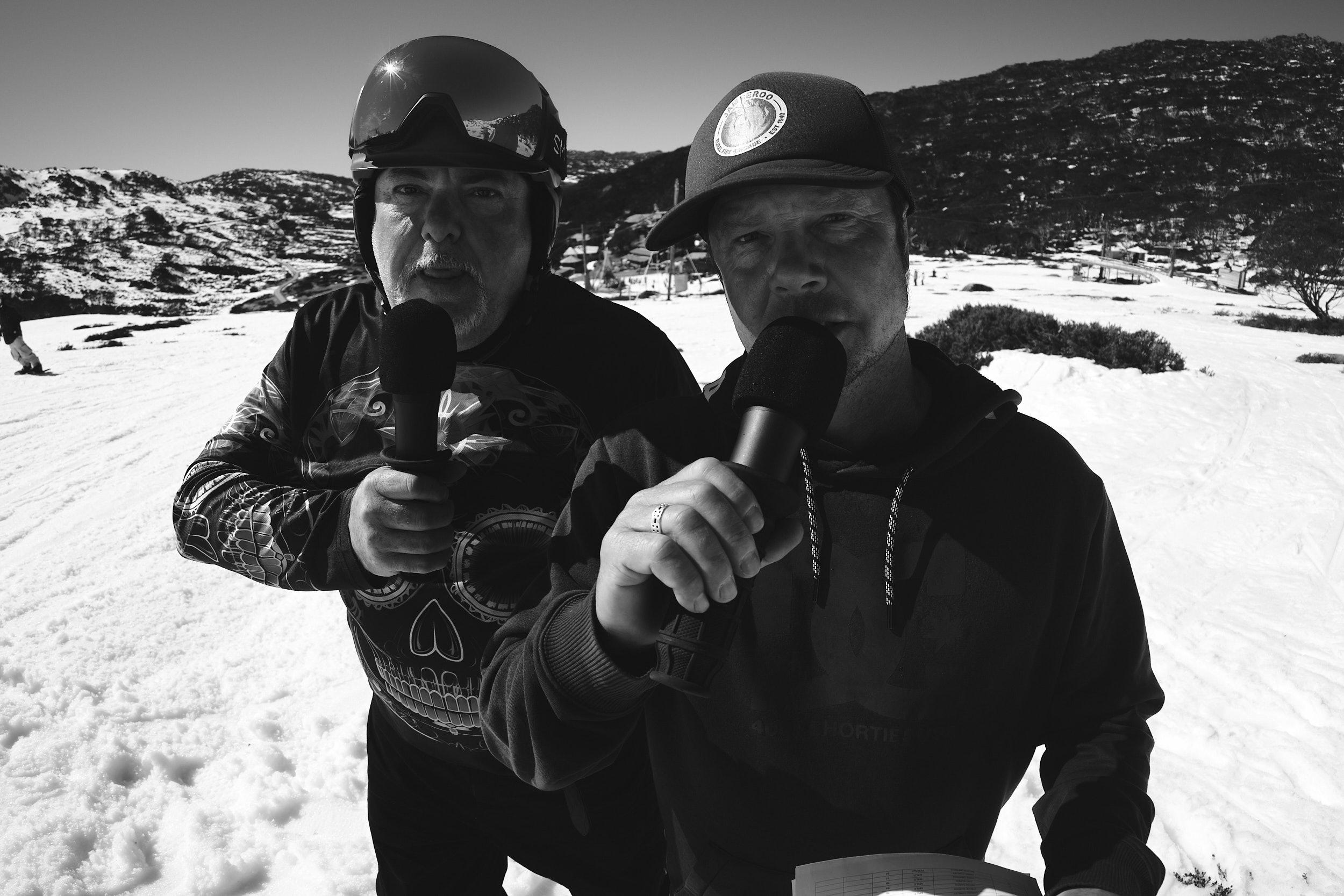
The FRANK151 team filmed throughout the event, capturing the riding, the film night, the characters, the atmosphere and interviews with members of the SHREDFEST community. We spoke with riders from different generations, filmmakers, artists and the people responsible for bringing the event together.
Because the history of snowboarding isn’t only found in results or trophies. It’s found in the stories. The road trips. The crews. The first films. The boards. The artwork. The friendships. The places where people learned to ride and the people who convinced them to keep going.
Those are the details that give a culture its identity.
The Godfather: Tim “TV” Vlandis
Tim “TV” Vlandis is one of the foundational figures in Australian snowboarding. Known throughout the community as “The Godfather,” Vlandis grew up surfing in Maroubra before discovering snowboarding in 1987. His aggressive approach took him from Australian competition into extreme terrain across Alaska, Japan and France.
Four decades later, he remains directly connected to the culture he helped build. For SHREDFEST, Vlandis wasn’t interested in simply looking backwards. The aim was to bring the community together and celebrate what Australian snowboarding has become.
“At SHREDFEST, we’ve created more than just an event — we’ve built a celebration of 40 years of Australian snowboarding culture.” — Tim “TV” Vlandis
A Nameless Force: RJ Williams
Robin-John “RJ” Williams comes from another important side of the Australian snowboard story. His background crosses snowboarding, board graphics, industrial design, events and video production. During the late 1990s and early 2000s, he was deeply involved in the creative side of the Australian snowboard boom.
Following a serious back injury that limited his time on the mountain, Williams redirected his creative energy into art and developed his identity as A Nameless Force. That mix of snowboarding, design, film and street art became an important part of the thinking behind SHREDFEST.
Together with Vlandis, Williams helped create an event that was focused on the people behind Australian snowboarding as much as the competition itself. The goal, as he explains below, was to bring together the riders, filmmakers and artists who built the culture with the people now carrying it forward.
RJ WILLIAMS — THE INTERVIEW
FRANK 151: Australian snowboarding was built by outsiders, rule-breakers and people doing it for the love. Has the industry lost that spirit chasing sponsors, resorts and mainstream approval?
RJ WILLIAMS: No, I don’t think it has lost that spirit. The industry has simply become much bigger. Snowboarding now operates at an Olympic level, which wasn’t part of the landscape in the early days. That’s also where much of the funding exists for young riders, and accessing it requires them to behave like professional athletes.
The responsibility now falls on the elders of the sport to step up and ensure that learning what it means to be an Australian snowboarder remains an important part of becoming an elite athlete. That culture may actually be one of the reasons Australia continues to achieve extraordinary international results despite having such a small snowboard population.
FRANK 151: Forty years on, what era genuinely produced the best Australian snowboarders — and who has been unfairly written out of the history books?
RJ WILLIAMS: I’m not sure anyone has been deliberately written out. A few people have undoubtedly been forgotten, but maintaining your place in snowboarding also requires continued involvement. Keep riding, support community events and ask what you can do for snowboarding — not only what snowboarding can do for you. Everyone has an opportunity to maintain their place in its history.
As for which era produced the best snowboarders, that depends entirely on how you define “best.” Are we talking about the most creative, entrepreneurial or flamboyant people — or simply the most technically accomplished athletes?
If technical performance is the measure, the answer is right now. But the industry is much bigger than athletes. It includes designers, park builders, filmmakers, photographers, event organisers and judges. Australia currently has people operating at a world-class level across virtually every one of those fields. The present era represents a mature Australian snowboard industry producing some of the world’s best talent in every category.
“Sometimes snowboarding should simply be a fun day on the hill with your friends. We need both sides of it.”
FRANK 151: Snowboarding once felt dangerous, rebellious and completely separate from skiing. Has the culture become too safe, polished and corporate?
RJ WILLIAMS: No, I don’t think it has become too safe, polished or corporate. Some events have simply grown. When something has been running successfully for ten years, it naturally becomes popular, attracts major sponsors and develops bigger commercial obligations. That happens in every sport.
The answer is to keep creating and supporting community-based events alongside those larger productions — events that aren’t solely about being the best or meeting massive expectations. Sometimes snowboarding should simply be a fun day on the hill with your friends. We need both sides of it.
FRANK 151: Australia has produced world-class riders despite limited snow and short seasons. Why doesn’t the local industry give them the same respect and support as athletes overseas?
RJ WILLIAMS: I believe the local industry supports young Australian riders extremely well considering its limited resources. If an athlete follows the Olympic pathway and achieves the necessary results, meaningful support can become available — but snowboarding remains an incredibly expensive sport.
There also needs to be reciprocity. If riders want support from the local industry, they should support it in return: ride for the local shop, represent Australian brands and help grow the community. Help the industry grow, and the industry may become capable of helping you grow.
Our world-class riders invest enormous amounts of their own time, money and energy, and make serious personal sacrifices. Talent alone is never enough.
Where the imbalance becomes obvious is when an Australian reaches the top international level. An Australian rider ranked in the world’s top five may still receive less commercial support than an equally ranked athlete from a larger overseas market. That needs to change.
Perhaps the long-term answer is building major Australian brands capable of selling internationally and supporting our riders at that same global level. International companies may never invest in Australian athletes quite like a successful Australian company would. If our industry can produce that kind of brand, we may be able to change the entire dynamic.
FRANK 151: Is SHREDFEST purely a celebration of the past, or is it also a wake-up call for Australian snowboarding to protect its culture before the next generation loses it?
RJ WILLIAMS: SHREDFEST celebrates the past, but it also celebrates the present. Being able to show contemporary films like Val’s movie and Oh My Days alongside work from earlier generations was an important part of the film night.
I would also like SHREDFEST to act as a wake-up call for the future. Snowboarding creates some of the greatest memories of our lives, but it’s the people we share those experiences with — and the friendships that last a lifetime — that make those memories truly important.
Australian snowboarding has its own identity. It carries influences from surfing and skateboarding, combined with a distinctly Australian mentality. That deserves to be celebrated every year.
I’d also love to see more of our stories committed to print. The characters matter. They are what make snowboarding’s stories and memories interesting. There are 12-year-olds in parks around the world doing extraordinary spins, so technical ability alone isn’t what separates a rider anymore.
What separates them is personality, character, origin story, career trajectory, the risks they take and the laughs they share along the way. Australian snowboarding has a unique way of producing those stories. It’s important that we continue documenting and celebrating them.
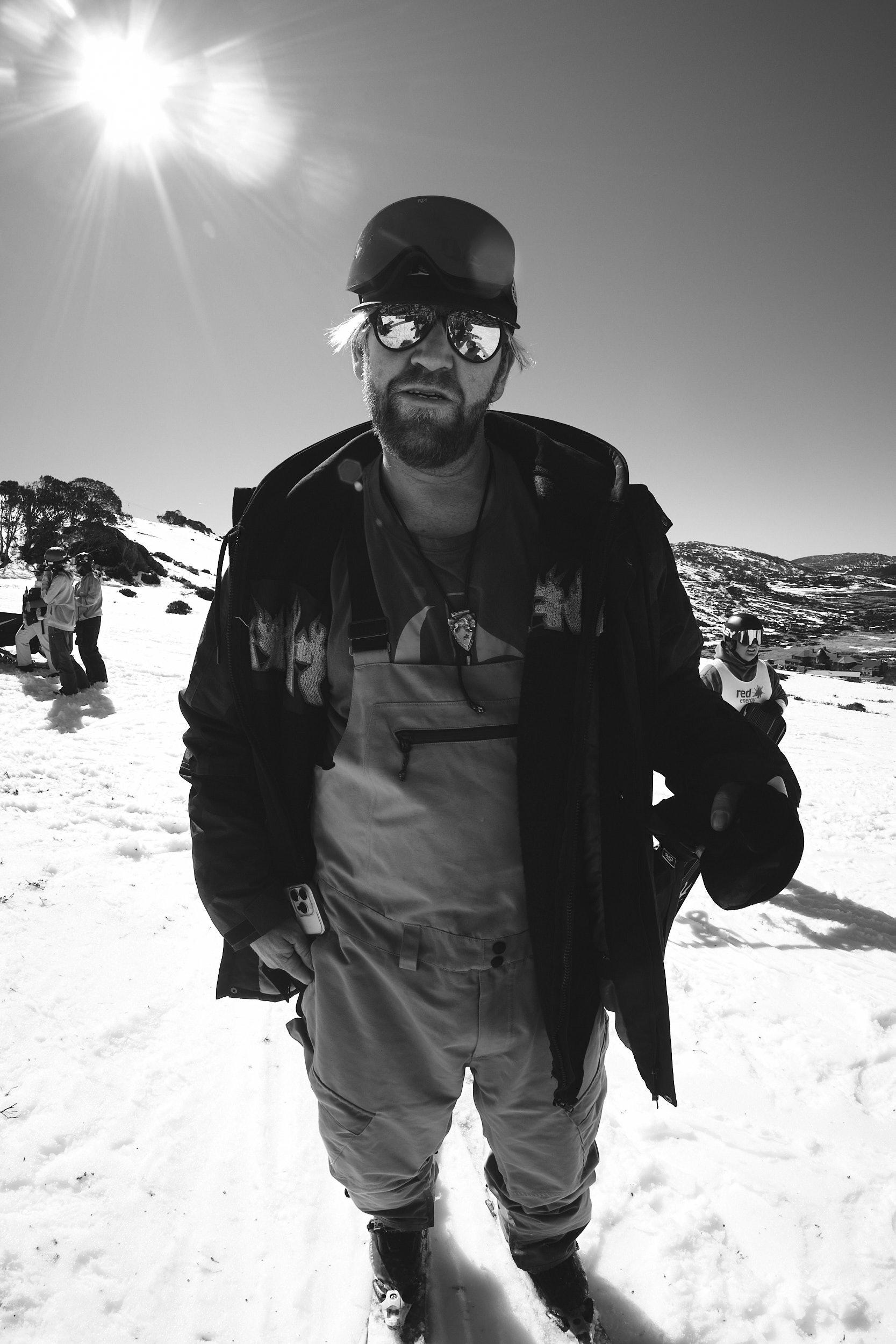
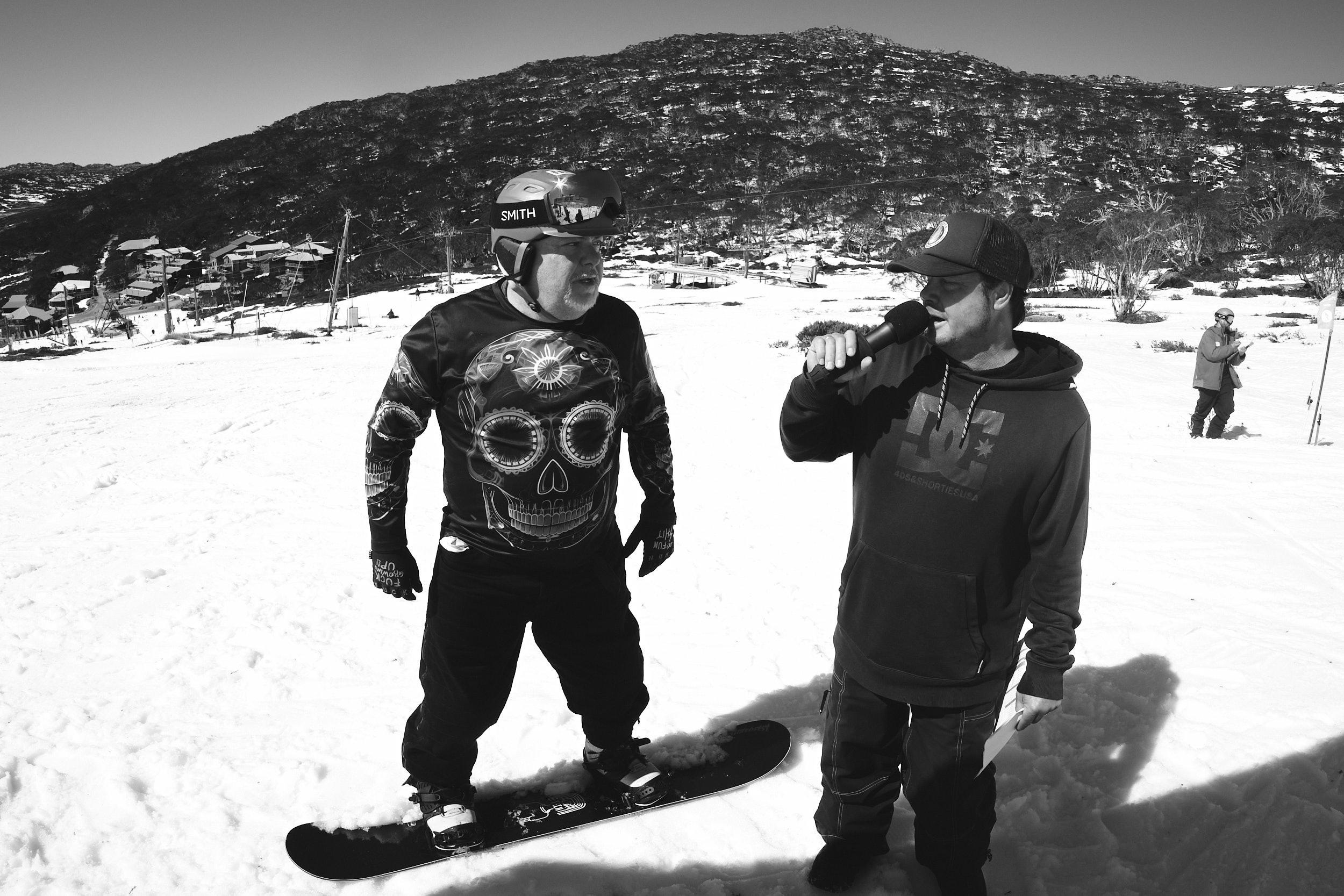
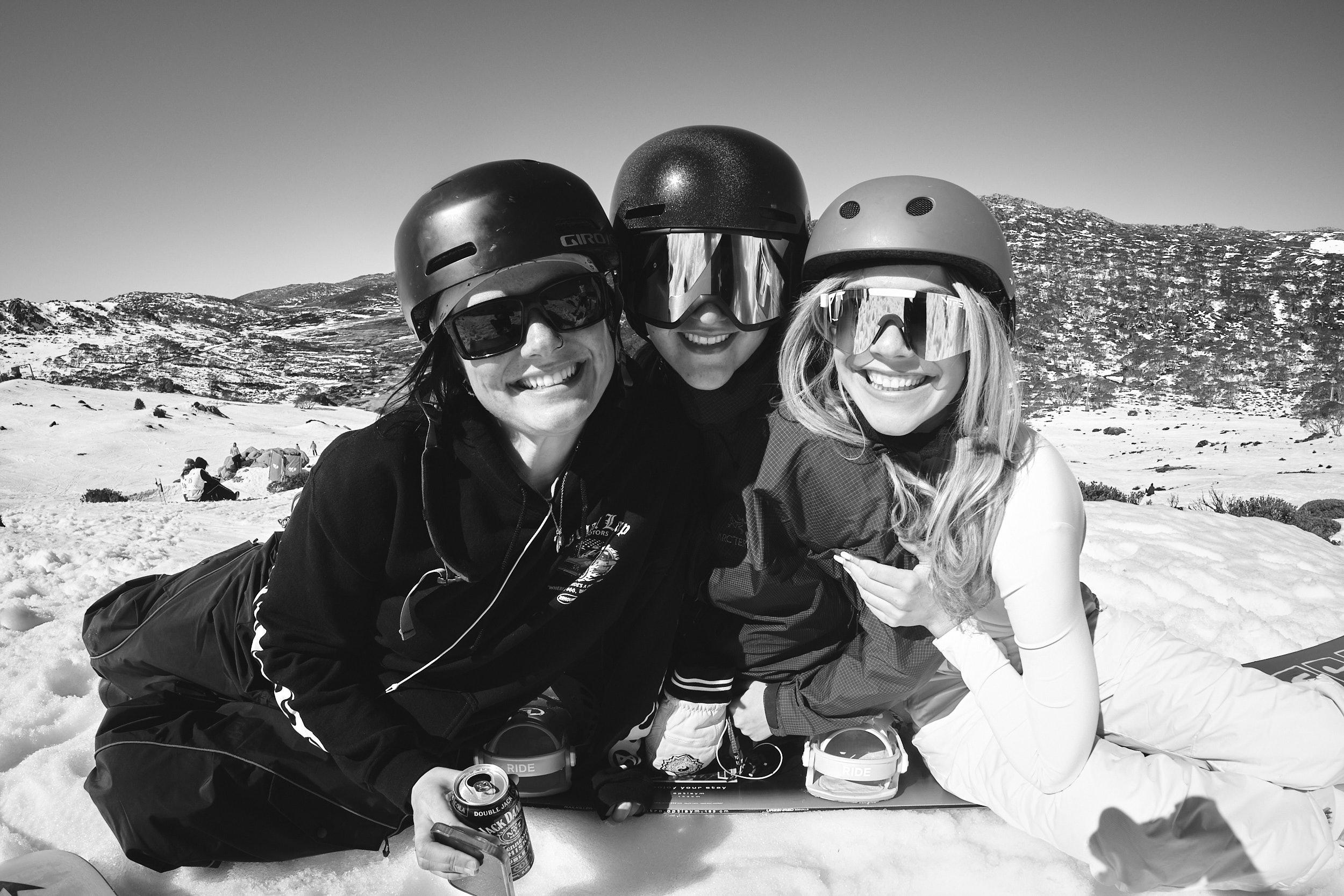
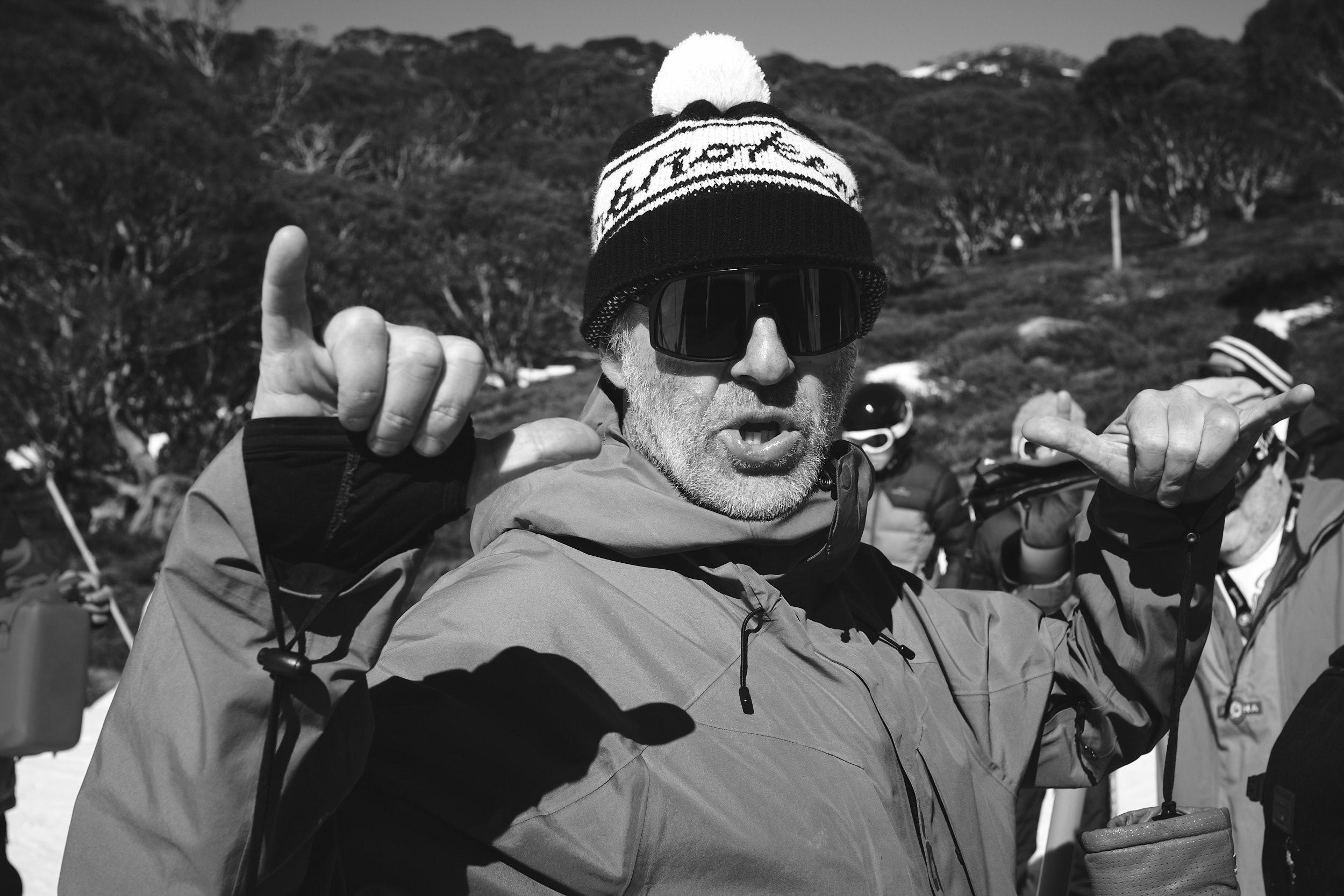
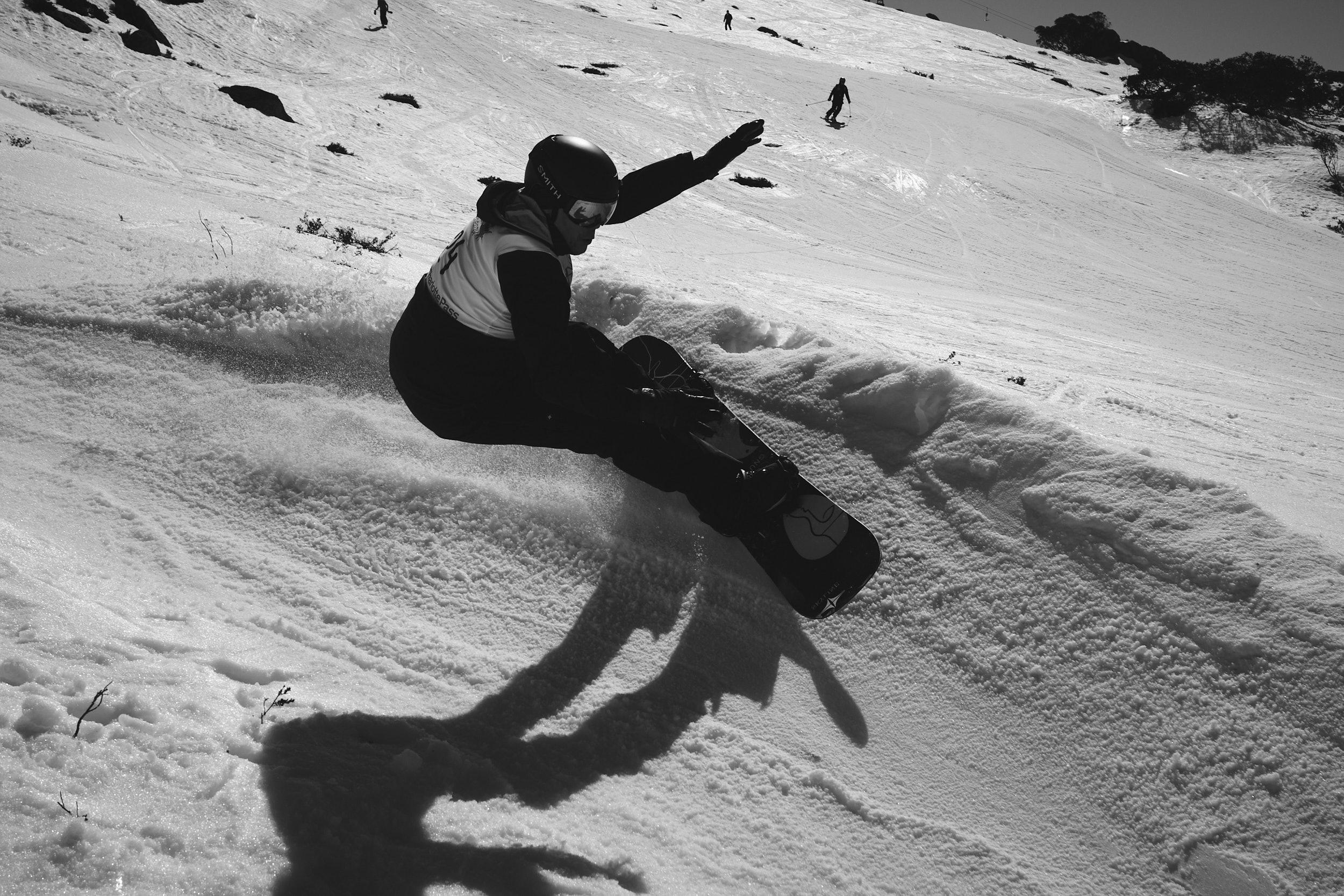
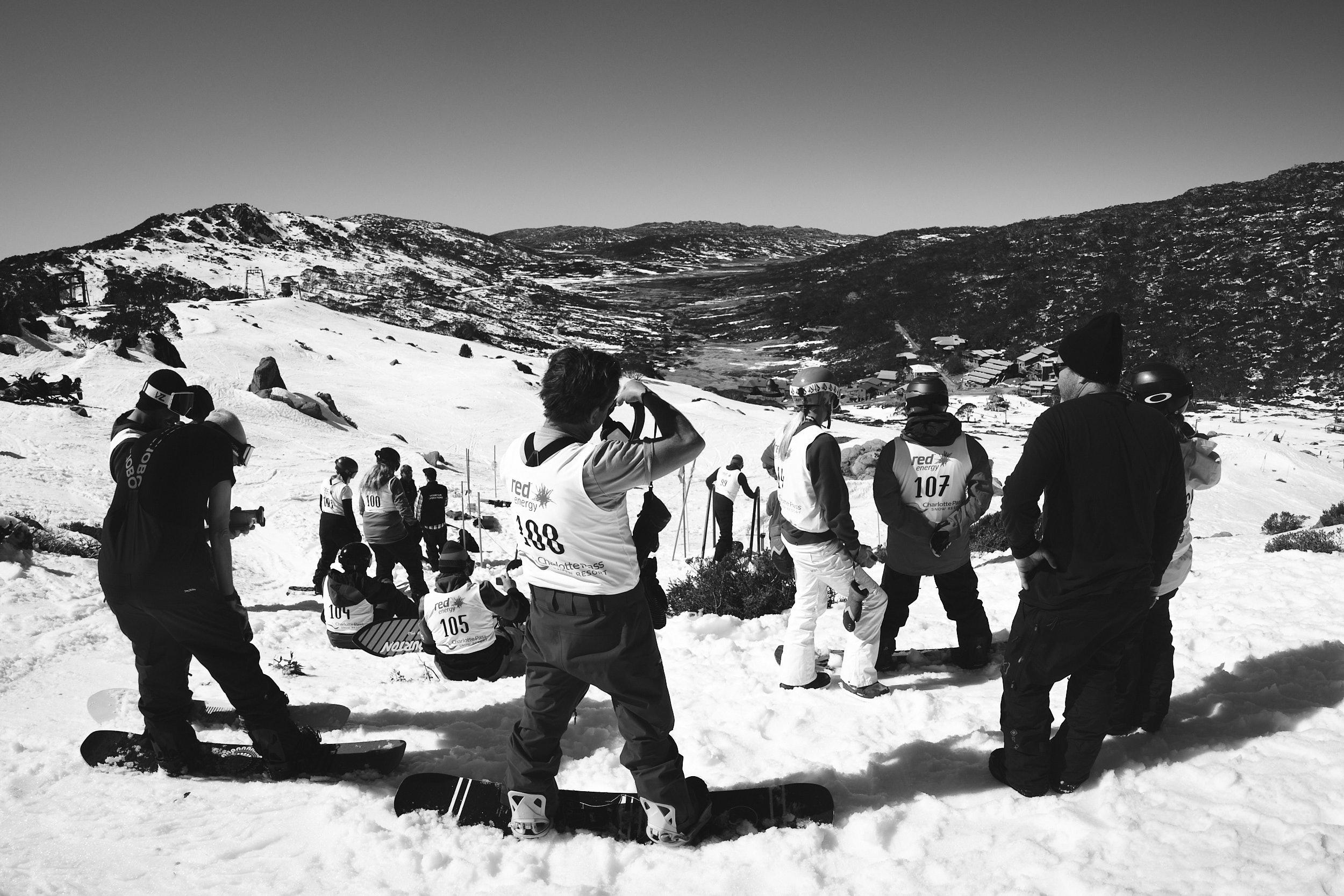
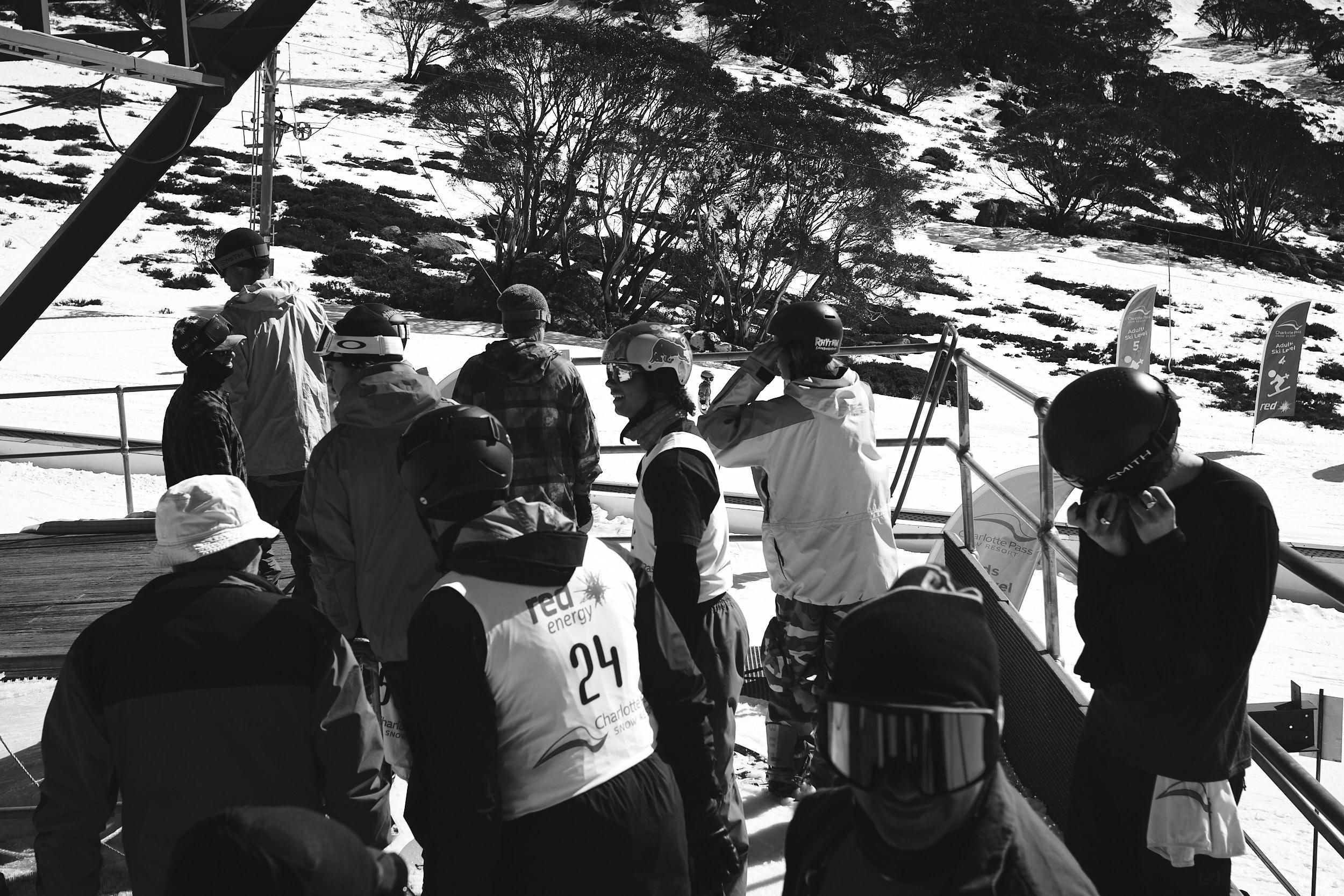
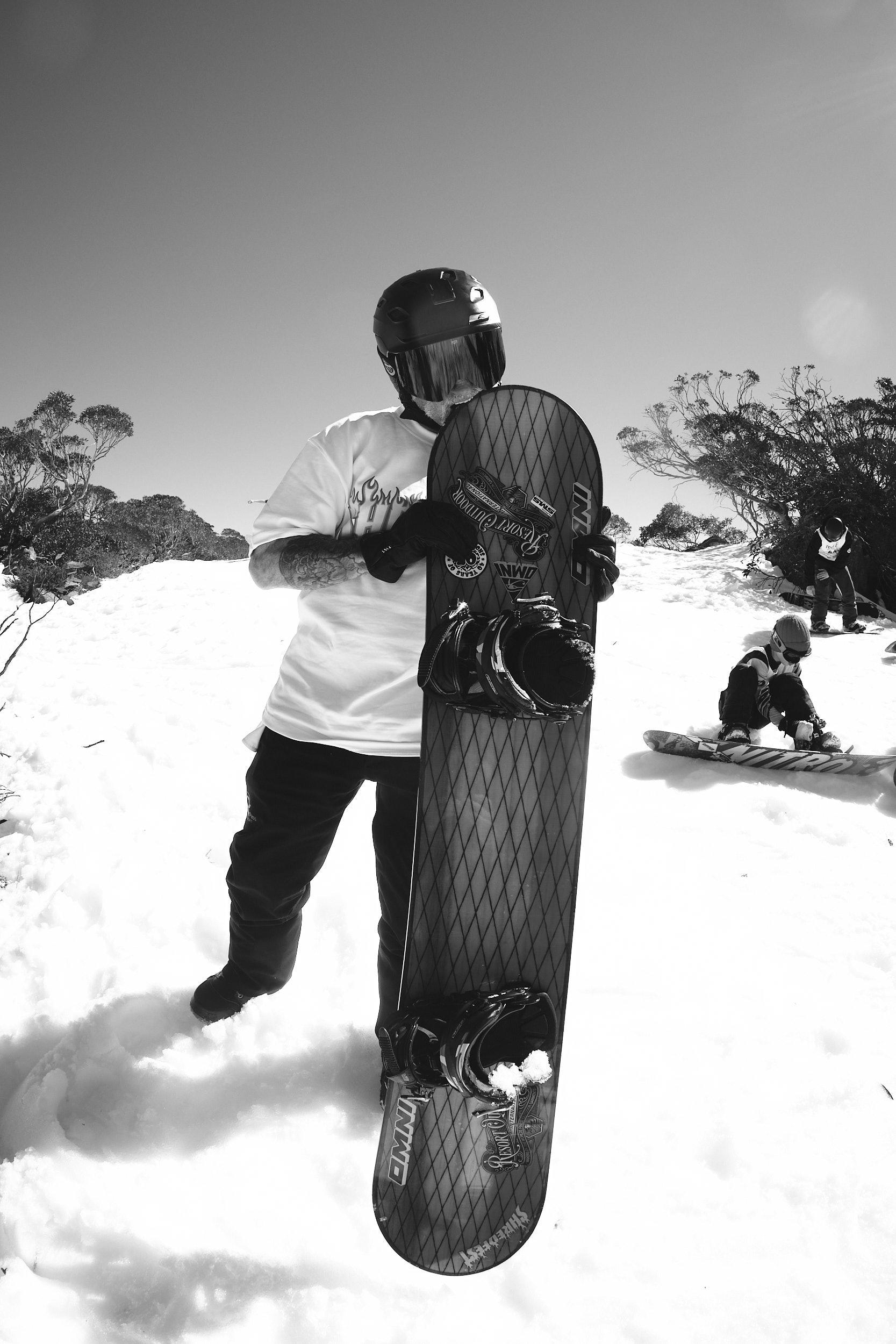
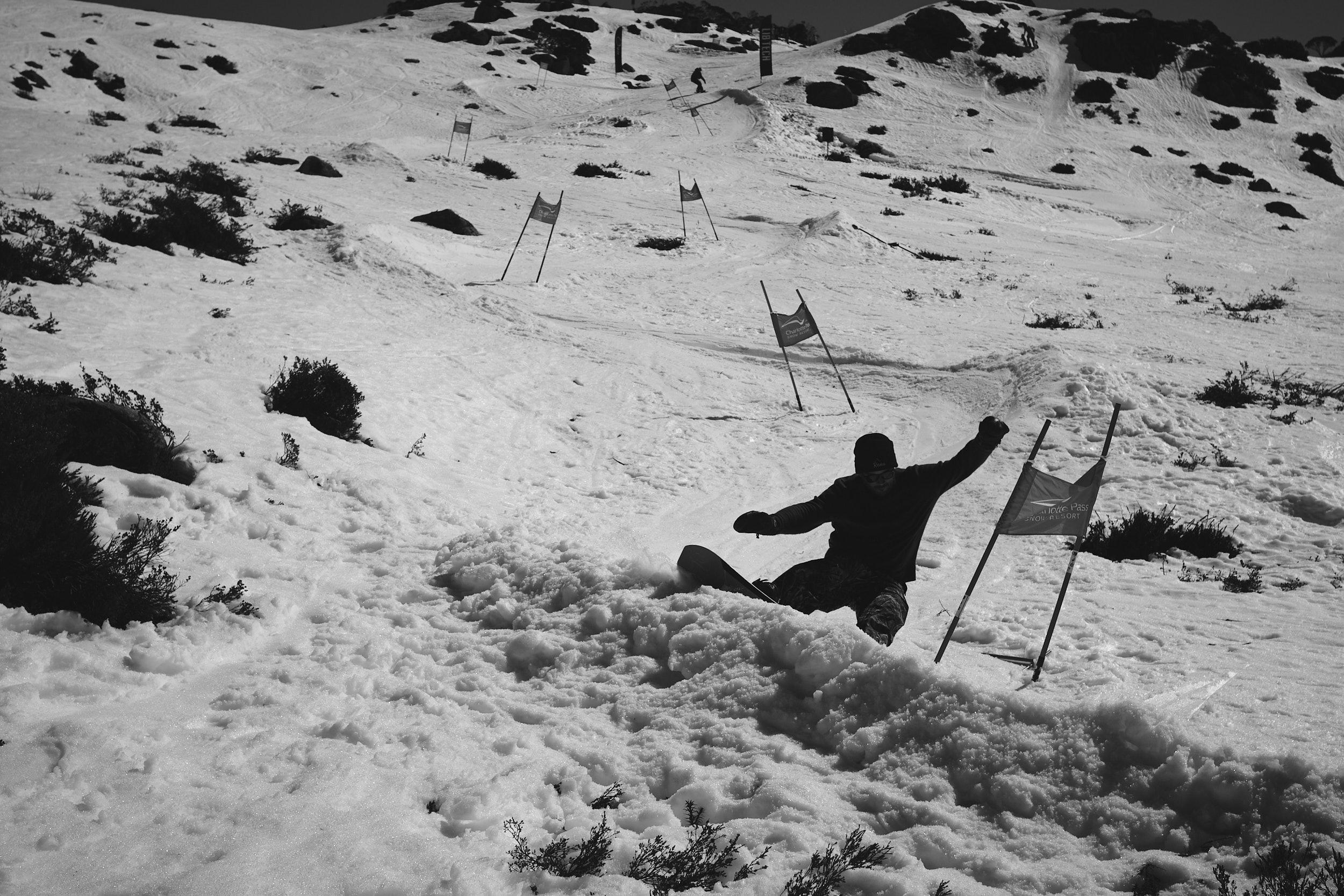
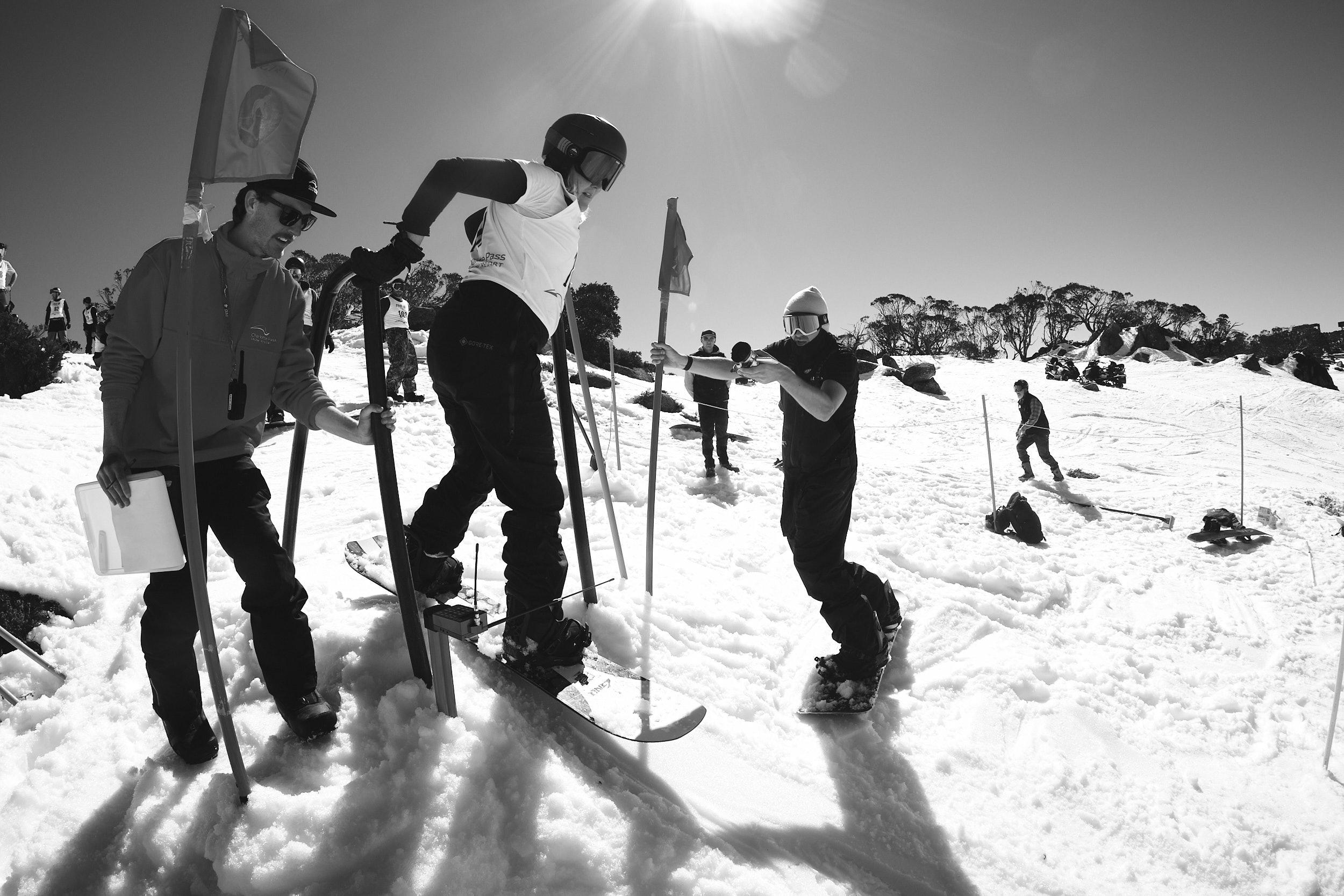
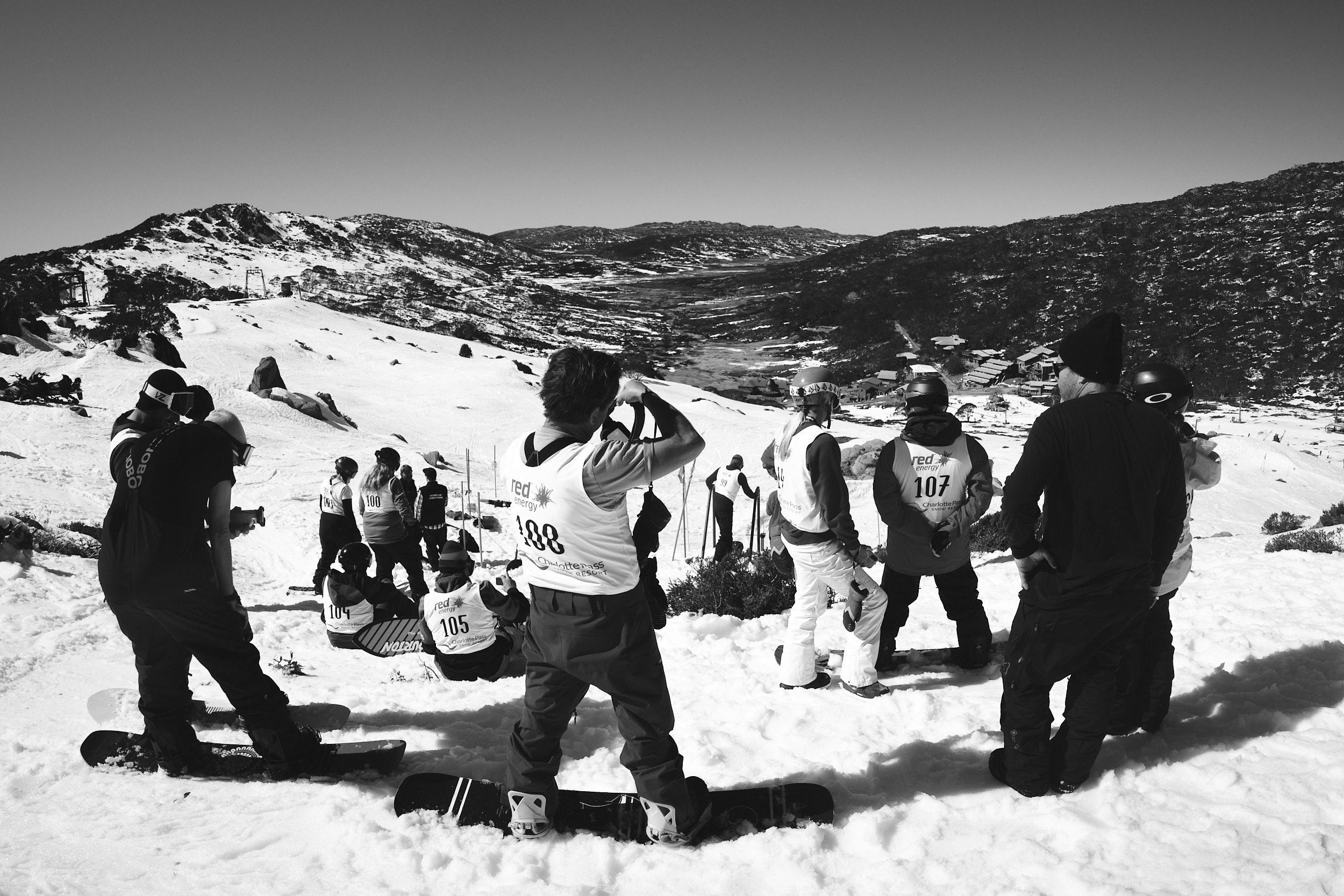
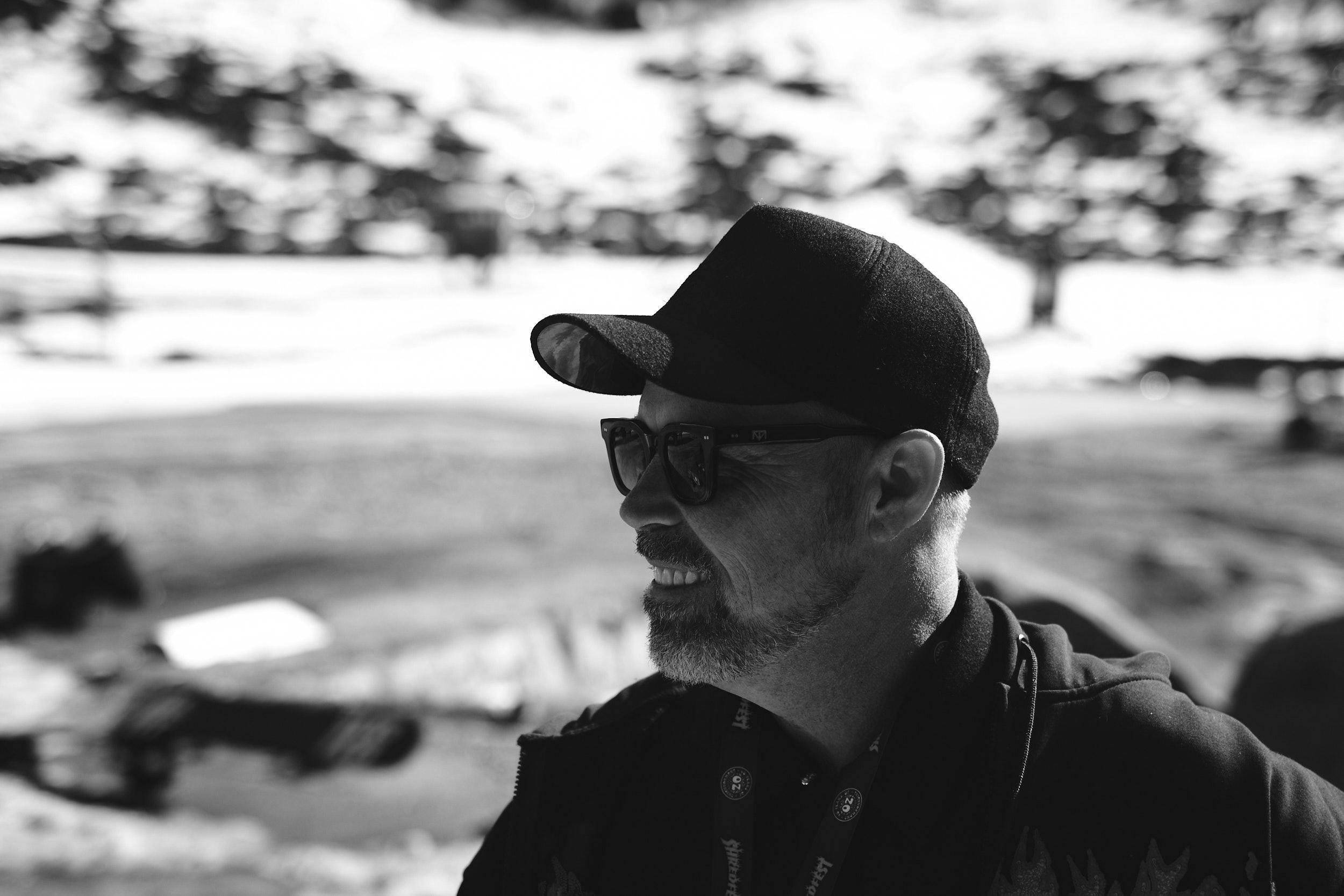
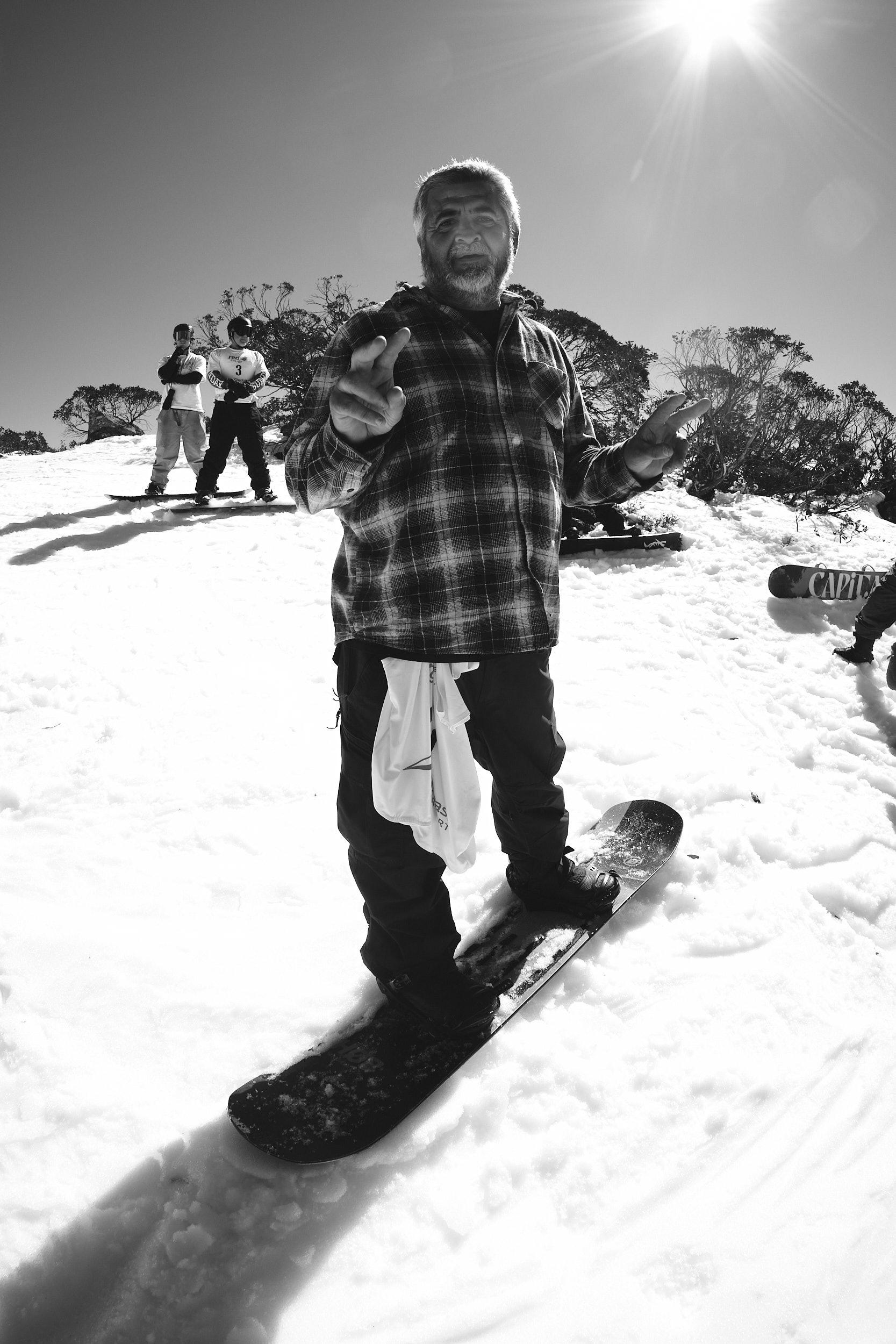
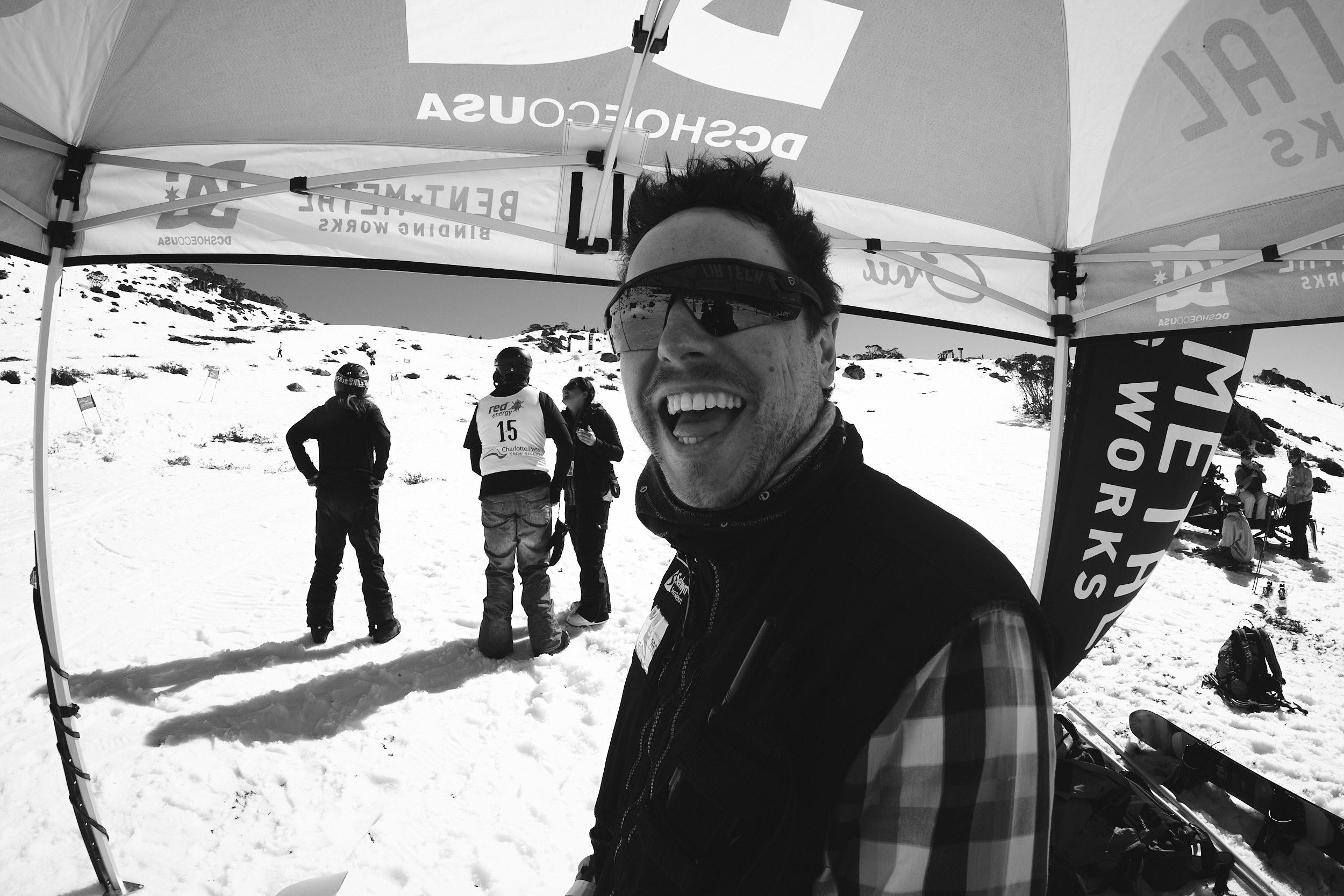
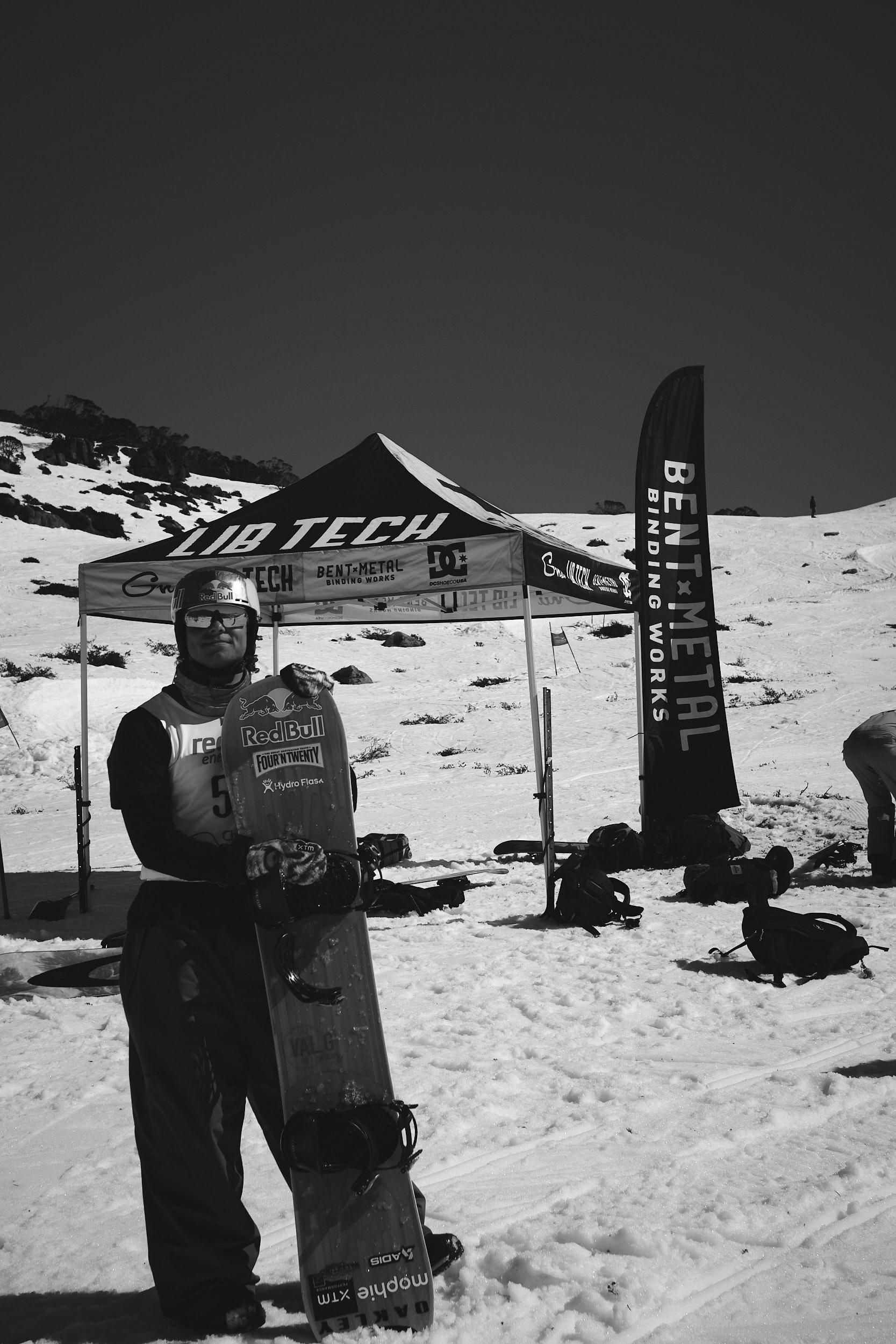
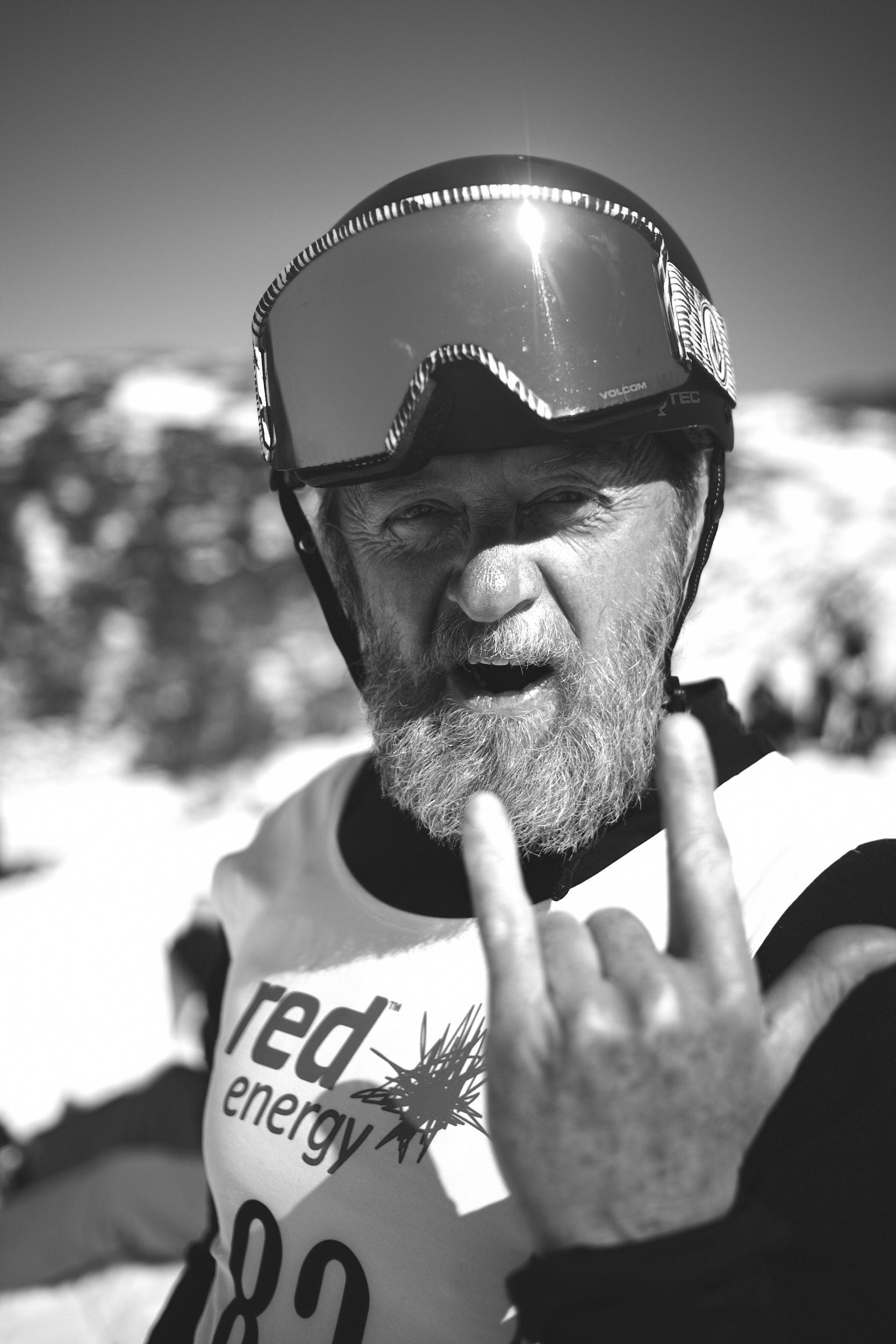
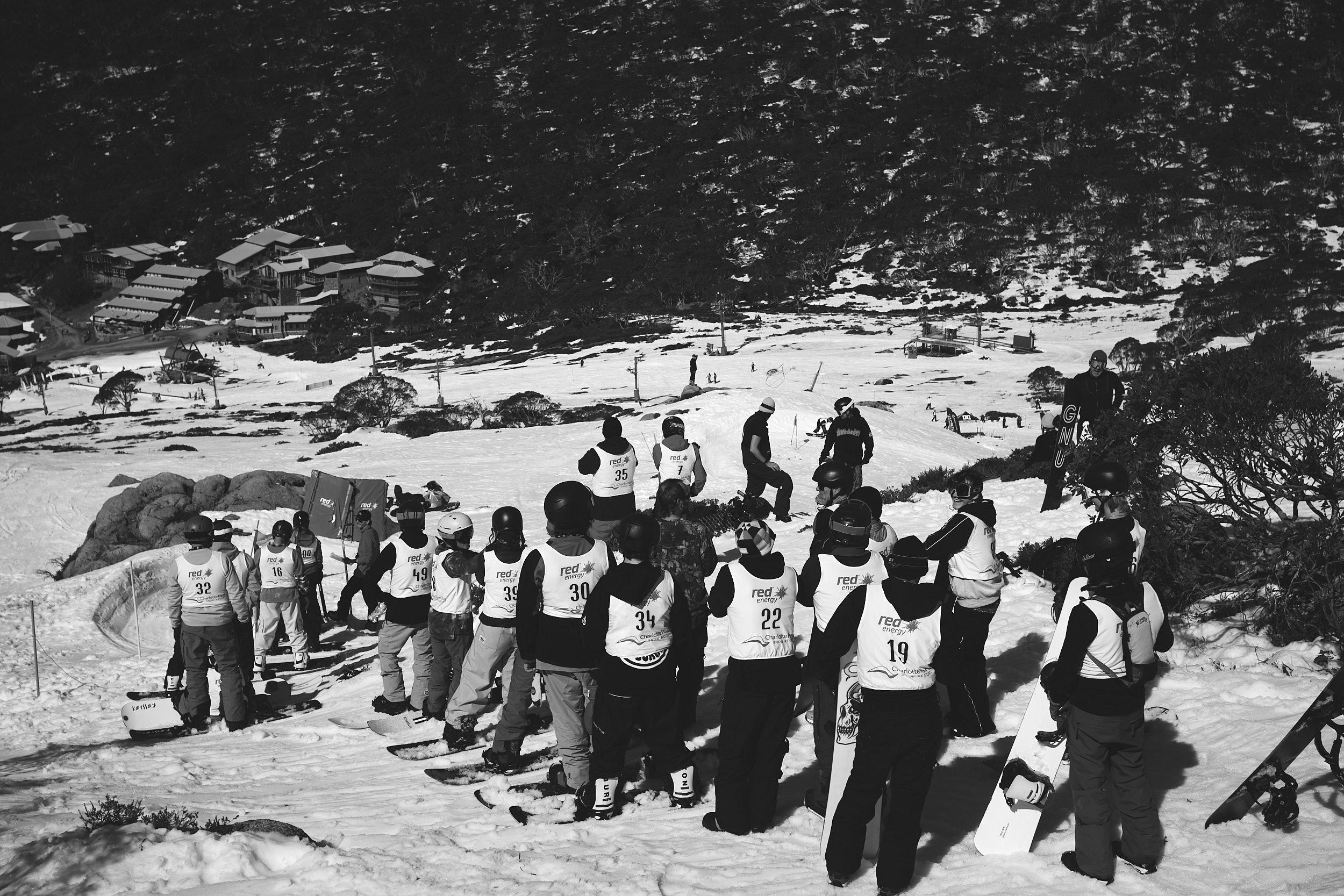
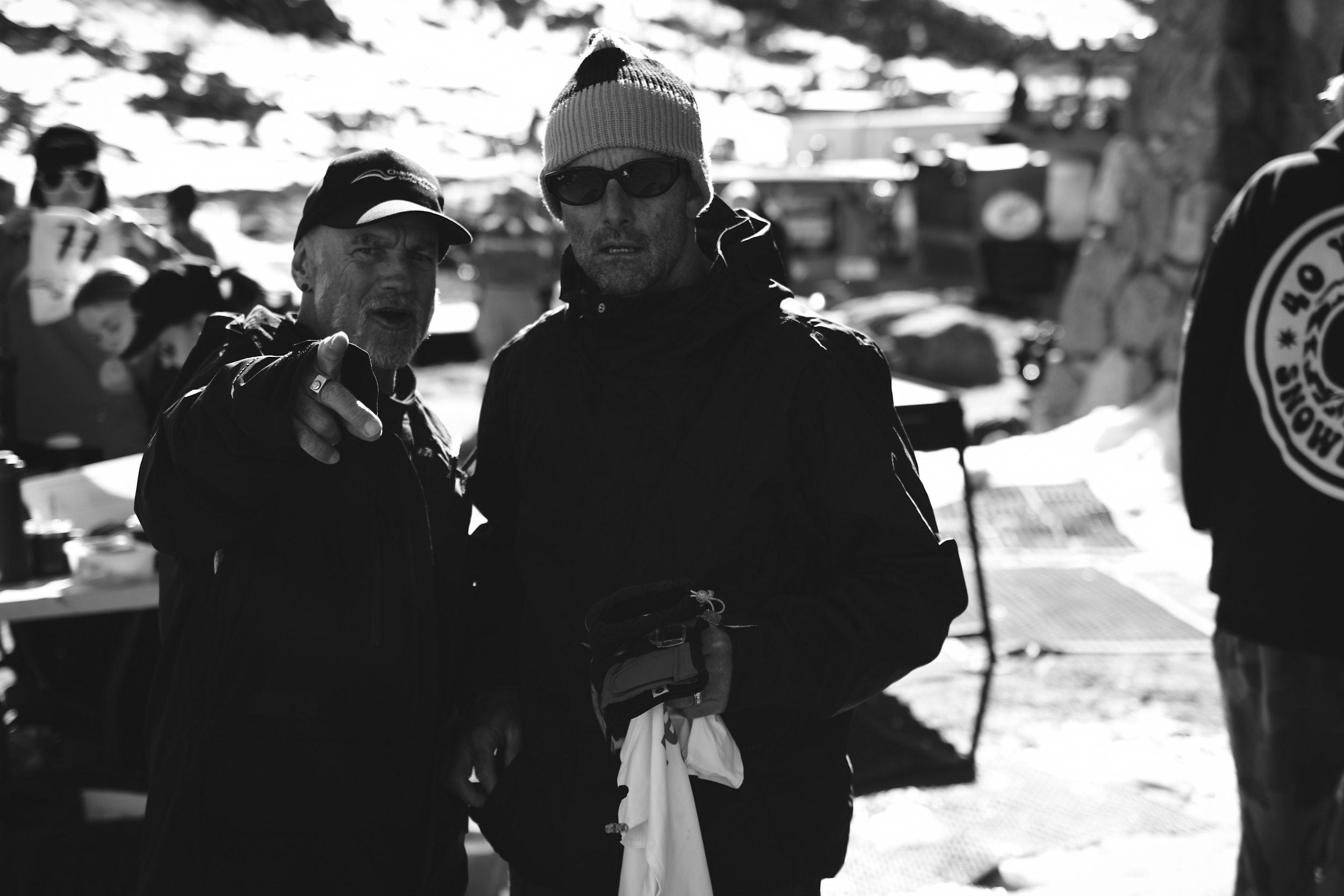
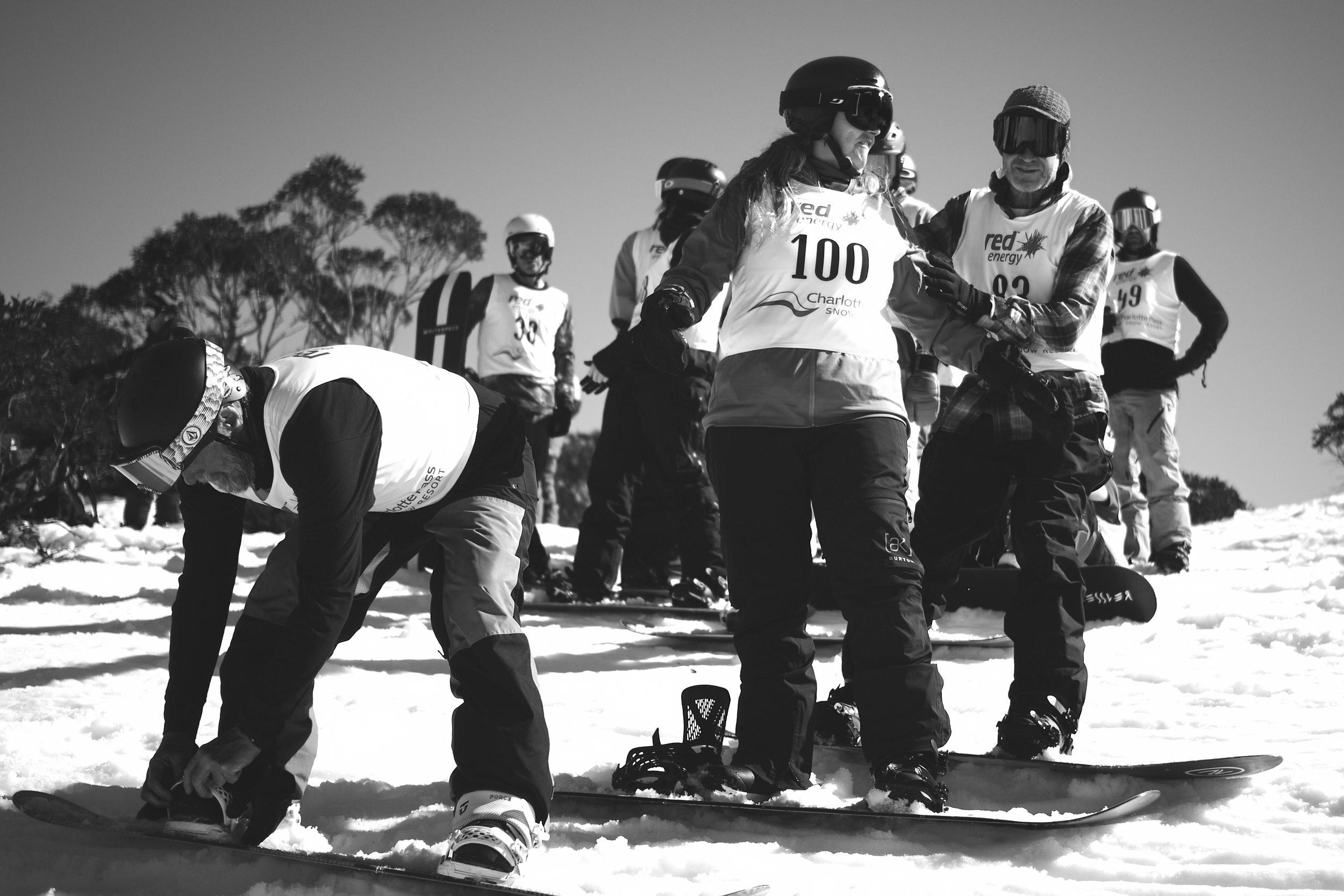
Valentino Guseli, the current face of Australian snowboarding on the international stage.
Saturday: Ride Day
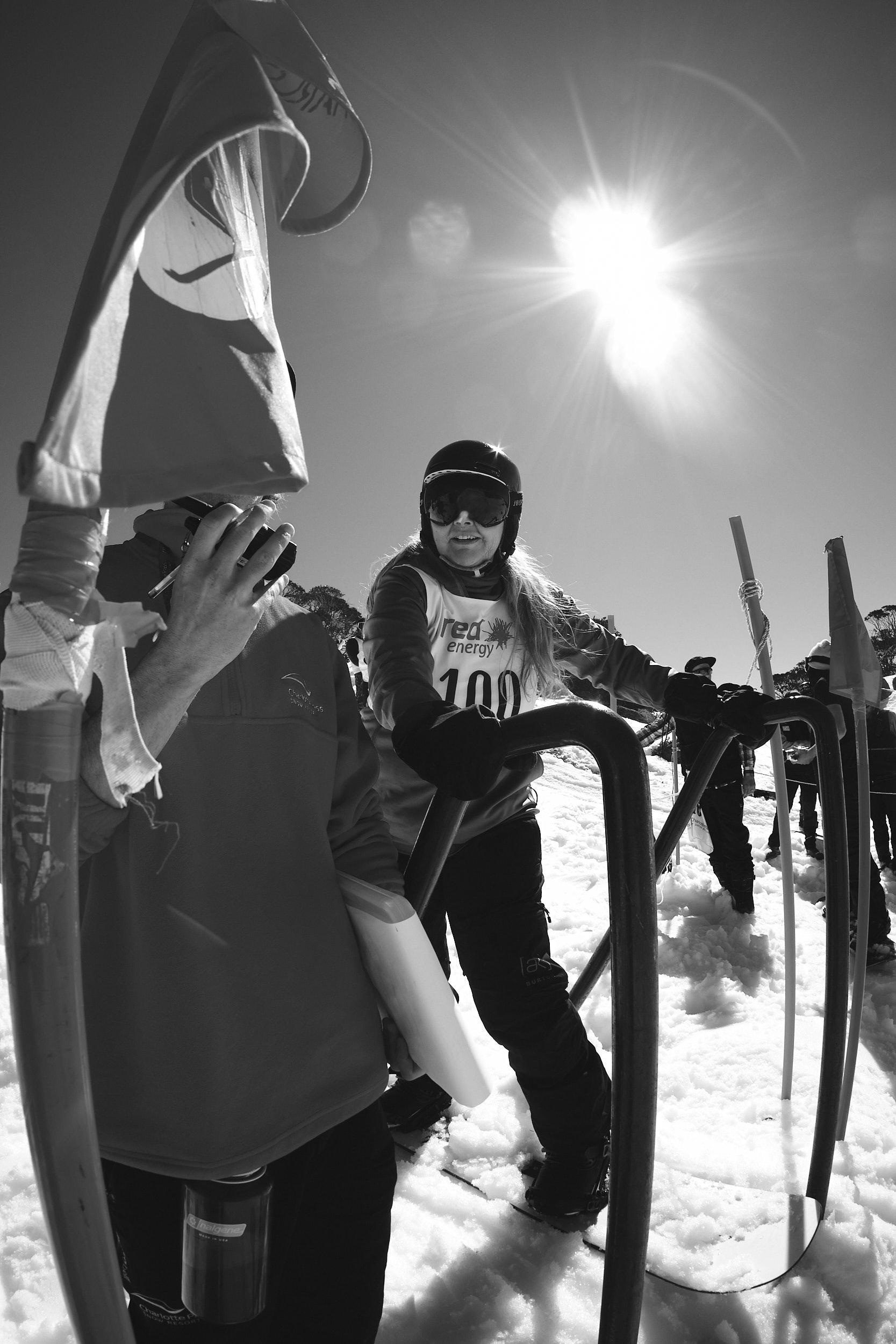
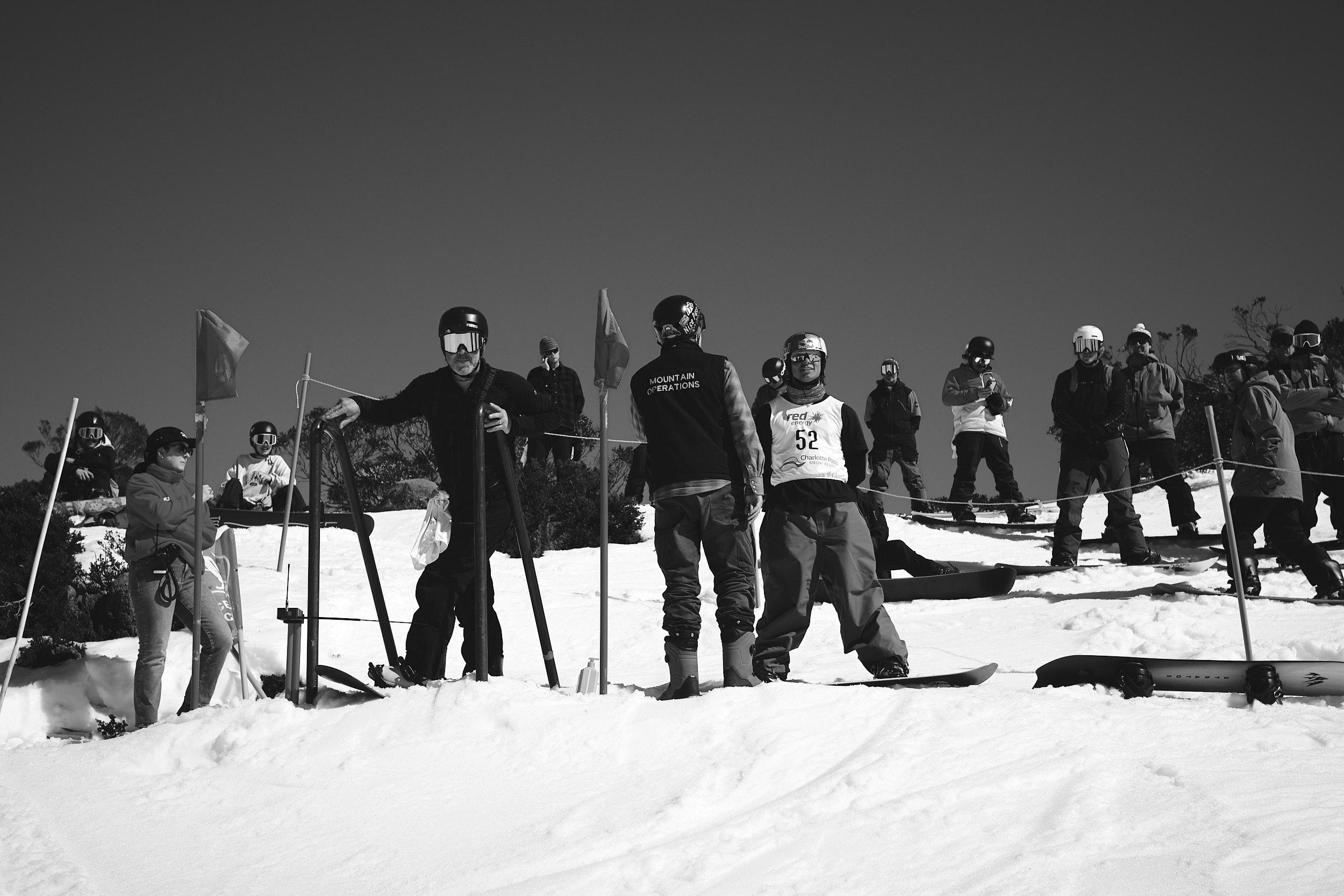
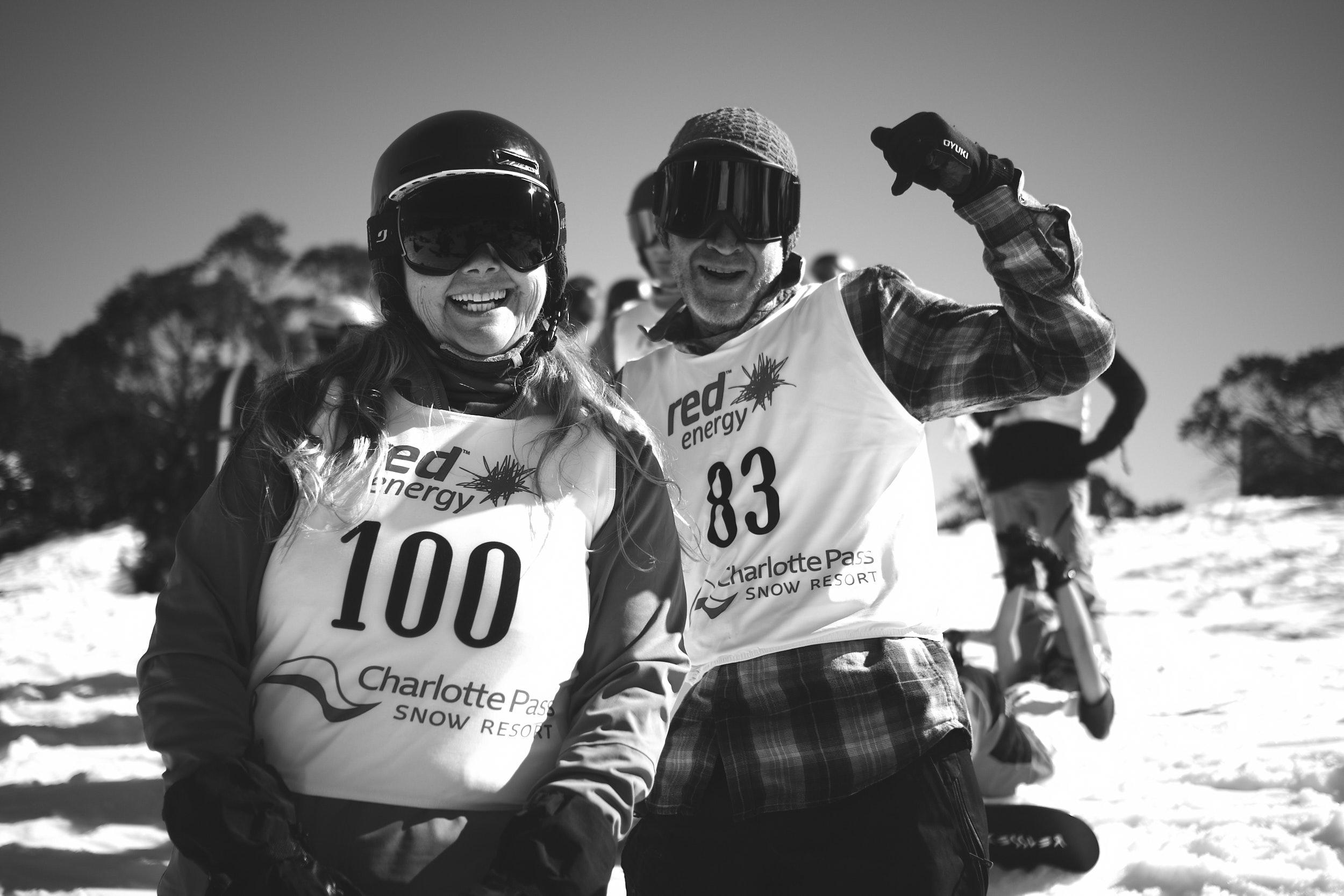
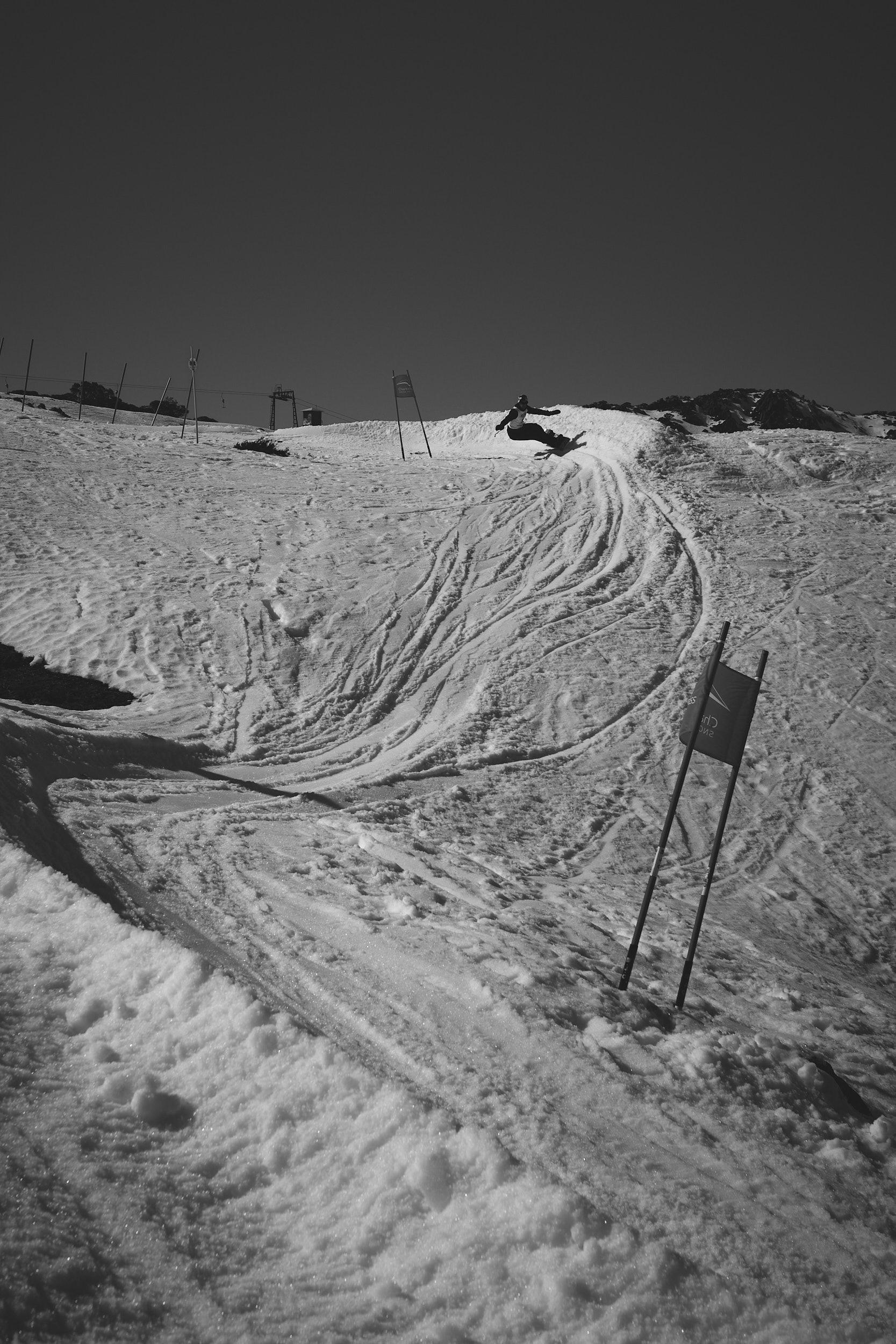
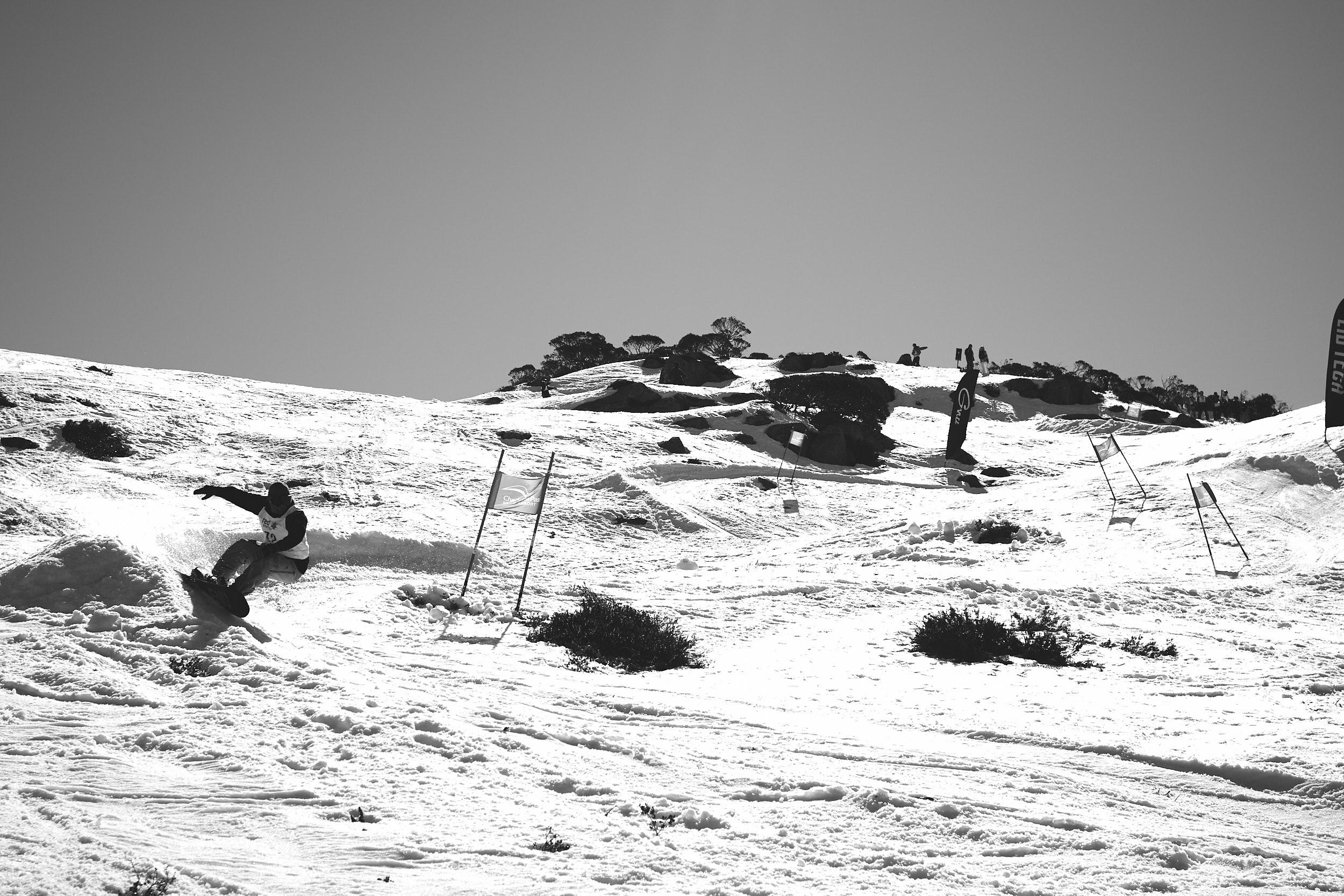
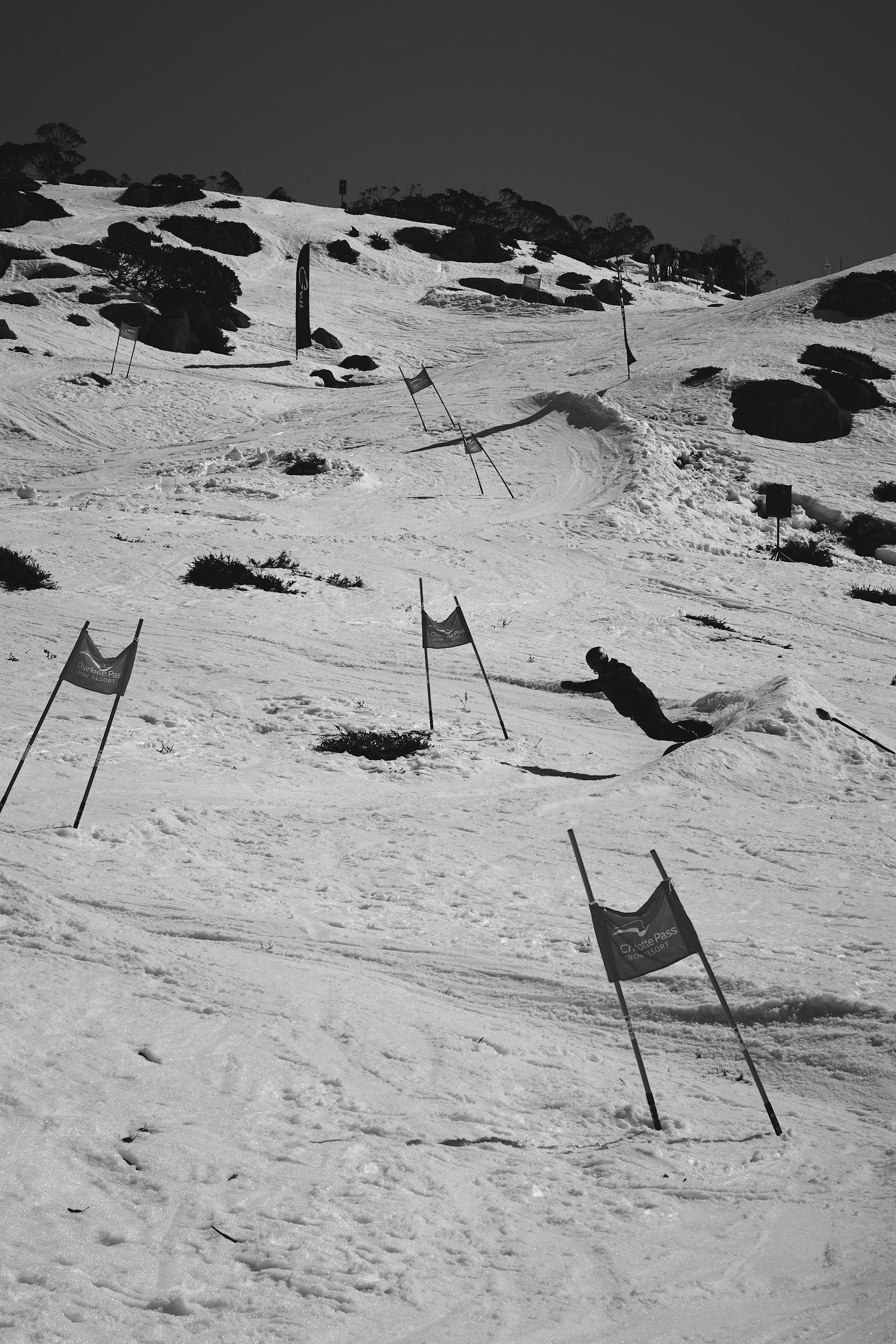
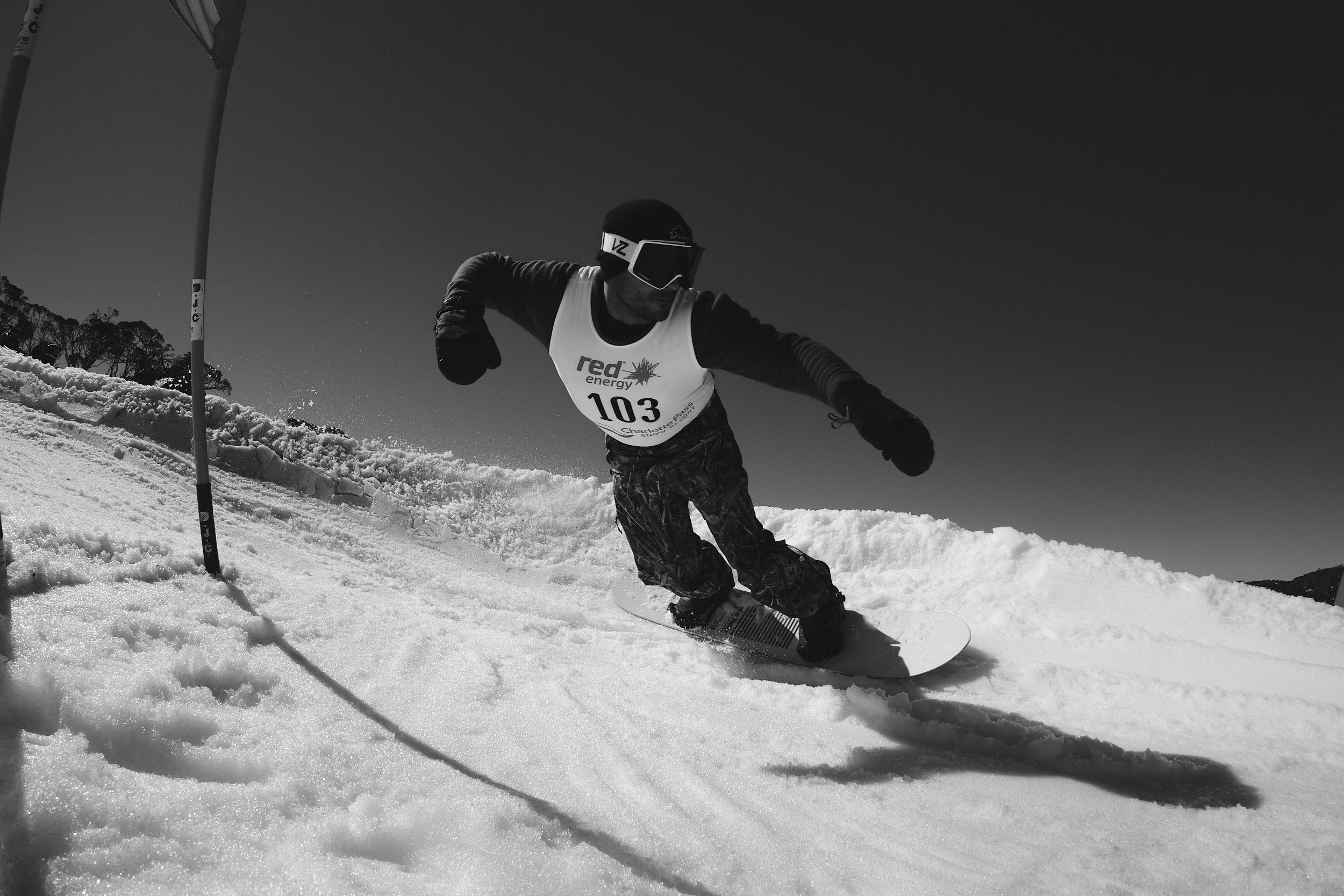
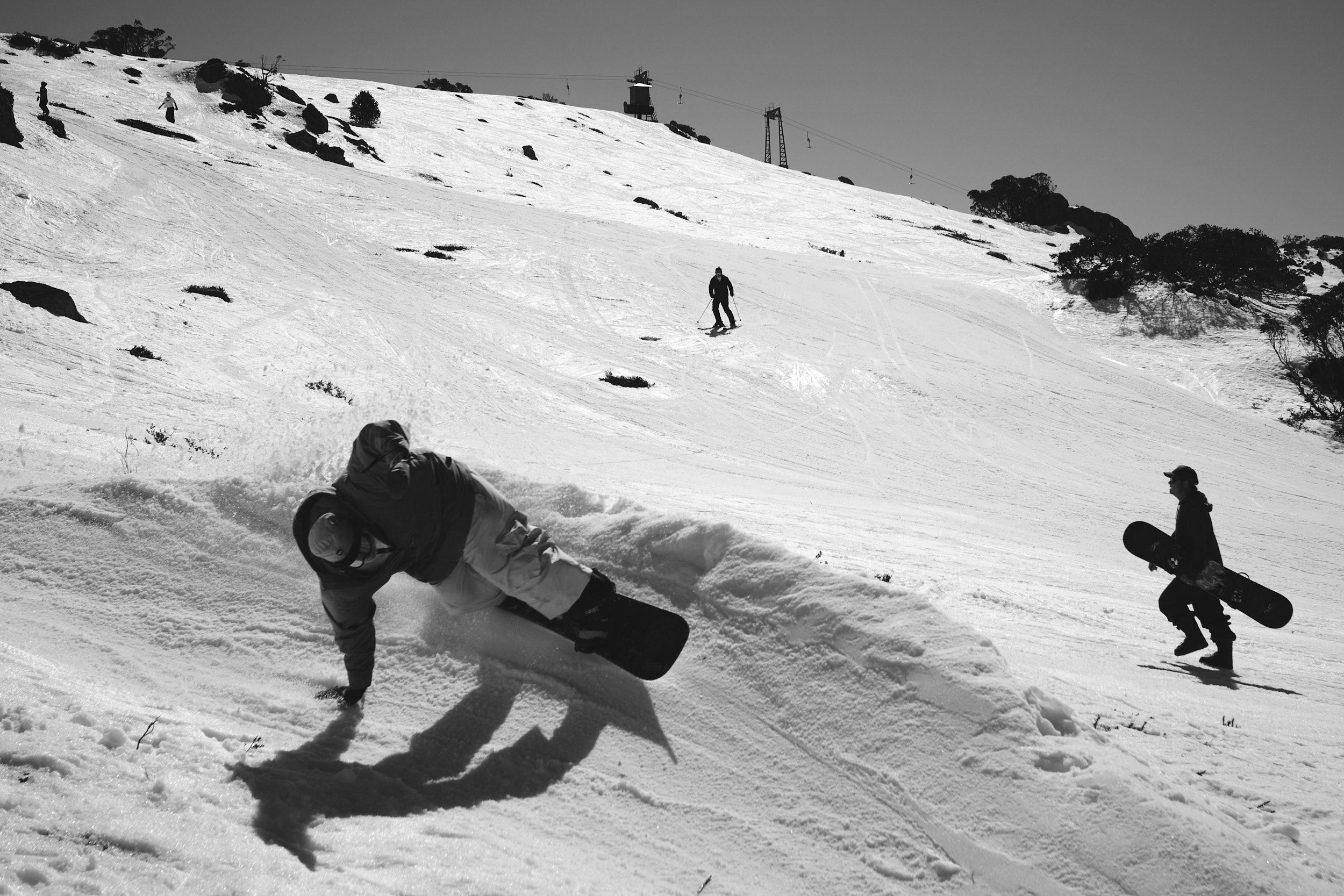
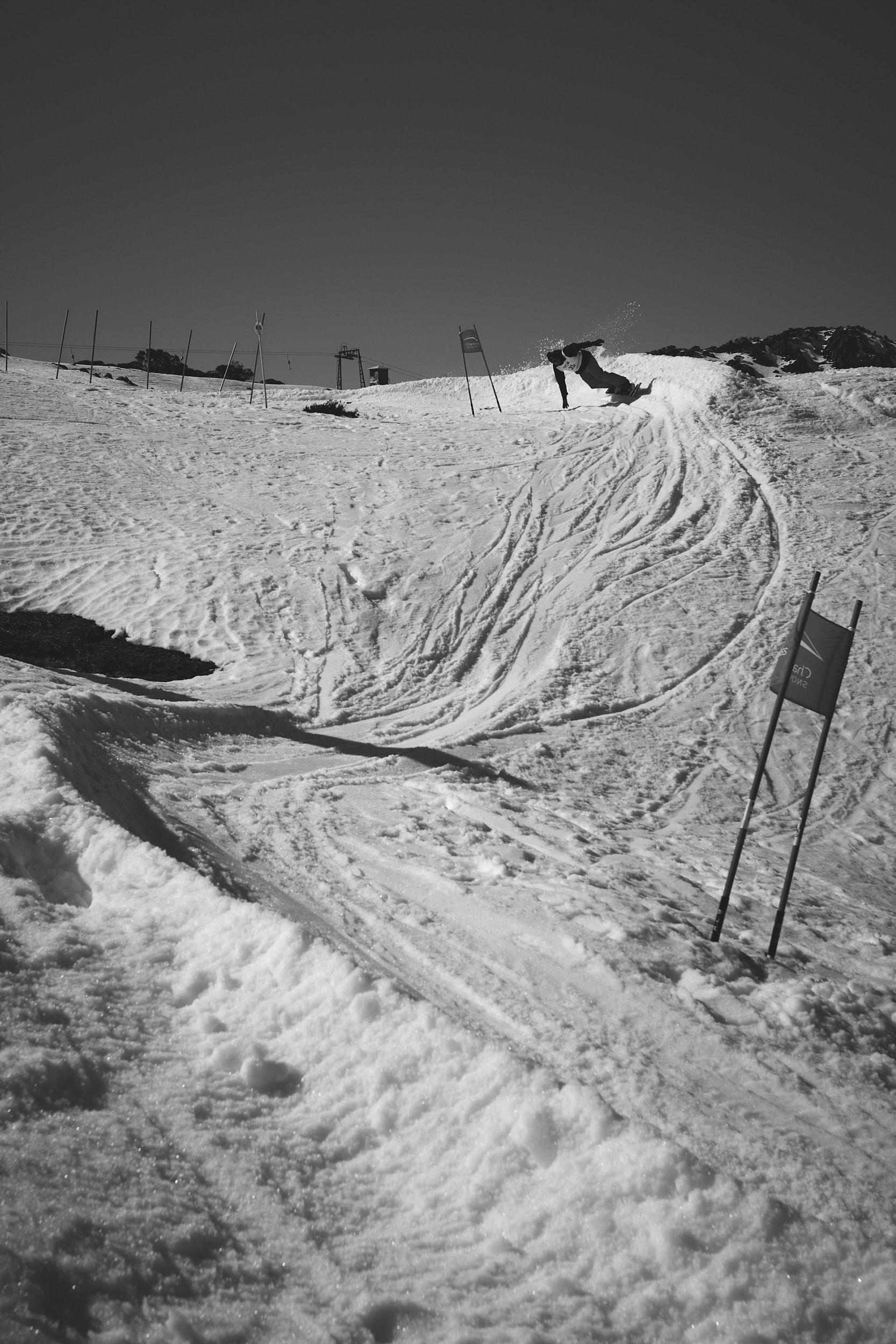
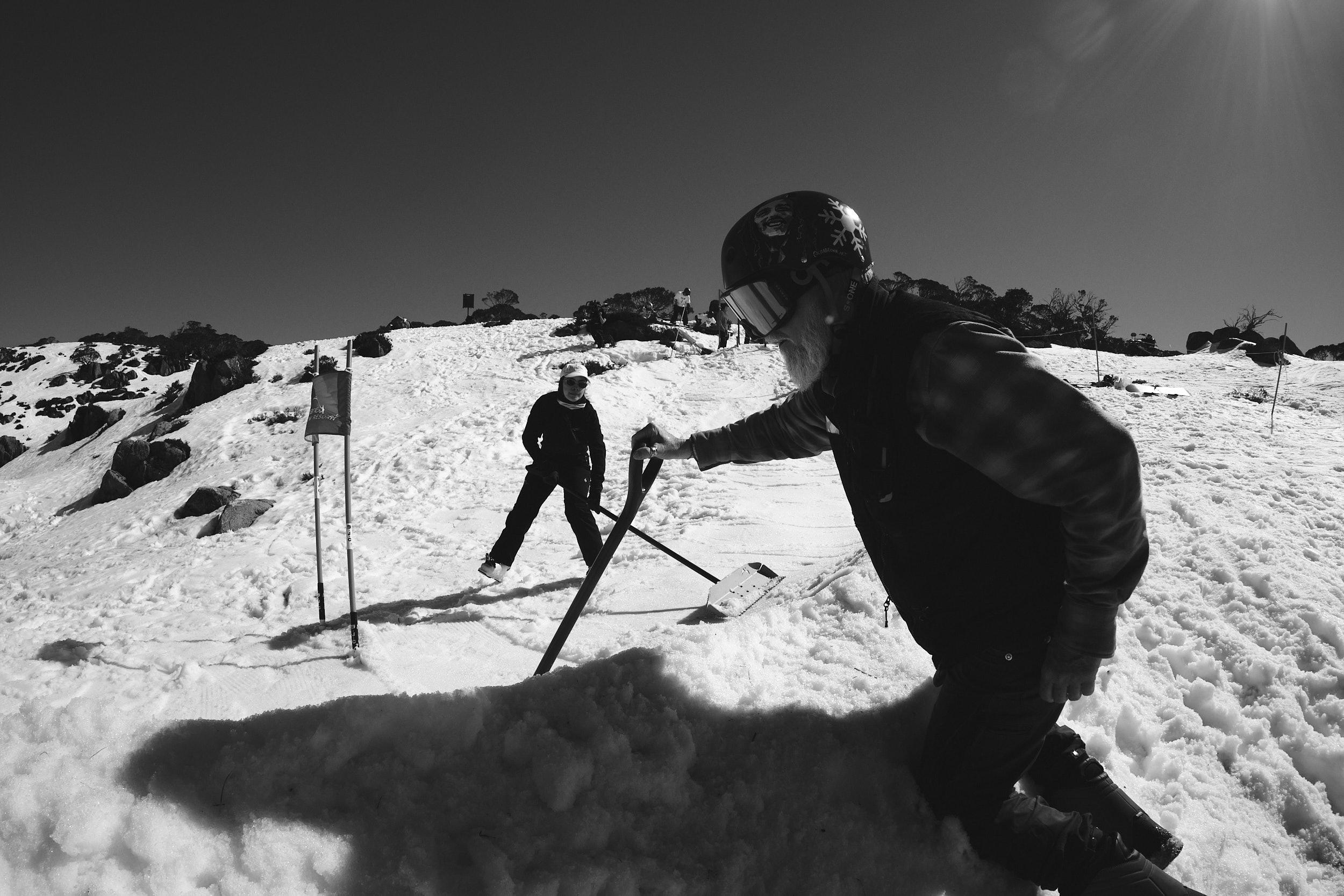
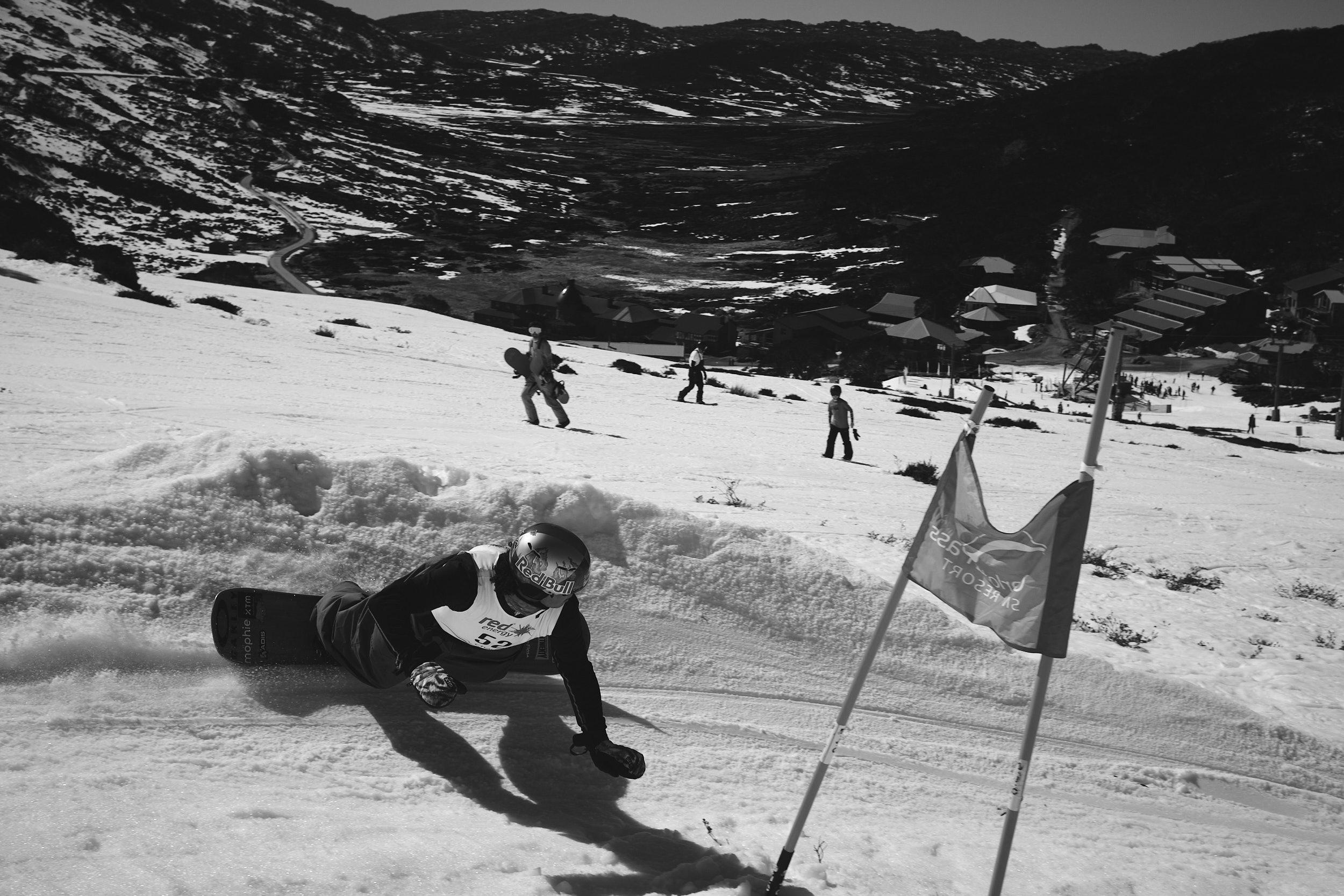
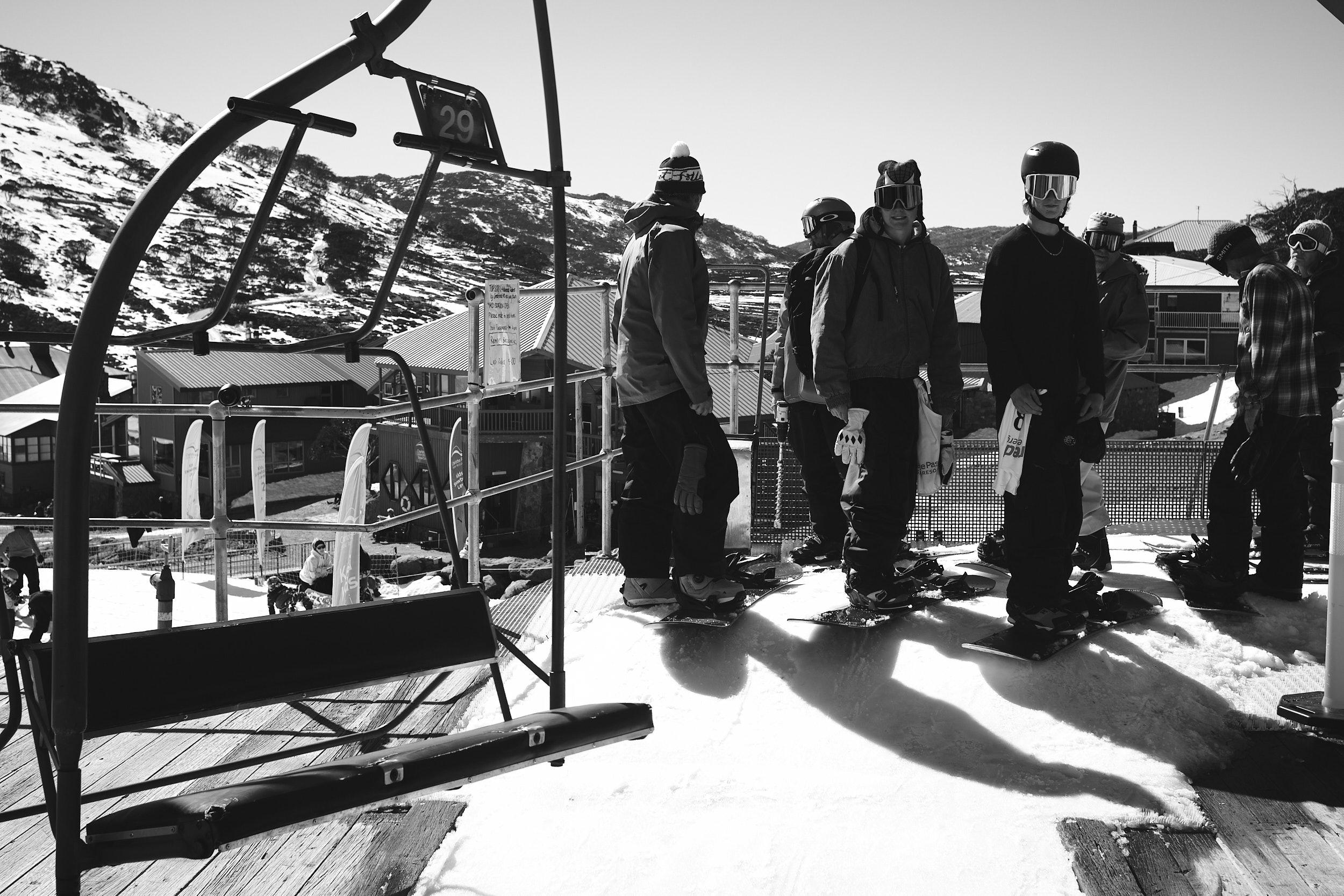
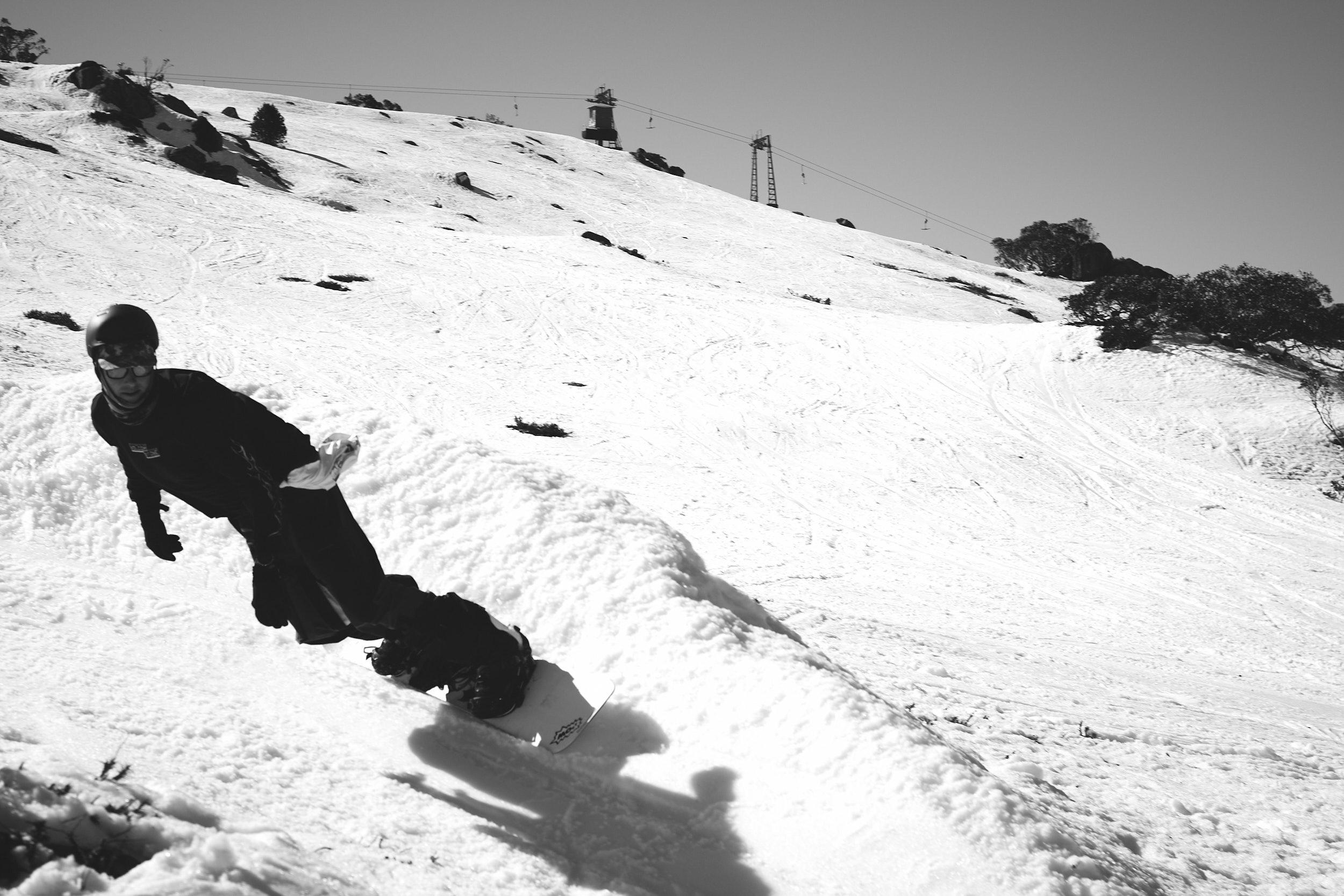
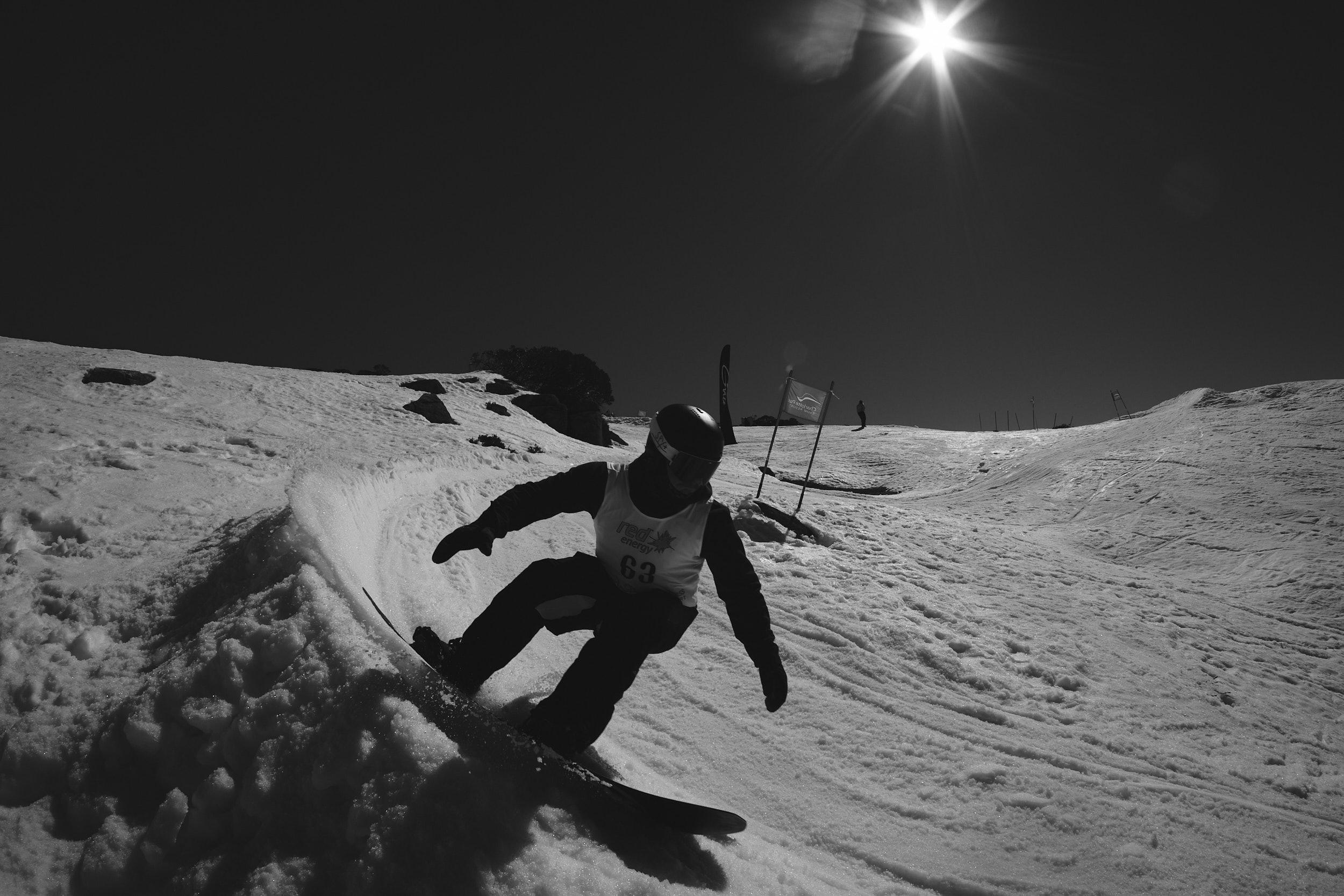
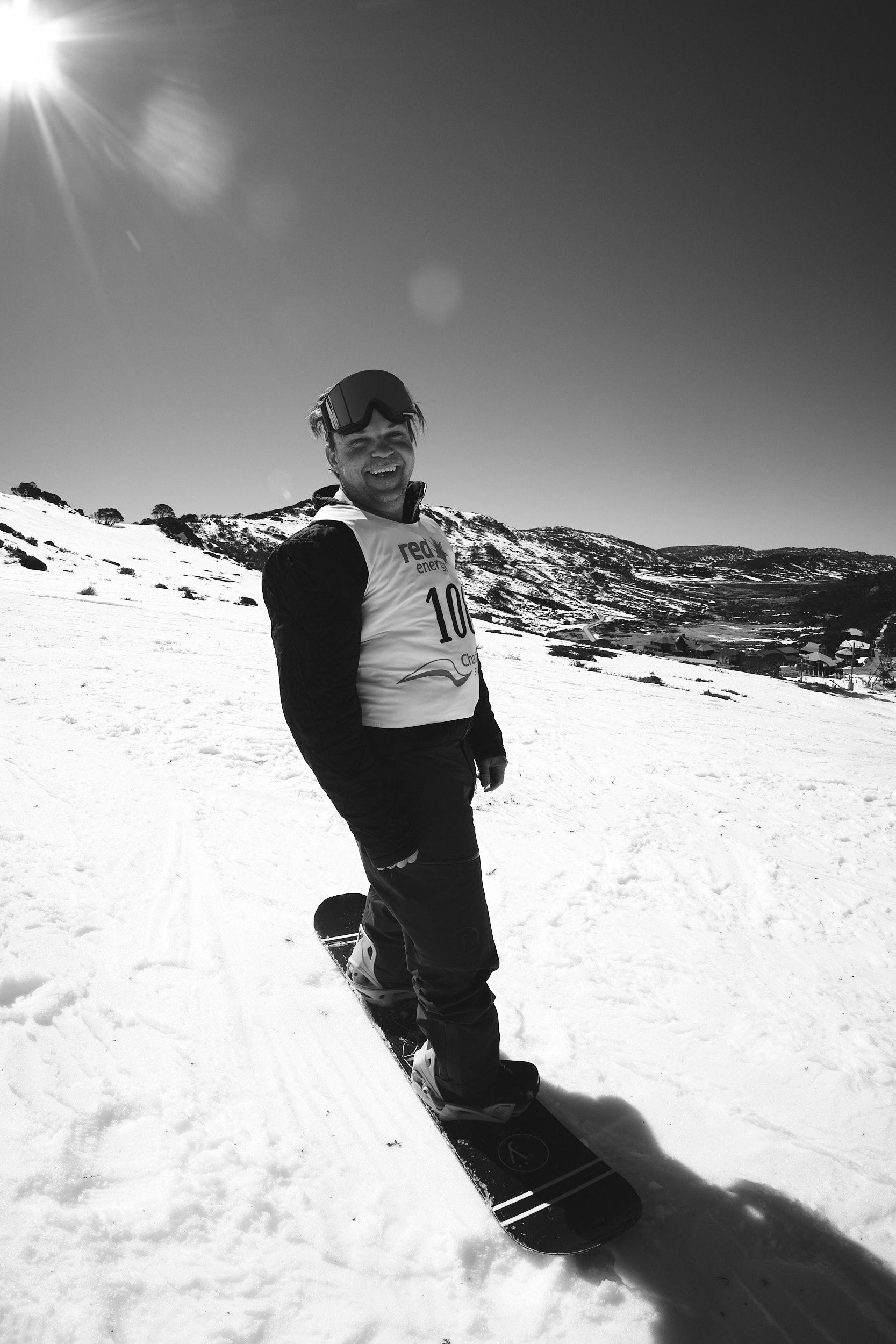
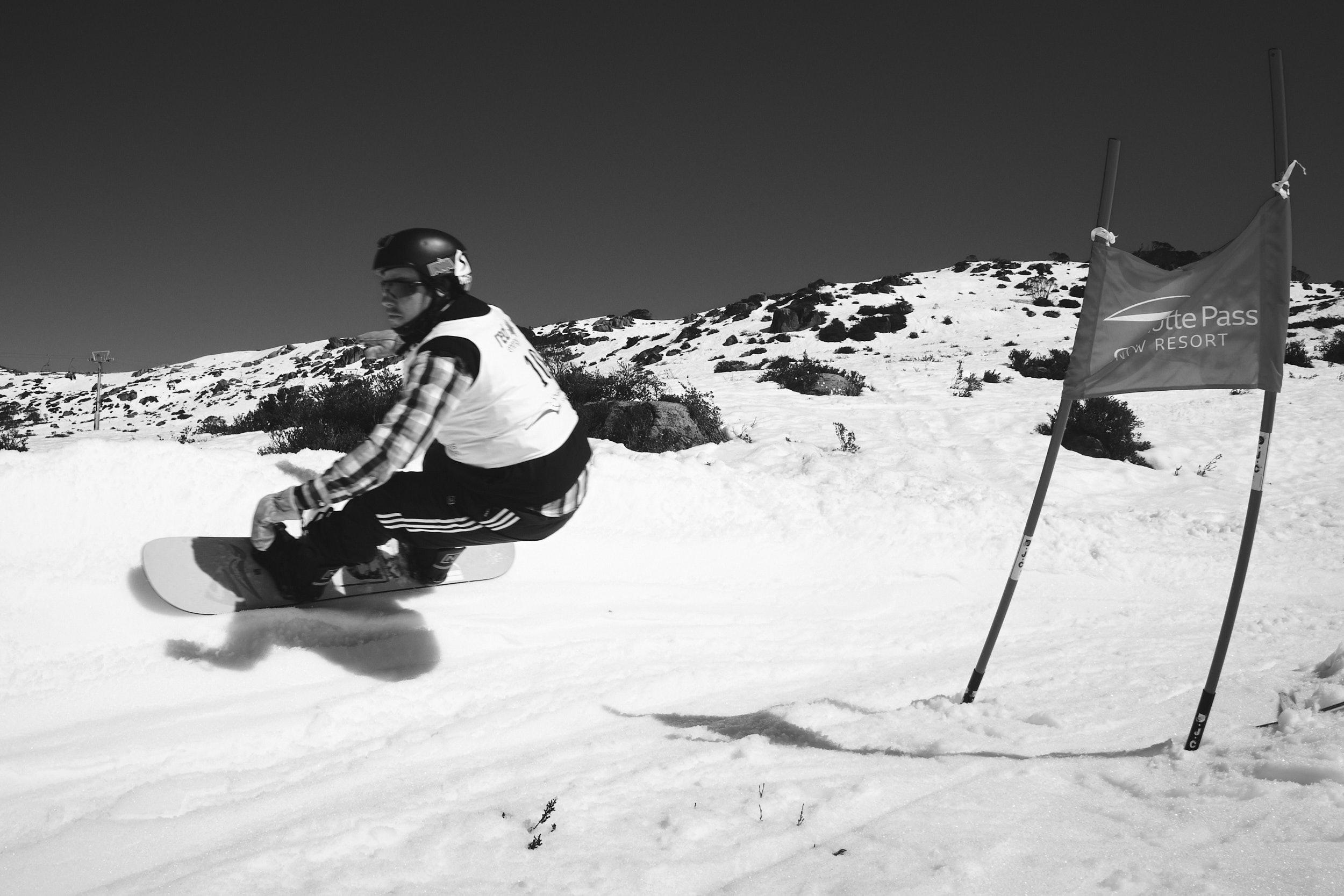
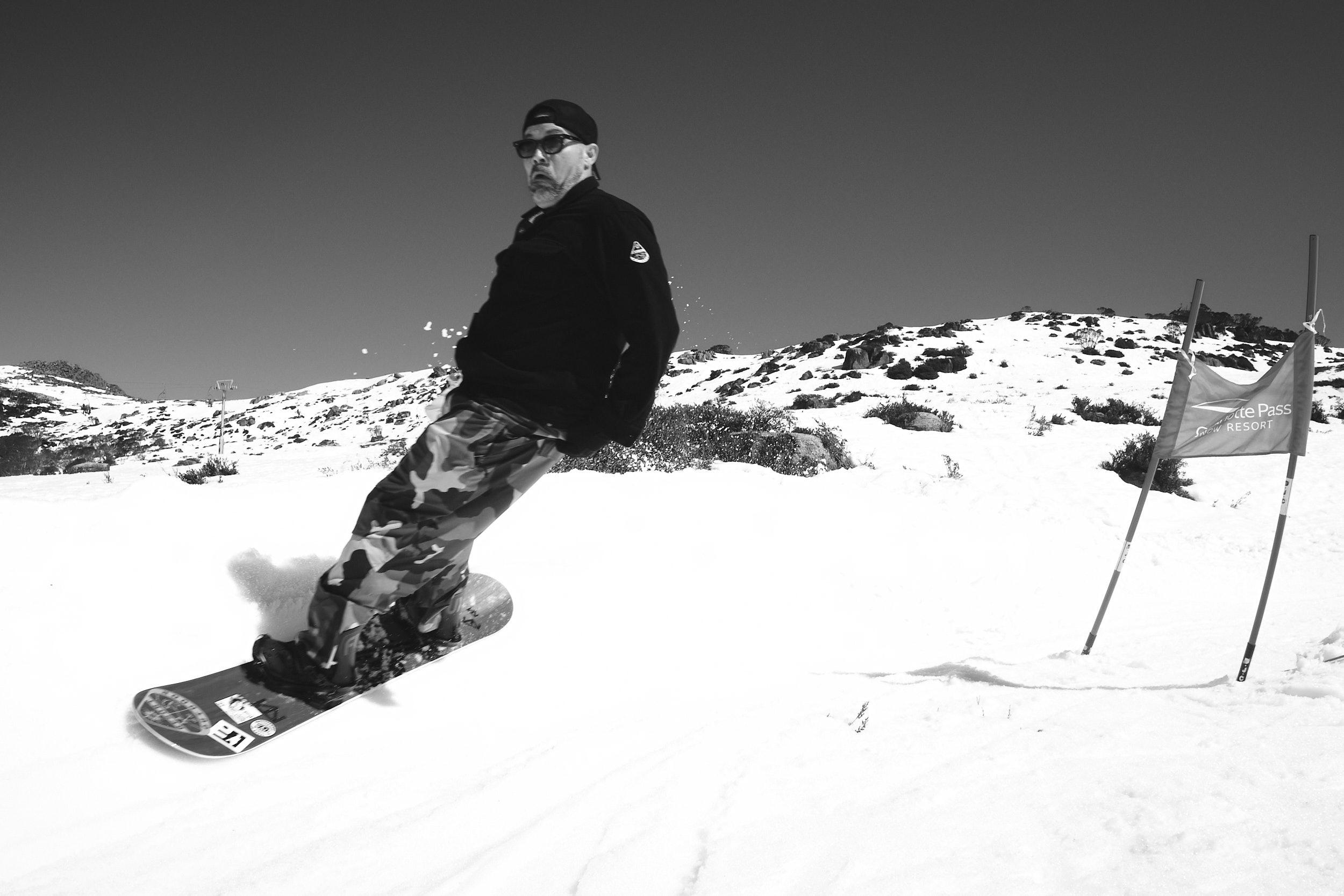
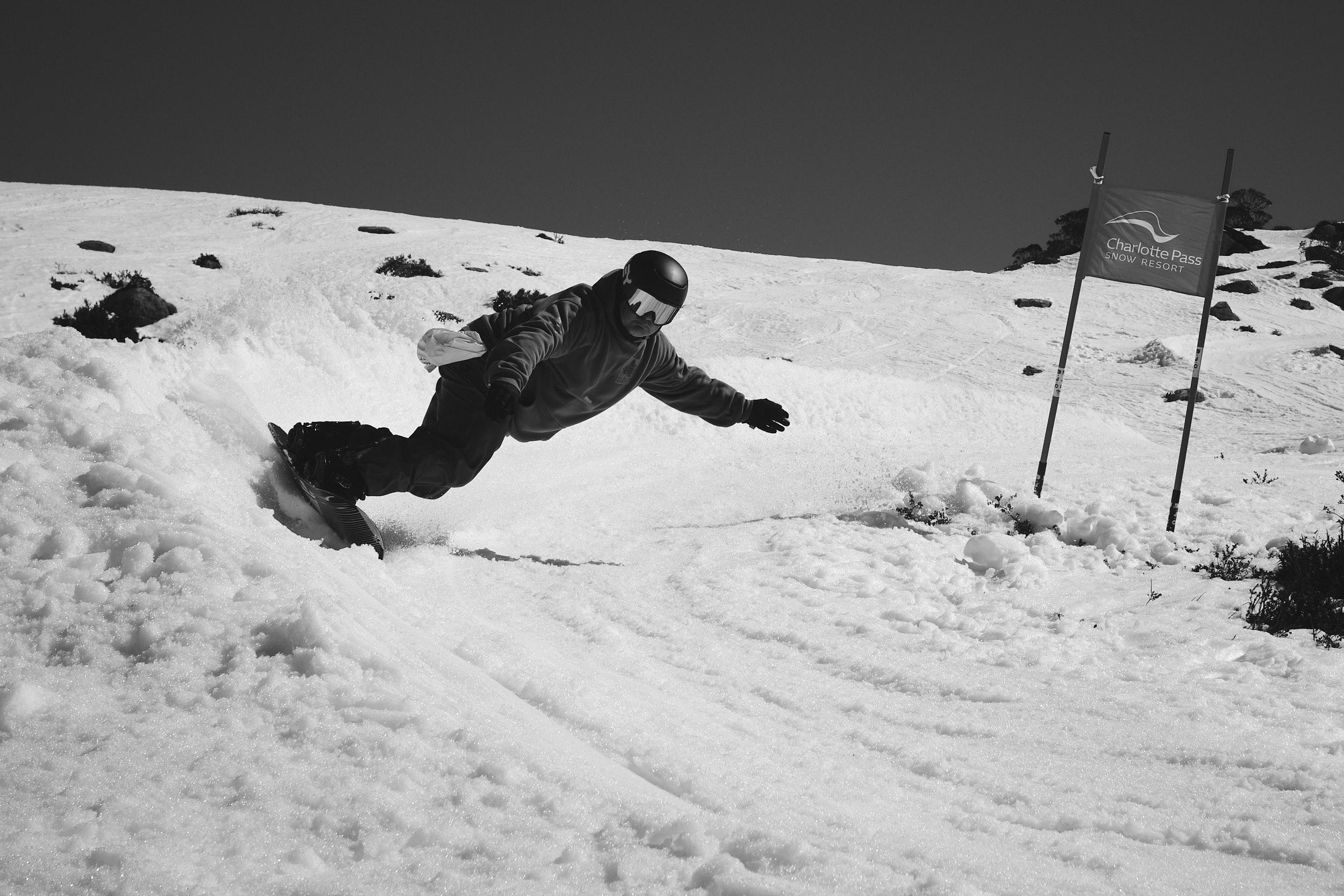
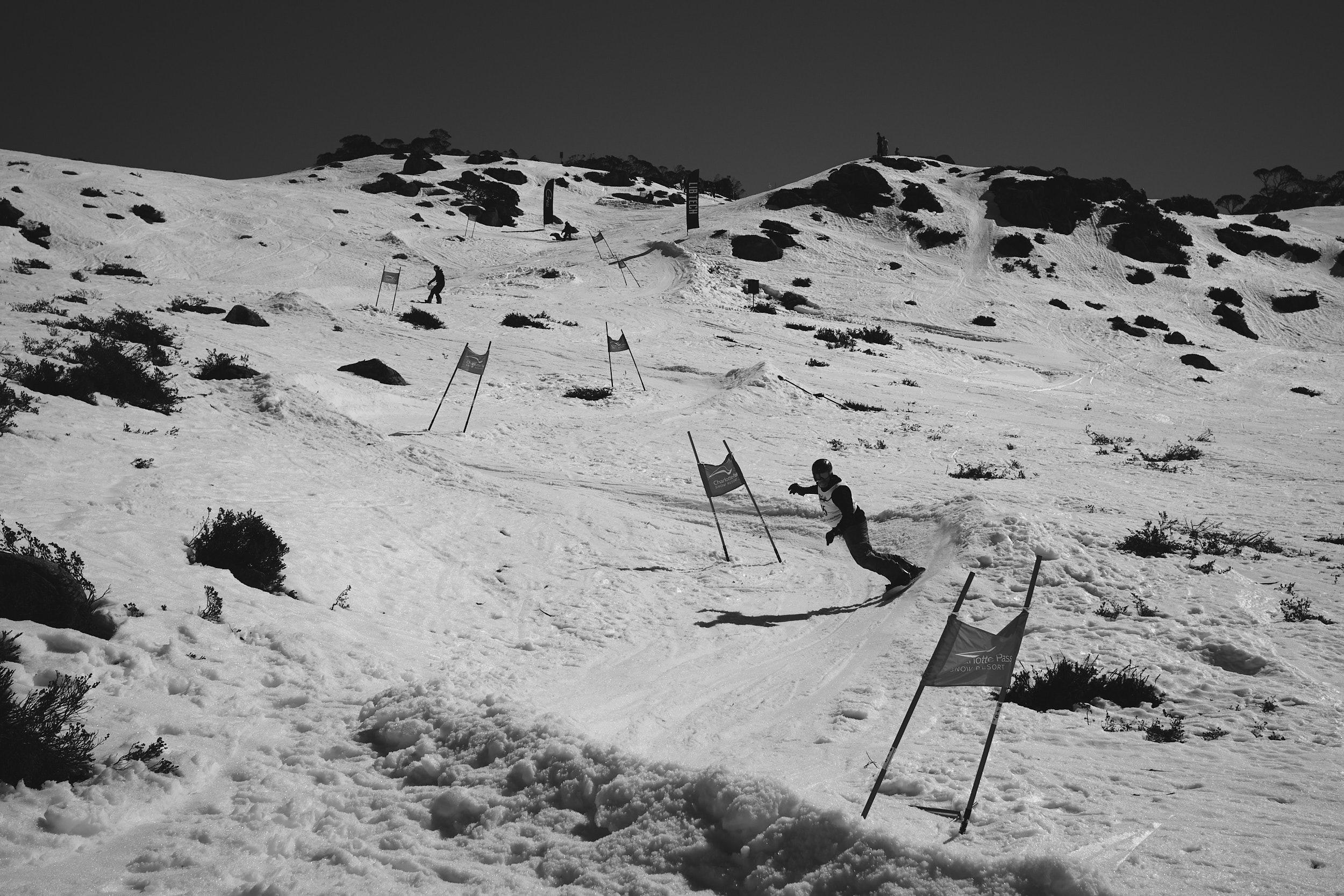
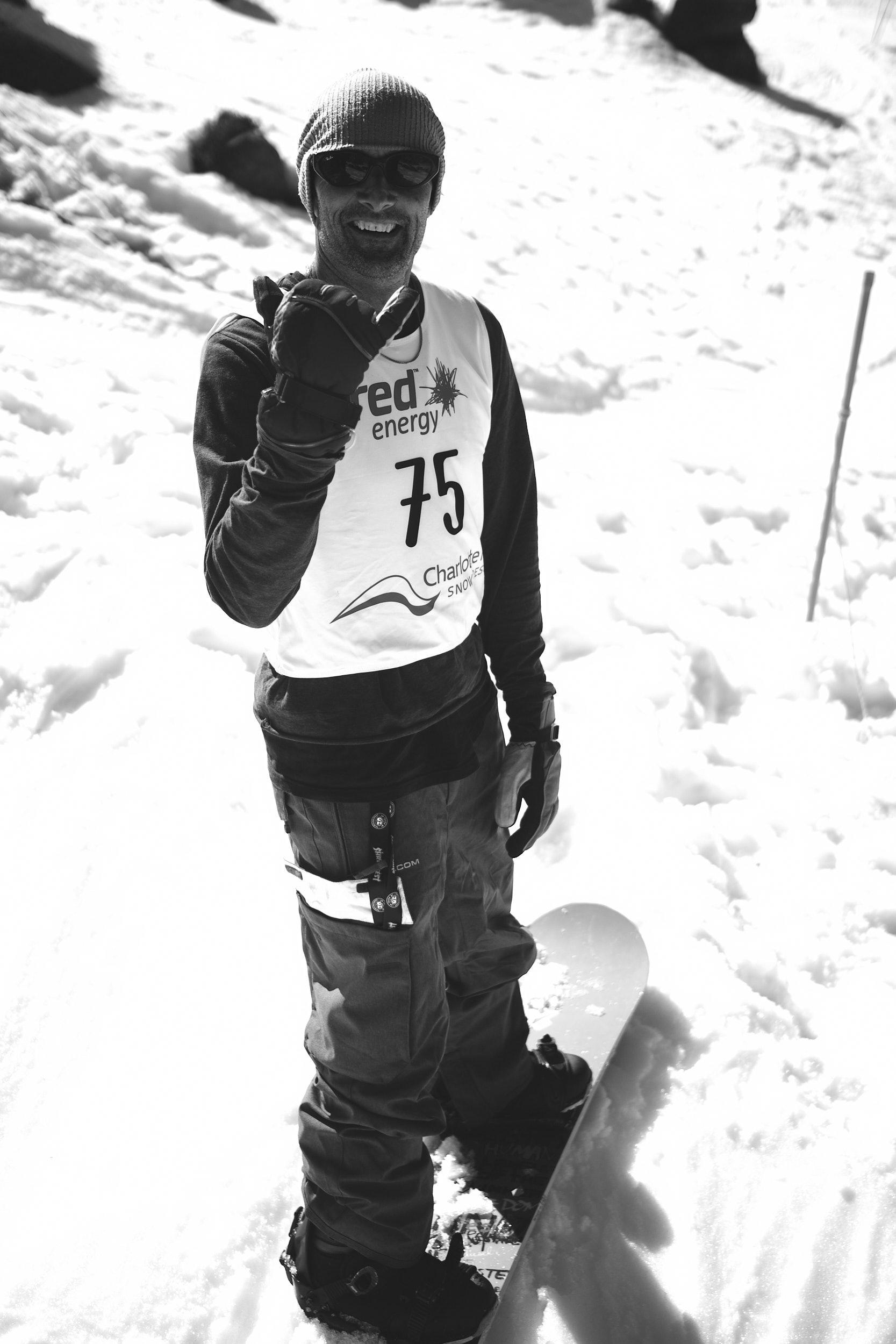
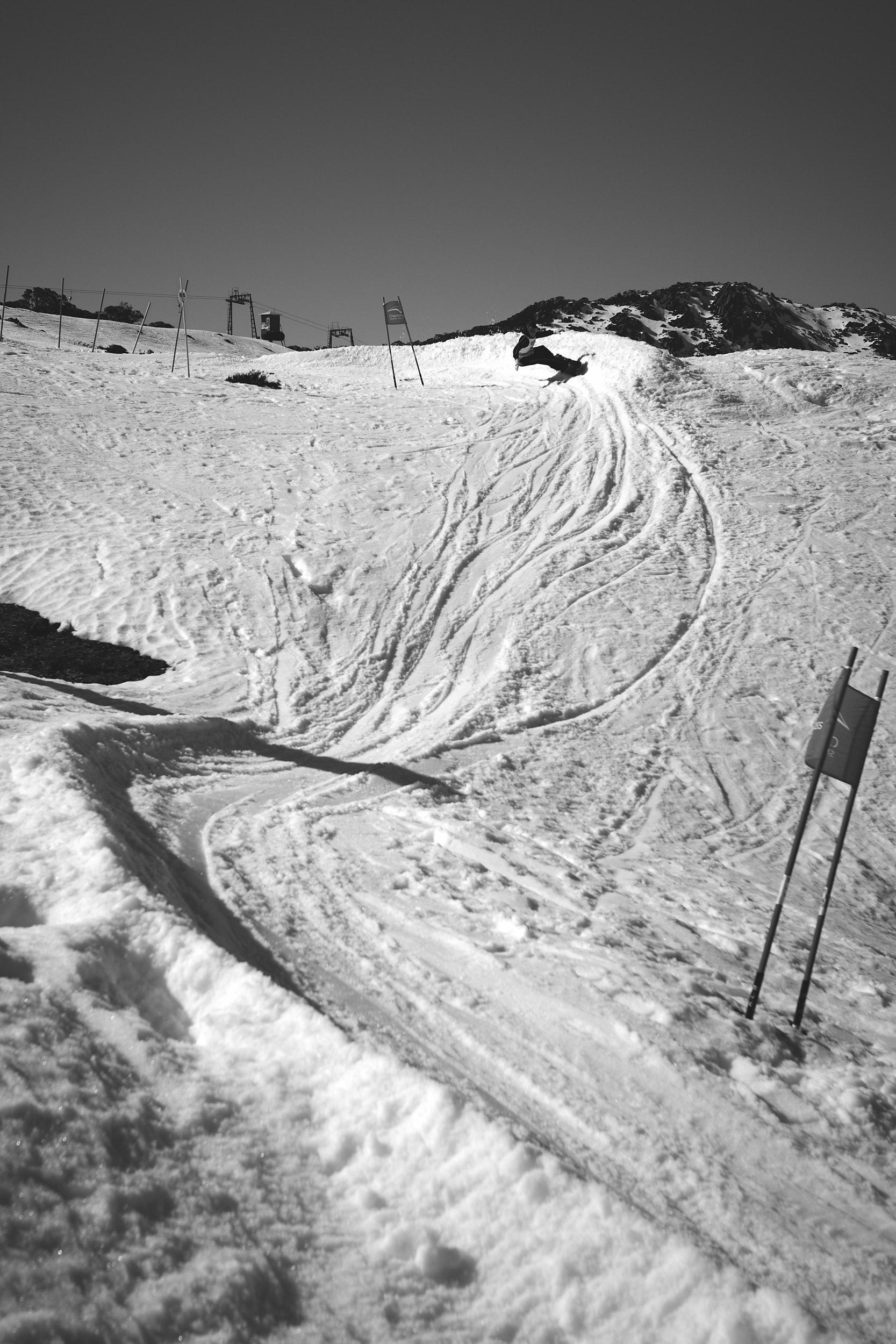
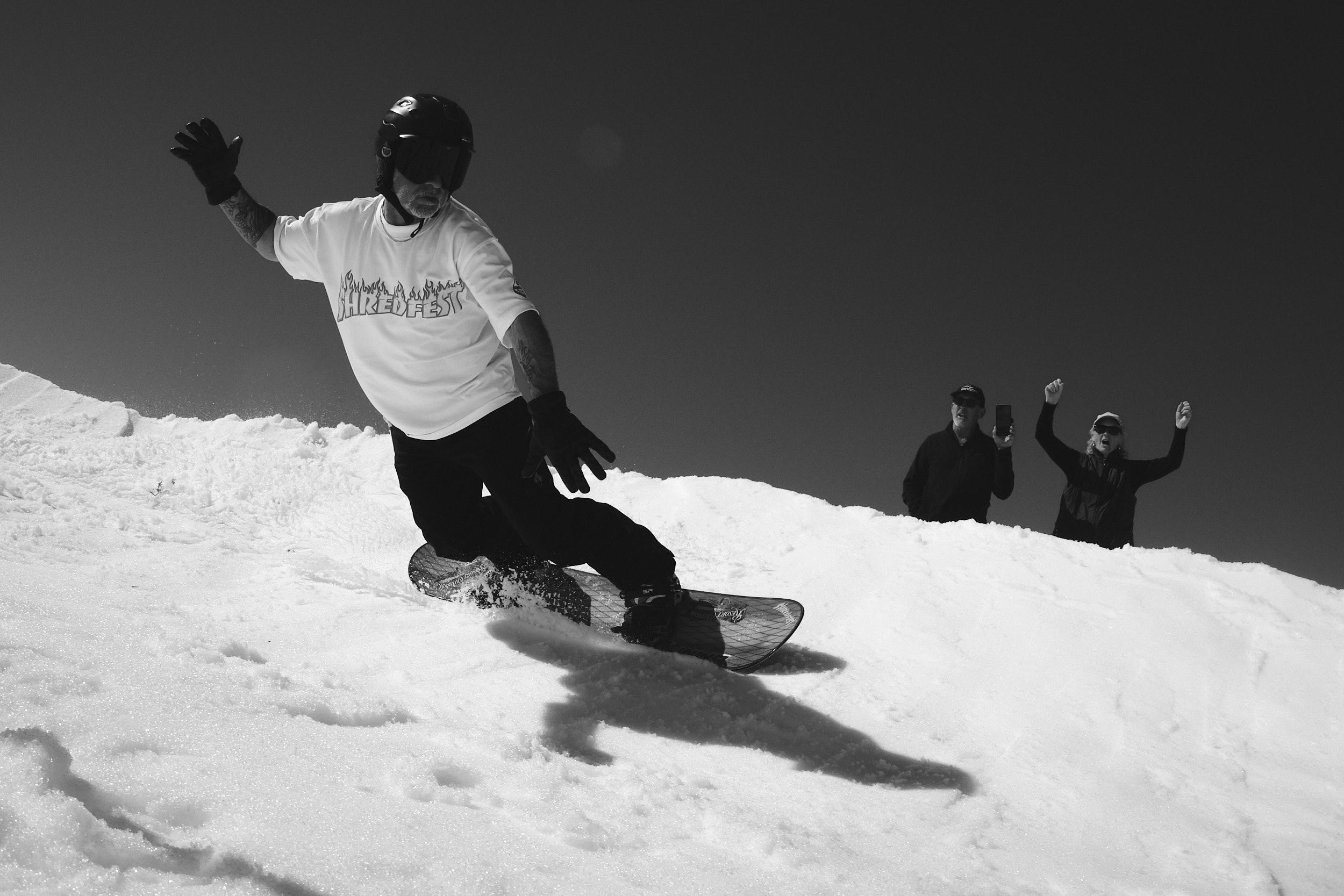
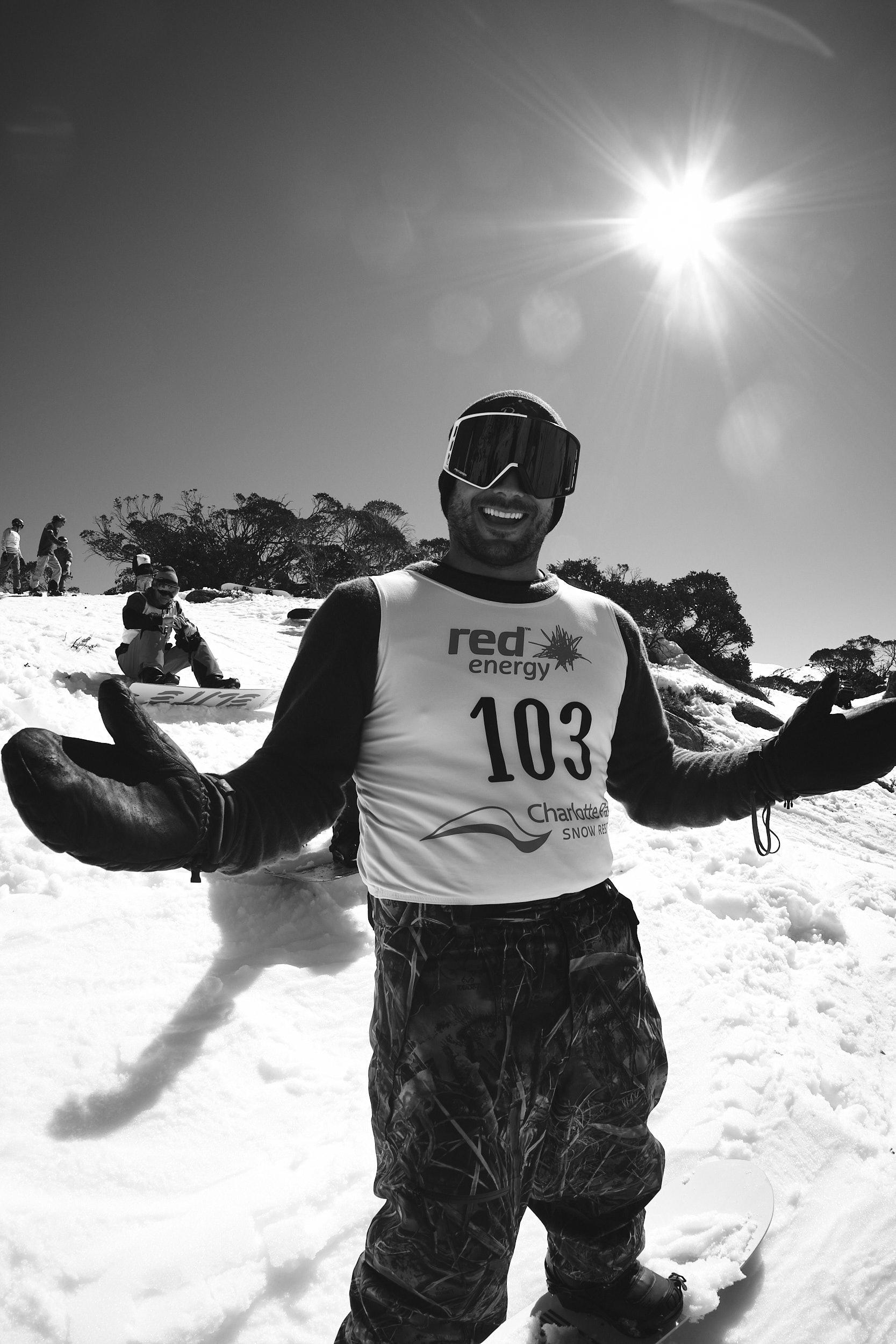
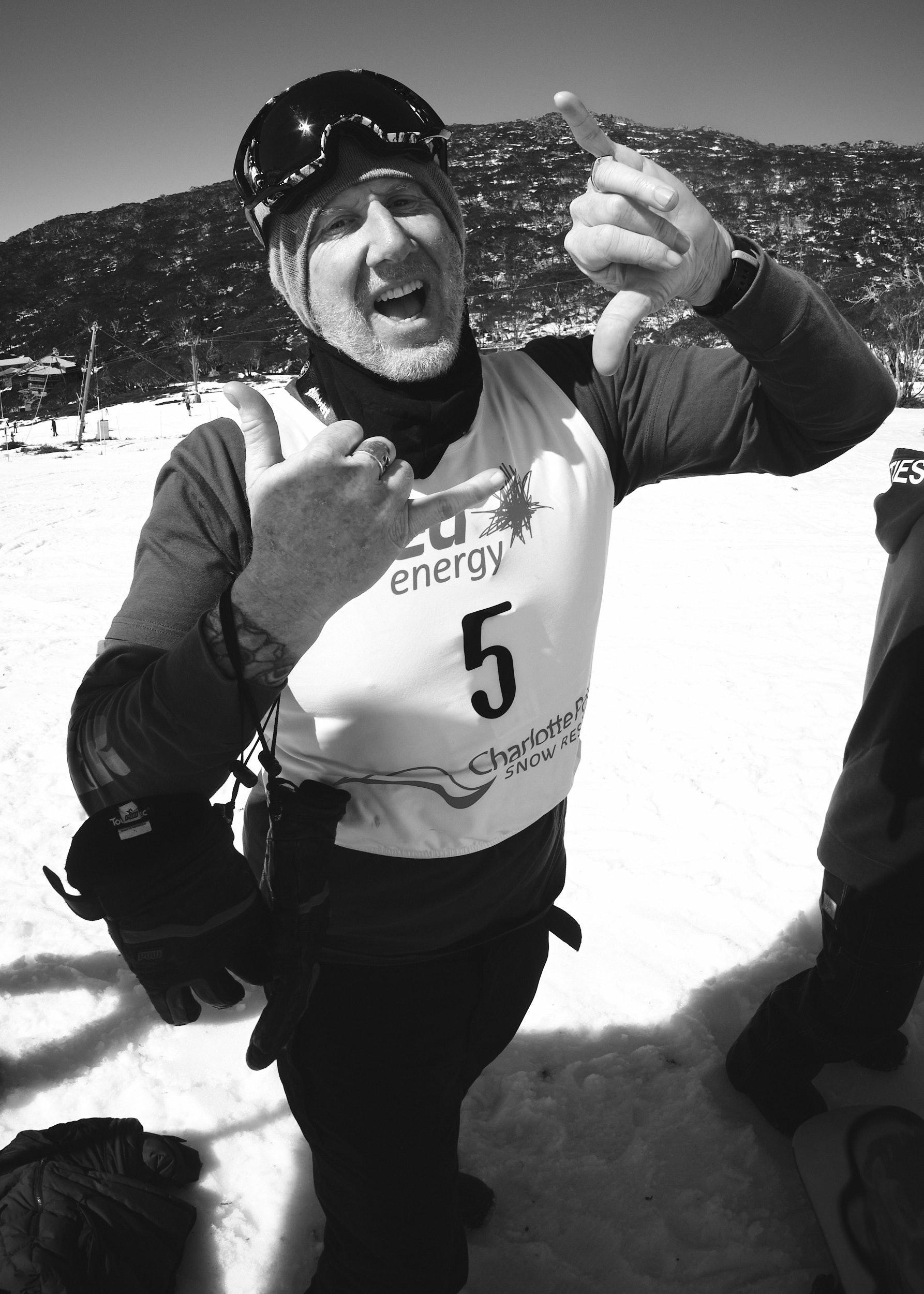
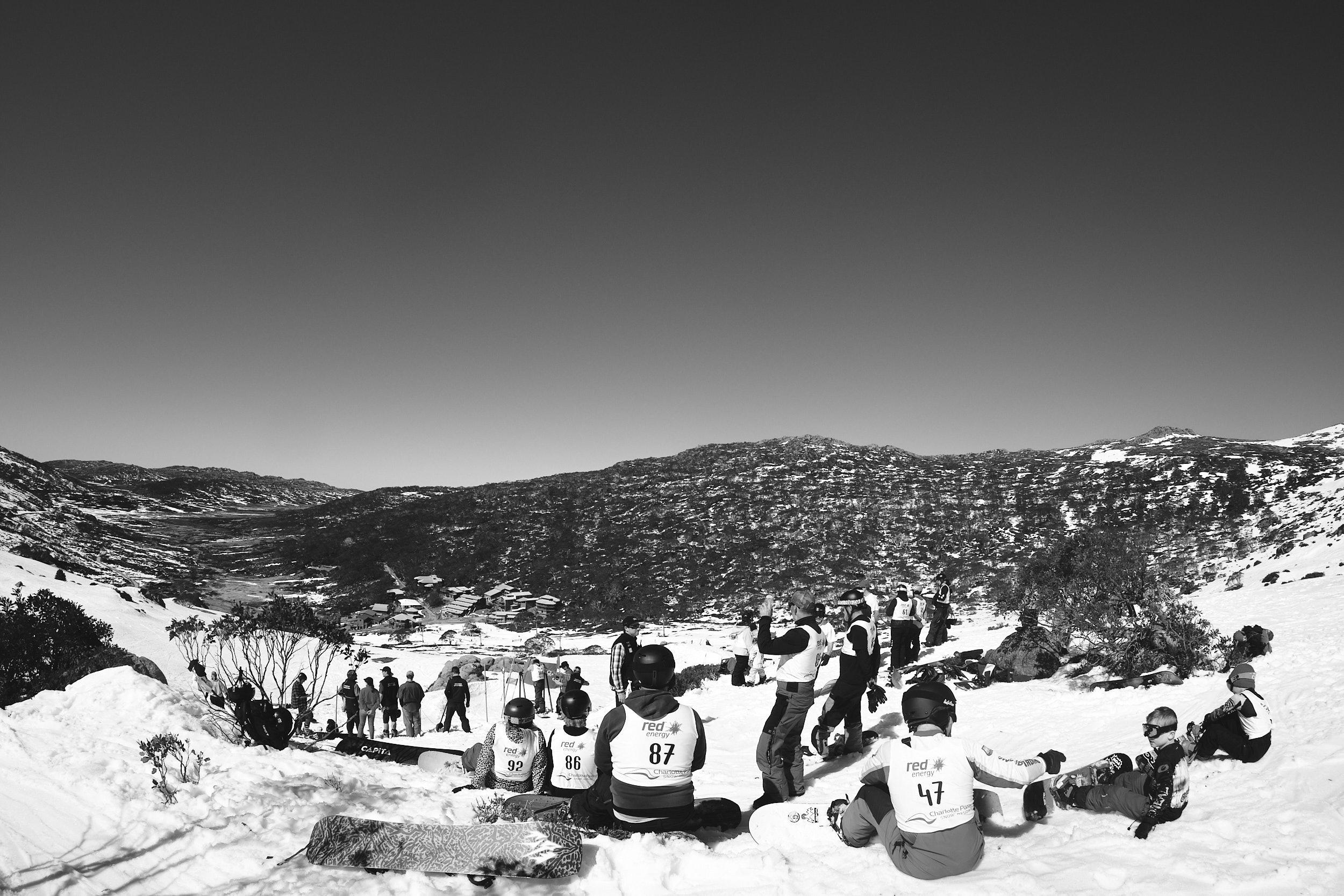
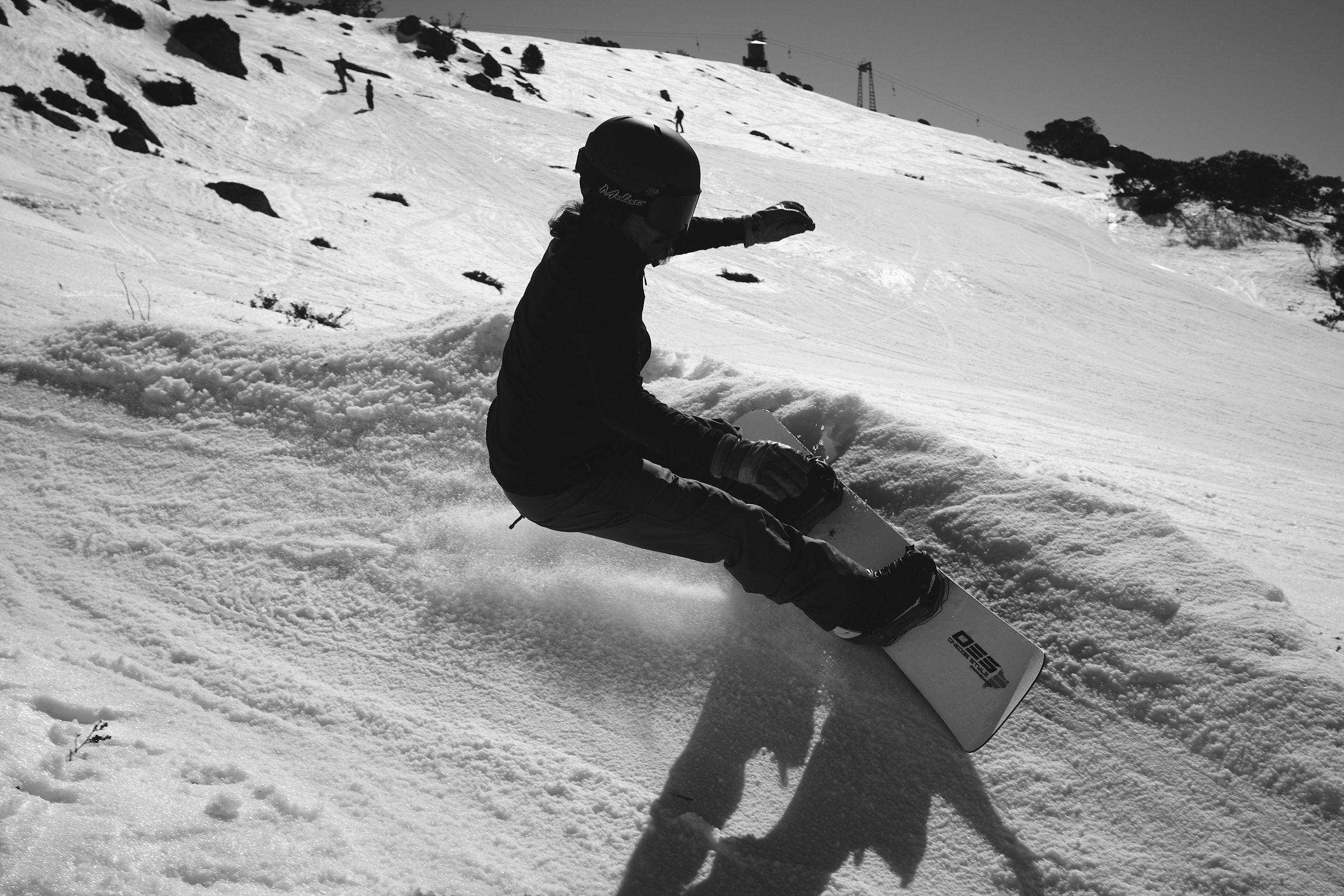
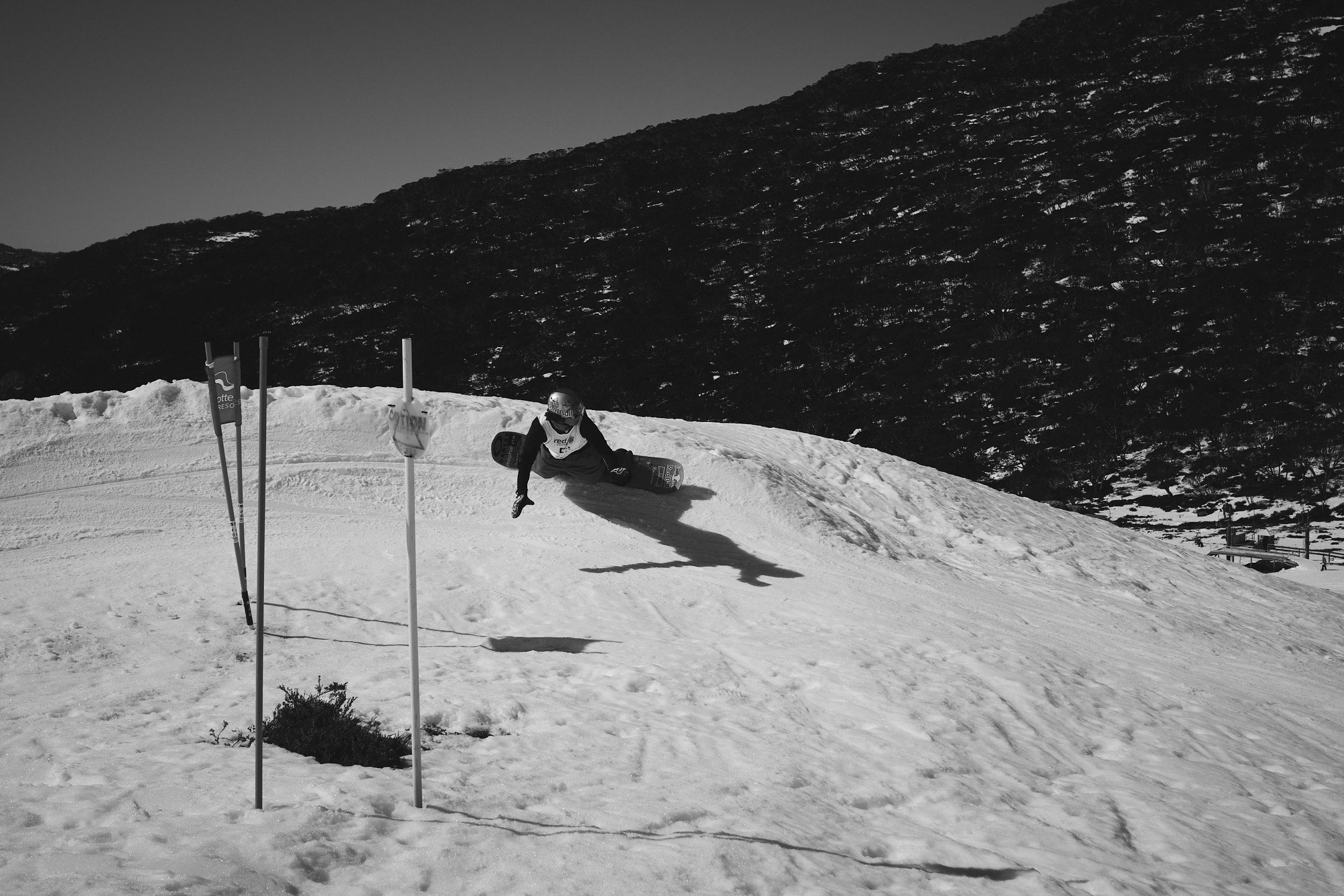
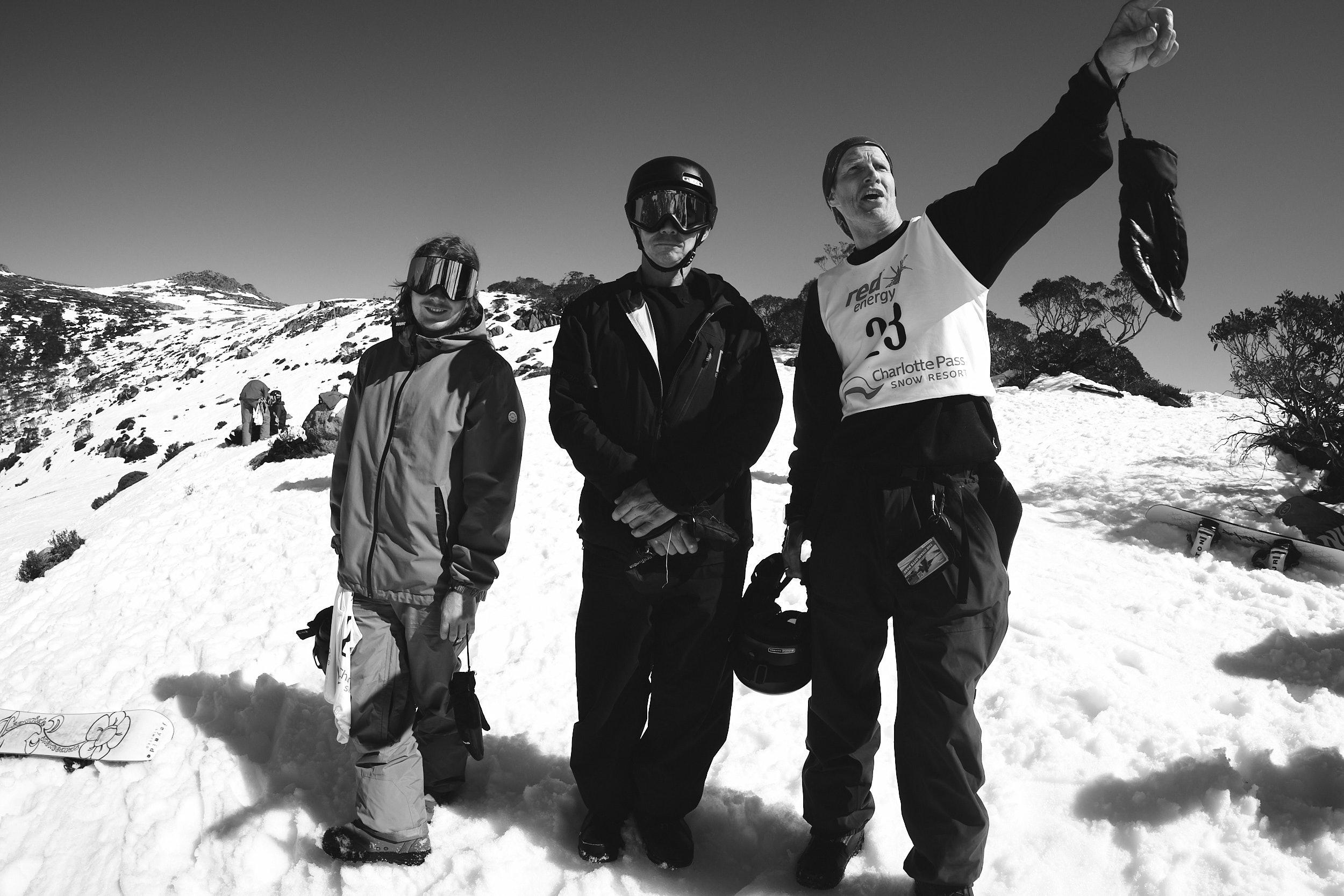
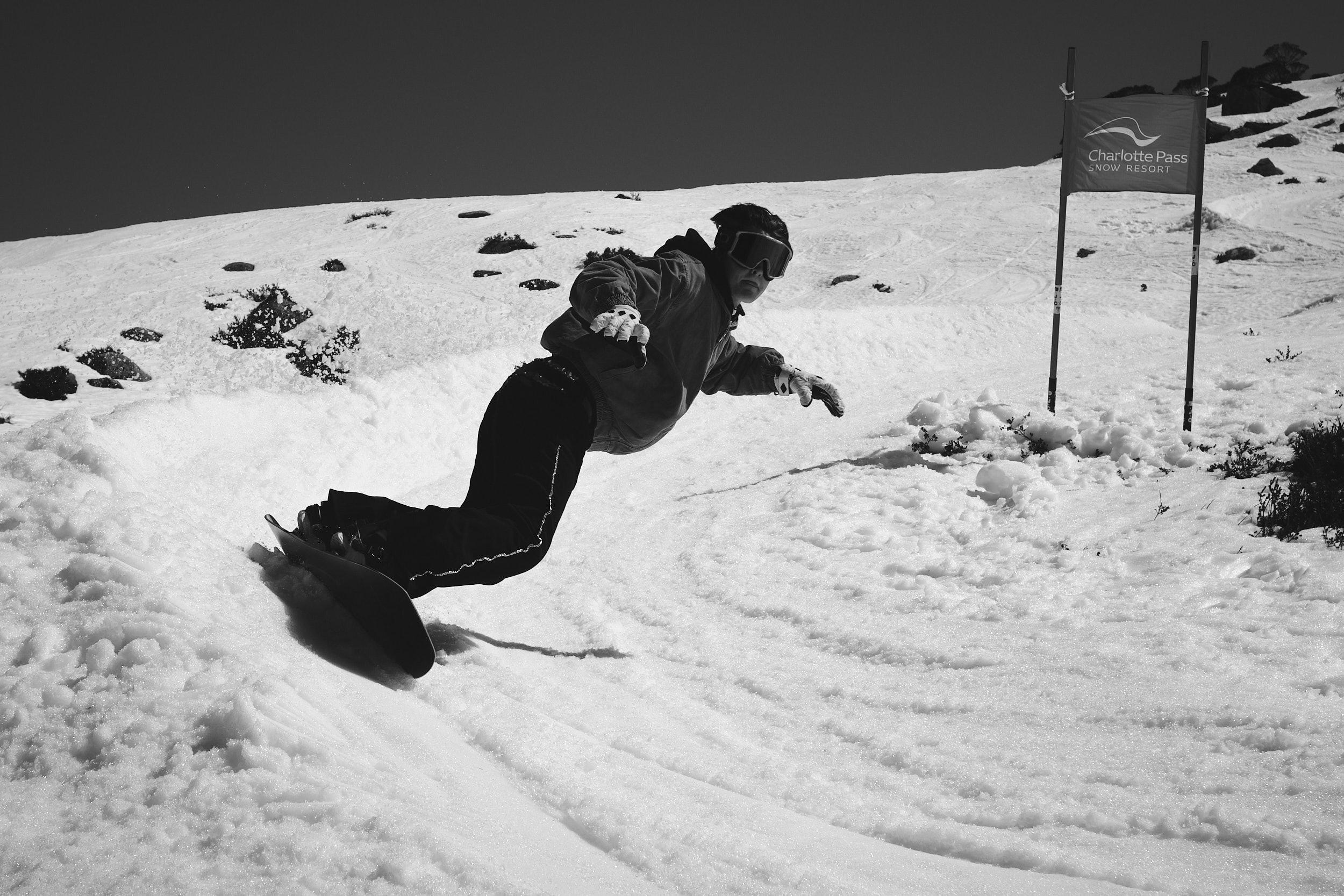
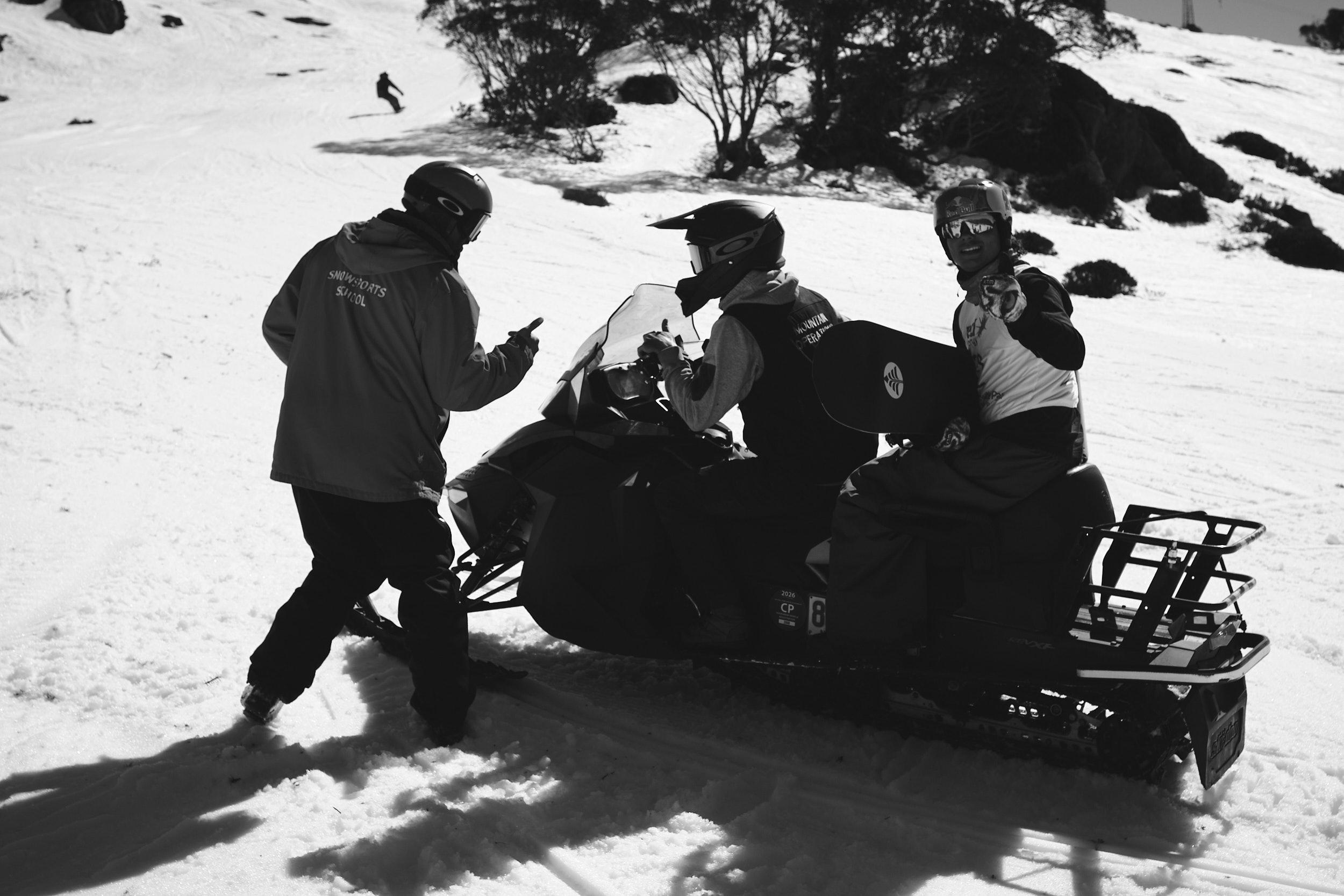
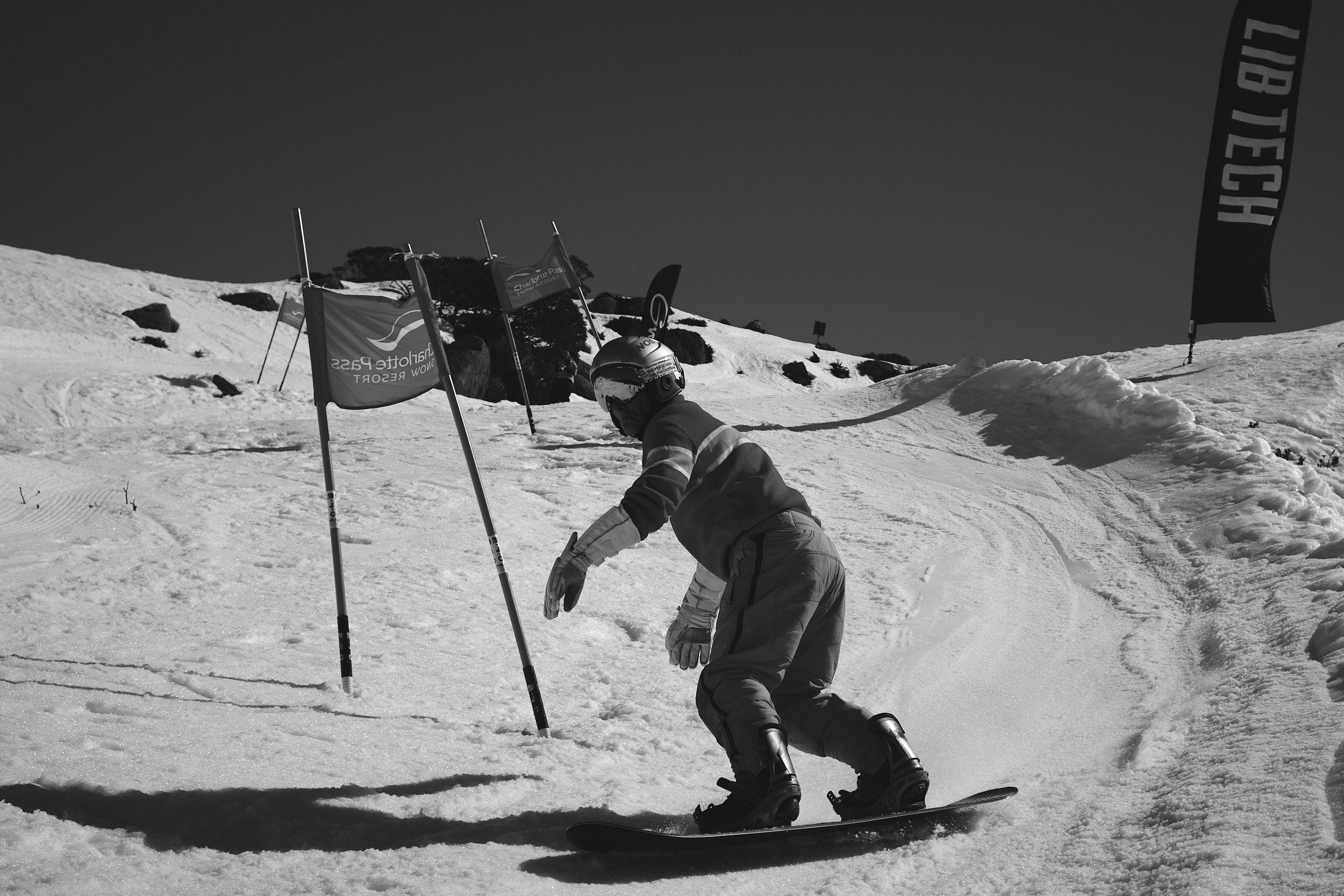
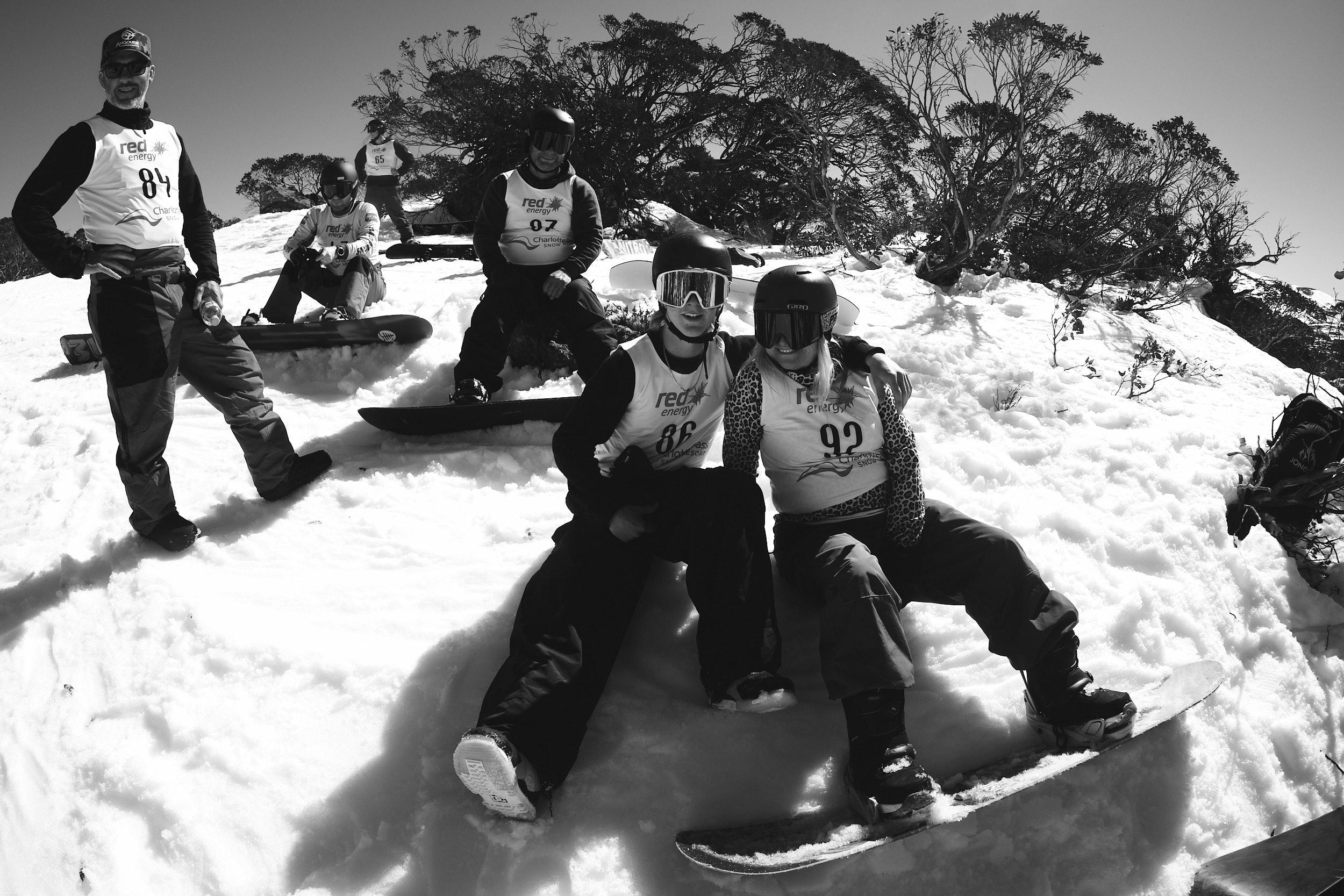
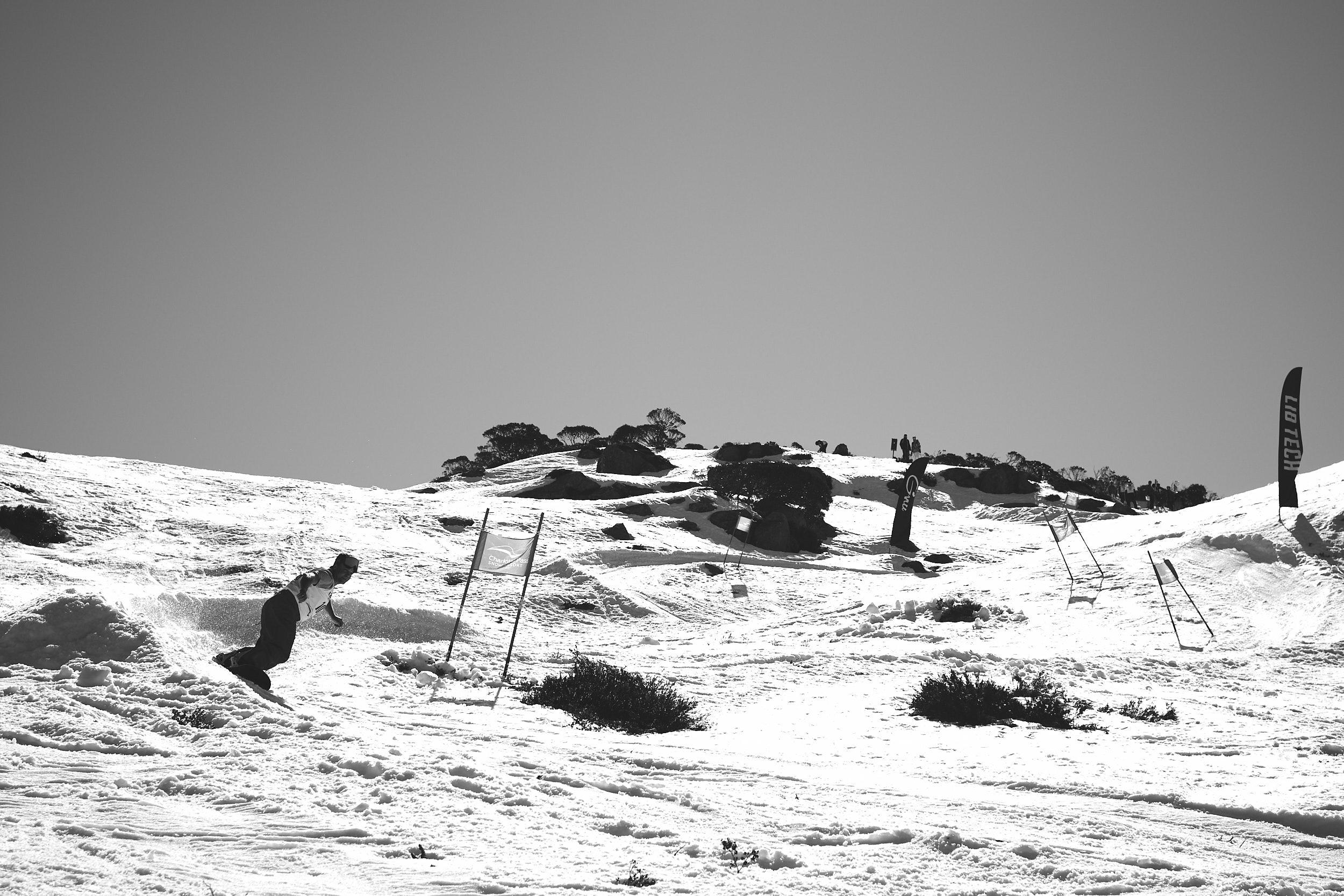
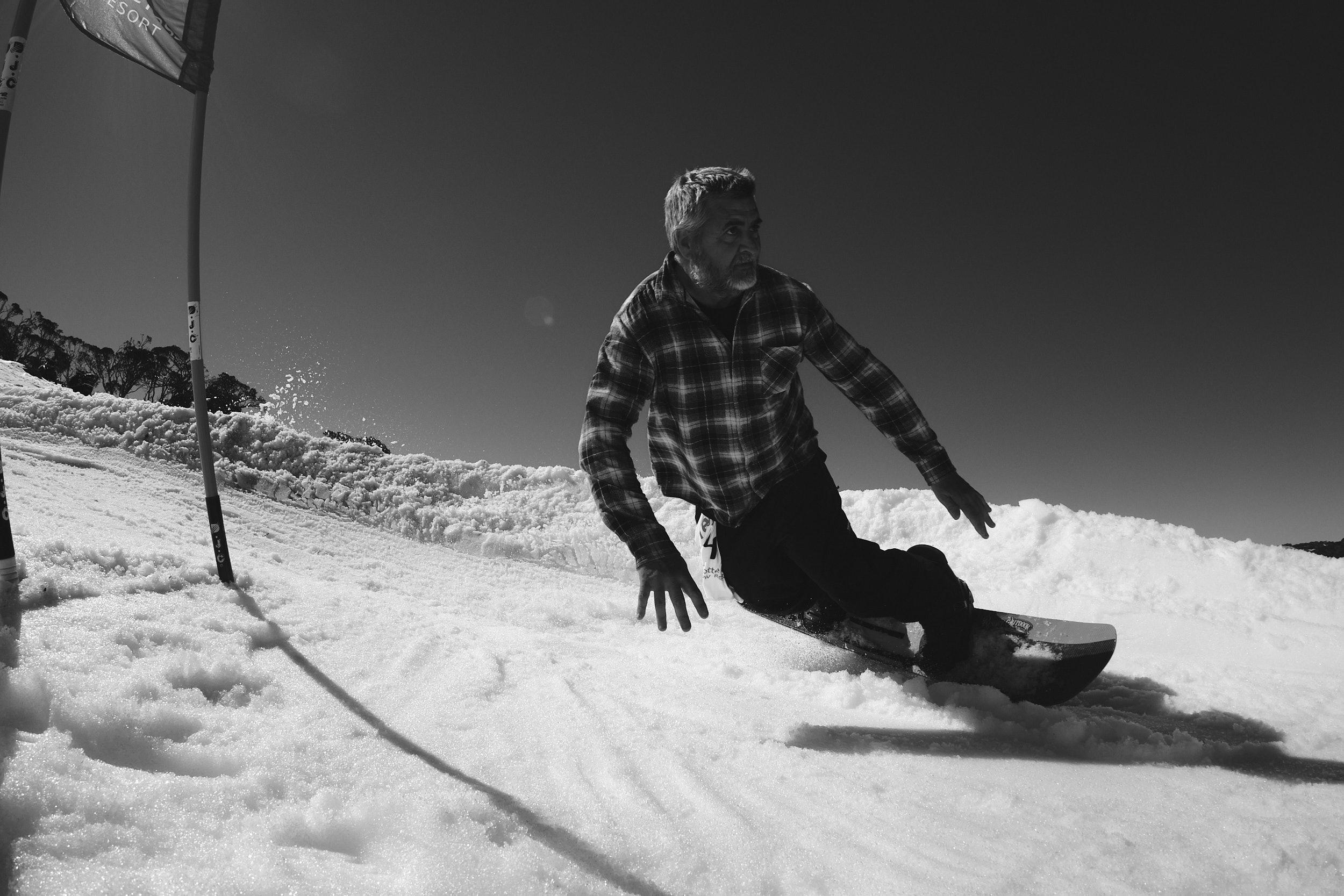
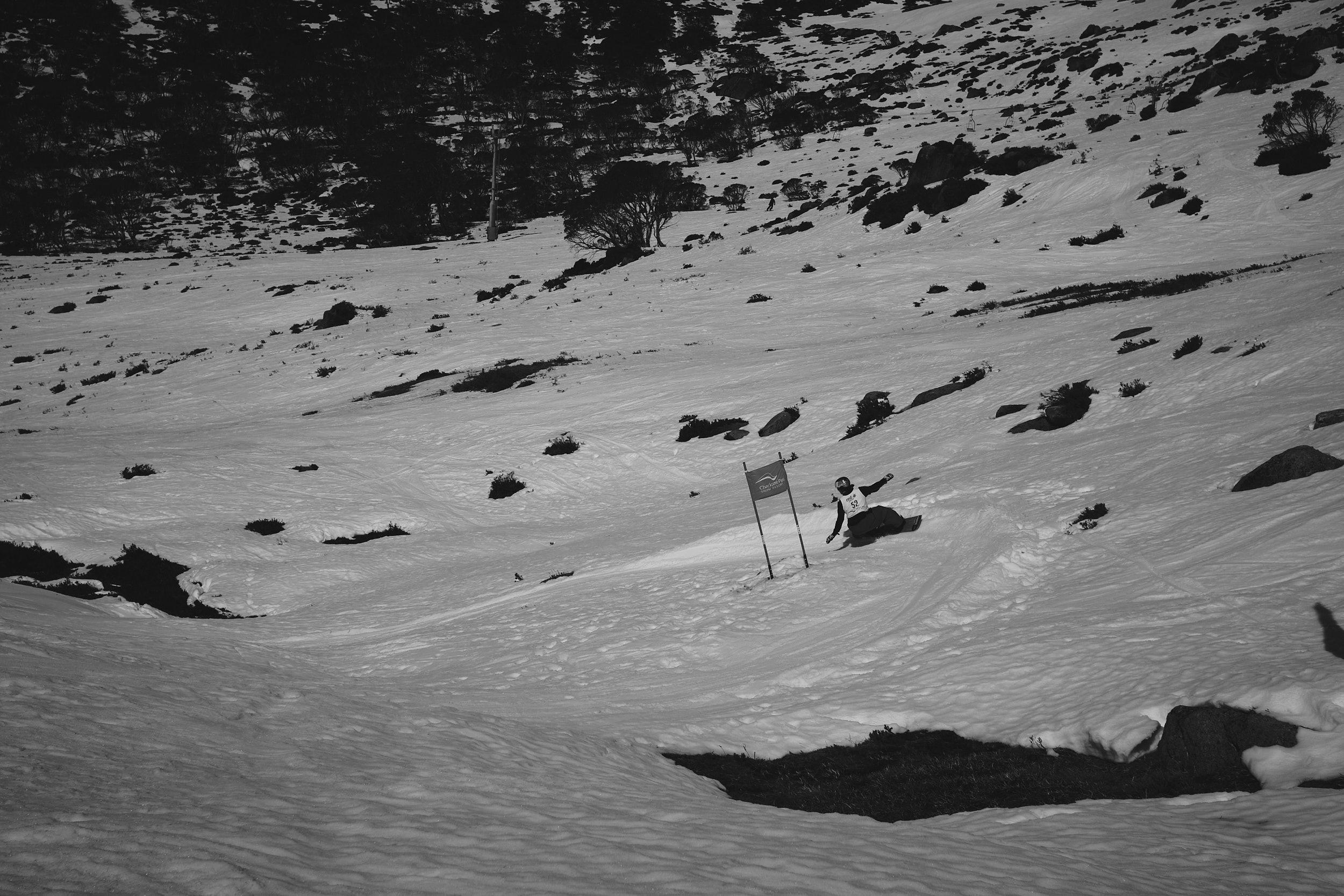
On Saturday, SHREDFEST moved from Jindabyne into the mountains for the official Ride Day and Banked Slalom at Charlotte Pass. The format was deliberately built around generations of riders sharing the same course, with competitors chasing the Geoff Sawyer Perpetual Cup.
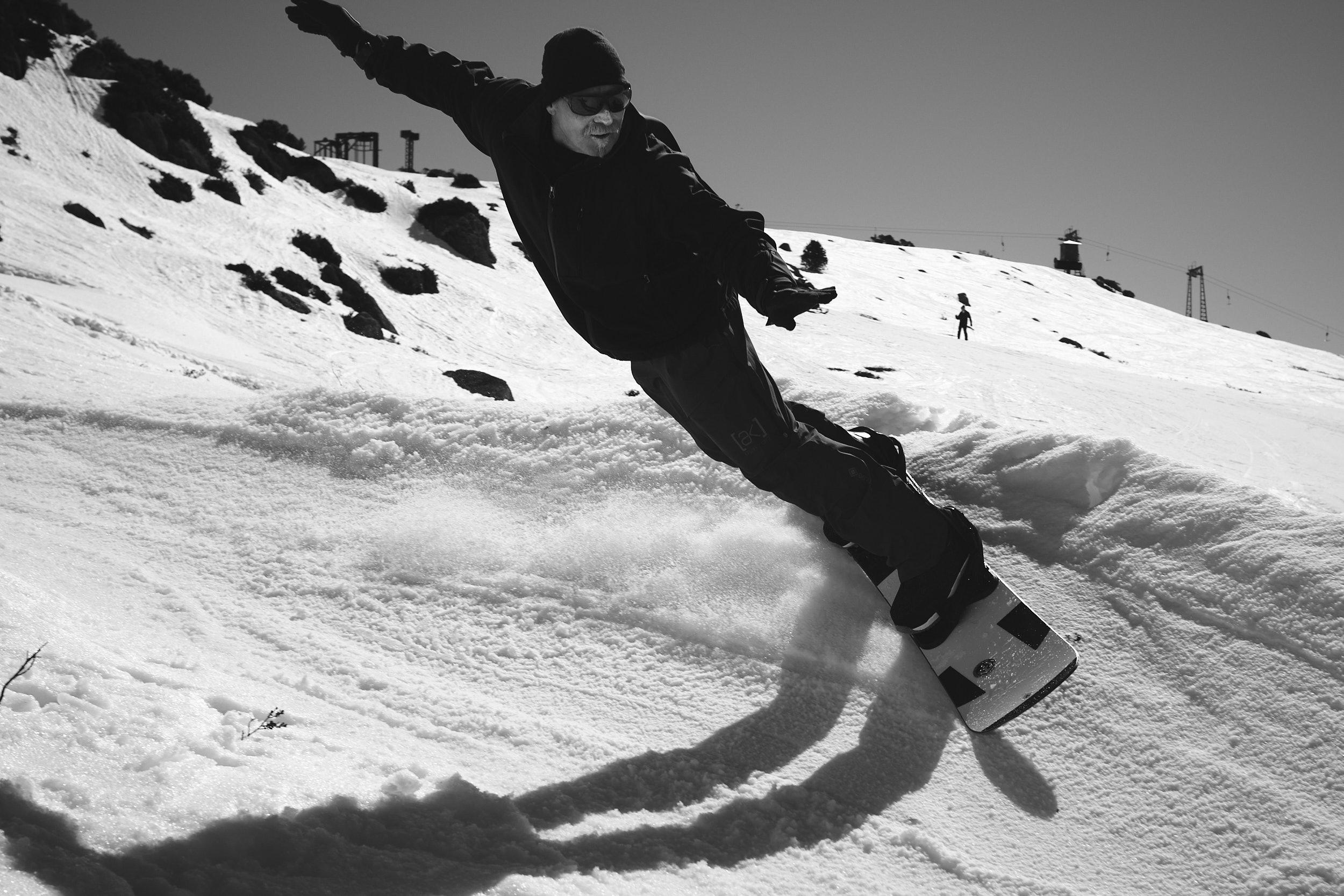
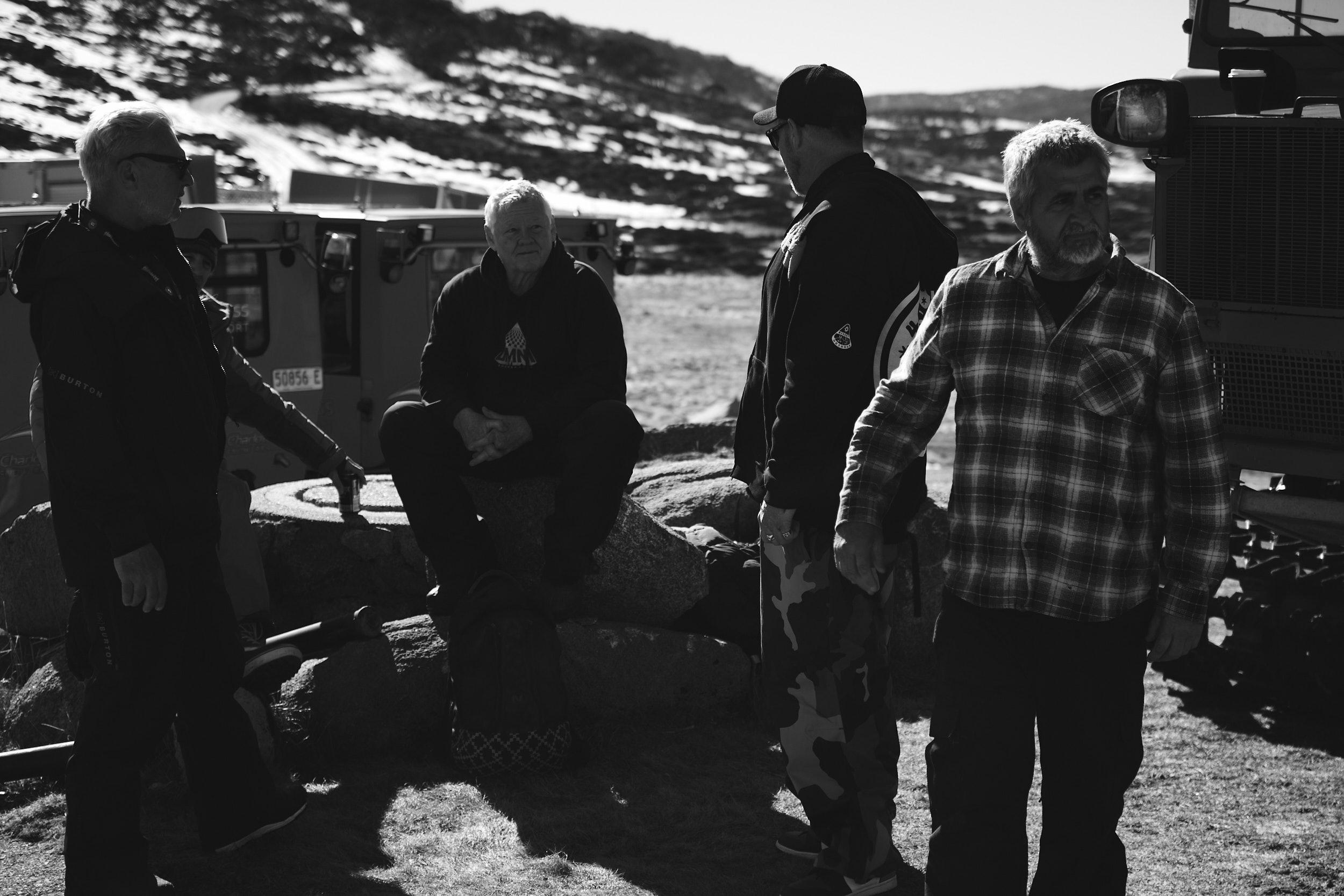
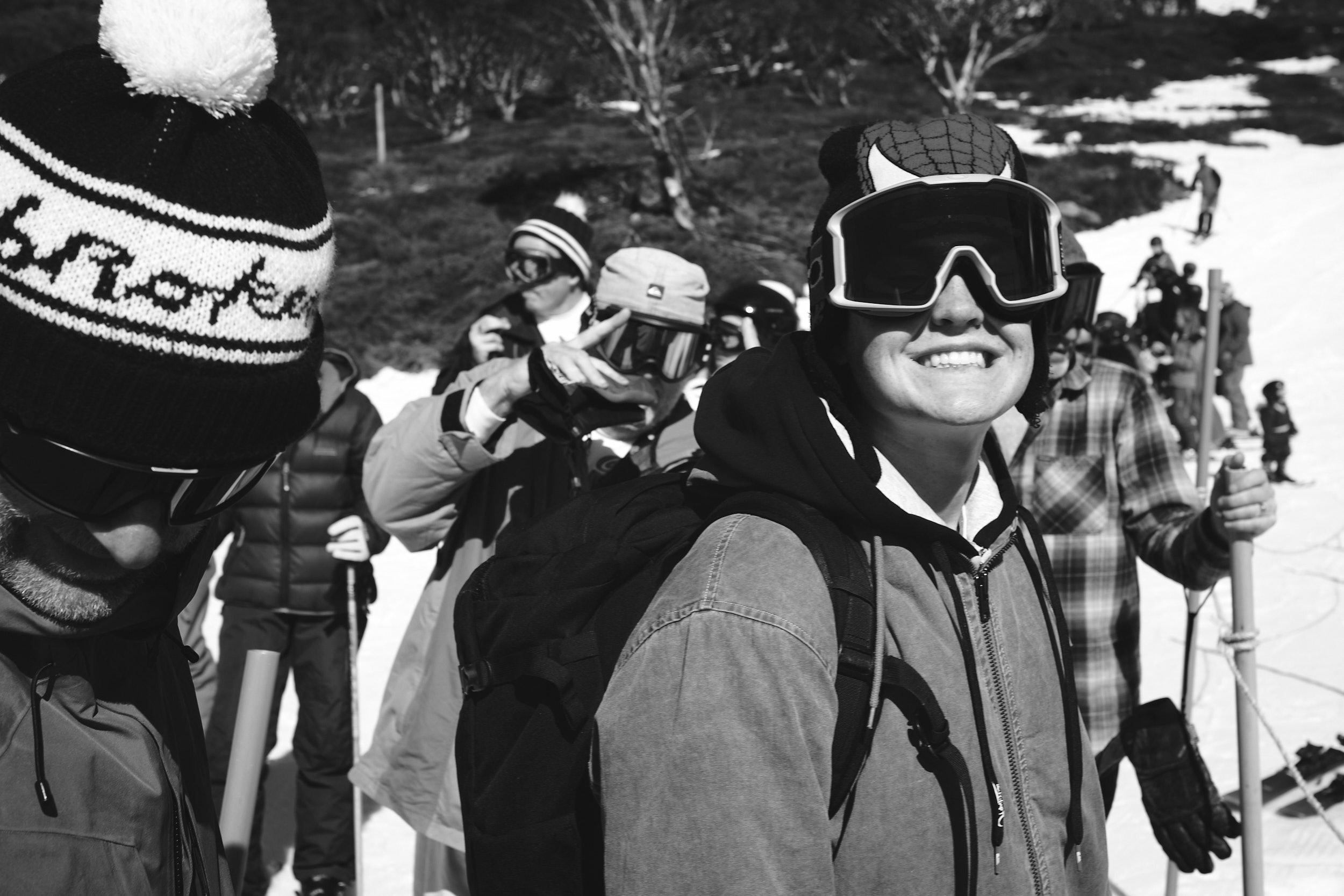
This was where the history became physical. Young riders lined up alongside veterans of the Australian scene. Different generations, different equipment and different approaches, but the same basic objective: find the fastest line through the course.
The banked slalom was a perfect fit for the weekend. There was no need to overcomplicate it.
Start at the top. Find your line. Make your turns. Get to the bottom. And see what happens.
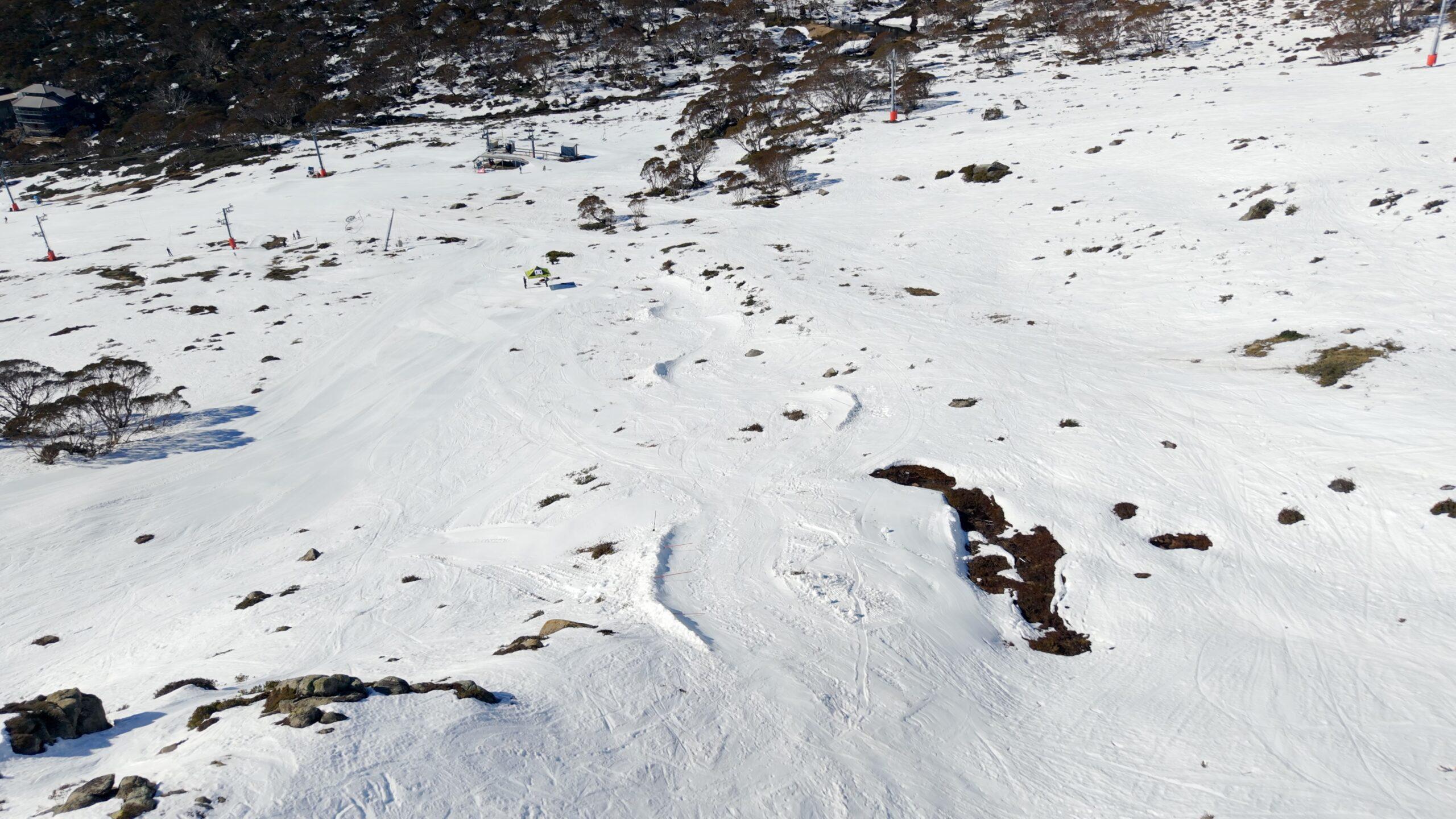
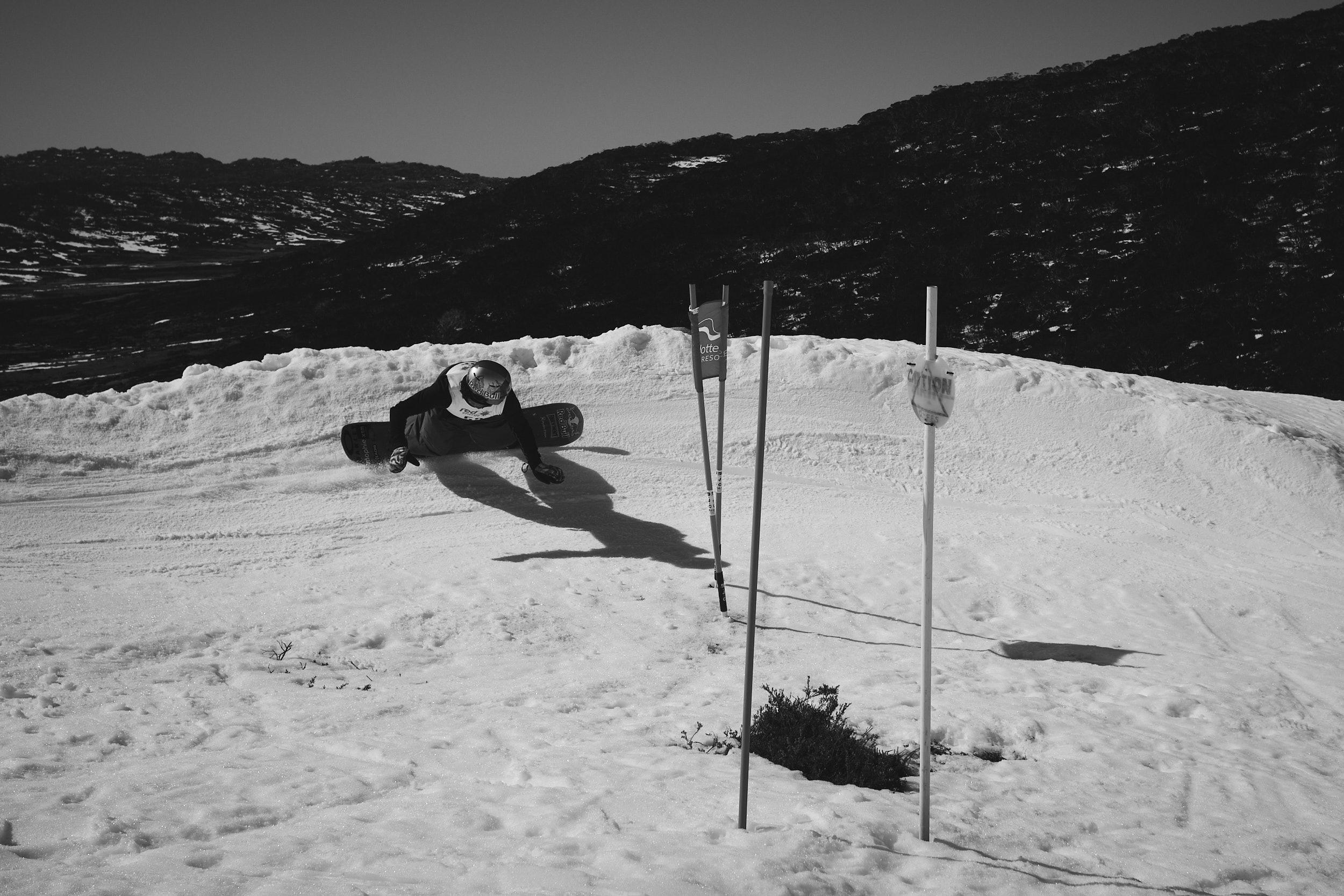
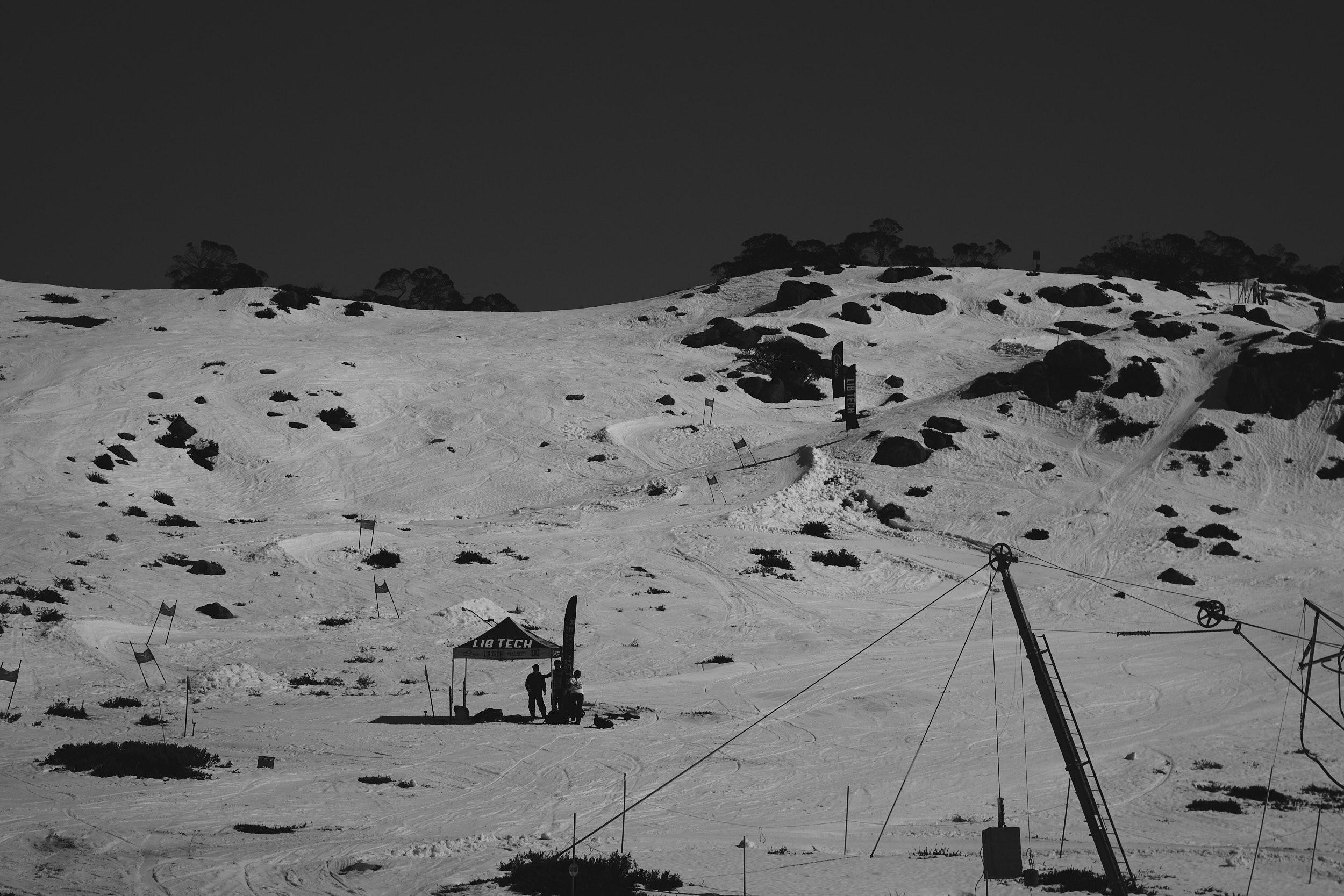
THE 2026 ShredFest Banked Slalom Course At Charlotte Pass.
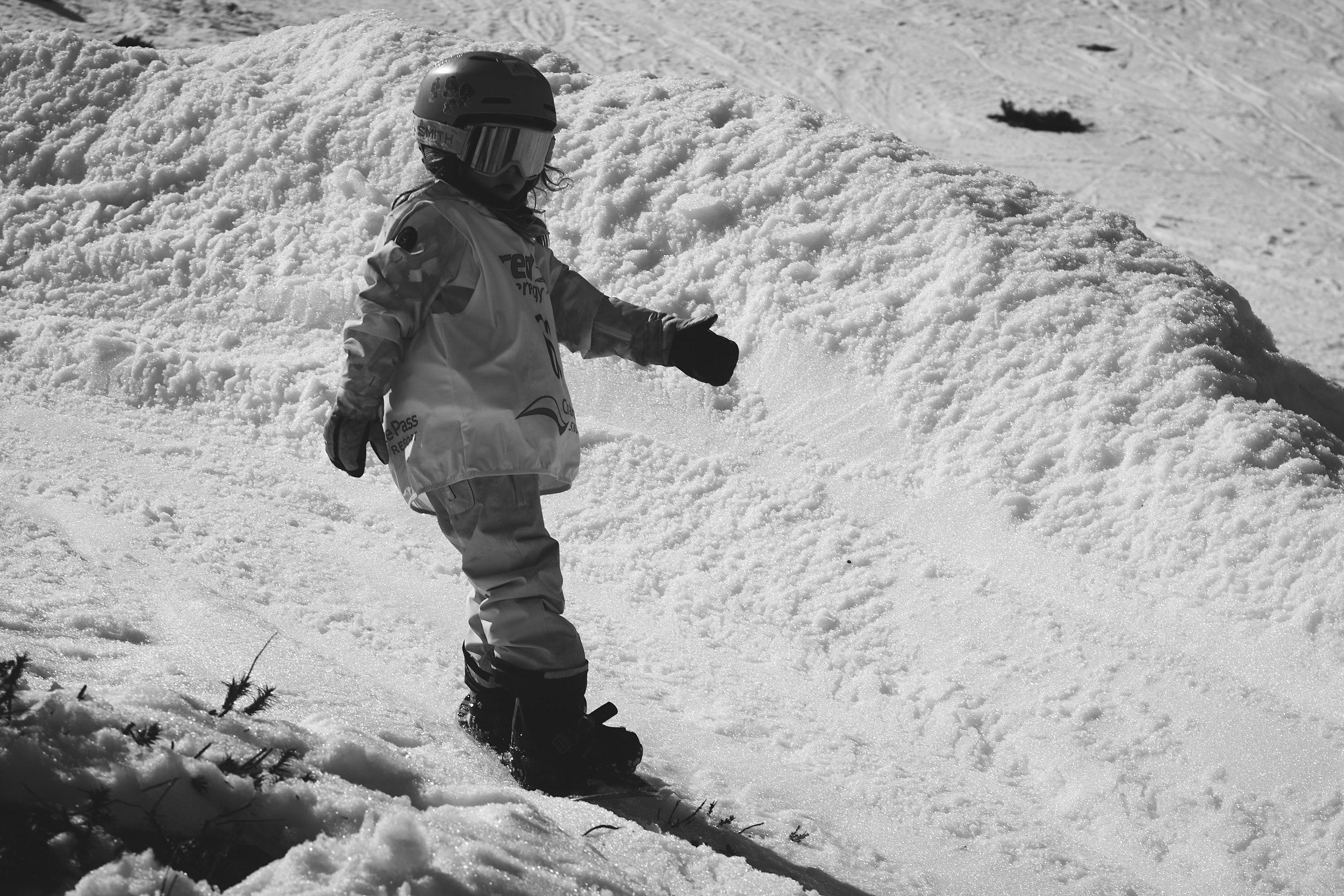
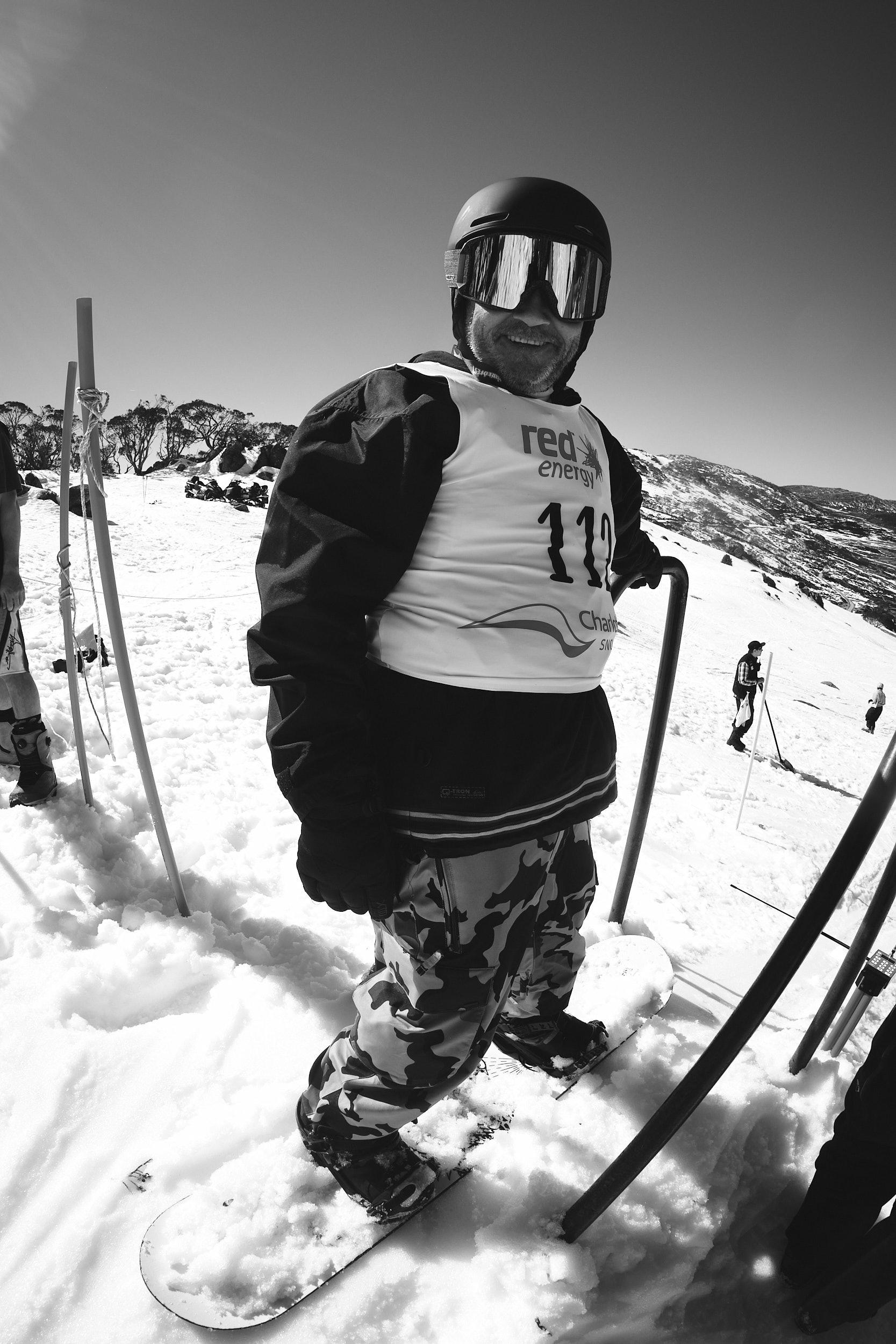
The field was split into six age categories, from the Groms (under 12) through to the Silver Surfers (60+), with men’s and women’s podiums in each. The spread of ages in the start order said everything about the event: a nine-year-old could drop in a few riders ahead of someone who had been riding since before the kid’s parents were born.
The Groms set the tone early. Bode Smith took the under-12 boys with a 34.98, ahead of Francis Huggett and Archer Hiron, while Estelle Stamp claimed the girls’ category with a 38.77. In the Juniors, Archi McVeigh laid down a 29.41 that would have held its own in the older divisions, with Jett Jones Czechowski and Eddie Frolich rounding out the podium.
The Opens was where the clock really got tested. Pantxo Wall stopped it at 25.81 — the fastest run of the entire day — with Valentino Guseli only a tenth behind on 25.92 and Karl Vangoor a further two-tenths back on 26.13. Three riders, three-tenths of a second, one course. Natalie Holman took the women’s Opens with a 34.53 ahead of Jasmin Cowley.
The Masters proved that 35 to 49 is no time to slow down. Hayden Lawn won the men’s with a 28.08, with Stewart McIntosh and Andrew Fawcett close behind. The women’s Masters was the tightest podium of the day: Sarah B on 32.22, Laura Stamp two-tenths back on 32.42, and Goha Kelm in third.
Among the Veterans, Mark Cowley took the men’s with a 28.69 — a time that would have placed him on the Masters podium — from Christoph Zimmerman and Tony Graham. Marguerite Cossetini won the women’s with a 34.89, with Danah Besson and Danni Morris completing the podium.
And then the Silver Surfers. Ashley Muller won the 60+ men’s with a 32.96, Bart Joseph and Darren Powell filling out the podium, while Selena Webber took the women’s on 40.09. Nobody in that category was there to prove anything to anyone. They’d already spent four decades doing that.
The Legendary Sean Gall
SHREDFEST 2026 BANKED SLALOM RESULTS
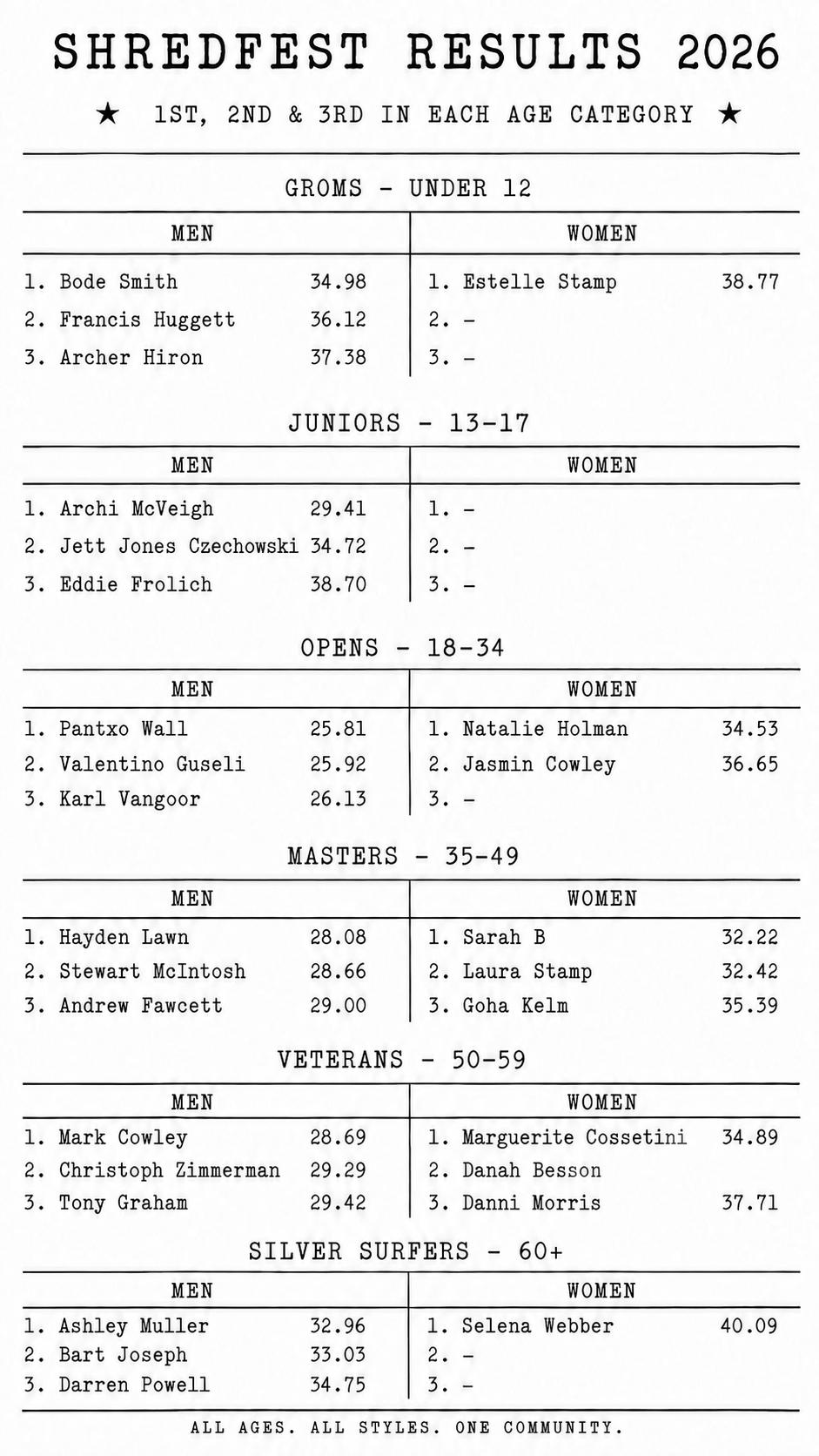
All ages. All styles. One community.
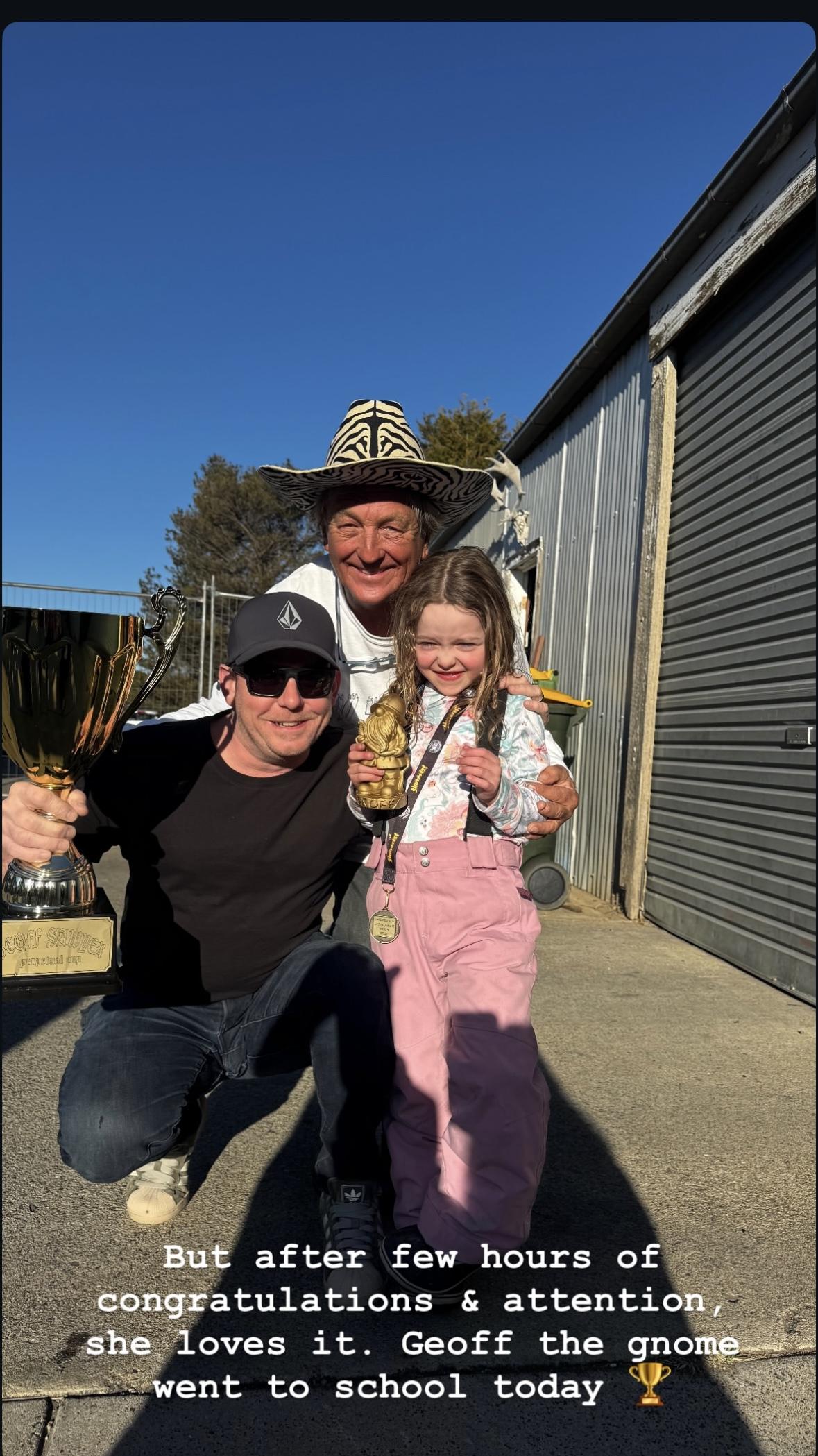
The Cup and the Gnome
Two trophies were on the line at Charlotte Pass, and they could not have been more different.
The Geoff Sawyer Perpetual Cup went to the fastest combined time across both runs of the day on the banked slalom course, regardless of age or category. Named for one of the original crew of Australian snowboarding, and with Sawyer himself in the room on Friday night, it is the closest thing the Australian scene has to a heritage trophy. In 2026, it went to Dave Curtis, who laid down the fastest combined time of the day.
The other award was the one everybody actually wanted.
The slowest time of the day earned the most coveted prize of the weekend: a garden gnome known simply as Geoff. No engraving, no polish, no pretence. Just a gnome, handed to whoever took the scenic route down the course.
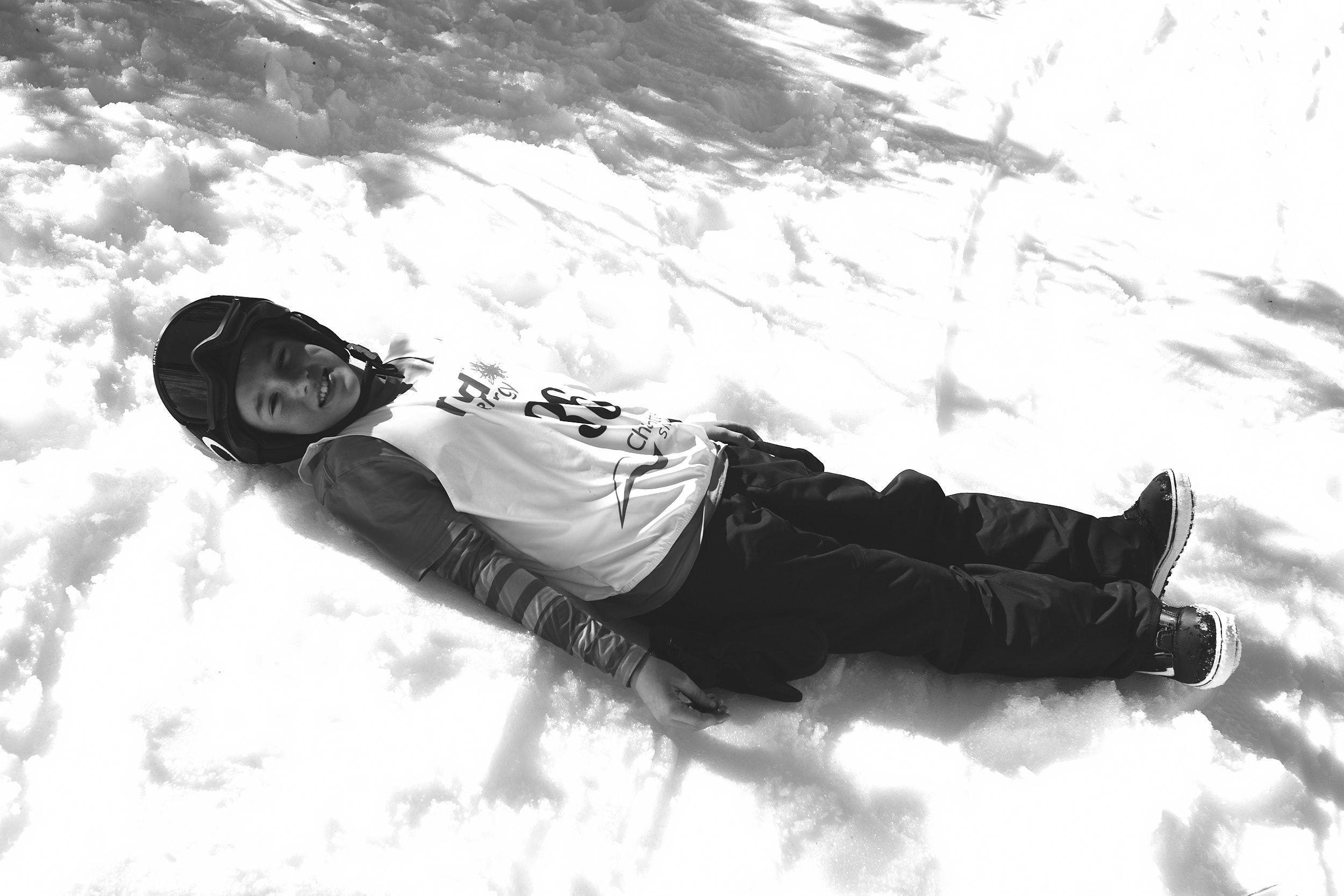
In 2026, Geoff went home with six-year-old Estelle Stamp.
Estelle had already won the under-12 girls’ category with her 38.77, but it was the run itself that stole the day: every turn made, every bank ridden out, no rush and no fuss, while the crowd at the bottom got louder with every gate. By the time she crossed the line she had the slowest time of the day, a category win and the loudest cheer of the weekend.
It says a lot about Australian snowboarding that the gnome got a bigger reception than the cup. Speed is impressive. But the culture has never been only about the clock. It has always been about showing up, dropping in and having a laugh about it at the bottom.
A six-year-old carrying a garden gnome off the mountain, cheered by riders who had been at it since 1986, was about as perfect a picture of the weekend as you could ask for.
Geoff the gnome understands this.
Four Decades, One Start Gate
The most significant part of SHREDFEST wasn’t necessarily who finished first. It was who was standing beside the start gate.
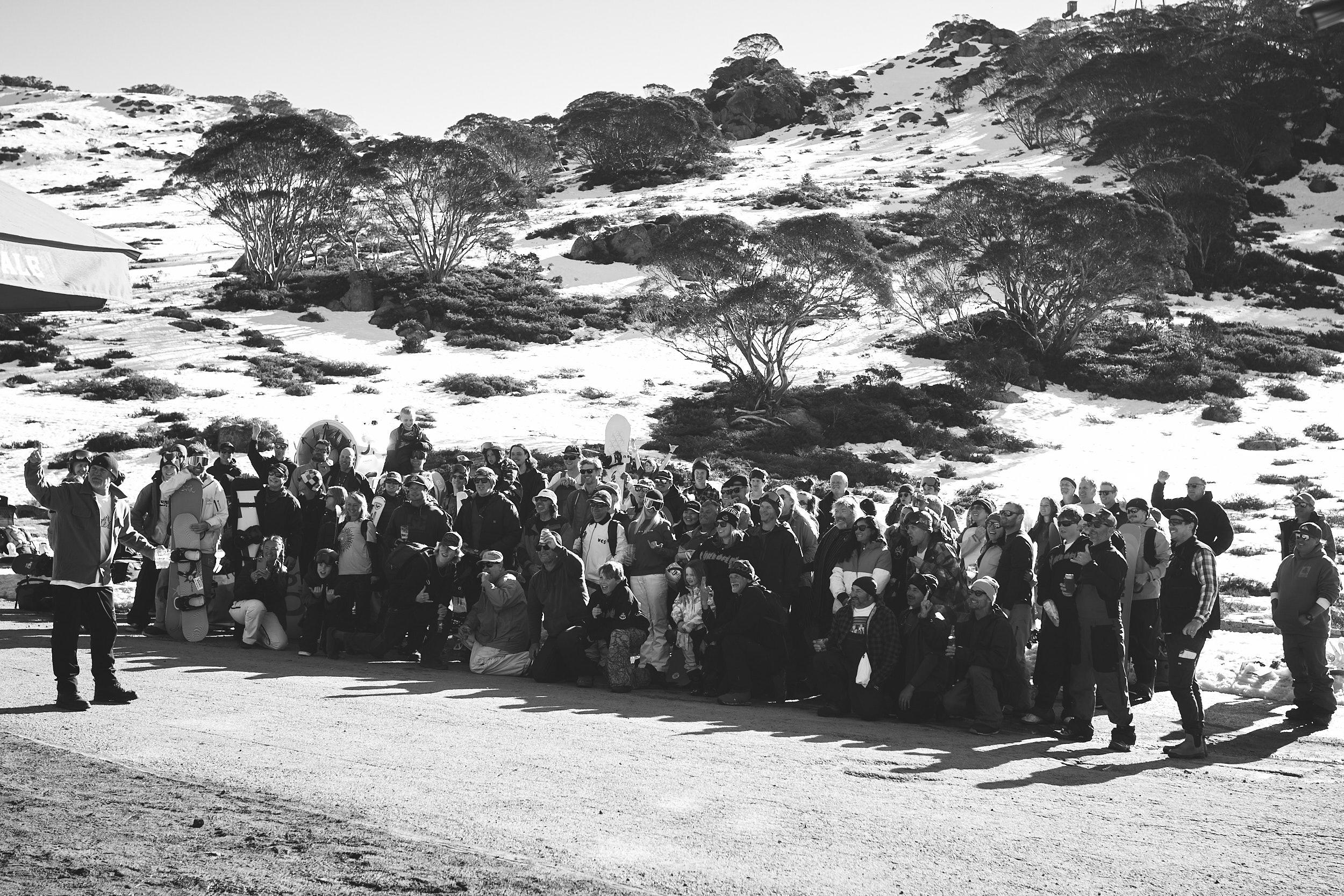
Australian snowboarding has always been a relatively small community, which makes moments like this particularly important. The riders who helped establish the scene were suddenly sharing the same mountain with people who had grown up watching their footage. The people who once represented the future of Australian snowboarding were now part of its history. And the current generation was already writing the next chapter.
That connection between generations was at the centre of SHREDFEST. The event was designed around the idea that snowboarding culture belongs to everyone who has contributed to it — riders, filmmakers, photographers, artists and crews.
The Filmers
For four decades, snowboarders have relied on filmmakers to preserve the moments that disappear as quickly as they happen. Olliepop Films and other Australian snowboard filmmakers have played a role in maintaining that tradition.
SHREDFEST gave those films another purpose. They weren’t simply old clips. They were evidence — of how the riding changed, how the clothes changed, how the mountains changed, how the equipment developed, and how the culture somehow remained recognisable through it all.
Watching old footage surrounded by the people who lived it added another layer to the weekend. Every clip had a story. Every rider had a history. Every film represented somebody’s time, effort and commitment to documenting the scene.
One of those people is Jeremy Richardson, a filmer who has spent years documenting Australian snowboarding from behind the lens. FRANK151 sat down with him at SHREDFEST to talk eras, overlooked riders and what’s worth preserving.
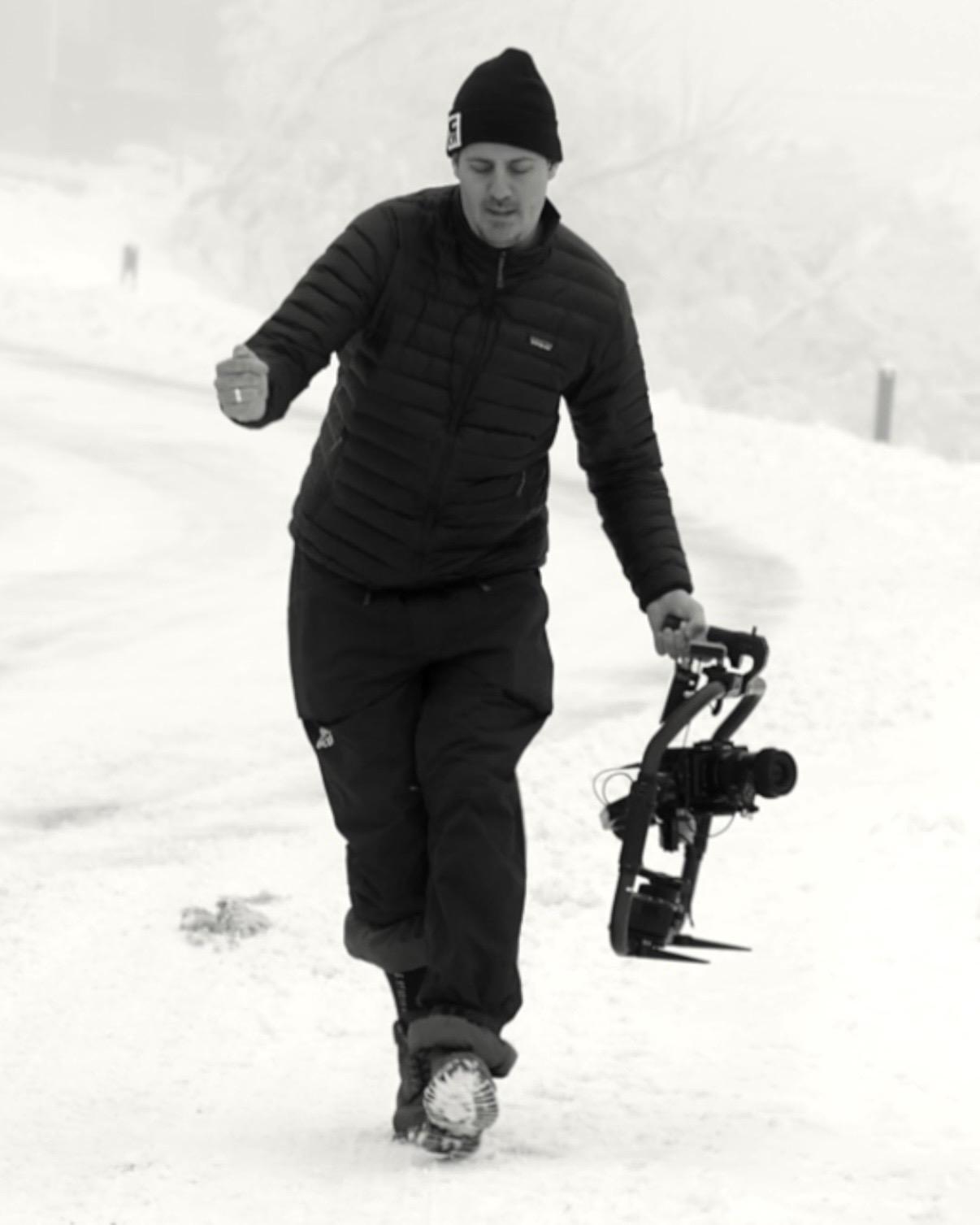
JEREMY RICHARDSON — THROUGH THE LENS
FRANK 151: You’ve spent years documenting Australian snowboarding from behind the lens. Looking back across 40 years, which era had the rawest energy — and why?
JEREMY RICHARDSON: Oh man, that’s a tough one. For raw punk rock energy, it’s got to be when Mick Simpson was filming in the early ’90s.
That said, I still think about being 19 to 21, shooting at Stylewars by day and sending it with the riders by night. The parties at Silverski seemed to have an endless supply of longnecks and bottles of Jägermeister getting handed around, free-pouring shots for your mates. That 2007 to 2010 period was pretty loose.
FRANK 151: Which riders, crews or moments have been unfairly left out of the official story of Australian snowboarding?
JEREMY RICHARDSON: The cream always rises to the top at contests, so if you were travelling and putting in the work, the Australian industry always gave you some attention. But I reckon the riders focused on filming or shooting photos had to work a fair bit harder at the Victorian resorts, just because of the way the industry has this hub feel around Jindabyne and the nearby NSW resorts.
An underrated location is probably Falls Creek Village. It’s got more rails and wall rides than you could hit in a season, some of the most legit spots I’ve seen anywhere in Australia. Back in the day, Jason and Daniel Currie were both crushing it at Falls alongside Canadian Mat Galina.
On the ladies’ side, Jade McJannett went for almost two decades and hit the Stylewars 90- to 100-footers at a time when women did not get the same support as men.
These days Gus Bald is killing it, and personally, I think he needs way more shine than he’s getting. I’d like to see Gus have a solid $50K yearly budget just for filming and travel, and Andy James deserves the same for as long as he wants to produce video parts.
I’d also love to give a shout-out to Jamie and Frosty at Twelve Boardstore, Adam Klumper at Rhythm, Shirvo at POW and Adrian at ESS Boardstore. Those five blokes have done more for Australian riders than they’ve ever got shine for. They’ve backed so many grommets, movie projects and events over the years, and every one of them is an elite, warm-hearted human.
“It’s not being an old head to say that Instagram killed the video part. There’s nothing better than a movie premiere night or waiting for the next DVD to drop.”
FRANK 151: Before Instagram and instant edits, snowboard films helped build the culture. Has social media opened the scene up — or killed some of its mystery?
JEREMY RICHARDSON: The scene needs to get off its phones, for sure.
It’s not being an old head to say that Instagram killed the video part. There’s nothing better than a movie premiere night or waiting for the next DVD to drop.
Brands need to lead the way here and back riders to make projects that don’t always make the ROI but reaffirm the value of the culture. Any influencer is just a kook. They might be worthy of note, but they’re not where brands should put a single cent of their funding towards.
FRANK 151: SHREDFEST is bringing multiple generations together to celebrate 40 years of Australian snowboarding. What does an event like this mean to someone who has captured so much of that history?
JEREMY RICHARDSON: SHREDFEST is a really special weekend that lets every snowboarder feel like they’re home.
It’s inclusive, and it recognises and respects each era of a culture that is still young but really diverse. It brought kids, parents and grandparents together and everyone in between, and it showed how gnarly and progressive each generation has been in its own right.
FRANK 151: If you could preserve one piece of Australian snowboard footage for the next 40 years, what would it be — and what makes it so important?
JEREMY RICHARDSON: Video parts and magazines.
The culture of snowboarding isn’t competition, it’s filming and photography. There’s no culture without those two things, so cherish it, put time into it, and work together to share the memories and inspire others, all while having a damn good time together.
The Culture Between the Turns
This is what separated SHREDFEST from a standard snowboard competition.
The riding was important. The racing was important. But so were the conversations happening between runs. The film screenings. The old photographs. The stories. The reunions. The new friendships.
The event was built around the idea that Australian snowboarding is bigger than competition results. It is a culture created through the crossover of snowboarding, surfing, skateboarding, art, photography, film and music. That crossover has always been part of the Australian experience.
FRANK151 has always understood that board culture doesn’t exist inside a single category. It overlaps. It evolves. It gets passed from one generation to another.
SHREDFEST was a snapshot of that process.
Sunday: 40 Years in the Room
The weekend concluded at Jindabyne Memorial Hall with presentations, commemorative 40-year medals, stories from across the decades and sponsor prizes.
By Sunday, the event had become something larger than its original schedule. It had become a reunion — a celebration of the people who helped build Australian snowboarding and a meeting point for those who will shape its future.
Four decades of snowboarding had been brought into the same room. That is a lot of history.
What Comes Next?
Forty years of Australian snowboarding is worth celebrating. Not because everything has remained the same, but because so much has continued to evolve. The mountains. The equipment. The tricks. The films. The graphics. The riders. The technology.
The culture continues to move. But some things remain.
The desire to ride. The need to create. The importance of the crew. The filmmaker waiting for the shot. The artist designing something that will end up on a board. The rider looking at a line and wondering what is possible.
That is the part that doesn’t change.
SHREDFEST 2026 was a celebration of those four decades, but it was also a reminder that Australian snowboarding is still moving forward. The pioneers are still telling stories. The filmmakers are still filming. The artists are still creating. And the next generation is already waiting for its turn.
40 Years Down. The Story Continues.
SHREDFEST 2026 brought three days of films, riding, racing and stories to Jindabyne and Charlotte Pass, connecting four decades of Australian snowboarding culture in one weekend.
For FRANK151, being there meant documenting more than an event. It meant documenting a culture. The riders. The filmmakers. The artists. The organisers. The characters. The history. And the people carrying it forward.
Forty years of Australian snowboarding. One community. And plenty more chapters still to come.
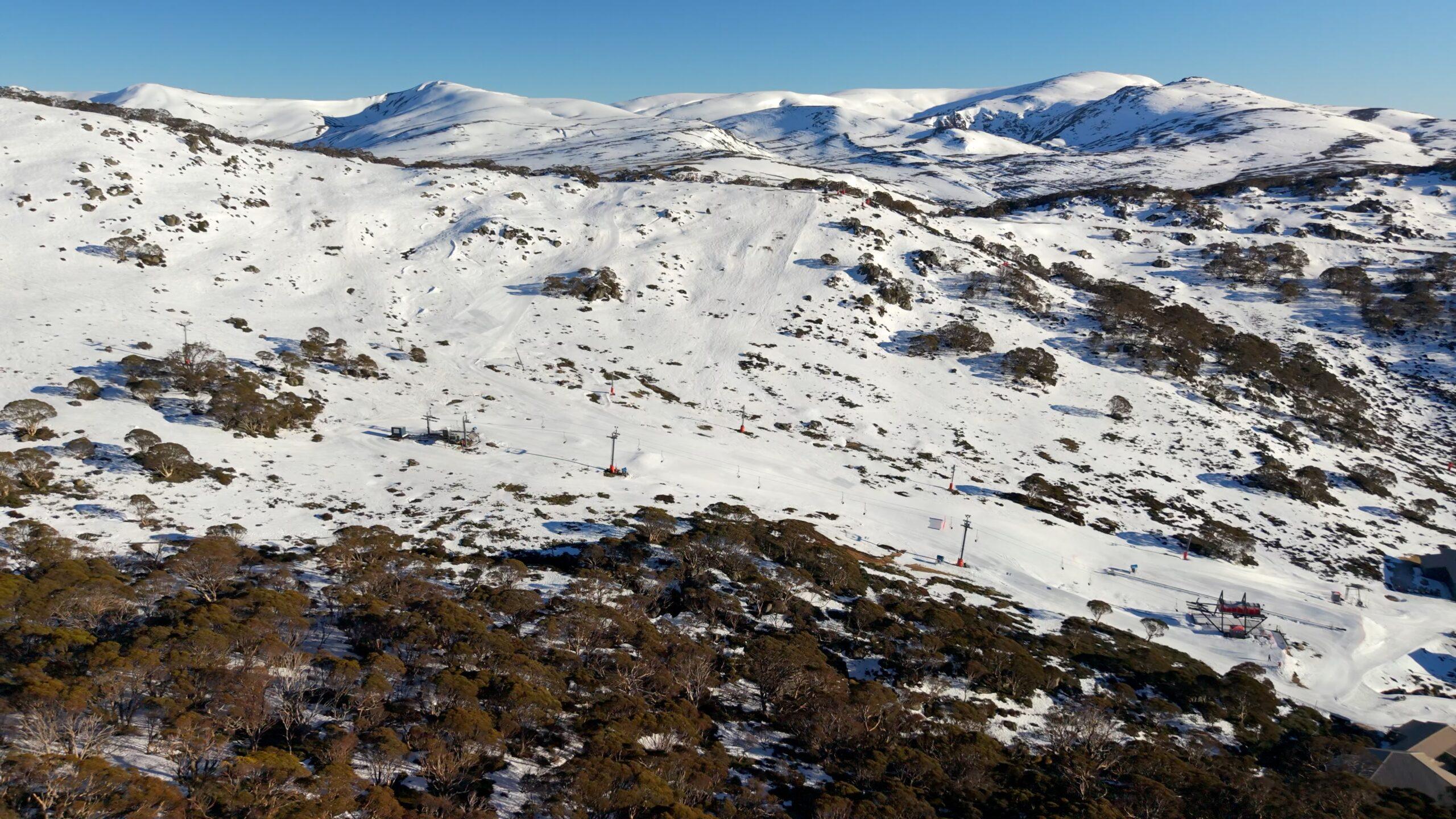
The amazing Charlotte Pass Ski Area.
Thank You
Events like SHREDFEST don’t happen on their own. They happen because brands, shops, resorts and crews put their hands up and back the culture. SHREDFEST 2026 was proudly supported by:
Charlotte Pass Snow Resort • Oz Snow • Philter Brewing • Heaps Normal • Lib Tech • GNU • Systems Australia • Resort Outdoor • Snowy Mountains Television • XTM Performance • Black Flys Oz • Birchwood • Buddie Supply Co • The Base Layer • Super Hill Bomber • Anticorp Riders • Kyneee • Rythm • Ballistyx • Balmoral Boards • Snowy Mountains Sports • POW Boardstore • FRANK151 • Fallen Broken Street • Shed Nine • Vans • Soundboks • Omni
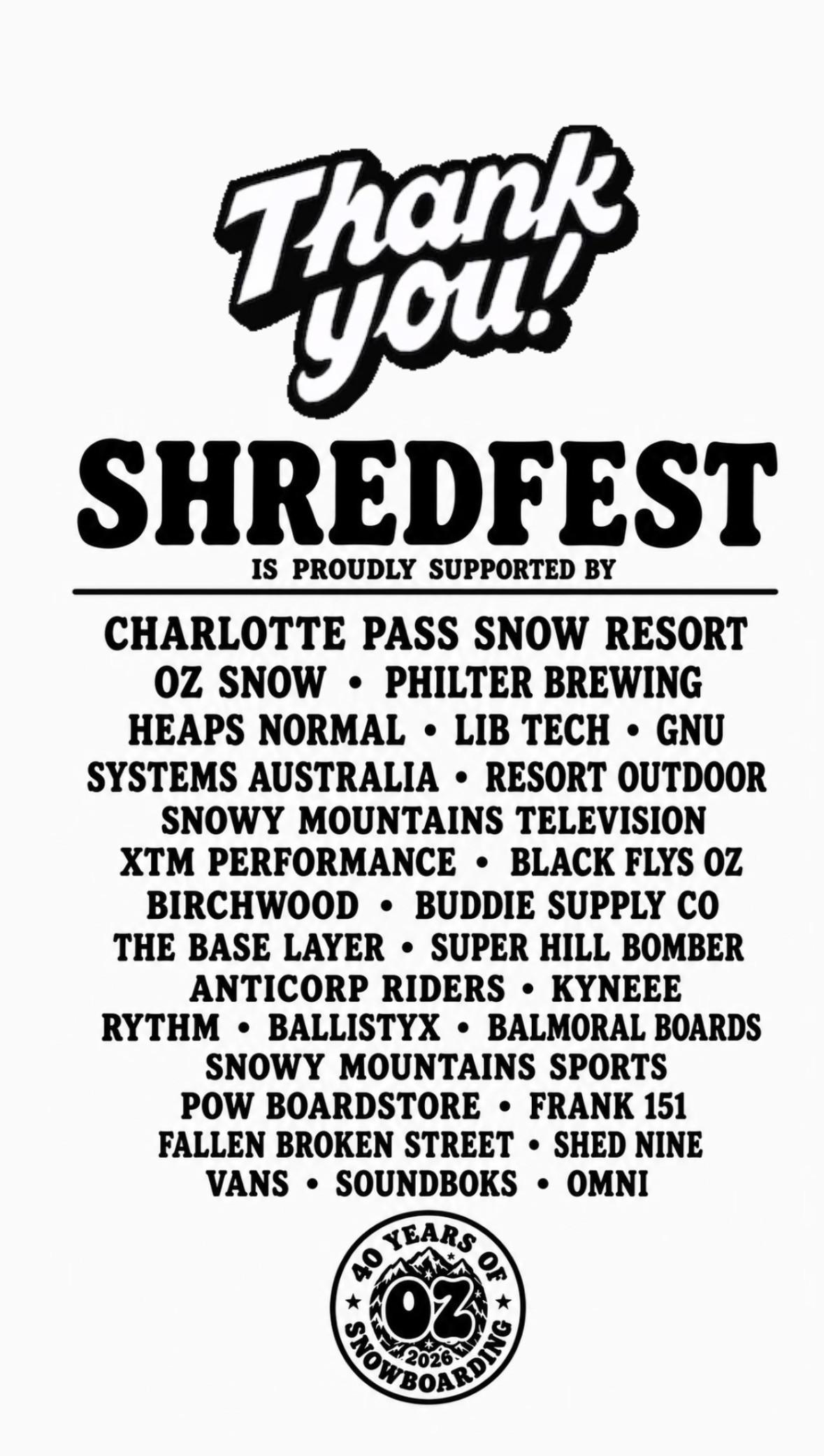
To every one of them: thank you for backing 40 years of Australian snowboarding, and for making sure there’s a 41st.