
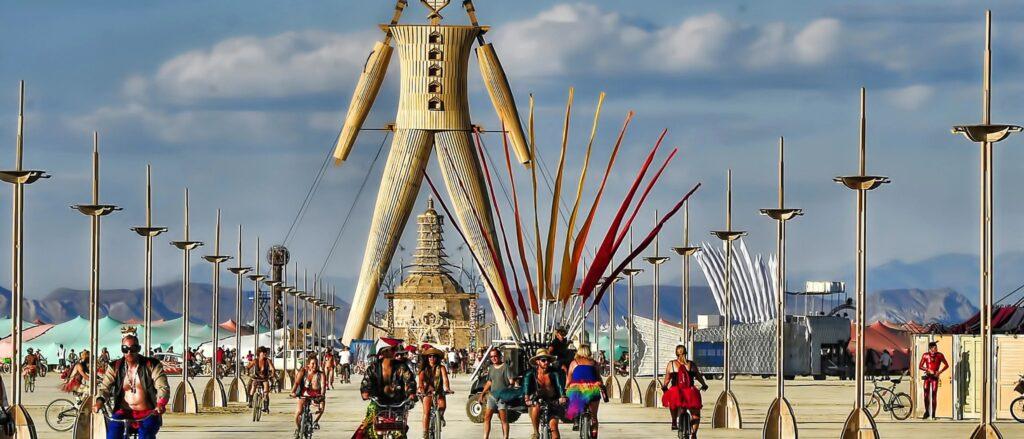
In 1986, two guys—Larry Harvey and Jerry James—dragged an 8-foot wooden man to San Francisco’s Baker Beach, lit it on fire, and unintentionally sparked a cultural wildfire. No permits. No press. Just a small group of freaks and weirdos standing around a bonfire, watching a man burn. That one chaotic act of radical self-expression would morph into one of the most iconic and subversive gatherings in modern history: Burning Man.
Exodus to the Desert: Black Rock Calls
By 1990, the cops shut down the beach burn. But the flame was already lit—literally and figuratively. The tribe migrated to Nevada’s Black Rock Desert, a scorched, alkaline wasteland that offered something Baker Beach couldn’t: lawless space. That first desert mission wasn’t a party—it was a survival test. There were no rules, no cell service, no spectators. Just an open canvas and a blank check to blow minds.
Enter: the Cacophony Society—a crew of pranksters and anarchists with a taste for disruption. Their flavor? Urban exploration meets Dadaist sabotage. Their motto? “You may already be a member.” With them came absurdity, chaos, and a love for the absurd. Think Mad Max meets Situationist International.
A City Built on Dust and Principles
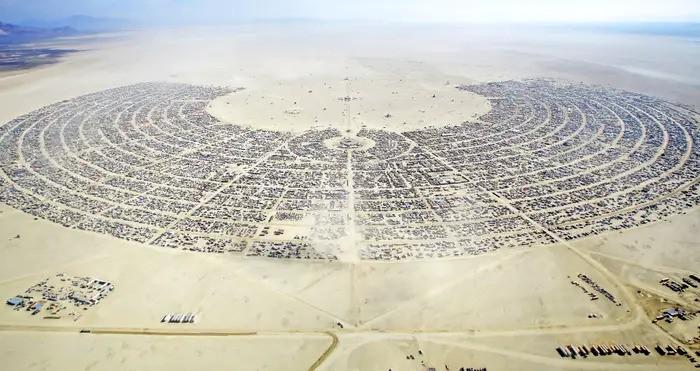
Out of the dust rose Black Rock City, a temporary metropolis where currency died, identities shifted, and art became survival. Burning Man wasn’t just a fest. It was a philosophy. Ten principles emerged like commandments from the playa: radical inclusion, gifting, decommodification, self-reliance, self-expression, communal effort, civic responsibility, leaving no trace, participation, and immediacy.
Translation? Be weird, be generous, clean up your mess, and don’t come to watch—come to do.

The Tech Bros Arrive
By the mid-2000s, word spread. Then came the tech money. Google, Facebook, Tesla—the desert got infiltrated. Suddenly, there were luxury camps, air-conditioned yurts, and catered sushi dinners. OG Burners cried foul: Where did the dirt go? Where was the danger? But the Man kept burning, and the contradictions became part of the mythos.
The irony? Those same millionaires funding mega art installations still had to shit in porta-potties. In Black Rock, no one escapes the dust.
Burn, Baby, Burn
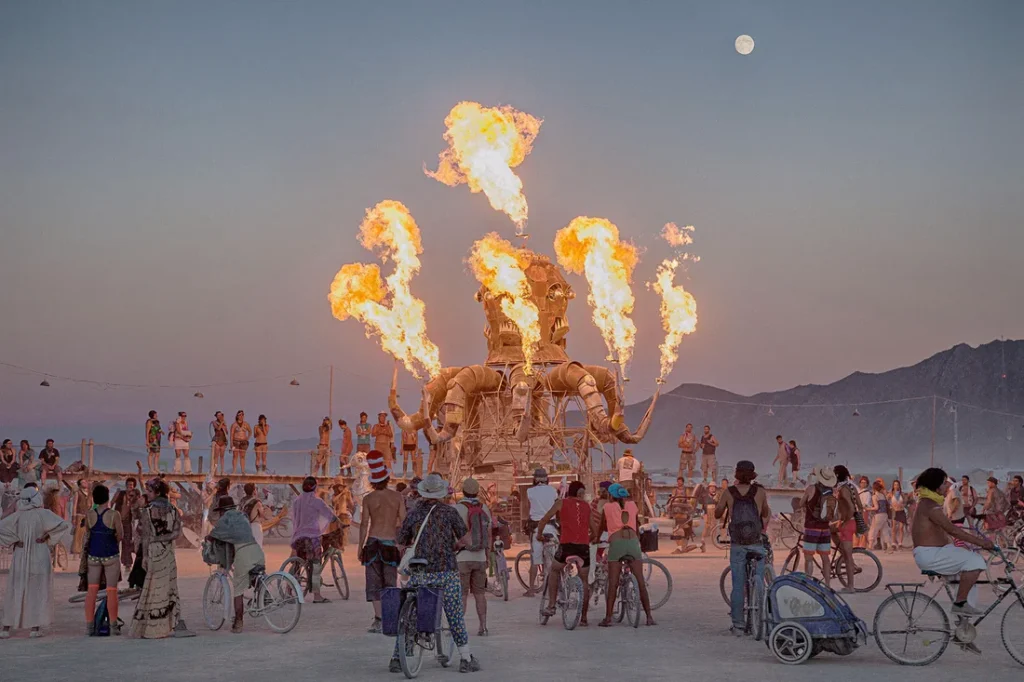
Despite all the flux, the ritual remains. Every year, the Man goes up in flames—like a pagan god sacrificed to remind us: nothing is permanent. On the final night, thousands watch as the wooden figure incinerates in a mushroom cloud of fire and fury. It’s theater. It’s therapy. It’s an exorcism.
The next day? They burn the Temple. And it’s dead silent. Grief, love, loss—it all goes up in smoke. And just like that, Black Rock City vanishes, leaving no trace. Poof.
The Legacy
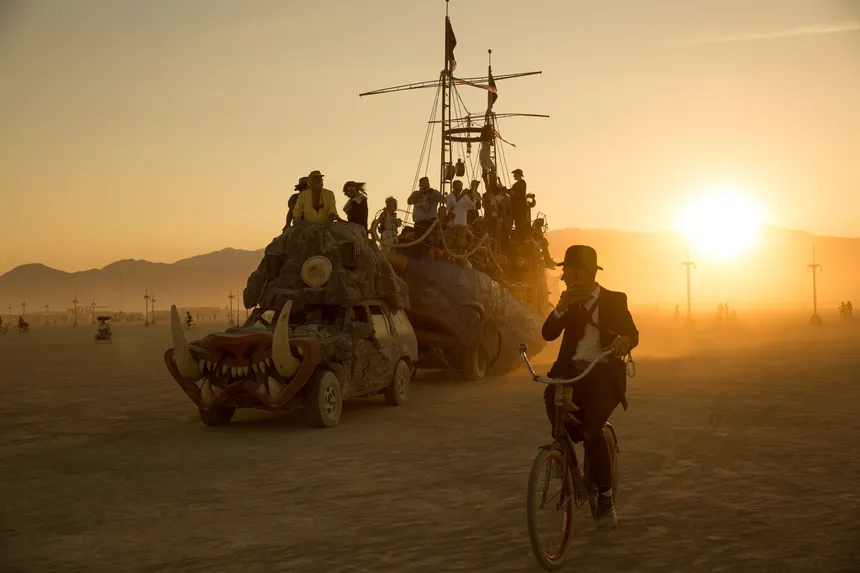
Burning Man is not Coachella. It’s not a music festival. It’s a mirror. A mirror for society, for your identity, for your bullshit. Whether you’re building mutant vehicles or meditating at sunrise, one thing’s clear: the playa gives, and the playa takes away.
So yeah—what started as a rogue beach bonfire became a ritual, a revolution, a question mark. In the end, Burning Man is whatever the hell you make of it.