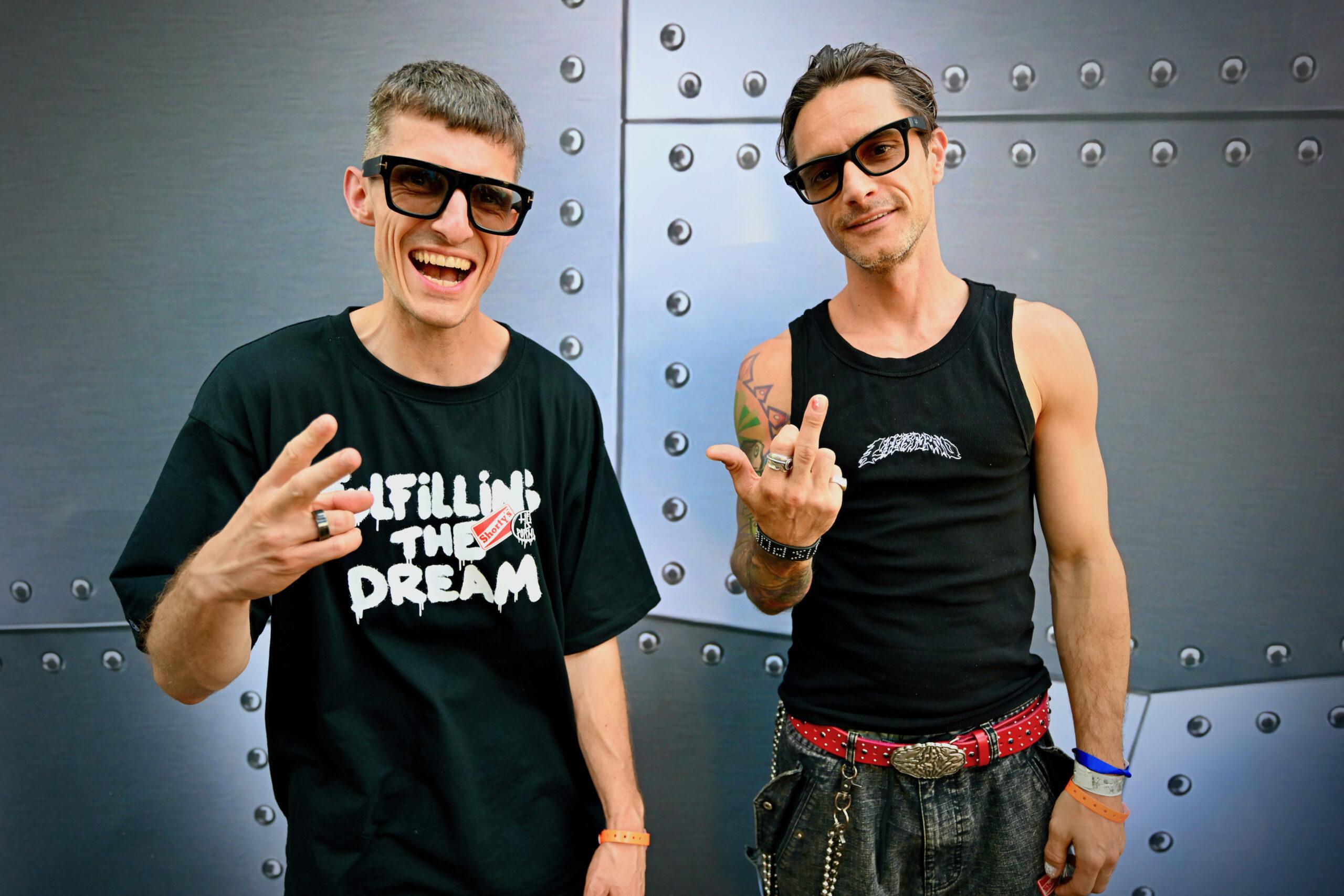
In this series, Frank 151 invites you on a captivating journey around the globe, providing a unique glimpse into the narratives and imaginative landscapes of individuals who are driving creativity to new heights worldwide.
Embark on a visual and intellectual adventure as we delve into the worlds of not only photographers and actors but also delve into the realms of rappers, musicians, graffiti artists, filmmakers, and the visionary minds behind emerging brands. Our creative chronicles are set to unfold, offering a rich tapestry of insights, anecdotes, and life wisdom that traverse the vibrant streets to the dynamic boardrooms, from the vast oceans to the majestic mountains.
Join us as we connect with the crème de la crème of the creative realm, bringing forth a diverse spectrum of perspectives that highlight the intersection of artistry, innovation, and entrepreneurship. From the pulse of urban streets to the serene landscapes, this series promises to capture the essence of the global creative scene, providing an immersive experience that transcends boundaries and celebrates the multifaceted expressions of human ingenuity.
Before Life is Porno, Forbidden Spot and a world of skateboarding, art, music and underground culture, Tino Hrnčiar was a kid growing up in a small town in the Slovak mountains, watching skate and snowboard videos on VHS and trying to figure out how to get closer to the world he was seeing on screen.
That obsession eventually took him from starting Slovakia’s first online skate and snowboard shop at 17, to rapping in Dramatikz, working at Red Bull’s global headquarters, and eventually walking away from the corporate world to build Life is Porno.
Fourteen years later, Life is Porno has grown far beyond clothing. It’s a community, a creative platform and an ongoing experiment in what happens when skateboarding, art, music, food and people collide. Ahead of the brand’s New York takeover, Frank 151 caught up with Tino Forbidden to talk about where it all started, building culture before the algorithms took over, working with Shorty’s and Chad Muska, and why the best ideas are usually the ones that refuse to go away.
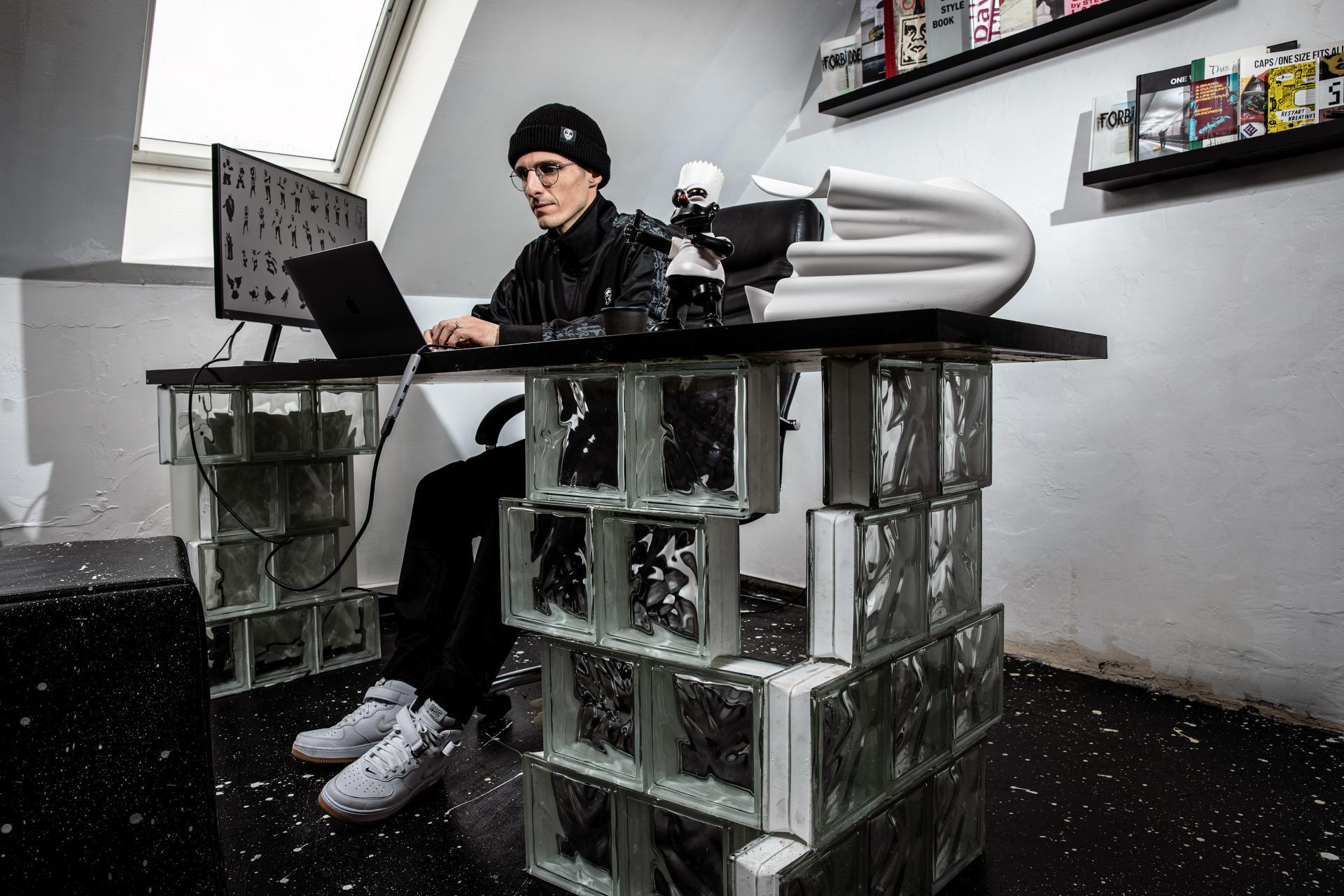
Tino’s Home Office Is Built Different.
TINO FORBIDDEN: The world I wanted to live in came on VHS. I grew up in a tiny town in the Slovak mountains. Skateboarding and snowboarding got me first. Everything in those videos and in the first skate shop I walked into was almost unrealistically cool. The graphics, the clothes, the music. I wanted in.
That led me to punk, my first concerts, then a full obsession with hip-hop culture, which barely existed around me yet. Skateboarding shaped what I listened to, what I wore, who I hung out with. And it shaped how I did business.
During high school, I spent a year as an exchange student in the US, in Tampa. Suddenly, the world I’d been watching from the Slovak mountains was right there around me.
After I came back, a friend and I started Slovakia’s first online skate and snowboard shop. I was seventeen. Our starting capital was exactly zero. Distributors couldn’t imagine people buying a snowboard without seeing it first. We convinced them to supply products as the orders came in. So we were doing dropshipping before we knew there was a word for it.
A few years later, I was rapping in my own group Dramatikz. Two albums with Sony, more than a hundred shows.
Looking back, I guess those VHS tapes were a pretty good trailer for the rest of my life.
TINO FORBIDDEN: I joined Red Bull’s headquarters as a trainee. And digital was pretty much a trainee too.
TV, radio, print, billboards. That was where most of the attention went. Then there was this “digital thing.” I was the young guy who knew a bit about it so a lot of it landed on my desk.
I was part of the international brand team, developing cool campaigns with agencies around the world and helping launch these campaigns in different markets. And my main thing was taking the famous Red Bull cartoons online.
For one project, anyone could send us an idea for a cartoon. If it won, we made it into a real commercial and put it on TV around the world. Some are still running today, which is pretty crazy.
Another project worked like a skate video game, except you had to land the tricks yourself. We’d announce a trick, you’d film yourself landing it and upload the clip to unlock the next level.
I was also working directly with teams at Google and Facebook’s headquarters on how Red Bull would advertise on their platforms worldwide. Those were some pretty big projects to land on the table of the guy who’d come in as a trainee. But there were no senior digital people yet.
What did it teach me about culture? Red Bull never tried to be liked by everyone. Love it, hate it, just don’t ignore it.
TINO FORBIDDEN: “We just hit a million fans on Facebook. So what do we do with them now?” I remember someone saying that at Red Bull Media House during a meeting. We knew something big was happening. We just didn’t know quite how big.
I also remember Gary Vee predicting that people would make a living sitting at home shooting videos for the internet. The reaction was basically: “What do you mean videos? What kind of videos?”
Nobody was talking about culture. Everyone was talking about reach.
But we were constantly spotting early signals and trying to use them. Japan was already using QR codes in everyday life while people back home barely knew what they were. In South Africa, people were using basic mobile phones for things like banking, long before smartphones became the norm. A lot of the job was spotting what was already normal somewhere else.
TINO FORBIDDEN: Digital wasn’t taken too seriously yet so there were fewer rounds of approval. If an idea felt right, we could try it. We had room to experiment with things that would have been a no-go in traditional media. That freedom was a huge advantage. Nobody knew how to measure it yet. So nobody could prove us wrong.
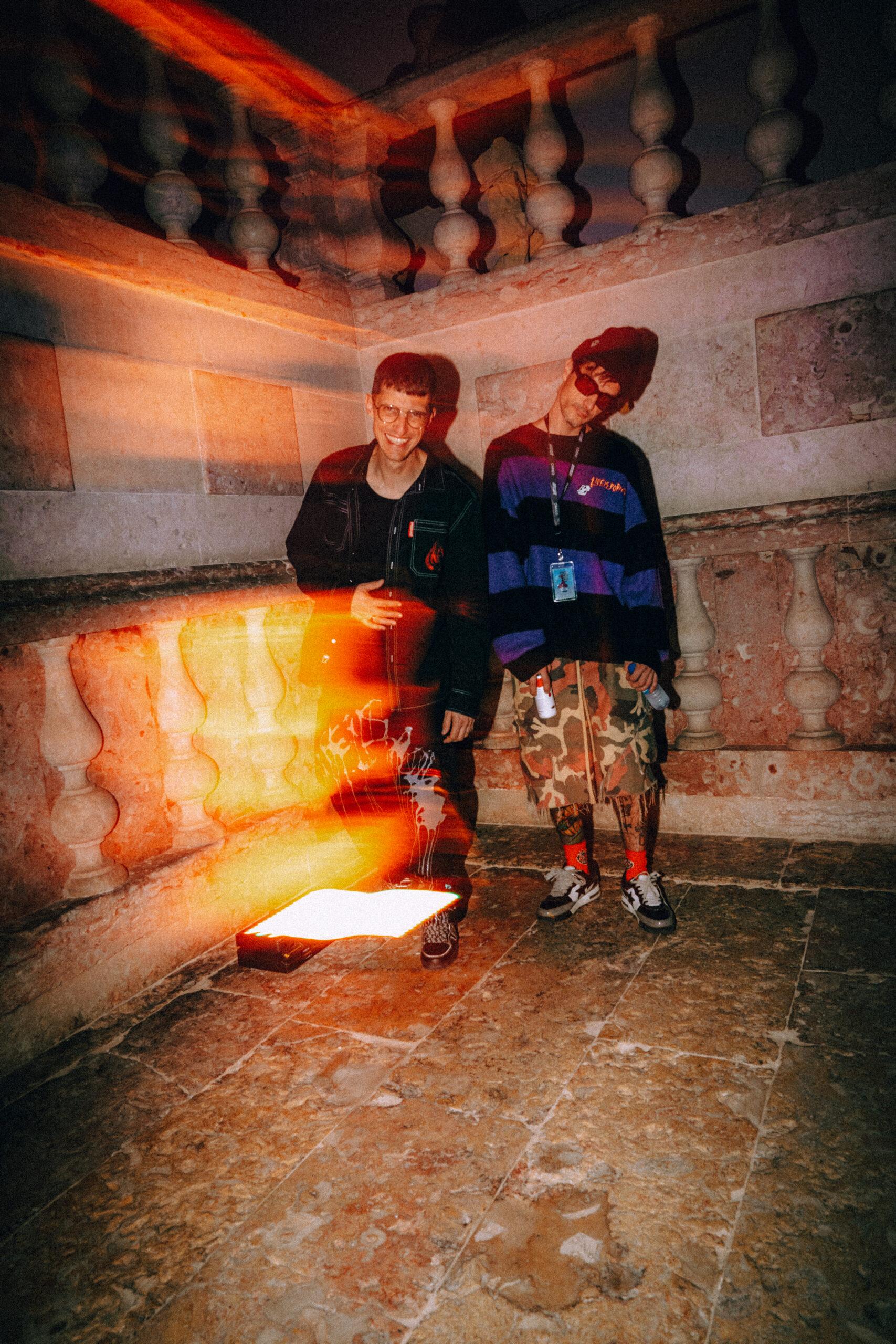
TINO FORBIDDEN: Red Bull was my dream job. But I always joked that “dream” and “job” shouldn’t be allowed in the same sentence.
I had an amazing job, with opportunities to work all over the world. And a double life. Weekdays, I was in a grey office in Salzburg. Friday afternoon, I drove up to eight hours to play a festival for ten thousand people. Monday morning, back in the company VW Polo. Almost nobody at work knew.
But I’d never wanted to climb the corporate ladder. I wanted to build something of my own. And I knew the longer I stayed, the harder it would be to leave. More comfort, more commitments, eventually a family. There would always be a very good reason to wait another year. So I quit. A few months later, I was in Prague starting Life is Porno with my friend Dian.
Now imagine that conversation with my parents. Their son is leaving a great international job to start a brand called Life is Porno. Every parent’s dream…
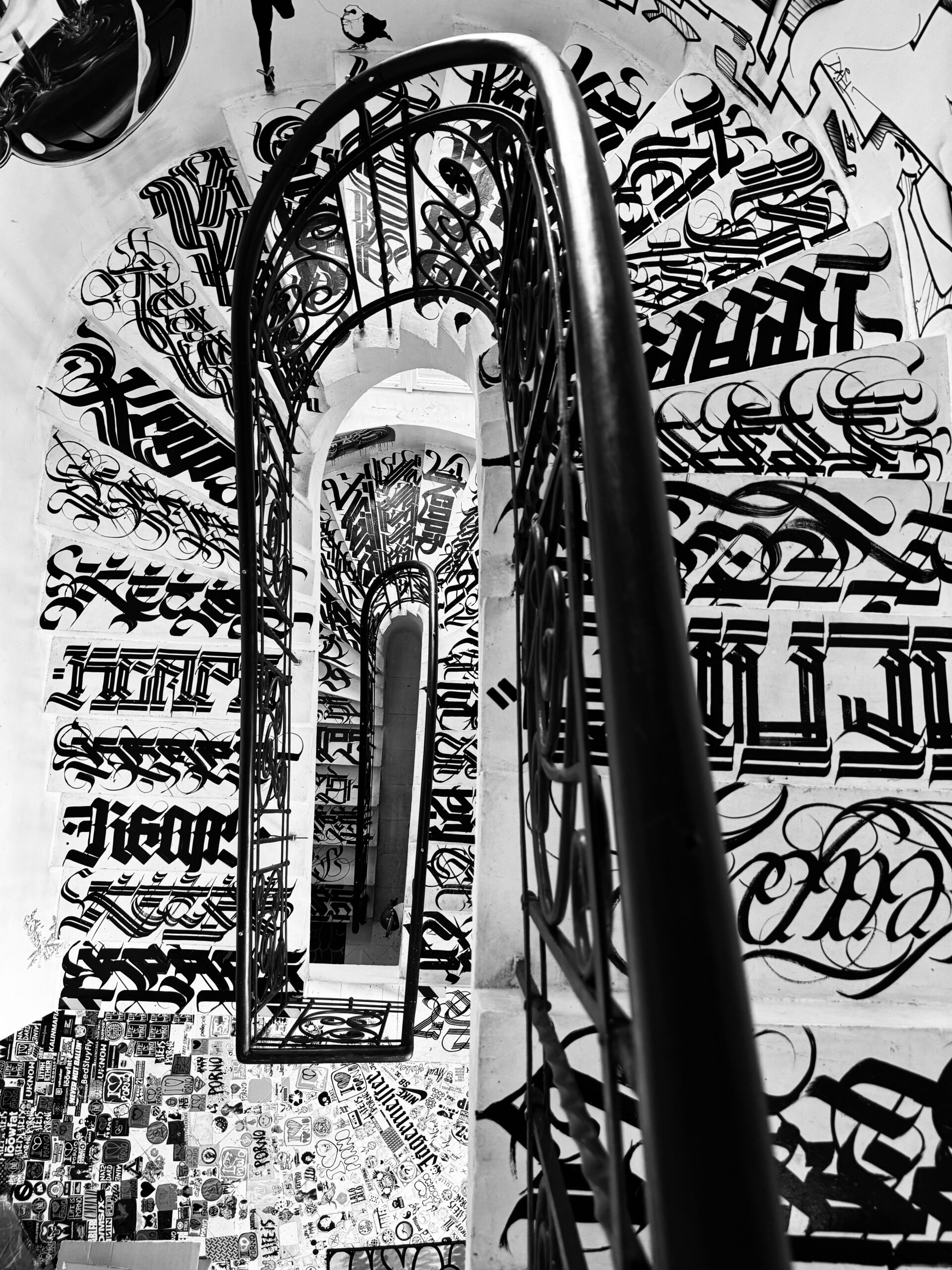
TINO FORBIDDEN: Life is Porno existed years before it became a brand. It was a crew. A bunch of friends in Prague, living and creating under one roof. We called the house Porno Villa. Artists, riders, musicians. Skate projects, parties, art, stickers all over the world.
Dian — a street artist — was already hand-painting one-of-one pieces for friends. Rappers, DJs, actors. People saw them and started asking where they could get one. Long before there was anything to buy.
And the name? A friend said it once: “Life is porno” and it stuck. First as an inside joke, then as something we actually lived by. A few guys from the crew even got it tattooed on their butts. Before there was a logo, before there was a single T-shirt.
And today, more than a thousand people have our brand tattooed on their bodies. Not only on their butts, of course.
We launched officially in 2012. And we’ve never explained the name to our fans. Everyone gets to decide what it means to them. For me, it’s simple: Do what you’re best at. Go all the way. And enjoy the hell out of it.
Fourteen years later, it still means the same. We just keep reinventing everything around it. And we keep working with the people shaping culture right now, not the ones who shaped it when we started. We got older. The brand fortunately didn’t.
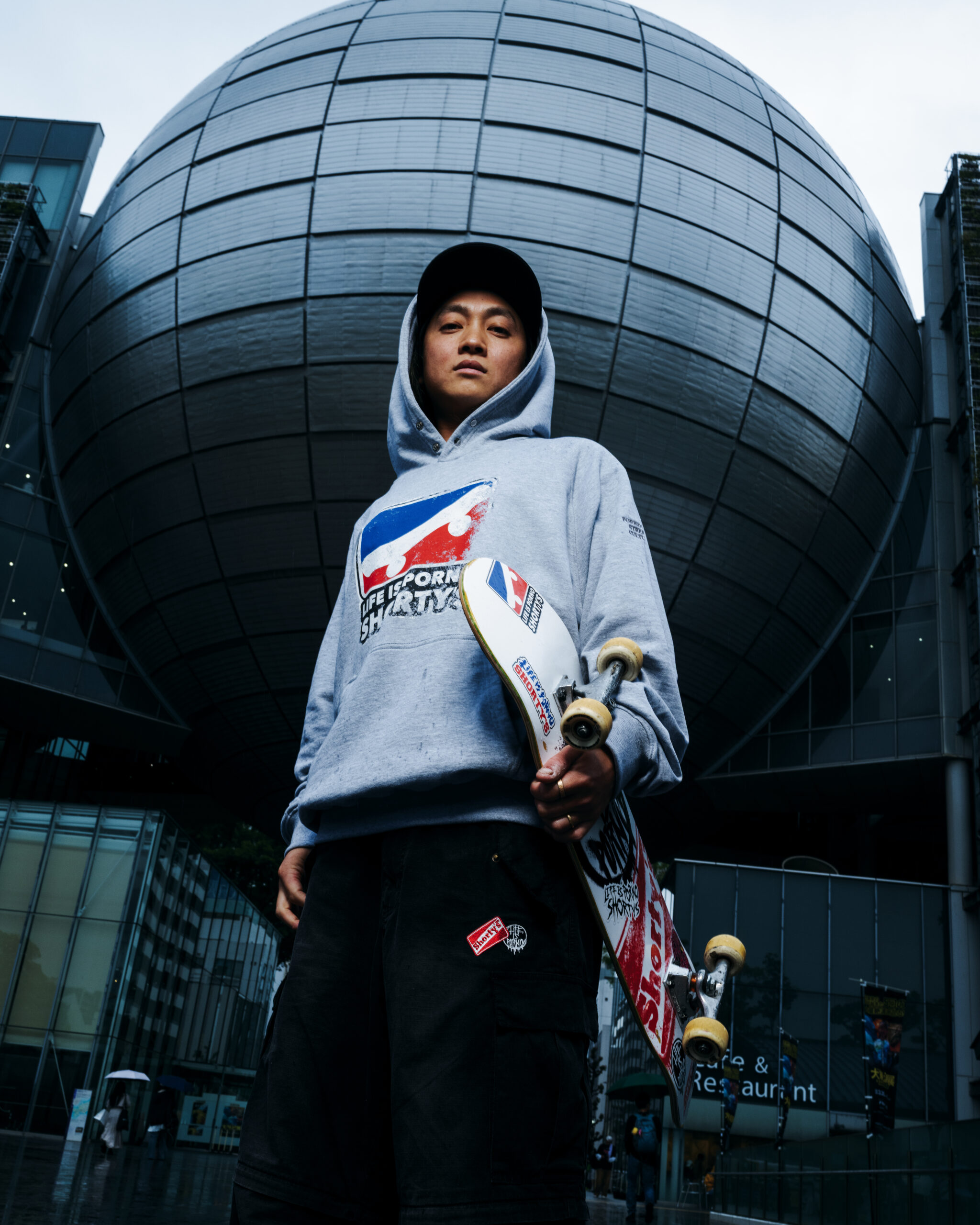
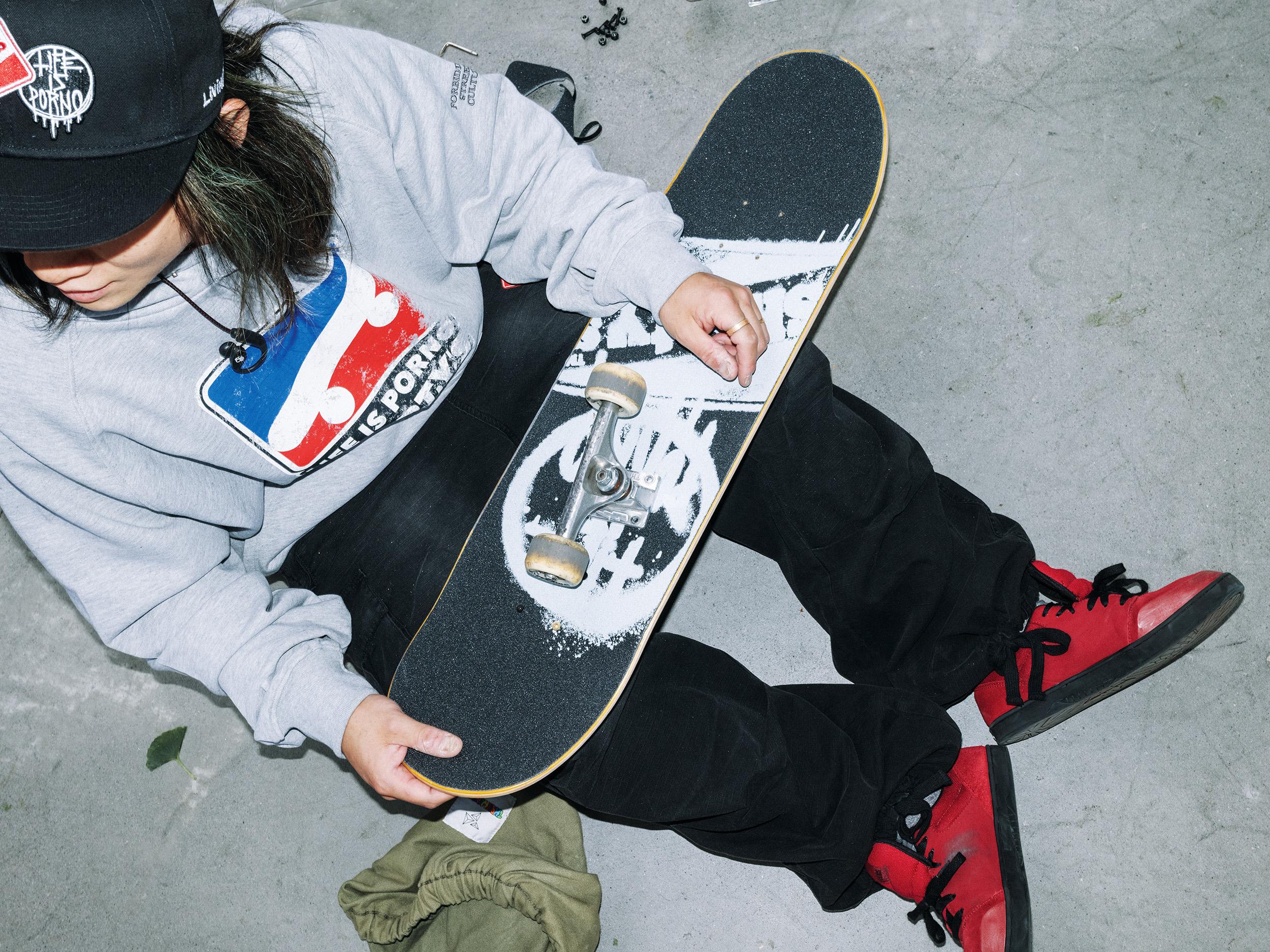
TINO FORBIDDEN: It starts with who makes the calls. Fourteen years later, the brand is still in the hands of the two guys who started it. Dian is our creative director. Almost every design comes out of his head, his brush or his iPad. I take care of the company and the brand. And we have an amazing team around us.
We work with the best photographers, filmmakers, designers, artists and riders. But we don’t chase big followers count. We’d rather give a platform to people who are in the beginning of their journey. We’ve watched so many of them start from zero and today they’re far ahead.
And we also keep it physical. The brand lives mostly online but the best stories start offline. Clothes for tricks at our Hidden Jams. Or our birthday week this August when we hid products in 100 cities in one week. Clues on Instagram, people running around to find them. That’s the stuff people post without us asking. I guess we never outsourced who we are.
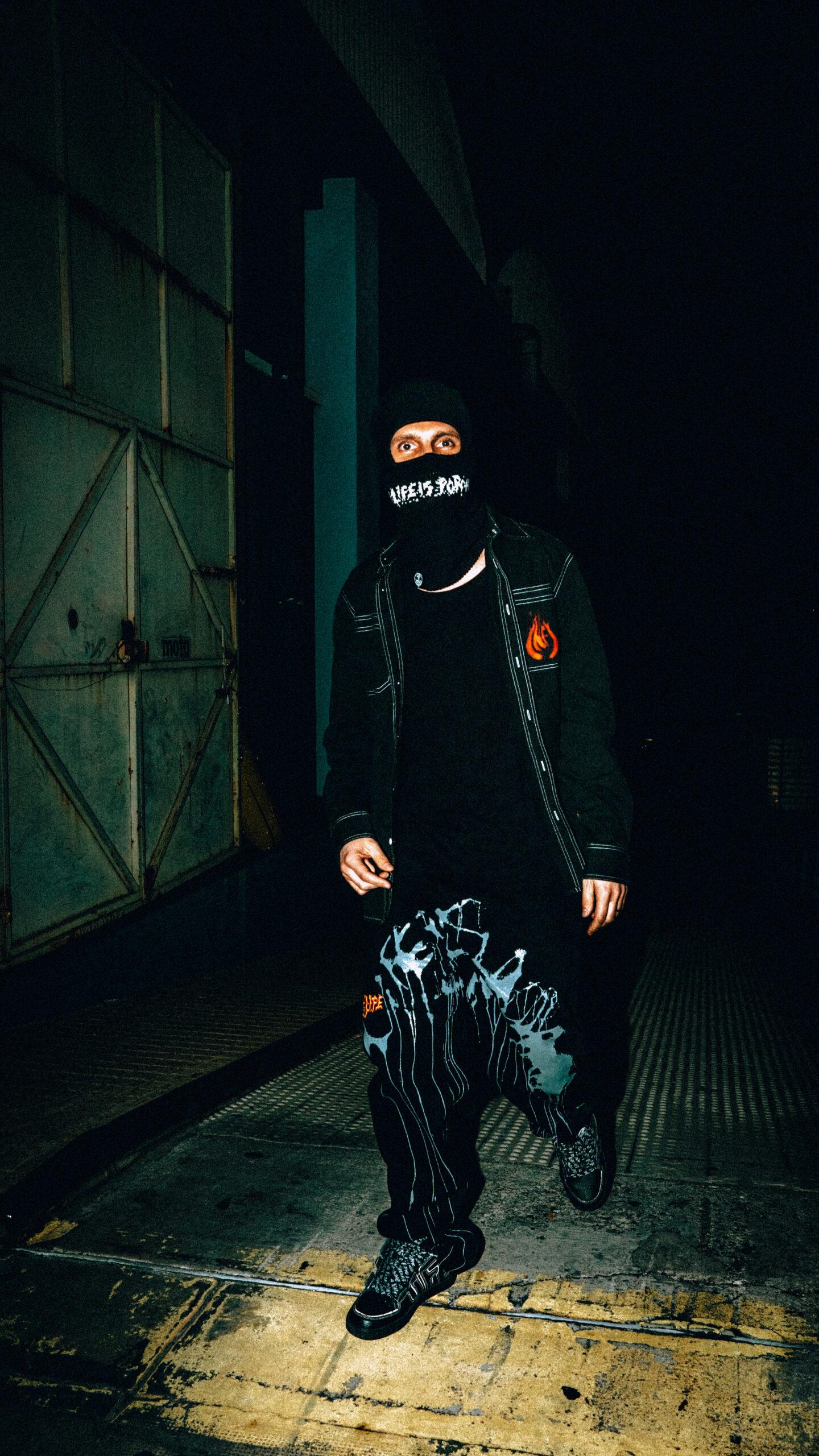
TINO FORBIDDEN: No agency. No pitch deck. Just one friend and one video.
The friend is Brandon Valjalo. He rides for Shorty’s and he’s been our friend for years. He stopped by Forbidden Spot, loved what we were doing and sent a video to Krishna Buyalos, the owner of Shorty’s.
A few weeks later, Dian and I were in California, sitting in the studio of the Shorty’s main artist David Flores, talking about writing our next chapter with one of the most iconic skate brands ever.
We didn’t want a logo swap. When you touch something with that much history, you’d better bring something of your own. So it kept growing. A 27-piece collection. Four films on three continents. And a launch where it belonged. Offline first, at the Mystic Skate Cup in Prague.
Brandon was there the whole way. From the first call, to filming in LA, to landing in Prague for Mystic.
And what did it mean to me? Shorty’s made a video called Fulfill the Dream. I watched it as a kid. I didn’t know it was an instruction.
TINO FORBIDDEN: Honestly? It wasn’t a project at all. It was a simple idea.
First, Muska. He’s still very involved in Shorty’s. When we were working on the collaboration, he was the final green light. Nothing moved until Chad said yes.
He’s also grinding on his own brand, MUSKA™. A One Man Corporation, as he calls it. And he sent us a pair of his shoes.
The plan was to customize them and show them at our pop-up at Mystic. Dian turned them into “past and future”. One shoe is the past. Completely torn down, destroyed and still cool as hell. The other one looks like it came from the future.
Then I remembered something we once did with a cap. Instead of a price, we asked people what they’d do or give for it. I pitched the same idea to Chad and he said yes.
So the shoes aren’t for sale. You have to tell us what you’d create, do or trade for them. Submissions are still open. And some of them are incredibly funny.
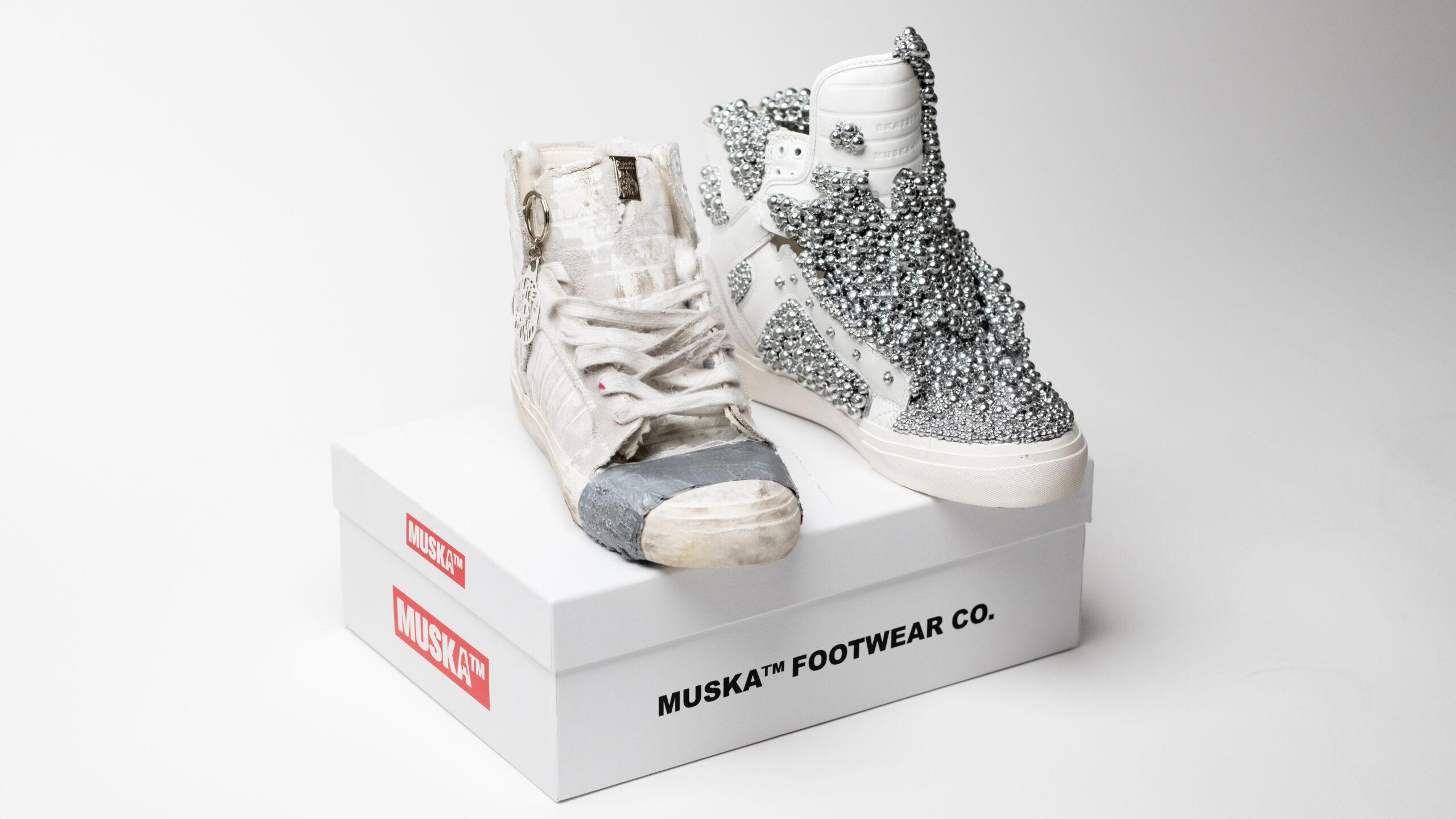
TINO FORBIDDEN: We’re not coming to New York to “launch in America.”
On October 12, we’re taking over Bowery Showroom on the Lower East Side. One evening. Clothes, art, music, friends. And two versions of our Hidden Jam, skate and b-boying. Cash for tricks, clothes for moves.
Nothing overproduced. We just want to bring a piece of our world from Prague to New York and see what happens.
Why New York? Because so many of the cultures that shaped Life is Porno collide there naturally. Skateboarding, street art, hip-hop, dance, fashion. We’ve been mixing those worlds for 14 years. New York invented half of them.
When someone walks in, I want them to feel like they discovered something they should have known about already. Basically: “How the fuck have I never heard of these guys?!”
TINO FORBIDDEN: I wish I could say I sat down 15 years ago and designed an ecosystem. That would make me sound much smarter than I am.
I just have a problem leaving ideas as ideas.
Even the word “Forbidden” was an accident. When we tried to register Life is Porno as a company, the court said no. They sent us four pages explaining why life is not pornography. Sitting in a traffic jam, Dian said: “If they forbid you, be forbidden.”
So we’ve been forbidden ever since.
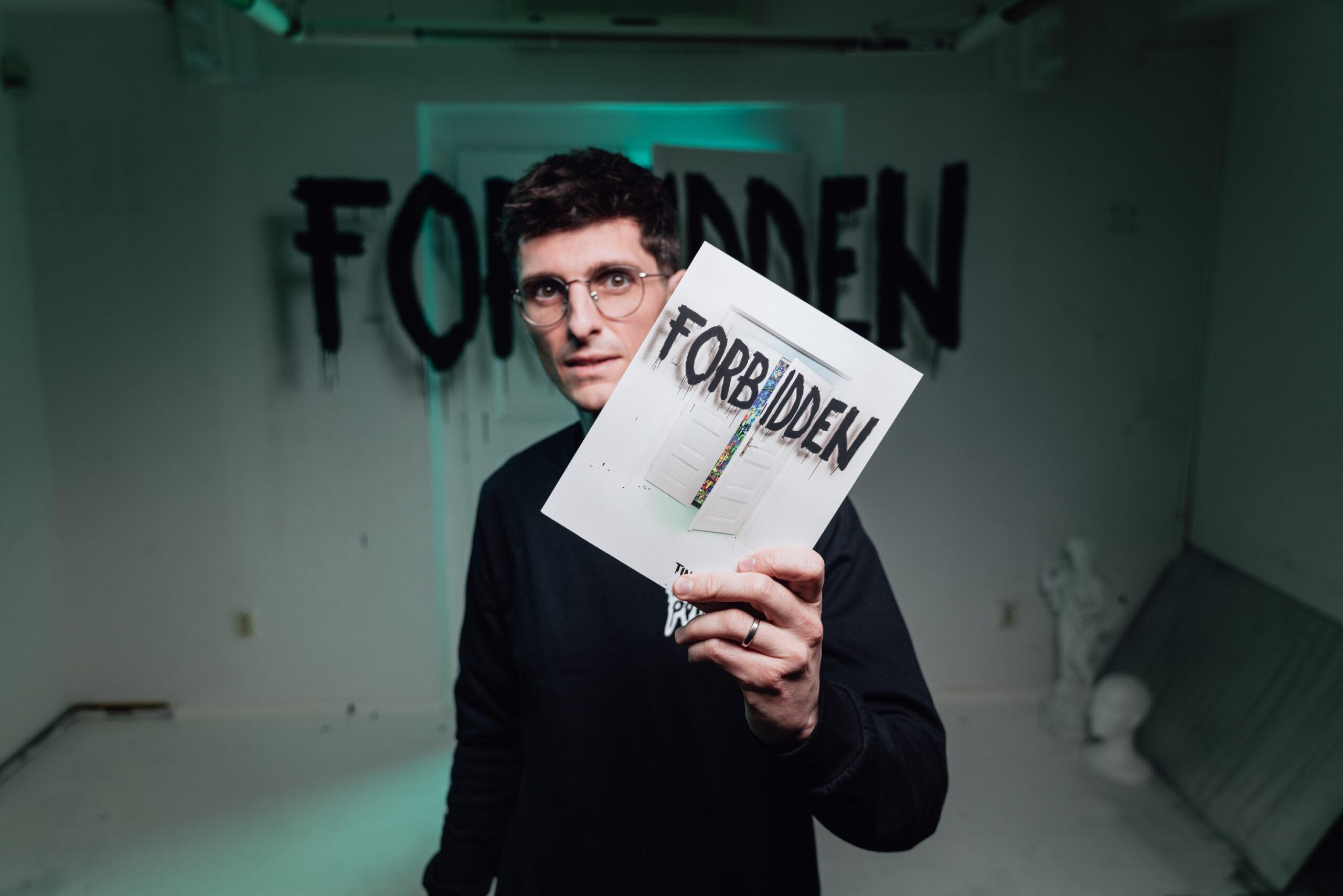
Forbidden Spot became the physical home for our world. Forbidden Taste took it into food. We said “restaurants are boring” so my wife and I created the secret dinners we couldn’t find anywhere. FORBIDDEN is my book. The one I wanted to read myself. And Infi Torem is an experiment in what happens when you mix Web3, a Mutant Ape, storytelling, products and community.
What connects them? None of it is just something you buy. You had to find the secret dinner. You hunt for the limited cap. You pitch us for the shoes. You have to play along.
And which obsession deserves to become real? I have way too many ideas. Most of them shouldn’t.
The good ones are annoying. They keep coming back. I talk about them without meaning to. I start connecting people in my head. Eventually it’s easier to just fucking make the thing than to keep thinking about it.
I don’t really choose the obsessions. The good ones refuse to leave…
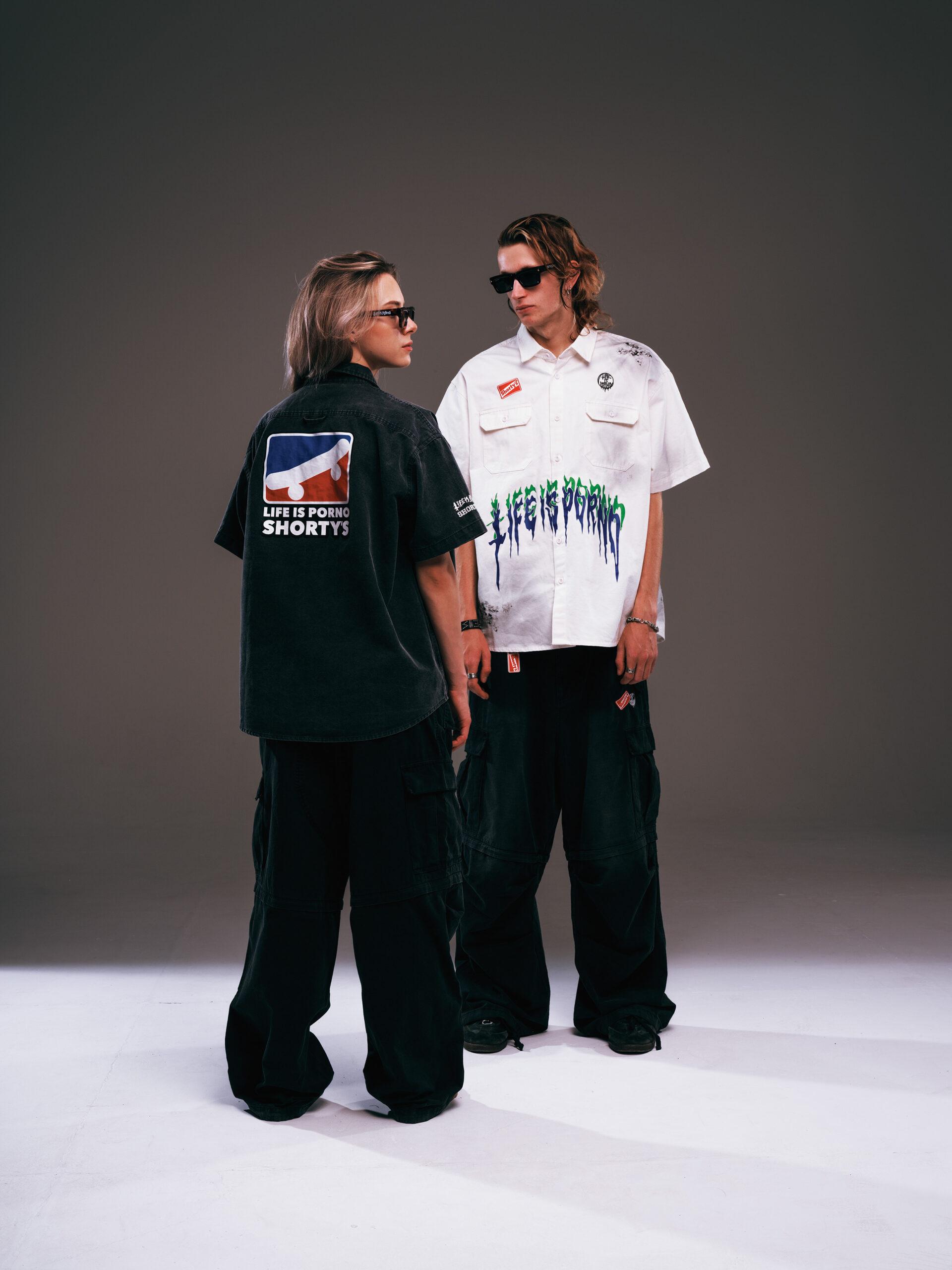
FRANK 151: You’ve gone from helping major corporations understand the digital future to building an independent cultural community on your own terms. At this point, what are you still trying to prove, and what is the next forbidden move?
TINO FORBIDDEN:
The best part? I’m not trying to prove anything to anyone.
But I did figure something out about myself. I’m driven by the beginning. The moment an idea becomes real. Connecting the dots. Connecting people.
Once everything runs smoothly, I get bored. I’m not great at that part. For years, I kept the spark alive by starting new companies, new brands, new projects. Honestly, it’s what kept me from burning out.
Now I do it differently. I start projects inside the project. Focus became crucial for me.
So the next forbidden move is bringing our forbidden life outside of Europe. In Central Europe, people know us. In the US, almost nobody does. We’re starting from scratch.
Which, as you now know, is my favorite part…