
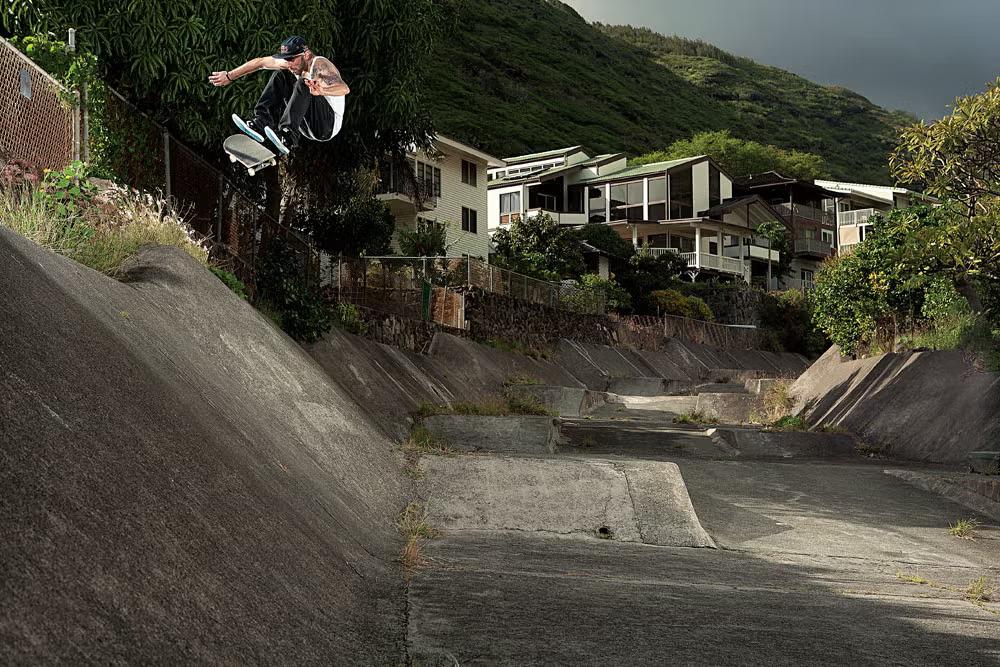
Zered Bassett came up skating the East Coast, from Cape Cod to Boston and eventually New York, where he became part of the Zoo York crew alongside Jeff Pang, RB Umali and a generation of skaters who helped define street skating in the late ’90s and early 2000s. Parts in Mixtape 2, Vicious Cycle and City of Killers cemented his place in skateboarding, built on heavy spots, raw street footage and a style that never needed much explanation.
These days, Bassett is taking that same street mentality into his art. His Paper Skaters project takes skate photographs, prints them, cuts them by hand and wheatpastes them onto walls around the city. Drawing on years of skating, photography and an early interest in graffiti, the work brings skateboarding back into the streets in a different way. Some people see a piece of street art, while skaters recognise the spots, the tricks and the moments behind the image.
Frank 151 caught up with Bassett to talk Zoo York, growing up on the East Coast, the evolution of New York skateboarding and how Paper Skaters came together. We also get into the creative process, the crews keeping the culture alive and what he wants to do next.
Frank 151: Growing up in Cape Cod before making New York City your home, what was it about NYC that completely changed the way you looked at skateboarding? Was there a moment when you knew the streets were going to become your canvas?
Zered Bassett: I don’t think NYC completely changed the way I looked at skating. I think it opened my eyes to raw street skating and gave me a new appreciation for East Coast skating. At the time, the West Coast seemed to be where all the pros were and where you had to be. After a few trips there and meeting Pang and the crew, I knew it was where I wanted to be.
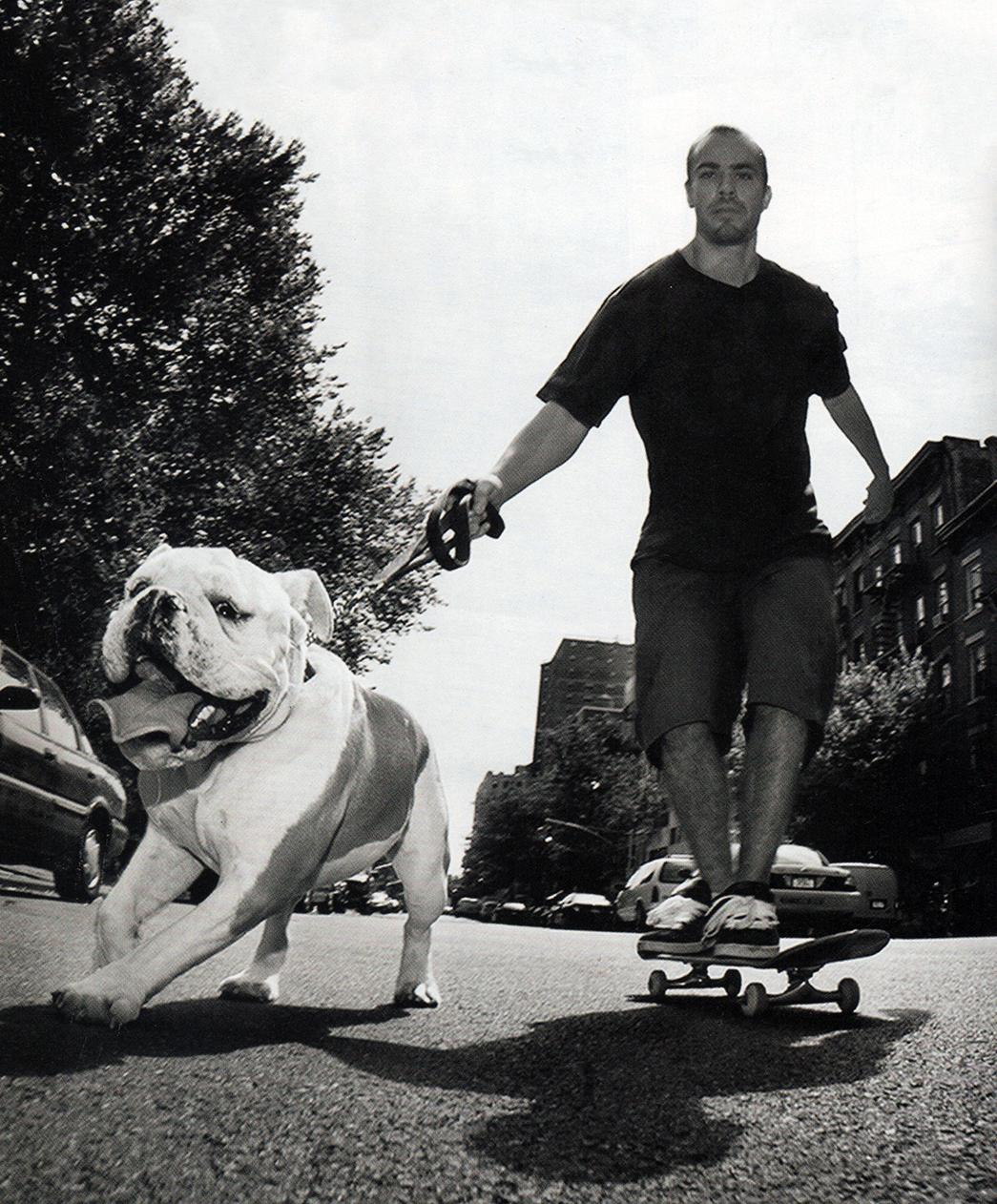
Frank 151: Zoo York wasn’t just another board company — it represented East Coast skateboarding at its rawest. What did it mean to become part of that legacy, and how did skating alongside guys like RB Umali, Jeff Pang and the Zoo crew shape the skater you became?
Zered Bassett: At the time, I didn’t know what I was becoming a part of. I just knew these were the guys doing it, and they were down for me. Looking back now, it feels really special to have been a part of that late-’90s, early-2000s golden era of modern East Coast street skating.
Skating with that crew gave me confidence and made me want to rep the East Coast that much harder. I really felt like I was a part of a movement, something real. And that has stuck with me.
Frank 151: New York has always had its own rhythm. The spots, the architecture, the people and the chaos. How much does the city itself dictate the way you skate compared to somewhere more polished like California?
Zered Bassett: I think the city keeps you on your toes, really makes you adapt to the surroundings, and keeps things spontaneous. It’s much more of a lifestyle than just a skate mission to film a trick.
Frank 151: Your Paper Skaters project has become one of the most unique art projects to come out of skateboarding. You shoot the photos yourself, print them, cut them by hand and wheatpaste them back onto walls. When did you realise photography and street art could become an extension of skating rather than something separate?
Zered Bassett: I realised that once I stopped drinking for the first time. I would walk around the city and shoot photos to keep my mind busy and off drinking. I would look at all the graffiti and street art, as well as look for new spots to skate. I would see spots that were really good but not skatable and imagine skating them. That put the vision in my mind. Then I couldn’t unsee it.
It all clicked, and I knew I had to paste up my photos in the streets. I started seeing different compositions and different ways to paste my photos so they would naturally blend into the environment around me.
Frank 151: There’s something poetic about taking a skate photo, removing it from the digital world, then putting it back onto the street where it belongs. Do you see those paste-ups as temporary public sculptures, photographs, graffiti — or something else entirely?
Zered Bassett: I see the paste-ups as something completely different. I see them as an idea that has come to life, something that makes people think and question. The average person will see it one way, while a skateboarder will see it completely differently.
Frank 151: A lot of people know the finished murals, but not the process. Walk us through a typical Paper Skaters installation — from shooting the trick, printing the image and mixing the paste, to finally seeing it come alive on a wall.
Zered Bassett: The process varies depending on what comes first: the photo or the idea. Most of the time, I get back from shooting photos and go through them. Certain photos stand out, and the ideas start to flow. Other times, I see a spot, get the idea, and then shoot the necessary photo or photos I need.
I would bring those cutouts on skate trips with me and keep my eyes peeled for a spot that would work for the pieces I had. It has to be the right scale and shot at the right angle to look right. I would have a bottle of mixed paste on me for when I found one. It’s like a scavenger hunt.
Getting a nice photo of the piece on the wall, where it blends into the environment as best as possible and looks like it belongs there, is the finished piece.
Frank 151: Before Paper Skaters, you experimented with graffiti. Did that world teach you to appreciate the impermanence of street art, knowing your work could disappear overnight?
Zered Bassett: The graffiti world taught me more about looking for spots, and what a spot even was, lol. It taught me how to use the city as a canvas. Of course, you want your piece to last as long as possible, but it’s not about that to me. It’s about executing an idea and bringing it into the world while trying not to get caught while doing so.
Frank 151: Your skating has always felt fast, powerful and instinctive, while your artwork is incredibly deliberate and considered. Do those two sides of your creativity balance each other out?
Zered Bassett: That’s interesting. I think my skating may come off that way because you’re seeing only the end result, whereas with my art, I’m walking you through each step along the way and showing you how I got there.
I think my skate mentality has made me a psycho when it comes to art because there’s no risk of getting hurt, so it takes a lot more work and precision for me to feel satisfied.
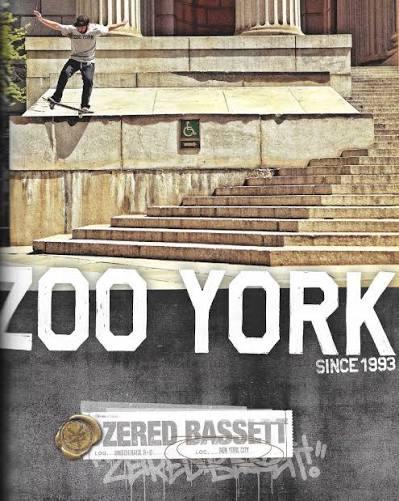
Frank 151: Looking back at classics like City of Killers, State of Mind and Divercity, is there one video part that still feels like the best snapshot of who Zered Bassett is? Or do you think your best work is happening right now?
Zered Bassett: Looking back, I would say Vicious Cycle and City of Killers are the best snapshots of who I am as a skater. Over the last few years, I’ve been tapping into something much deeper — myself as a person — and I feel the best I have ever felt. I believe my best work has yet to come.
Frank 151: You’ve watched New York skateboarding evolve through multiple generations. What’s something about today’s scene that gives you hope, and what’s one thing you think has been lost since the golden era of filming VX lines through the city?
Zered Bassett: What gives me hope about today’s scene is that there’s still a handful of crews that have done their research, put in the work and let the skating speak. Then you have the majority that seems to be chasing trends and attention, with a lack of respect for those who came before them. Very understandable in today’s world. But much respect to the ones working hard to keep the culture alive.
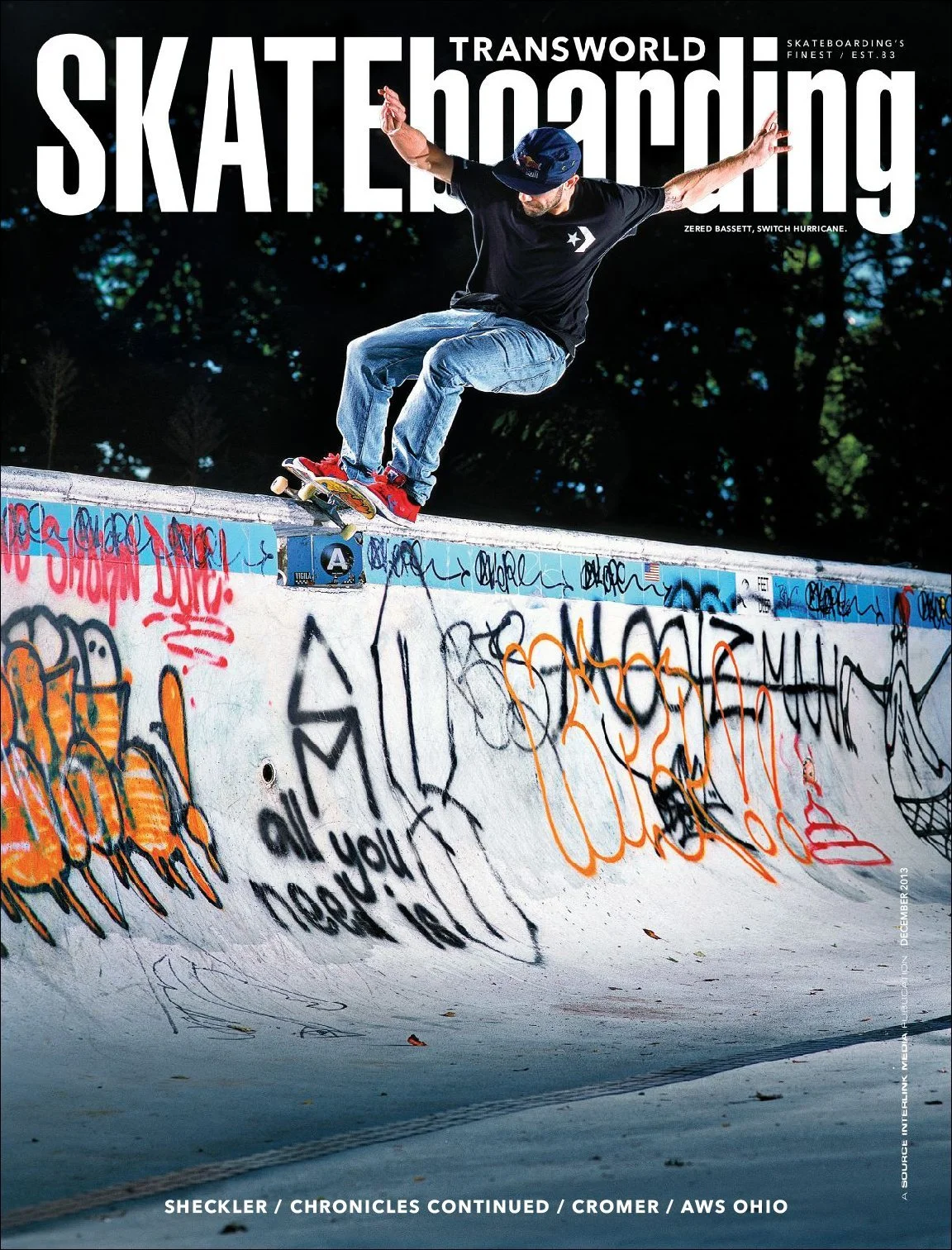
Frank 151: Skateboarding has always intersected with photography, filmmaking, music and art. Do you think we’re finally seeing skaters being recognised as complete artists rather than just athletes?
Zered Bassett: I think with so many eyes on skating now, people are realising more and more about the artistic side of it and recognising it. But at the same time, with skating being in the Olympics now, you’re getting a whole new breed of athletes who train and have coaches just to win at skateboarding. I’m cool with both. I just pay attention to the stuff I like.
Frank 151: You’ve built a career by staying authentic instead of following trends. Whether it’s a handrail in Manhattan or a wheatpaste hidden down an alley, what still gets you excited to wake up and create after all these years?
Zered Bassett: What gets me excited to wake up and create is the unknown. What will that look like? What happens if I do this instead of that? Working hard to accomplish an idea. Seeing something come to life that has been in my head for months or years and feeling progression — like I’m growing, learning and getting better.
Frank 151 — Bonus: If someone wanted to understand Zered Bassett in one afternoon, what would you tell them to do first: watch City of Killers, wander New York with a camera, or hunt down one of your Paper Skaters installations before somebody tears it off the wall?
Zered Bassett: One afternoon ain’t gonna cut it, but I would start by stepping outside with a camera, walking around and letting the mind wander.