
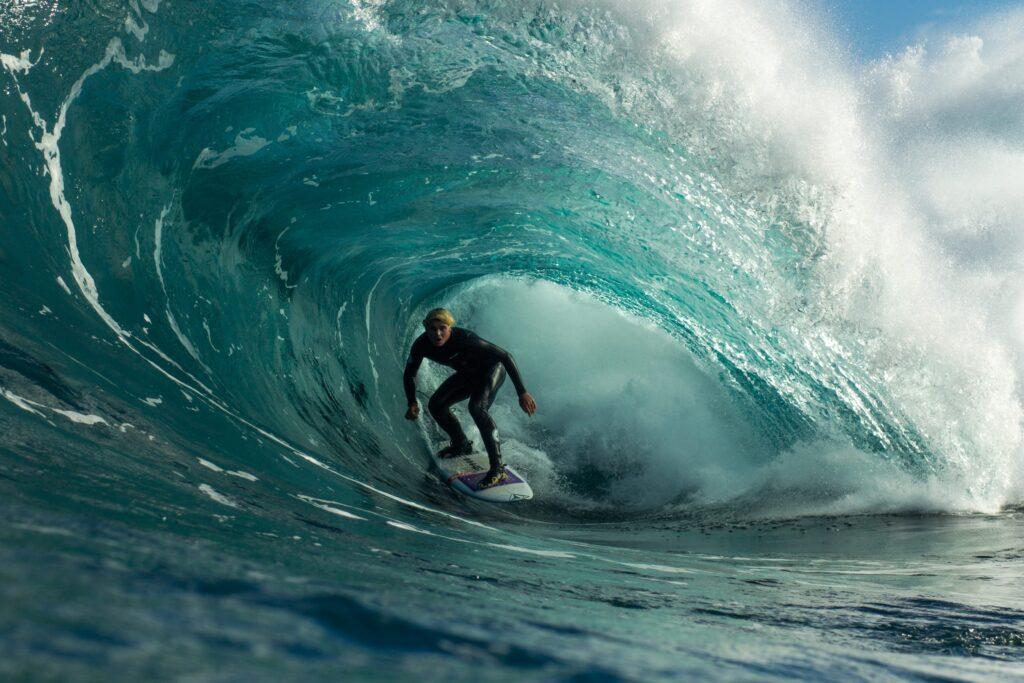
Noa Deane grew up around surfing’s old guard , with legends like Terry Fitzgerald, Wayne Lynch, Maurice Cole, and his father Wayne Deane shaping not just boards, but the way he saw the ocean. For Noa, surfing has never been about fitting into a system. It’s about escape, instinct, style, and chasing feelings that can’t be measured in a heat score.
From his iconic profile movie ‘Head Noise’ to desert trips, music, board design, and the tension between contests and creative freedom, Noa speaks with Frank 151 about the lessons passed down from his dad’s generation, the importance of individuality, and why surfing still feels like something impossible to master.
Frank 151: You grew up in a house where legends like Terry Fitzgerald, Wayne Lynch, and Maurice Cole were regular visitors. Looking back, how did those early conversations and personalities shape what you think surfing is today?
Noa Deane: I think I learned from my dad and his mates that why they did it was just to escape reality and not be like everyone else — almost a rebellion against being a normal human. No matter what is going on in your life, it all kind of washes away in the water, and you have your misfit crew of surfers riding a piece of foam and fiberglass on a wave created by a storm thousands of kilometers away. It’s weird.
I think that generation was really themselves, which is an inspiration. They broke off from being normal to pursue and perfect something like surfing, which I’m sure back in the day would have been frowned upon, but they did it anyway.
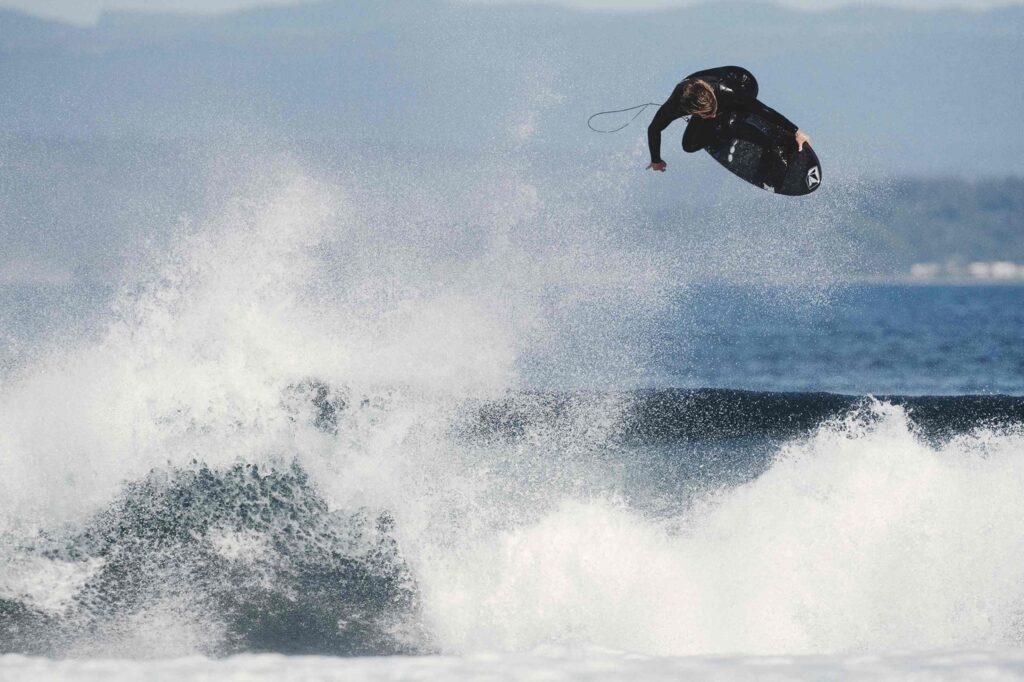
© Thomas Robinson/Volcom
I think I learned from my dad and his mates that why they did it was just to escape reality and not be like everyone else — almost a rebellion against being a normal human. No matter what is going on in your life, it all kind of washes away in the water, and you have your misfit crew of surfers riding a piece of foam and fiberglass on a wave created by a storm thousands of kilometers away.
Frank 151: Your dad, Wayne Deane, was obsessive about perfect board shaping and positioning in the lineup. How has that upbringing influenced your own approach to crafting boards, reading waves, and surfing intuitively?
Noa Deane: I was definitely lucky to have been taught a lot about boards and how to shape them. I still haven’t made a good one though, haha. It definitely makes things easier when I’m speaking to Luke about my boards now and have some clue about how different things feel under my feet and where we can make adjustments, instead of just saying it doesn’t work and asking him to make another one.
Dad was definitely a master at reading a lineup. He had a sort of system that started with what waves you would be catching and how much paddling was involved. That would determine what board you’d ride, sometimes making a compromise on both to try and make things work. Then onto the paddle out — if there was a rip or a slight break in the lineup where it was easier to get out, that would be his choice. He would have lineups on the beach, if possible, for distance in and out, and also up and down the beach. He would adjust them as the session went along and fine-tune it.
It’s funny, I surf a lot with Russell now, and I see him doing the same things I remember my dad doing. I’m sure it probably comes from his dad, Kirk, who is a bit of a scientist when it comes to surfing and big waves.
Frank 151: You’ve spoken publicly about not wanting to chase the traditional competition route — preferring video parts and exploration. In a world where social media often rewards contest results, do you feel surfing culture still undervalues that freer approach?
Noa Deane: I think I found it hard to show up and wait for a heat at a certain time and focus for 20 minutes. It never felt like I could show what I was capable of. It felt pretty restrictive for me.
I love surfing new waves and feeling new feelings on the board. I think in the last few years every part of surfing has grown so much. There’s a huge following for the comps, but also a lot of people going out there looking for new waves and experiences through surfing, which seems like the core reason to surf for me.
Frank 151: In the past you’ve said competition can sometimes dilute surfing — make it safer or predictable. Do you believe this tension between performance and progression will define the next era of surfing?
Noa Deane: It’s hard to say. I feel like some people surf better with a load of pressure on them in a comp, and some I’d prefer to watch in a video. I think we need both. If everyone was on the same page, there would be no individuality. It would be so boring.
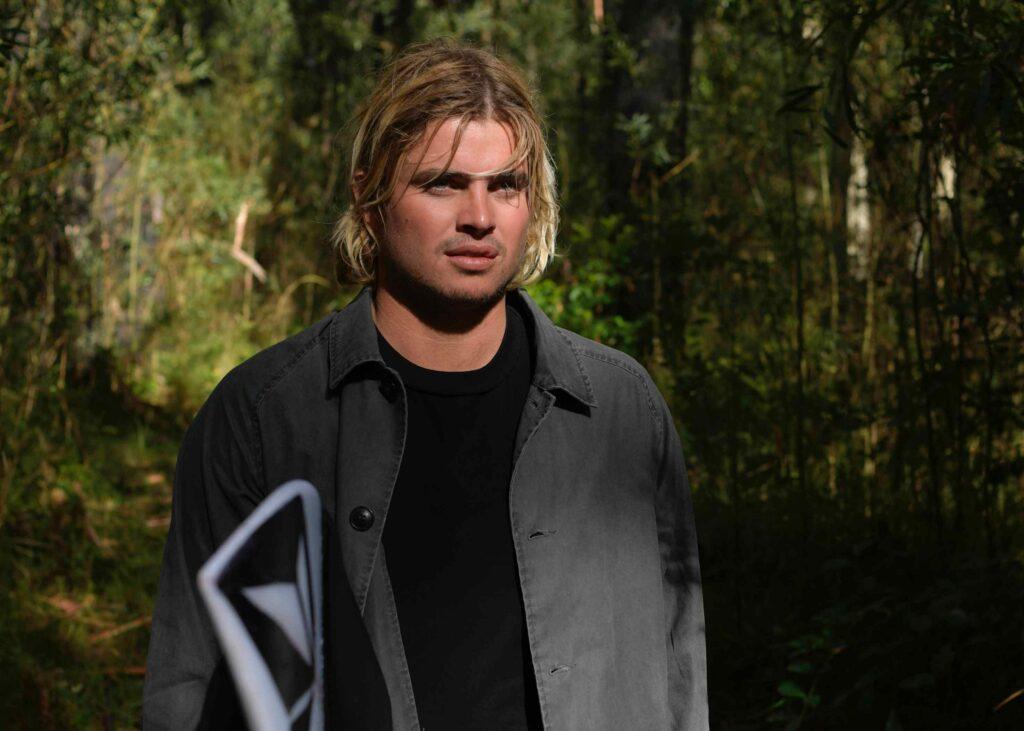
© Thomas Robinson/Volcom
I think I found it hard to show up and wait for a heat at a certain time and focus for 20 minutes. It never felt like I could show what I was capable of. It felt pretty restrictive for me.
Frank 151: Looking back at Head Noise — the film that helped launch your global profile — what creative or emotional milestones from that project still stick with you?
Noa Deane: I think a few things that stick out to me are probably getting my first few proper waves at Pipe, and also Mikey grinding it out on the beach for a few of those Northern Rivers sessions. One was like eight hours, I think. He burnt through all the batteries, and he ended up filming on a Super 8. It felt like we were both trying our hardest, which was sick.
Definitely that North Point air as well. Just never knowing when something like that can go down — I definitely wasn’t expecting it and was kind of laughing as I came around to spot the landing, thinking my board was definitely going straight in half. Somehow it just held.
I was stoked on the soundtrack as well. Mikey did a great job on that film.
6. Frank 151: You’ve talked about public perception and how comments like “fuck the WSL” were blown out of proportion. How do you manage the narrative around who you are versus who people want you to be?
Noa Deane: Yeah, I got in big trouble for that one for sure, haha. I think I just try to be myself and hope for the best.
Not everyone is going to like you or what you do.
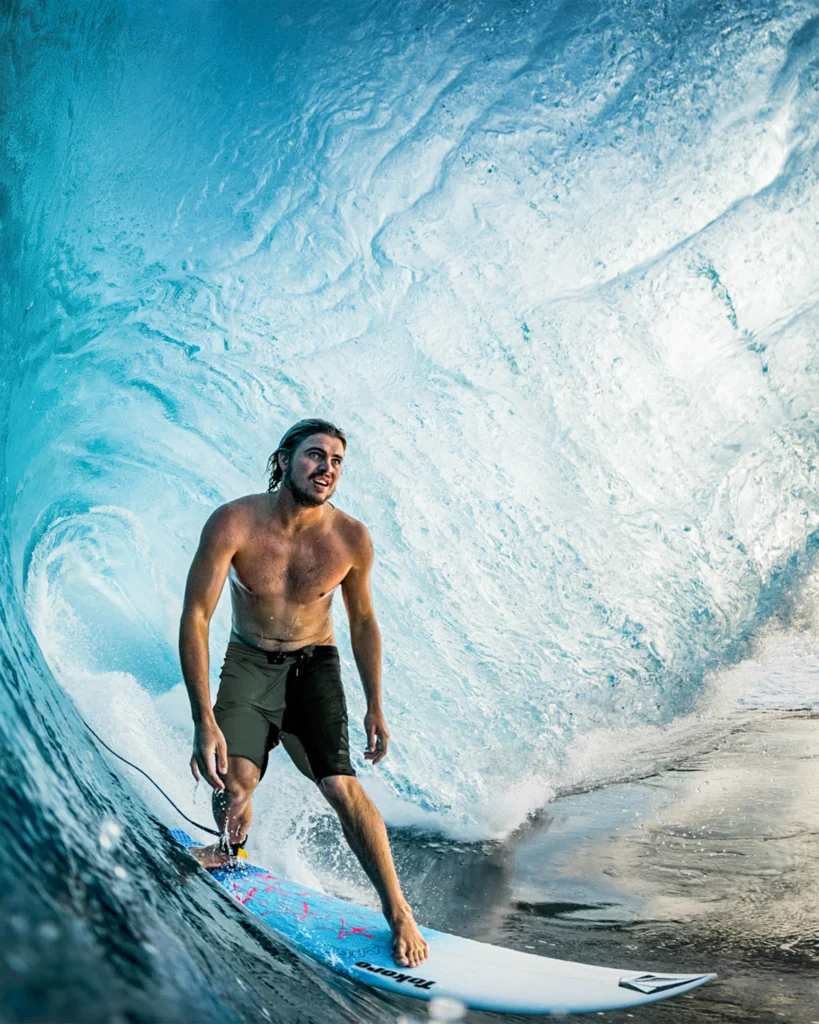
Frank 151: What role does surfing still play in your life outside media and industry expectations — is it still about joy and discovery first?
Noa Deane: Surfing is a massive part of my life. It feels like a challenge still to me, and something that is never mastered, even though you have moments where you think you have it all figured out. The other side of that is feeling like a kook still, which is always happening to me, haha. There is so much to learn. I think it’s a good thing for busy minds.
Frank 151: You’ve dabbled in music and building creative projects off the water. How do these other avenues give you clarity or balance compared to surfing alone?
Noa Deane: I love playing music. Like surfing, there’s so much to explore and learn about guitar and other instruments, which are kind of restricted in a way, but there’s always something new to be done or learned. It definitely fires the creative side of the brain up for me.
Surfing is a massive part of my life. It feels like a challenge still to me, and something that is never mastered, even though you have moments where you think you have it all figured out. The other side of that is feeling like a kook still, which is always happening to me, haha. There is so much to learn. I think it’s a good thing for busy minds.
Frank 151: Your generation of surfers seems to sit between honoring the past and redefining the future. What lessons from your dad’s era do you think are most important for surfers today?
Noa Deane: I think the most important thing is always style. Someone doing a trick half as good but with perfect style and power is just unmatched. It’s a massive part of surfing that I hope stays important with the next generation.
For example: Tom, Occy, Carroll, Archy, the Fletchers, Irons — some of my favourites.
Frank 151: If you were to design your ultimate surf trip — no cameras, no agenda, just pure waves — where would you go and what would you hope to experience?
Noa Deane: I think it would be desert camping, a few mates, some easy tubes, and a few mates with me. I don’t think it can get better than that.